
Diversity, Equity, Inclusion, and Belonging at Greenspring Montessori School
Montessori education, in its essence, is a pedagogy of acceptance, love, and understanding. We are so very lucky that 125 years ago, far ahead of her time, Dr. Maria Montessori built a peace education curriculum to support the work of Diversity, Equity, Inclusion, and Belonging, and was nominated for three Nobel Peace Prizes for her important work.
“The needs of [humankind] are universal. Our means of meeting them create the richness and diversity of the planet. The Montessori child should come to relish the texture of that diversity.”
– Dr. Maria Montessori
Our community’s work in Diversity, Equity, Inclusion, and Belonging is designed to deepen our Montessori practice and make us a stronger, more vibrant, and inclusive community. Yet even with our unwavering adherence to Dr. Montessori’s tenets, we know we must forward the work, taking a stand for equity and justice as models for our children and adolescents. We do this work so that our children have the foundation to move through the world with a deeper understanding of and care for humanity.
Our commitment is that every member of our community experiences the sense of belonging which allows them to engage fully, share their unique intelligence, and take thoughtful risks. The result is a stronger, more dynamic, and vibrant culture. Safety and belonging in our community also provide the foundation for building meaningful relationships, facilitating full emotional development and self-expression, and greater overall achievement. It is the duty of every member of our community to support the work of Diversity, Equity, Inclusion, and Belonging as we guide our students in becoming responsible and engaged citizens of the world.
Community Values
The Greenspring Montessori School community values self-knowledge, personal integrity, inspired purpose, and meaningful contribution nurtured through intentional guidance, academic discovery, and a culture of excellence.
At Greenspring Montessori School,
We endeavor to honor the dignity and belonging of all individuals in and beyond our community, acknowledging inherent personhood of all identities, inclusive of race, ethnicity, national origin, immigration status, language, religion, socioeconomic status, gender identity, size, sexual orientation, age, neurodiversity and dis/ability.
We engage in respectful conversations with all community members to understand diverse perspectives and lived experiences. Through shared dialogue, we seek to co-create a space for the empowerment of all members of our community to practice compassionate understanding.
We commit to create a culture of belonging by leveraging continuous learning, addressing biases, evaluating educational decisions and curriculum, and supporting responsible action. This effort is a work in progress that is continuously evolving.
We agree that these values are not only a part of our method of education, but also a way of engaging life. They become more than just what we do; they inform who we are.
We believe these values develop an actively compassionate, curious, rational, and resilient orientation toward the self, the community, the environment, and the world, calling us to engaged, inclusive, and responsible citizenship.
The Four Goals of Antibias Education
We are guided in this work by the book Anti-Bias Education for Young Children and Ourselves from the National Association for the Education of Young Children. Our school follows the Four Goals of Anti-Bias Education from this book which can be found here.
Below is an outline of the four goals of Antibias education:
Goal 1: Identity
- Educators nurture each child’s construction of knowledgeable, confident, individual personal and social identities.
- Children demonstrate self-awareness, confidence, family pride, and positive social identities.
Adding to early childhood education’s long-term commitment to nurturing each child’s individual, and personal identity, anti-bias education emphasizes the important idea of nurturing children’s social or group identities. Children will learn accurate, respectful language to describe who they and others are. Social identities include but are not limited to gender, racial, ethnic, cultural, religious, and economic class groups. A strong sense of both individual and group identities is the foundation for the three other core anti-bias goals.
Goal 2: Diversity
- Educators promote each child’s comfortable, empathetic interaction with people from diverse backgrounds.
- Children express comfort and joy with human diversity, use accurate language for human differences, and form deep, caring connections across all dimensions of human diversity.
This goal means guiding children to be able to think about and have words for how people are the same and how they are different. It includes helping children feel and behave respectfully, warmly, and confidently with people who are different from themselves. It includes encouraging children to learn both about how they are different from other children and about how they are similar. These are never either/or realities because people are simultaneously the same and different from one another. This goal is the heart of learning how to treat all people caringly and fairly.
Goal 3: Justice
- Educators foster each child’s capacity to critically identify bias and will nurture each child’s empathy for the hurt bias causes.
- Children increasingly recognize unfairness (injustice), have language to describe unfairness, and understand that unfairness hurts.
This goal is about building children’s innate, budding capacities for empathy and fairness, as well as their cognitive skills for thinking critically about what is happening around them. It is about building a sense of safety, the sense that everyone can and will be treated fairly.
Goal 4: Activism
- Educators cultivate each child’s ability and confidence to stand up for oneself and for others in the face of bias.
- Children demonstrate a sense of empowerment and the skills to act, with others or alone, against prejudice and/or discriminatory actions.
Goal 4 is about giving children tools for learning how to stand up to hurtful and unfair biased behavior based on any aspect of social identity. Children’s growth on Goal 4 strengthens their growth on the other three goals.
Our work is always to build a community for our students and the adults that surround them, that leaves them feeling seen, valued, and understood. As in all other areas of the curriculum, teachers tailor and scaffold anti-bias education materials and activities to each child’s cognitive, social, and emotional developmental capacities.
Diversity, Equity, Inclusion, & Belonging News
Encouraging Conversations for Belonging
This year, the Diversity, Equity, Inclusion, and Belonging (DEIB) Committee had an ambitious goal of creating lessons and resources for global holidays and cultural celebrations. The Committee strives to create thoughtful and authentic resources for our Guides without...
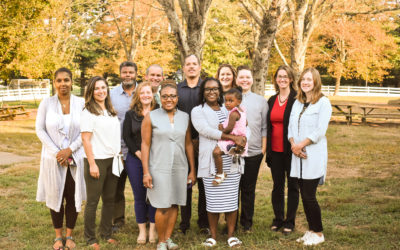
Meet the Diversity, Equity, and Inclusion Committee
The Diversity, Equity, and Inclusion Parent Committee The Greenspring Diversity, Equity, and Inclusion Committee (the Committee) formed organically last year as a small but rapidly-growing group of parents, staff, and guides having conversations to support each other...
Greenspring Awarded the Ursula Thrush Peace Seed Grant
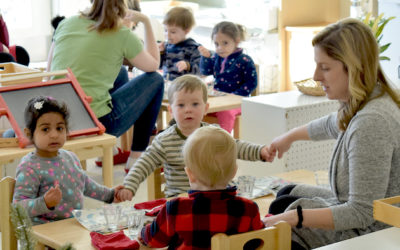
The American Montessori Society Peace Committee has awarded the Ursula Thrush Peace Seed Grant to Greenspring Montessori School and a partnering parent group to fund a project that promotes peace education. This grant was created by the American Montessori Society...

Why We Celebrate the International Day of Peace at Greenspring Montessori
Every year, we celebrate the International Day of Peace here at Greenspring Montessori. This isn't a particularly well-known holiday in many circles, I know, but to us this day is both a cause for celebration and a chance for reflection. Peace education is a huge...