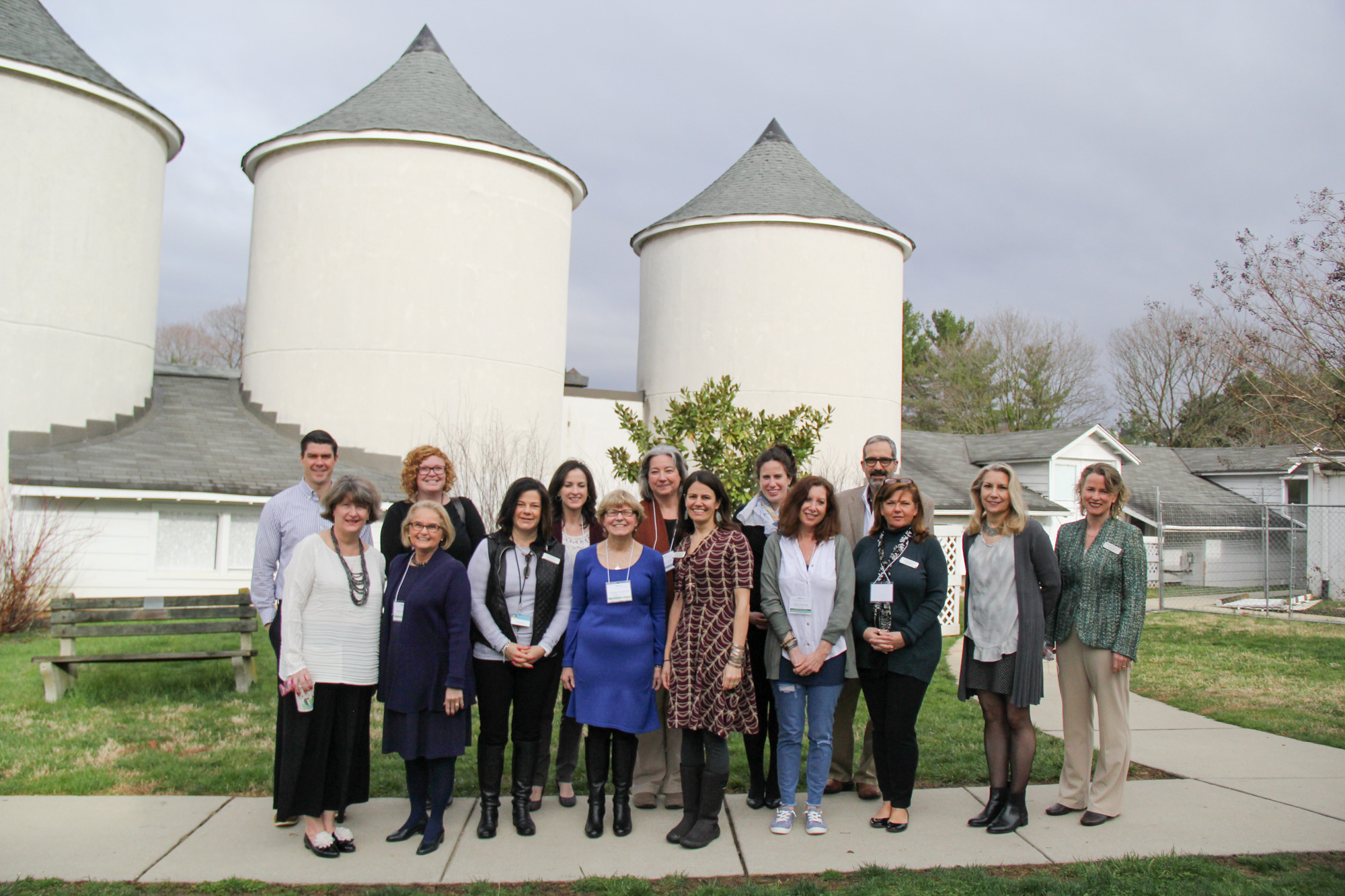

Just some of the presenters at the first annual Baltimore Montessori Conference.
On Saturday, April 1, 2017, Greenspring Montessori School opened it’s campus to the greater Montessori community for our first annual Baltimore Montessori Conference. The conference was created by the Maryland Center for Montessori Studies – the Montessori training center at Greenspring Montessori School. Our mission is inspiring and cultivating strong Montessori advocates and leaders as champions for the human spirit. To learn more about our Early Childhood Teacher Credential, please click here.
To all of our Participants, Presenters, and Volunteers who helped make the inaugural Baltimore Montessori Conference a huge success – THANK YOU!

Keynote speaker Jaqueline Cossentino presenting to an audience of more than 120 at Greenspring Montessori School.
Over 100 Montessori teachers, administrators, and parents from 6 states joined us for a day of workshops focusing around continuing our own education and understanding of Montessori practices. There were many workshops to choose from, with sessions led by inspiring life-long Montessorians including Marie Conti, Kathy Minardi, and Jen Cort!

The Director of Training for the Maryland Center for Montessori Studies, Lee Lanou, poses with two of our presenters.
To those who attended, we hope that you all enjoyed a day to refresh yourself and your Montessori practice, gain valuable theoretical insight, and practical information and ideas. We also hope that you were able to meet and connect with some new Montessori colleagues from other schools.
Be sure to mark your calendars for Saturday, April 7, 2018. We hope to see you there!

It has been a very busy month of construction at Greenspring Montessori School!
We are finally beginning to see the signs that our extensive project is underway. It is a great feeling for all those involved in planning and preparation for this project over the past two years. We have worked very hard to get to this point and this is a major accomplishment to celebrate!
To recap, our construction team created a temporary access road across the back of the soccer field, installed safety fencing around the Multipurpose building, and began the excavation of the stone water management area behind the Student Activity Center.

Many of the rocks were repurposed for our outdoor environments.
The last task proved to be the most tricky, as we found massive rock slabs that needed to be removed. For three days now, there has been a constant drone of a jack hammer across campus, but they have finally been able to remove most of the rock! This has also been a blessing in disguise, as we have been able to use many of the “scrap” rocks in our outdoor environments and decorative garden beds across campus.

Also, a team did safety walk-throughs in the Multipurpose Building, to assure that the plumbing, HVAC, and electrical are all prepared for demolition in the coming weeks. Workers will be doing the demo from the inside out, so to speak. They will be tearing down cabinets, drywall, and all non-structural elements before moving to the major demolition outside. Keep a look out for the first signs of demolition of the Multipurpose Building! While there will not be any theatricals or wrecking balls, it is still sure to be an interesting sight.
We are looking forward to see what exciting construction news we will have in March! Stay tuned for our latest updates.

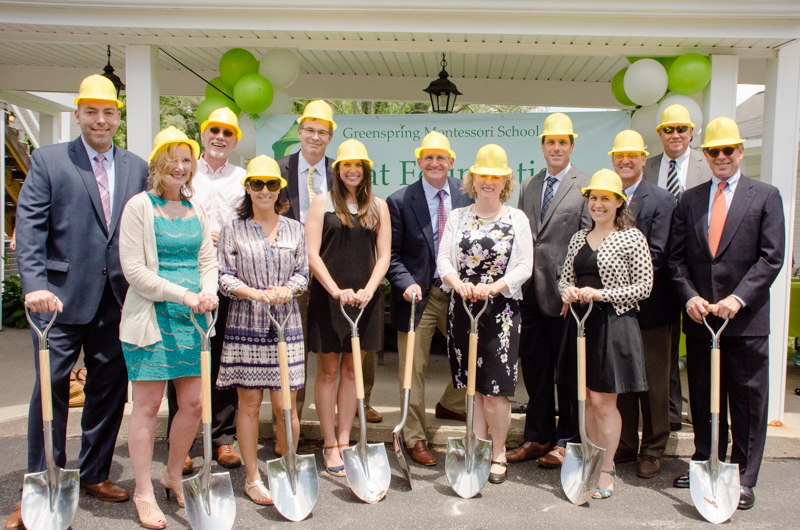
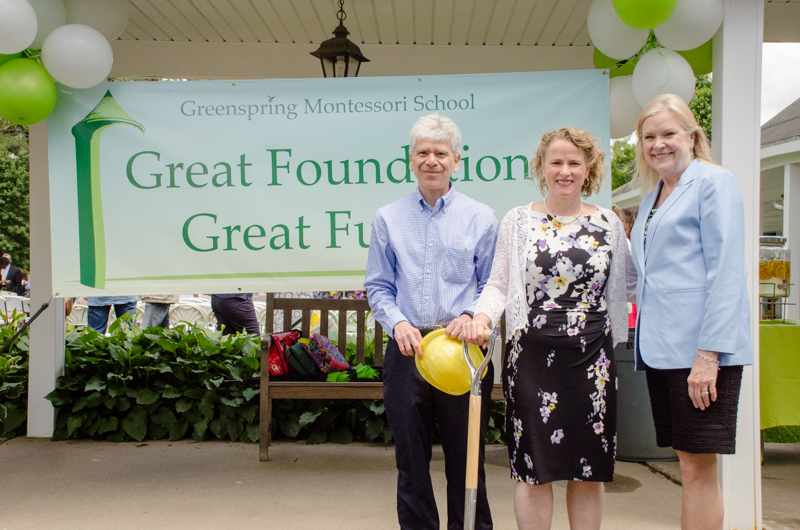
Greenspring Montessori School hosted a ceremonial Groundbreaking on Wednesday, June 8, 2016 for a building project to renovate nearly 30,000 square feet and construct 7,500 square feet of additional classroom space on its historic seven-acre campus. Head of School, Tamara Balis, spoke to the community about our progress, and our Chair of the Board of Trustees, Fred Brown, and Councilwoman Vicki Almond shared their support. Students, parents, and staff dug in with their shovels, ceremoniously marking the beginning of this transformation.
Originally known as Emerson Dairy Farm, the iconic white barns and silos have been an important part of the Greenspring history since the 1920’s. Currently home to over 250 children, toddler through grade 8, Greenspring Montessori School is committed to its mission of “igniting purpose and voice in a fully engaged learning community.”
True to the Montessori philosophy, the upcoming building project will provide thoughtfully designed classrooms with free access to outdoor space, community kitchens, and child-sized features such as cabinets, sinks, toilets, and more.
The school is compelled to complete this renovation to improve its beloved but aging facilities to be safer, healthier, and more environmentally-friendly, with buildings reimagined to fit the school’s growing needs. This collaborative effort will provide lasting benefits – social, developmental, academic, physical, and financial – that touch every member of Greenspring Montessori School’s community.
Learn more about our Building Project.
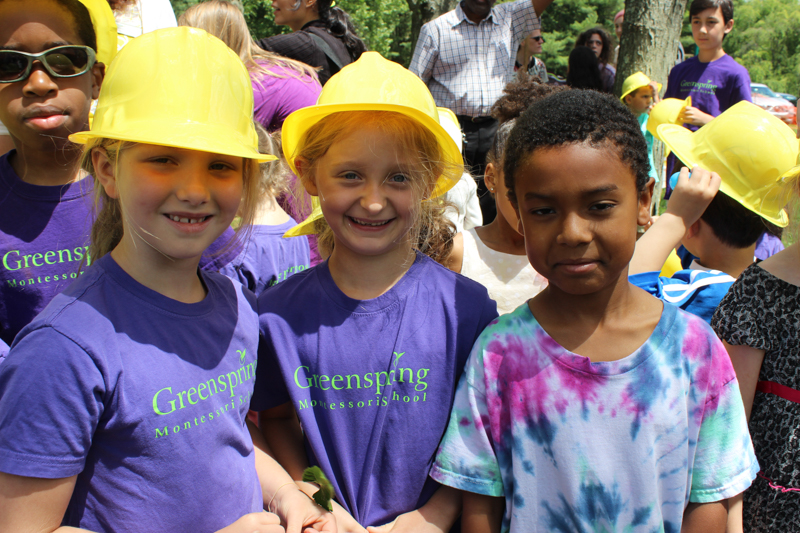
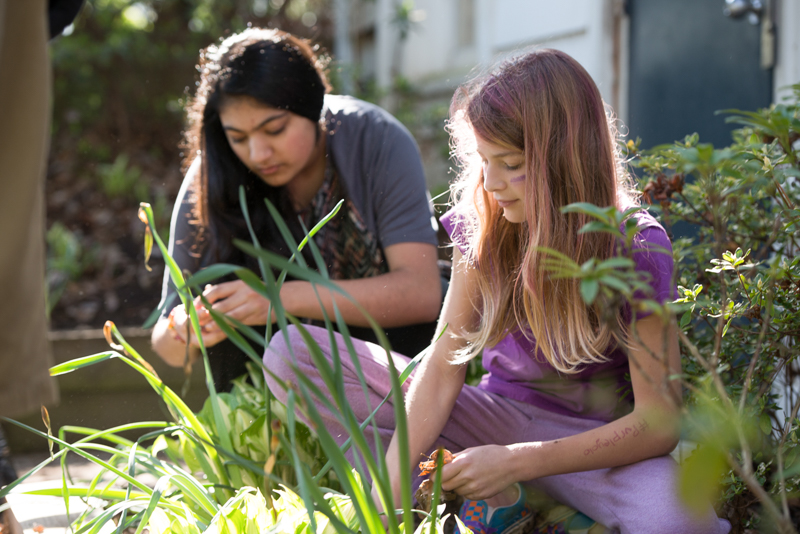
“There’s no such thing as bad weather, only unsuitable clothing” –Alfred Wainwright
In education today, there’s a forward momentum towards STEM (Science, Technology, Engineering, and Math). There are robotics clubs, programming camps, and circuitry courses. We want our children to enter the world prepared in math and science. However, if you look to the natural world, there are so many ways for your child to become a natural scientist and mathematician.
The etymology of “science” comes from the Latin scire, “to know”, and etymologists note that it probably originally meant “to separate one thing from another, to distinguish.” Yet, in our natural world, there is so much to know, to distinguish, that has fallen through the cracks in the education of our youth, and perhaps even ourselves. In the Montessori classroom, distinguishing and classifying starts in the Children’s House, in practically every subject area. This practice not only helps the child to fine tune their observation skills and hone in their level of concentration, but the child is organizing and classifying information in their brain.

In the Elementary classroom, children continue to use their observational and analytical skills to study, classify, and understand the distinguishing characteristics of the natural world. Elementary children are provided a high level introduction to this field of study. For instance, in botany and zoology, the child learns how each organism lives and what satisfies that organisms needs. Then the child learns about the function and parts, such as the function of limbs, skin, or leaf to that particular living organism. At this point, the child may explore variety. This exposure to variety is what impels the child to classify. A leaf is not merely a leaf, but a maple leaf – or even distinguished further, a red maple. Nor is a feather just a feather, but that very plain, brown feather is a bald eagle feather. By learning and practicing this skill, the child is practicing scientific observation.
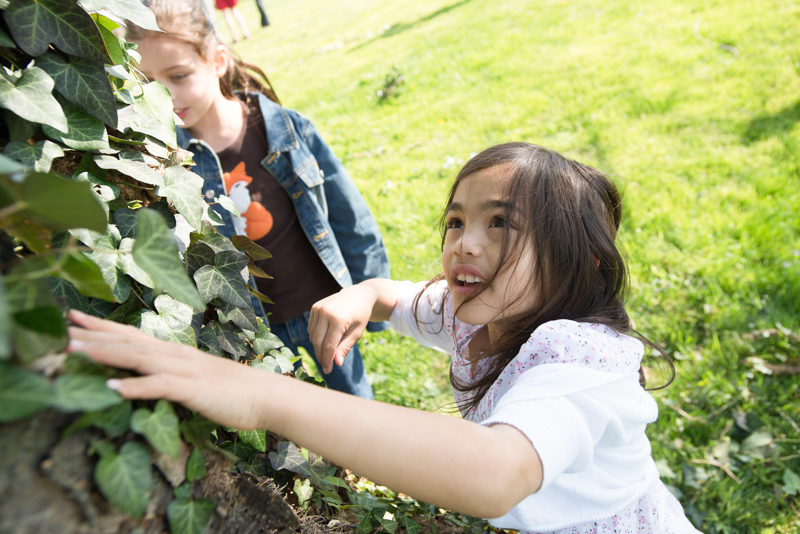
In the Adolescent Community, the child explores science and nature through Occupations Studies. Occupations is essentially a study of the land and offers the student a chance to apply scientific concepts such as soil and water chemistry, botany, and microbiology to agricultural practices. The Adolescent Community is committed to the study of the environment and science studies focus on environmental ethics, conservation, and renewable energy. The child conducts their own science experiments and writes full lab reports to explore cause-and-effect relationships. This serves as a means to be fully connected with wanting to distinguish, to know, more about our world.
In order to fully experience science, and even more, love it, the child needs to be in constant connection with the outdoors. No matter the weather, no matter the season, experiencing nature is the best complementary experience to teaching STEM. Pick up a child friendly field guide at a local used book store. Find an even more detailed one for yourself. Then explore – together. Your children will ask the most amazing, inquisitive questions – and you’ll be there with them, modeling scientific observation and inquiry.
To learn more about Montessori education, please visit us.
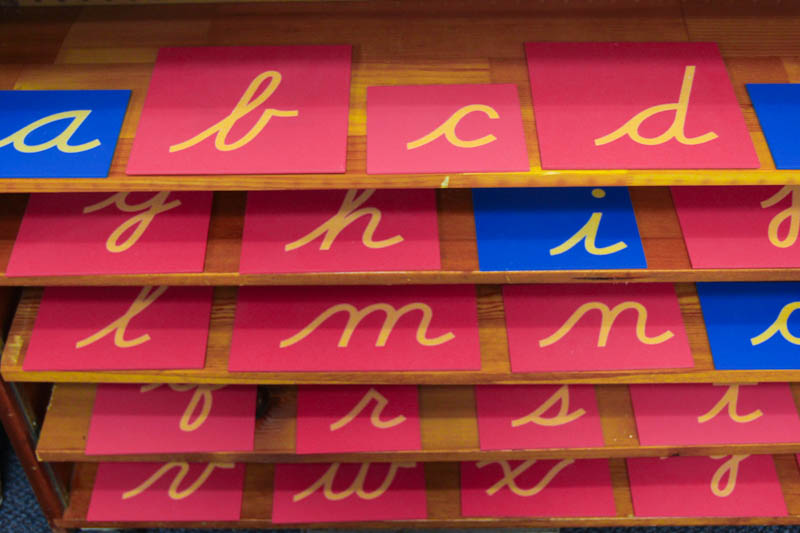
“Learning cursive is good for children’s fine motor skills, and writing in longhand generally helps students retain more information and generate more ideas. Studies have also shown that kids who learn cursive rather than simply manuscript writing score better on reading and spelling tests, perhaps because the linked-up cursive forces writers to think of words as wholes instead of parts.” – Katy Steinmetz, Time Magazine
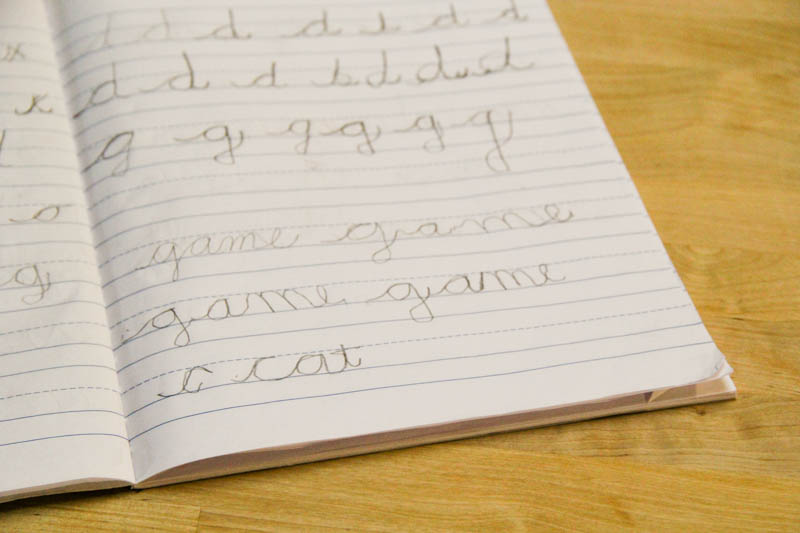
A sample of early cursive writing from a Lower Elementary (first grade) student at Greenspring Montessori School.
At Greenspring Montessori School, we have extended our commitment to teaching cursive writing to our Children’s House students. Starting at age 3, students now have access to cursive sandpaper letters, cursive name tags, and lessons on cursive handwriting.
It been proven that cursive writing engages more of the brain and helps students become better at spelling. As they are writing, children are able to slow down and focus on the precision, allowing them to think about what they are trying to say, instead of simply copying letter for letter. Our Children’s House guides look out for signs that an individual student is ready to begin learning cursive, as they also work on their print handwriting.
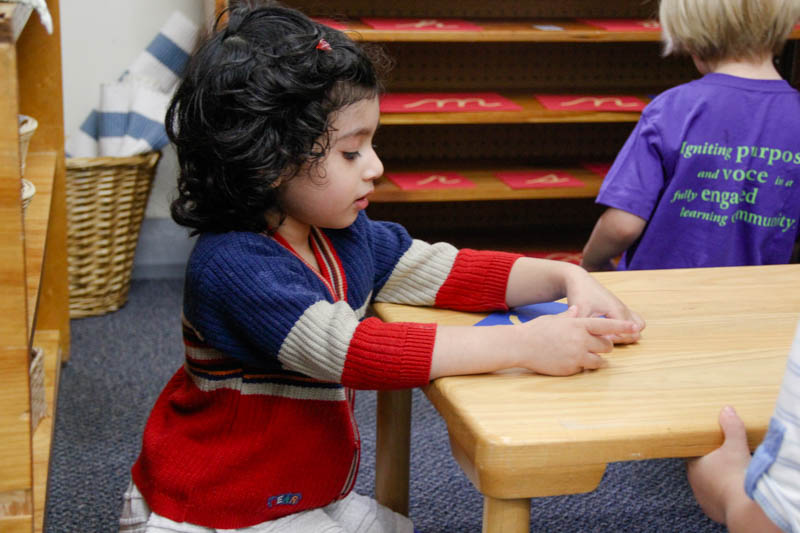
True to the Montessori model, our guides teach to the individual child. We know our students learn in different ways and at different speeds. In any one of our Montessori Children’s House classrooms, the students are spread about working on all kinds of different activities that interest them. If a student, for example, is drawn to the cursive sandpaper letters, the guide may give the child a lesson on the different parts of the letters, or on spelling out words using the large tangible pieces. If they are working on their pencil grip, the guide may suggest they try a word they know in cursive.
By the time the child enters Lower Elementary, they are working on the precision of their handwriting, creating more elaborate writing pieces to express themselves.
Want to learn more about our emphasis on cursive writing? Please contact us at inform@www.greenspringmontessori-b.dev.
Here are a few more articles and resources on cursive writing:
“5 Reasons Kids Should Still Learn Cursive Writing,” Time Magazine.
“Ten Reasons People Still Need Cursive,” The Federalist.
“What’s Lost as Handwriting Fades,” The New York Times.