For children birth – age 10
Whether you have a one year old or an eight year old, you might be familiar with an explosion of toys in your home. If you are dreaming of ways to streamline your living spaces, keep your children engaged, and encourage a sense of order, take a look at these recommendations for setting up a Montessori-inspired play space.
Setting up a Montessori-inspired playroom does not require a great deal of time or expense. The goal is simply to create a space that encourages independence and concentration in your child. As your child grows, the space will need to evolve to fit their needs, but the guiding principles remain the same. Here are some key components to keep in mind:
Provide varied workspaces
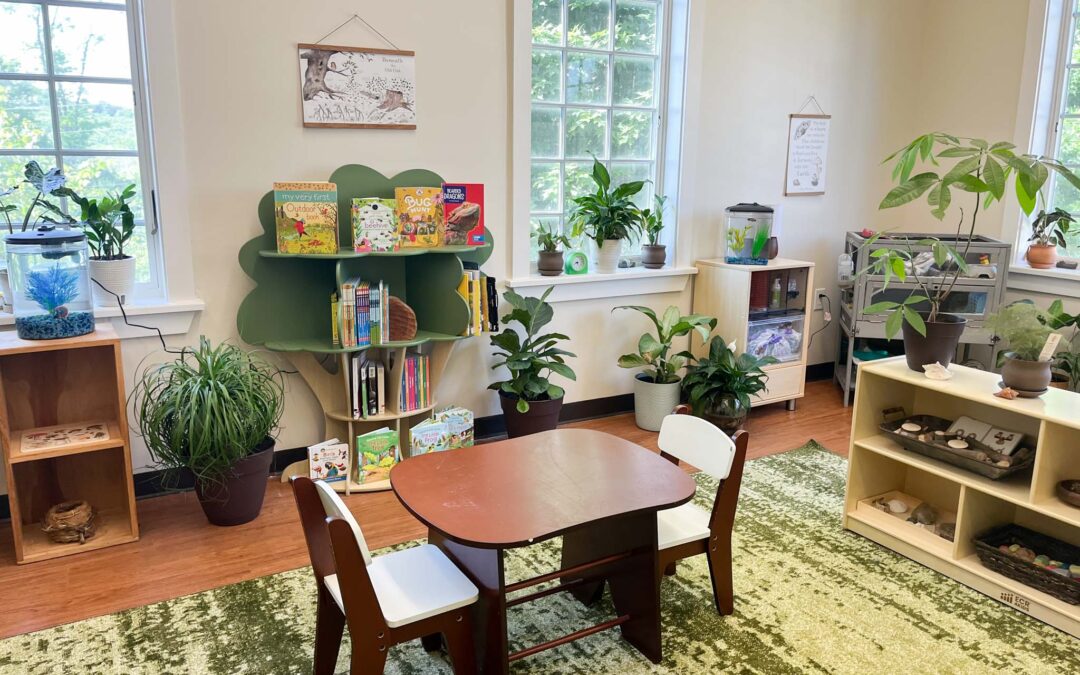
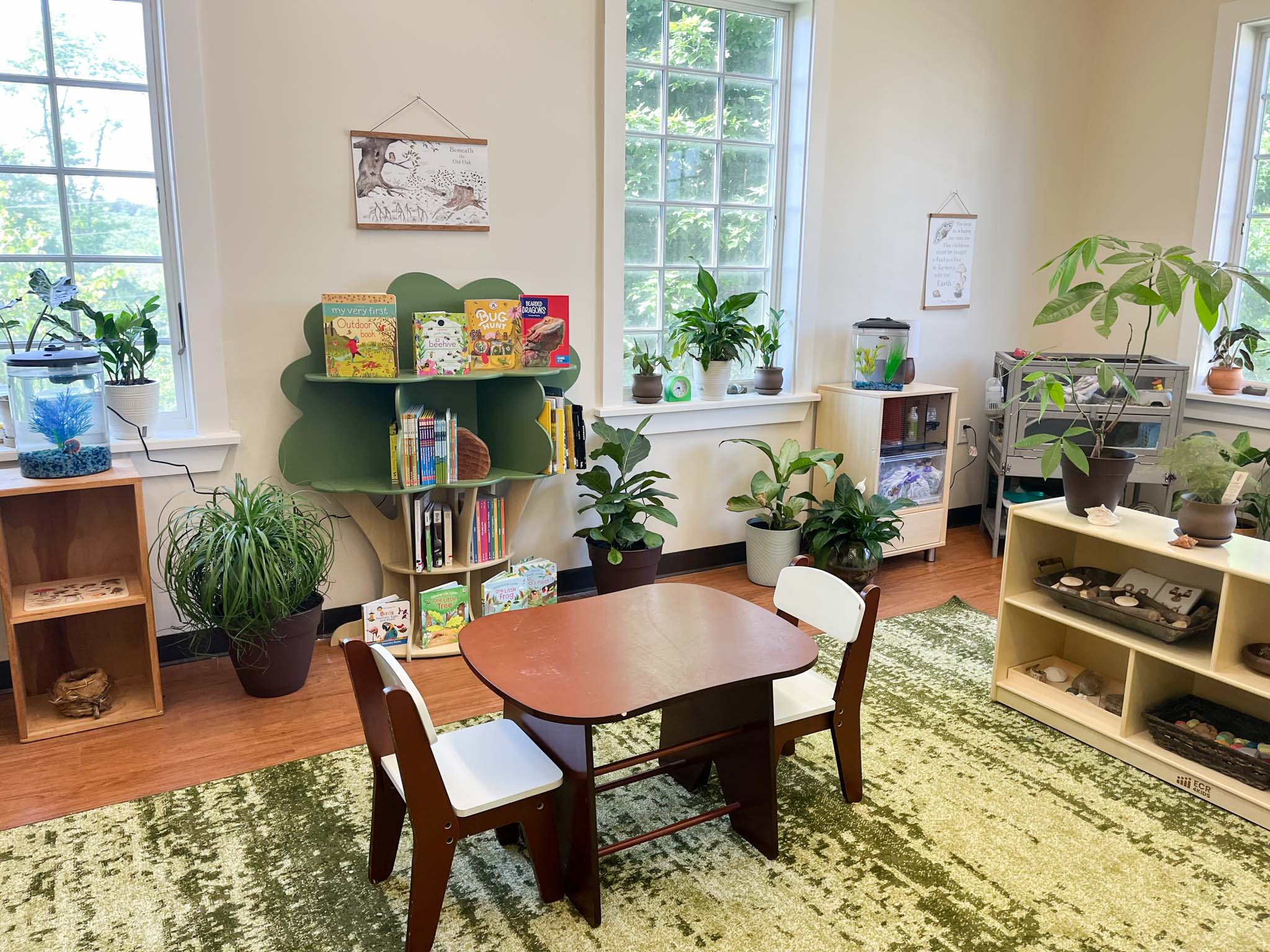
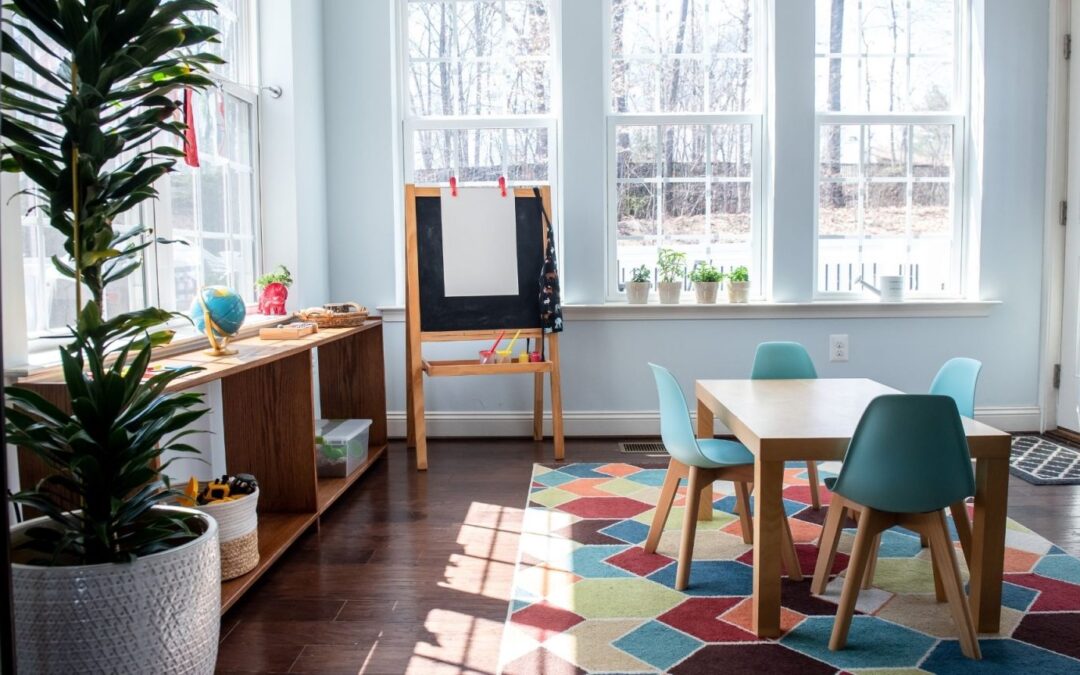
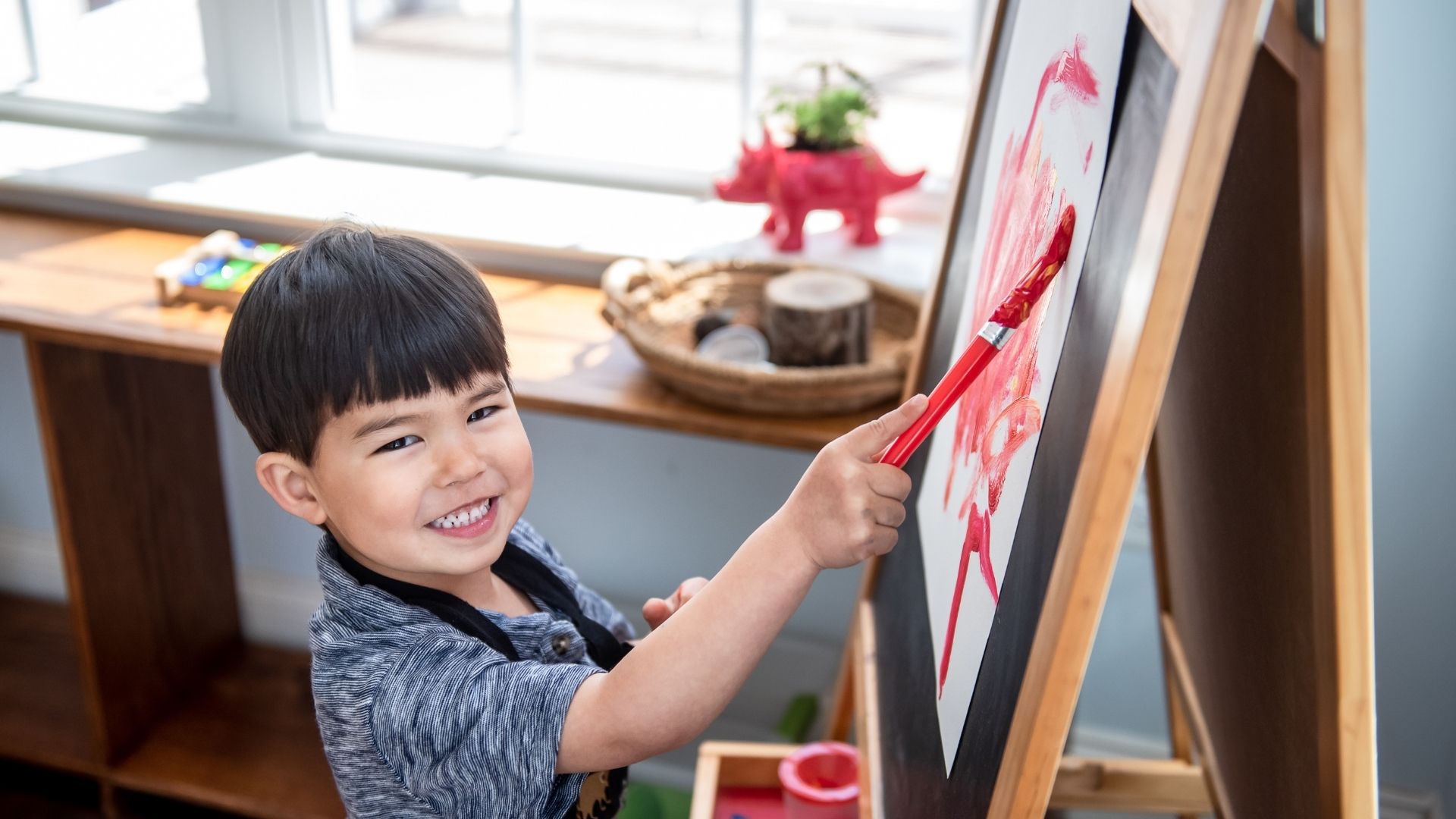
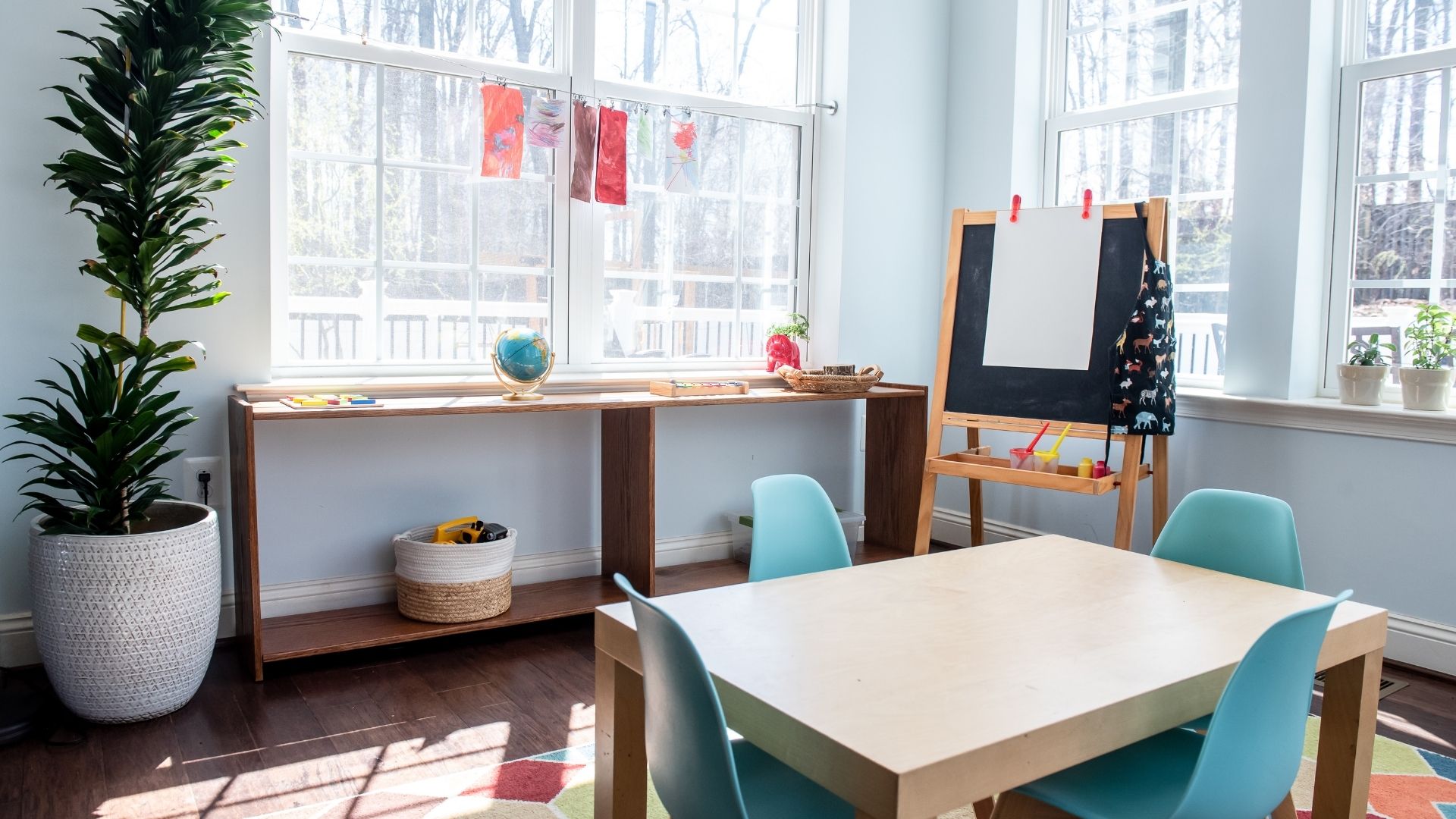
The furniture in Montessori spaces is child-sized and the materials are kept on low shelves so that the child can access them independently. If you have the space at home, it’s ideal to include a child-size table and chairs, an open space allowing for movement and large floor work, and a safe cozy spot for resting or recovering from an upsetting moment. Providing your child with a space that they can navigate independently allows for them to feel empowered without the intervention of adults.
Limit choices (and rotate toys)
To help your child be successful in the space, consider reducing the number of toys available. If your child is having trouble cleaning up their toys, it could be a good sign that they are overwhelmed by the number of toys that are available. You may use a small shelving unit with two or three shelves and just a few items on each shelf. Putting out just a few toys at once, and rotating them regularly, allows your child to focus on what’s available. Also, rotating toys will rekindle your child’s interest in older toys that they haven’t seen for a while. When a toy has remained on the shelf for a whole week untouched, you know it’s time to put it away and put out something different.
| This is as true for toddlers as it is for elementary-aged children! Older children may be interested in choosing what should go on the shelf and what can be stored for the time being. Older children can also help decide how many toys should be out at once and when it’s time to rotate. |
Choose toys that invite purposeful play
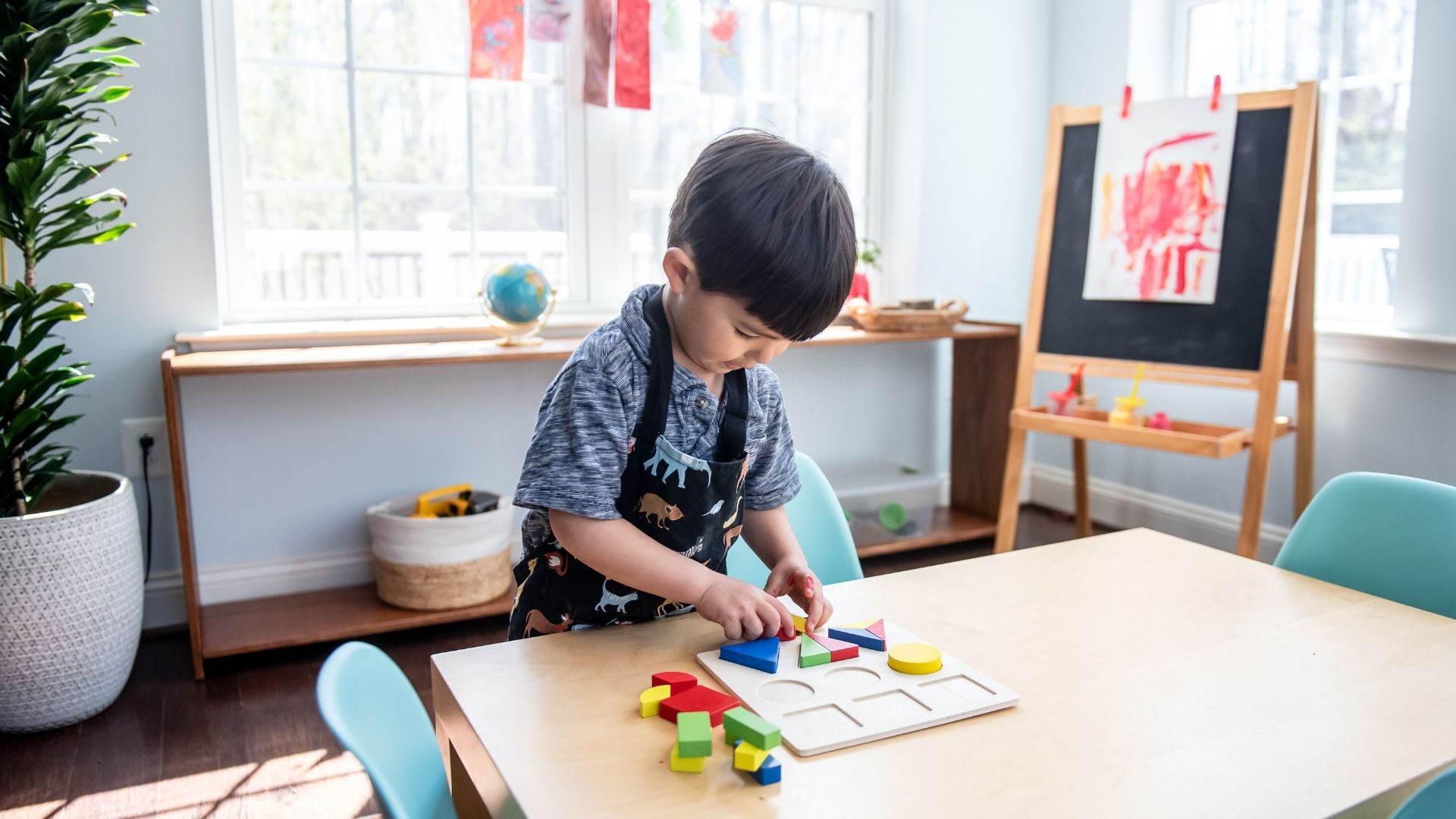
While there is no need to fill your playroom with “academic” work, you can select toys that help your child develop in different ways.
You might think about including a variety of toys that focus on the following:
- Developing fine motor (small muscles) skills – such as Playdough, stacking toys, or a screwdriver set
- Developing gross motor (big muscles) skills – such as a balance board or Pikler triangle
- Art and music – xylophone or bells, paper and crayons
- Books – take a look at our Bookshop page for recommendations by age!
- Open-ended toys for creative play – blocks, legos, or magnetiles
It’s also important to include toys that offer a varying degree of difficulty. You want a mix of challenging toys and things that are easy and familiar for your child to play with when they need a mental break. Studies suggest that battery operated toys that light up and make noises are designed to entertain and do not foster a child’s development of concentration. Open-ended toys that engage rather than entertain will encourage creativity and concentration in your child.
Include nature
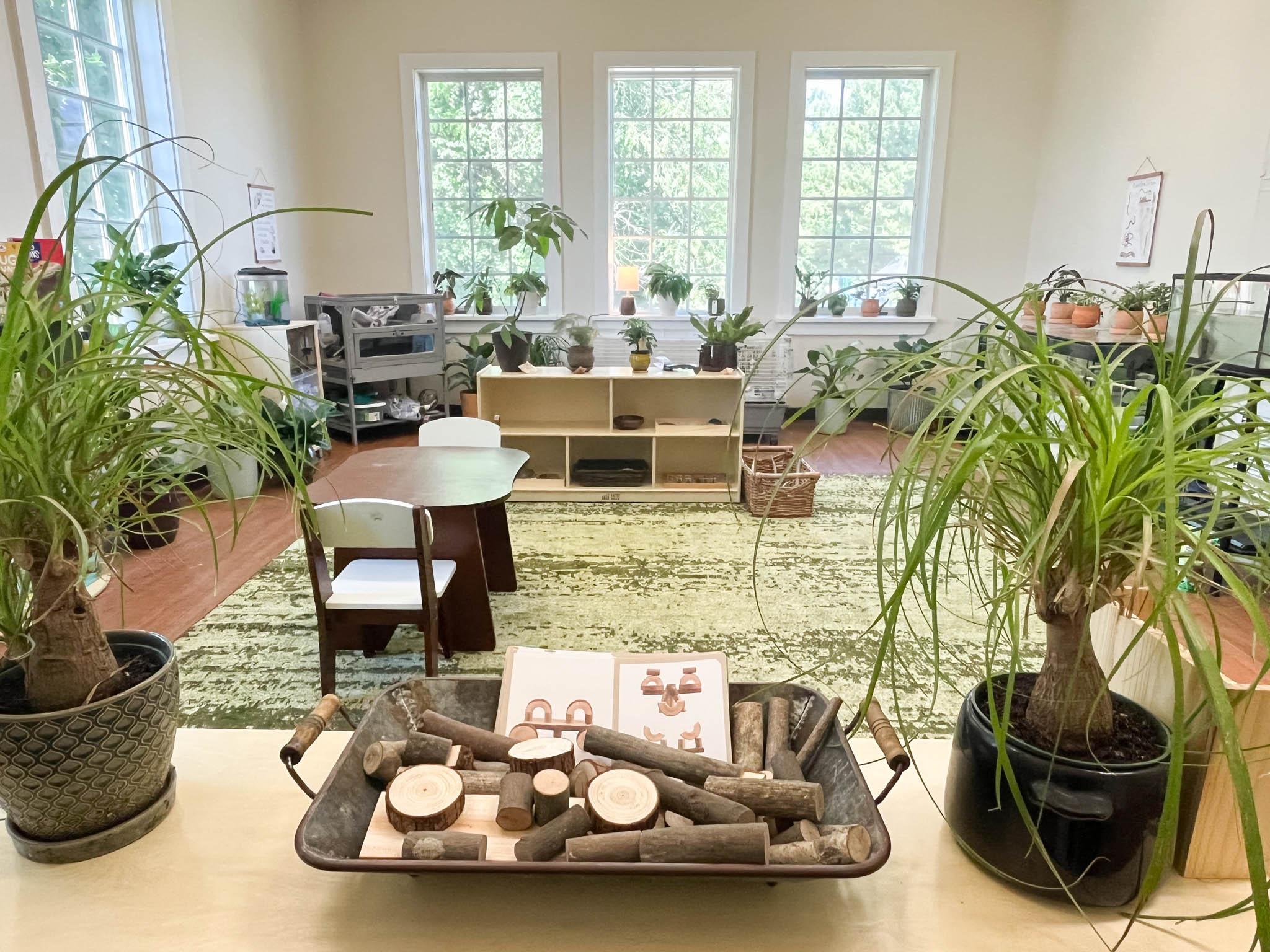
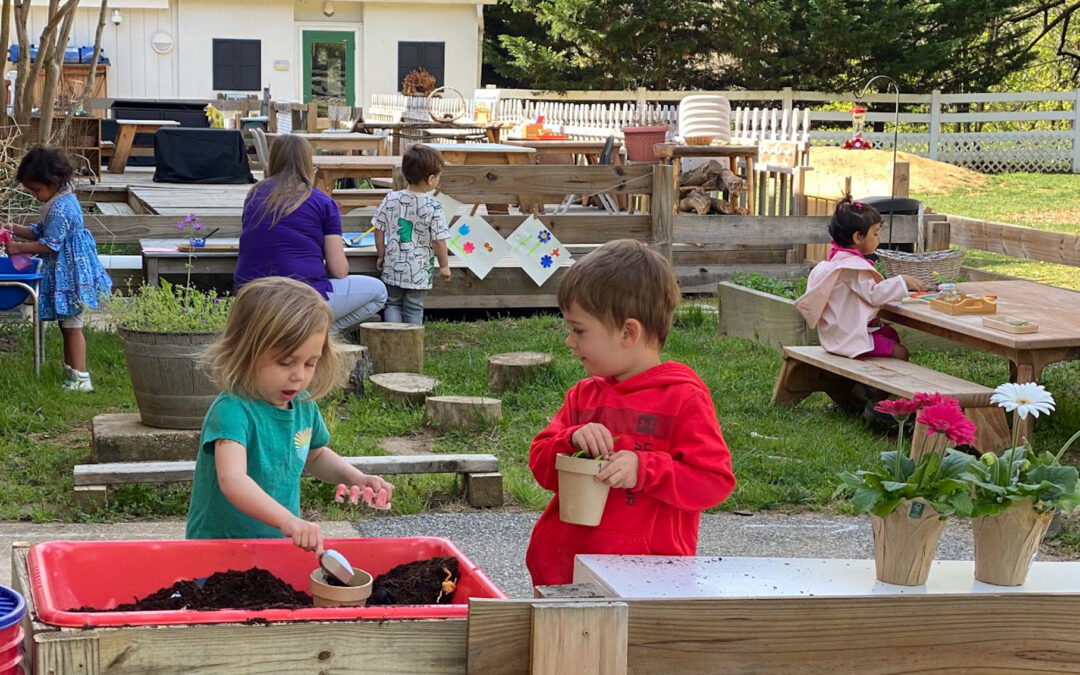
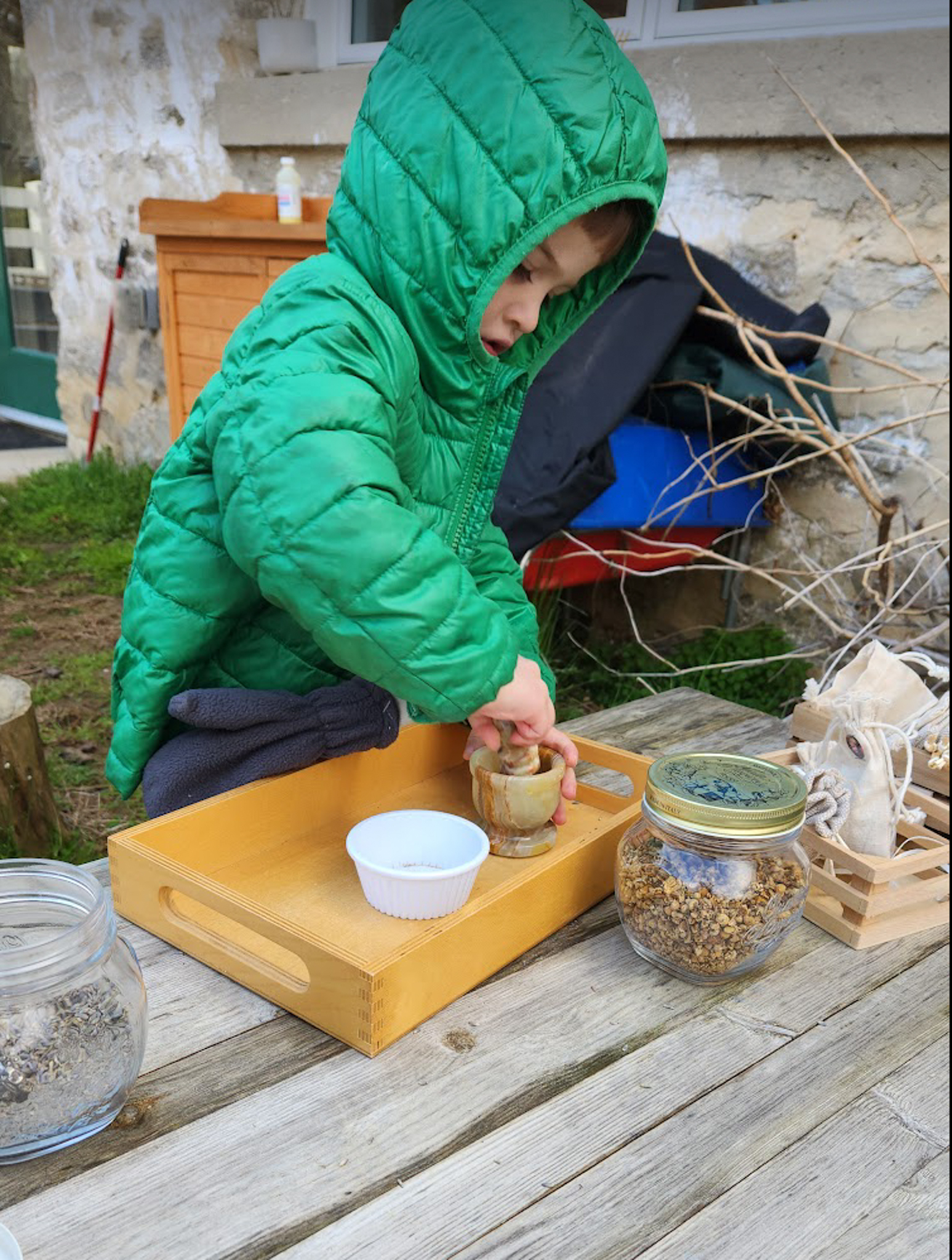
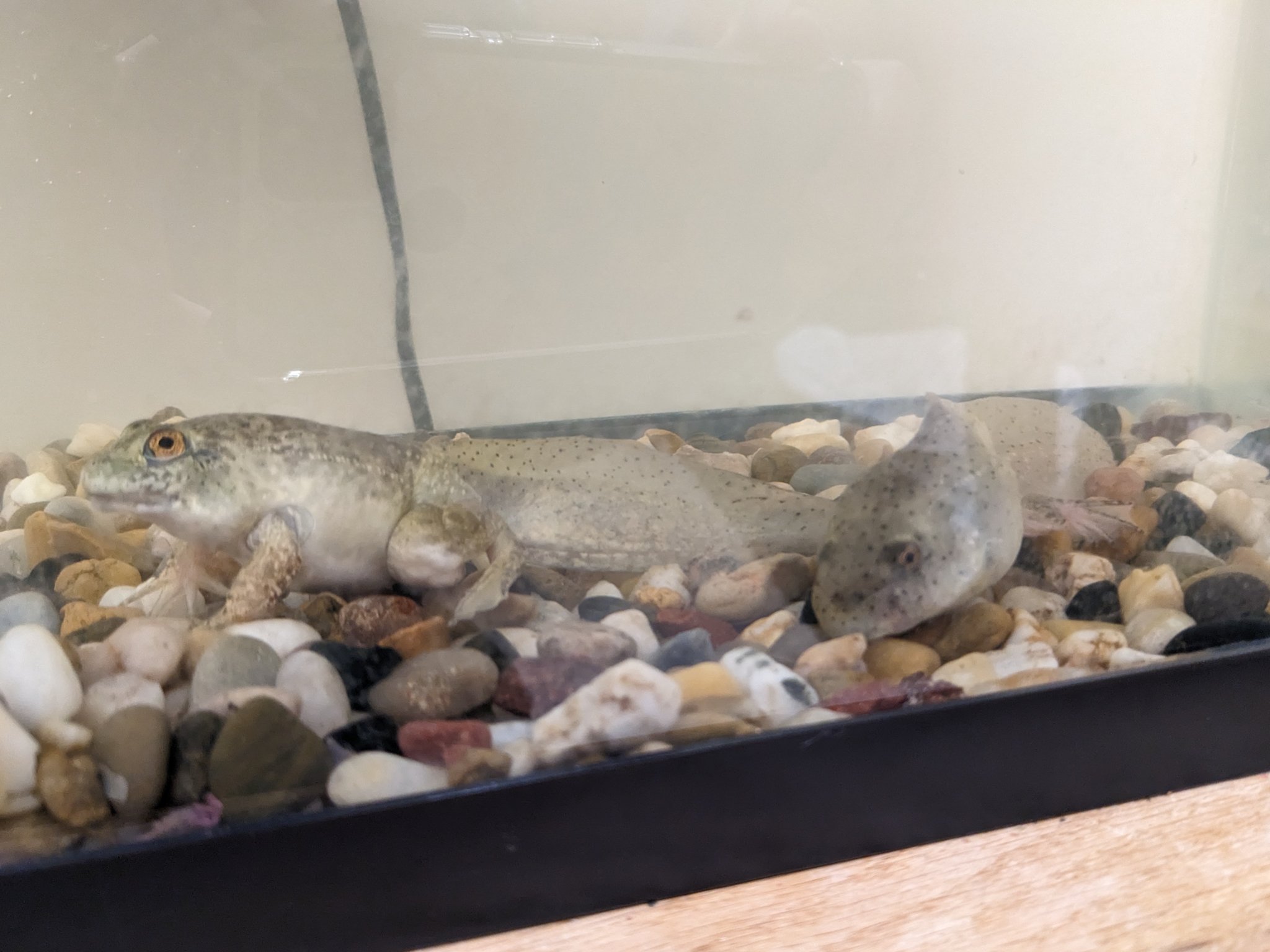
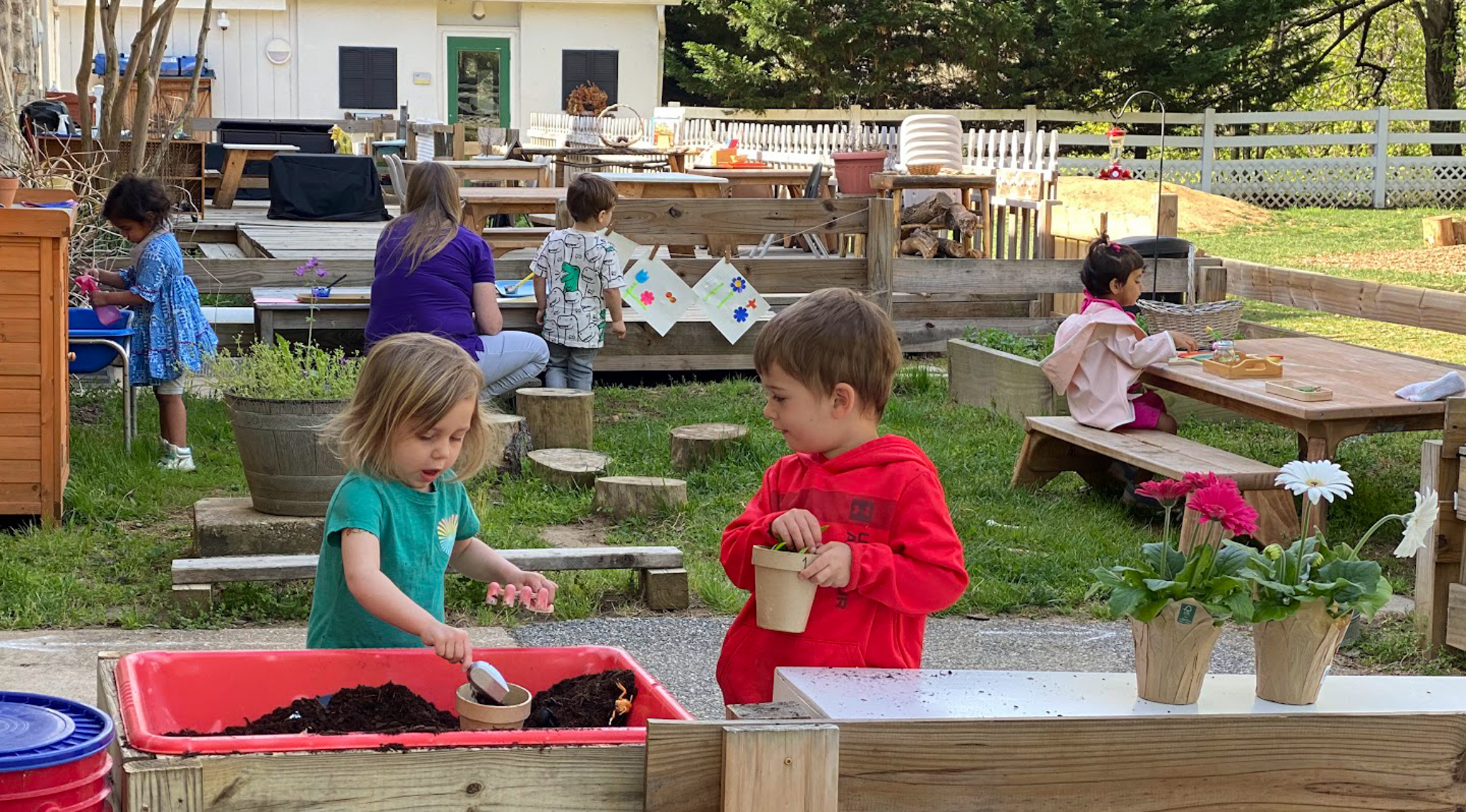
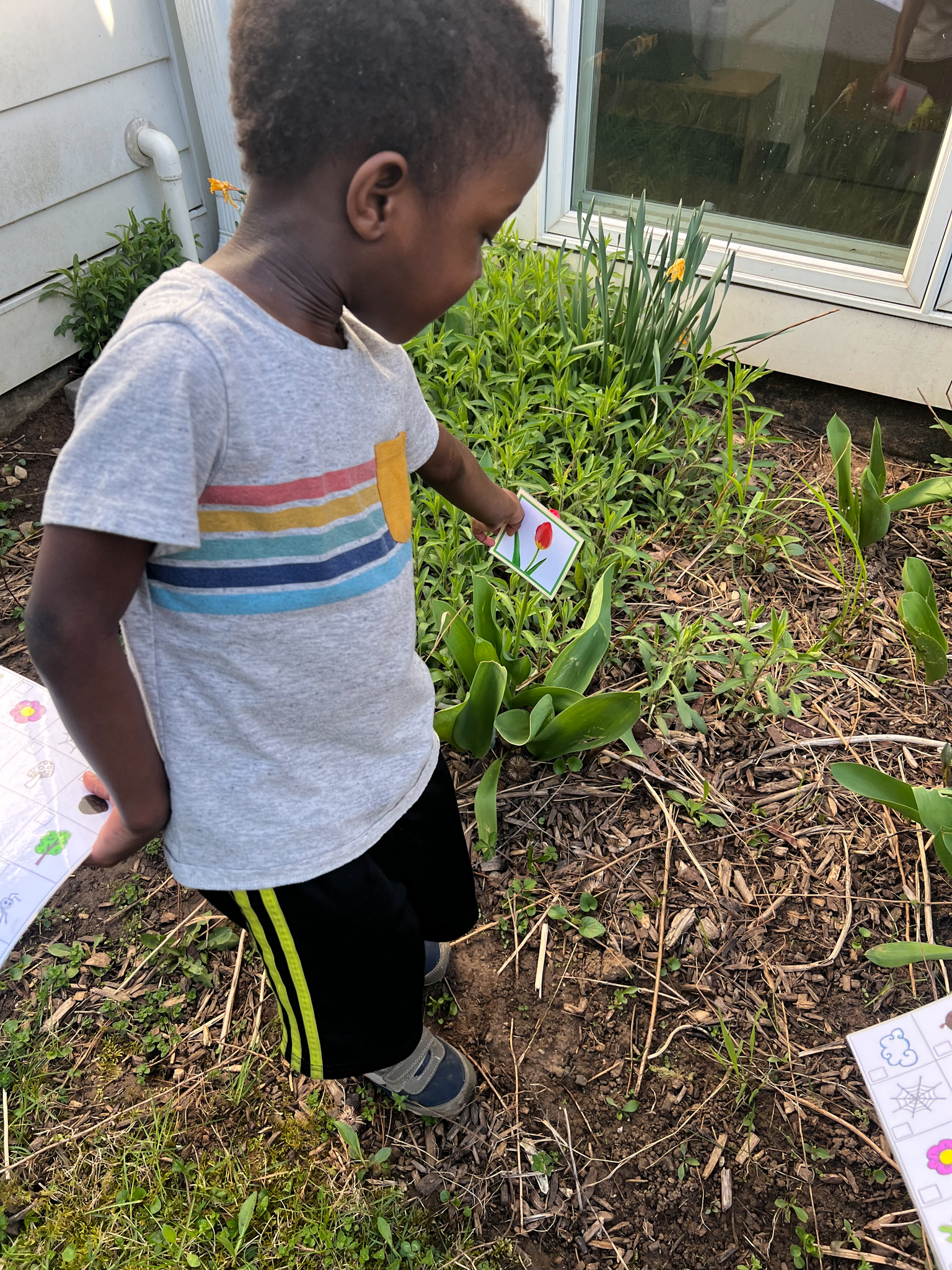
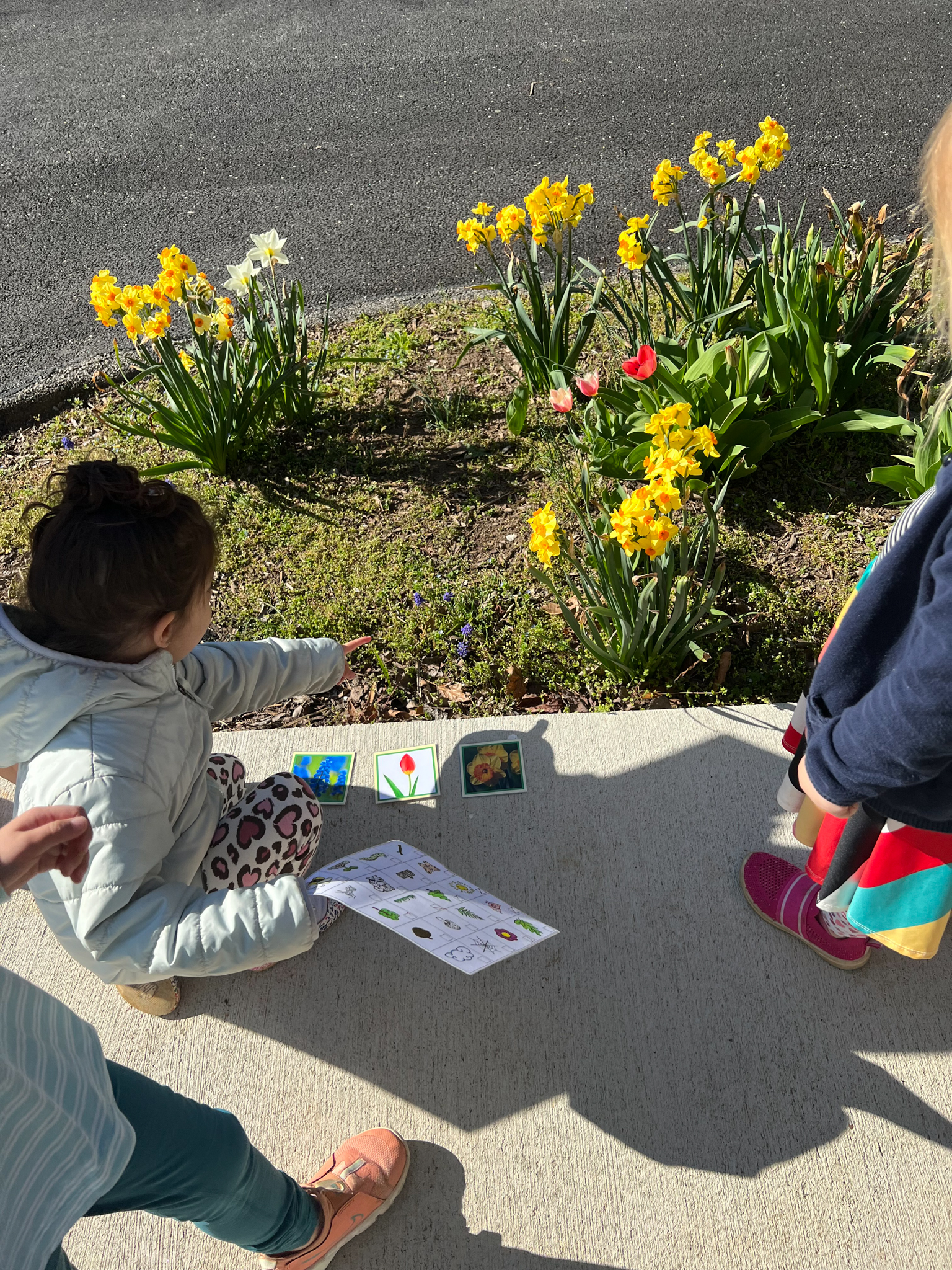
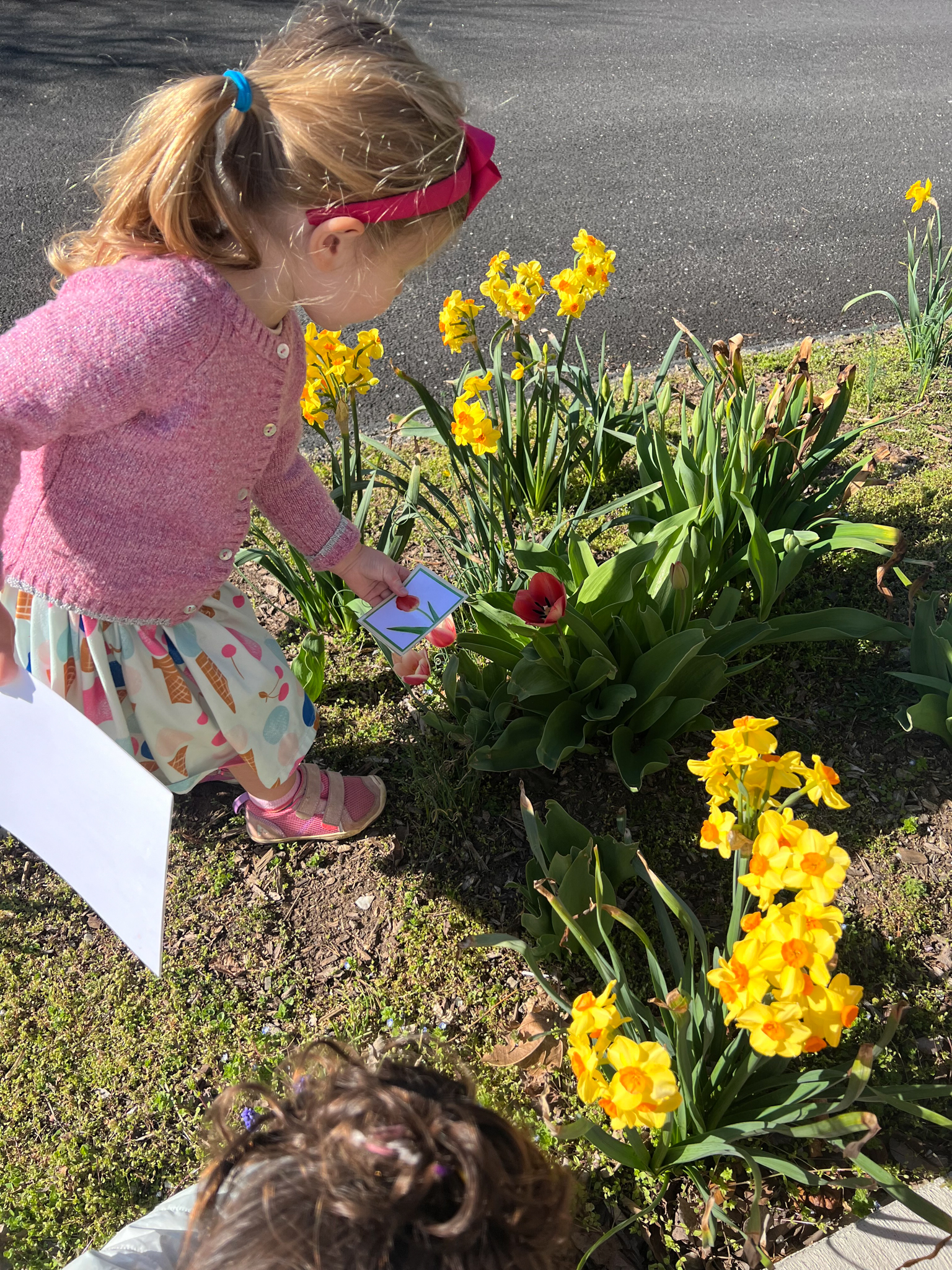
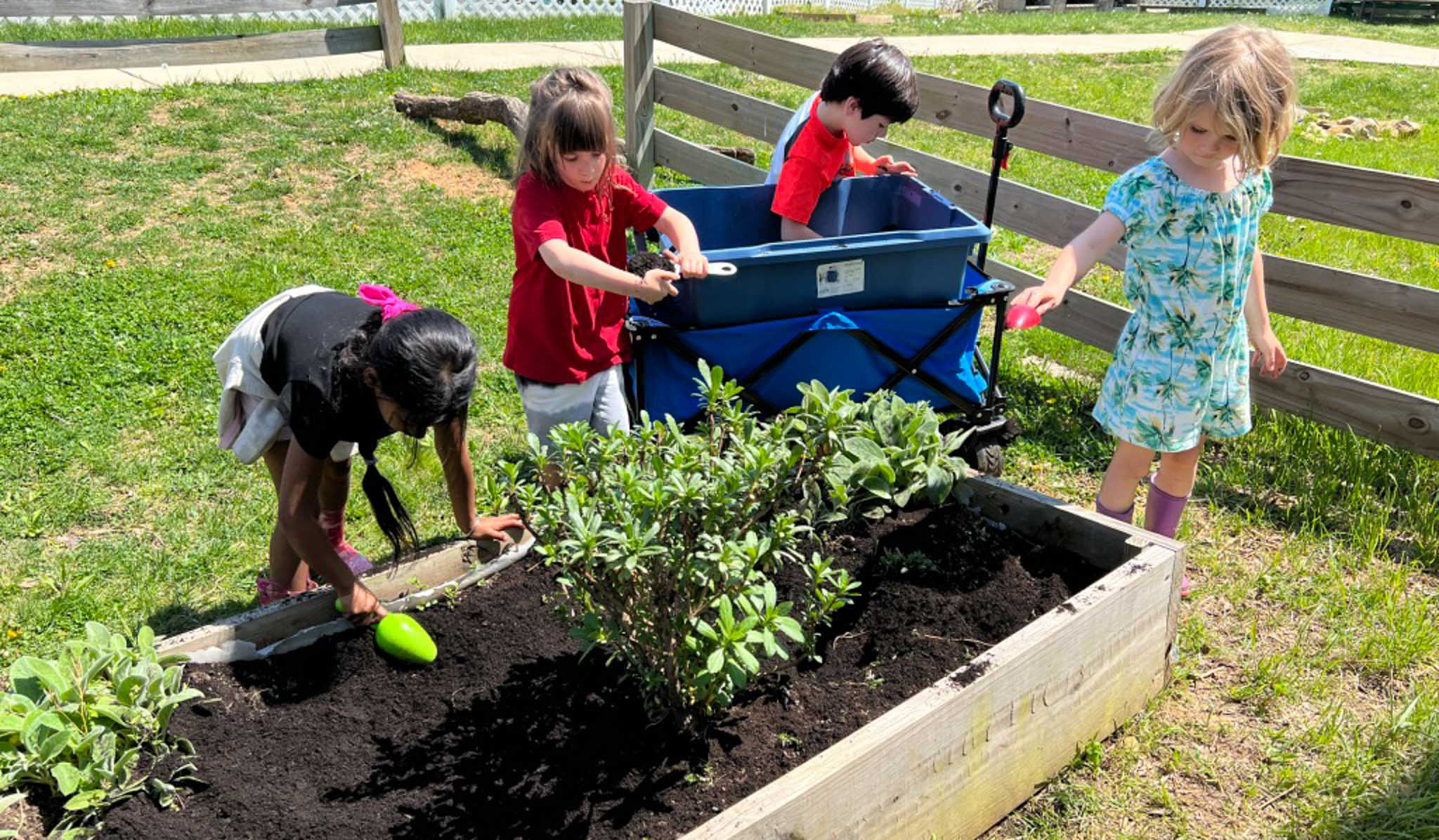
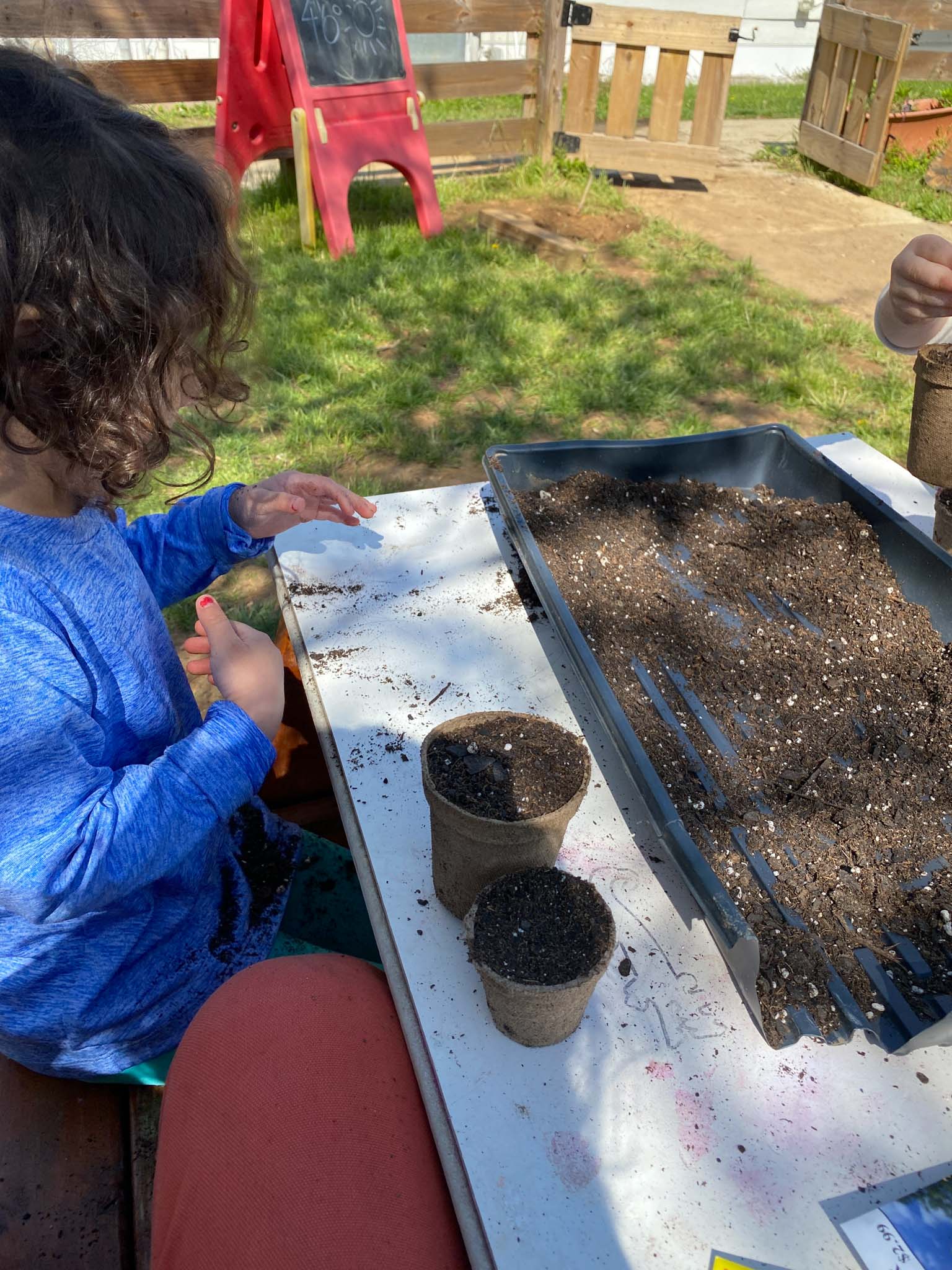
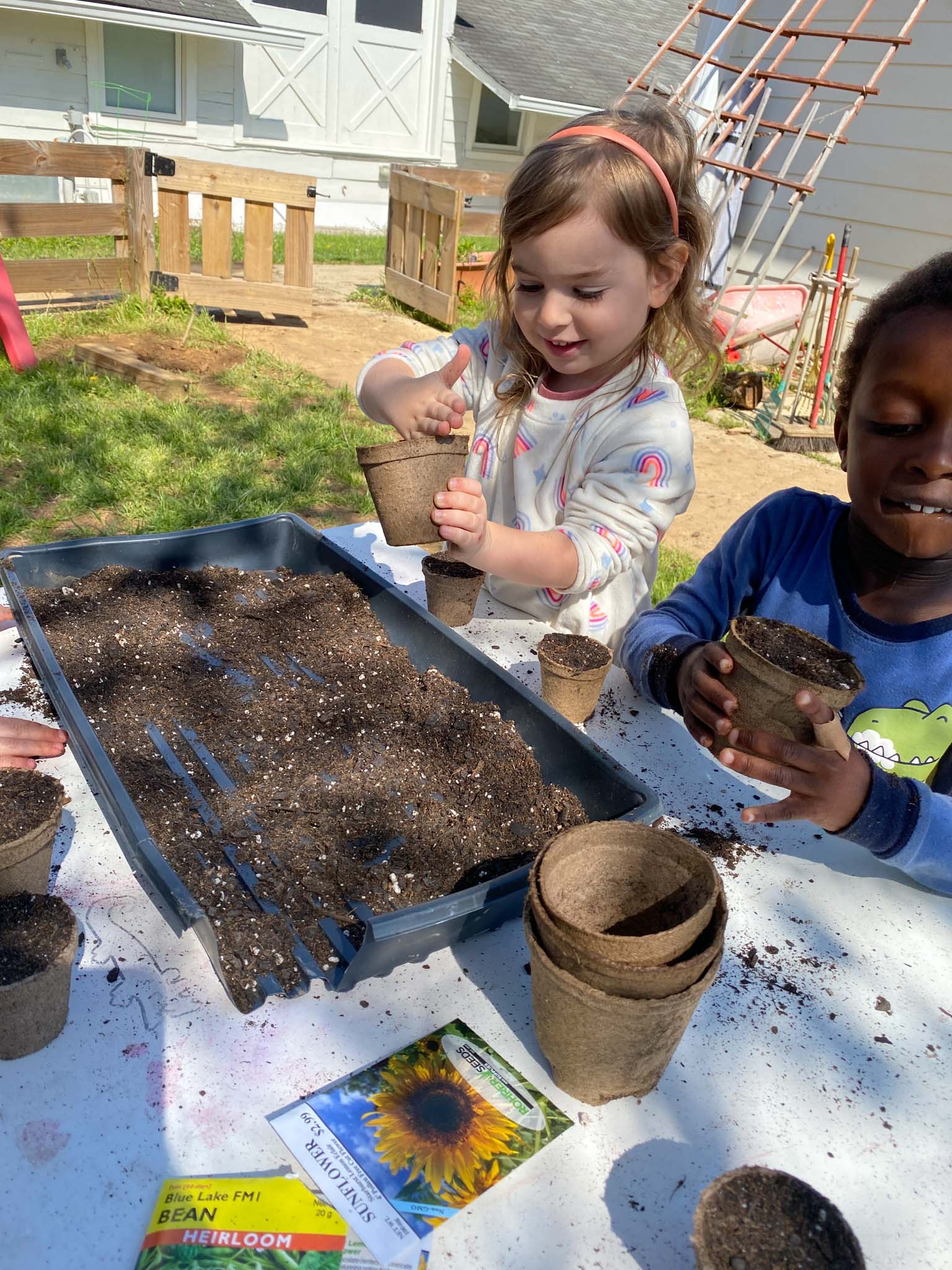
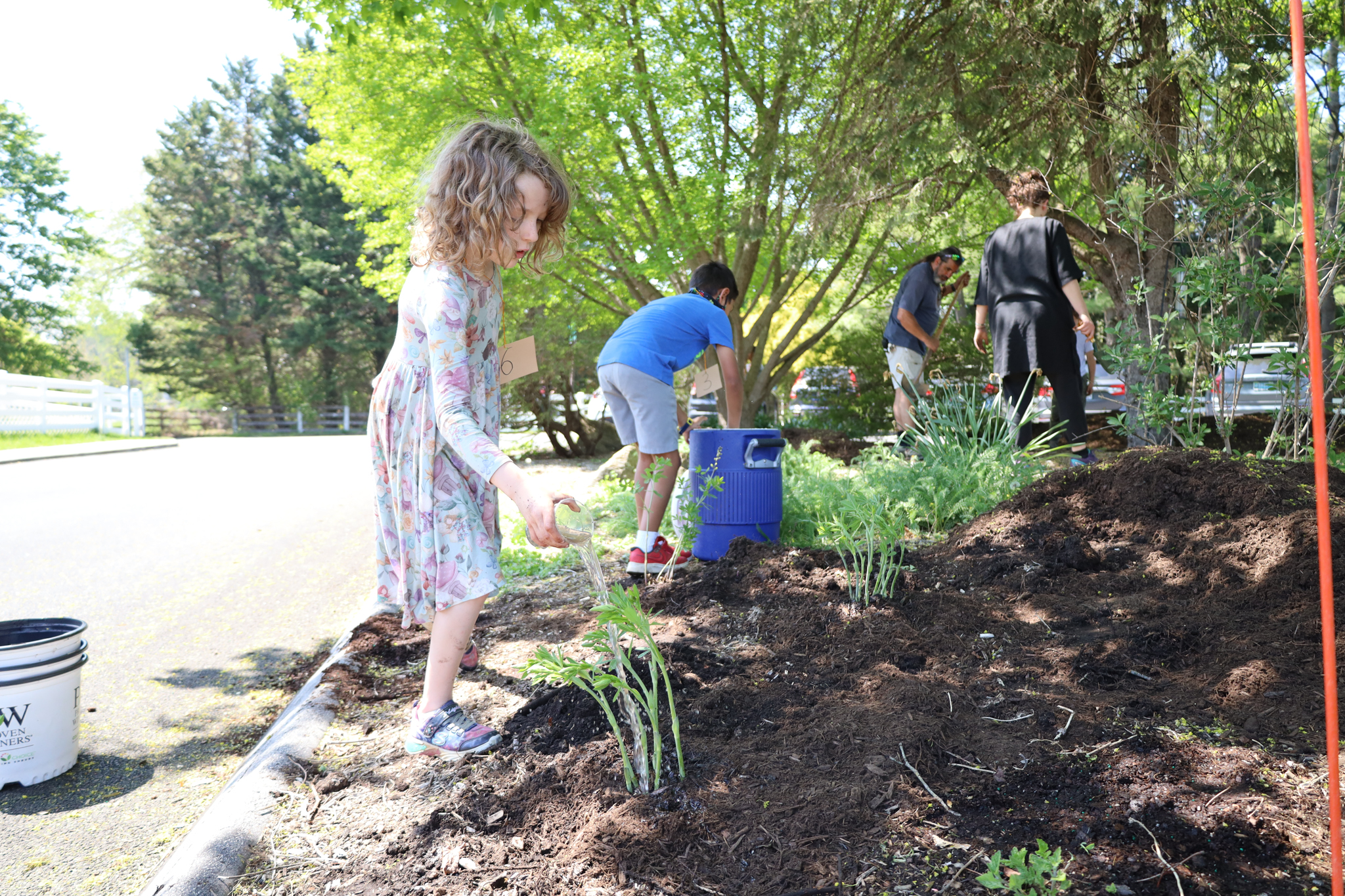
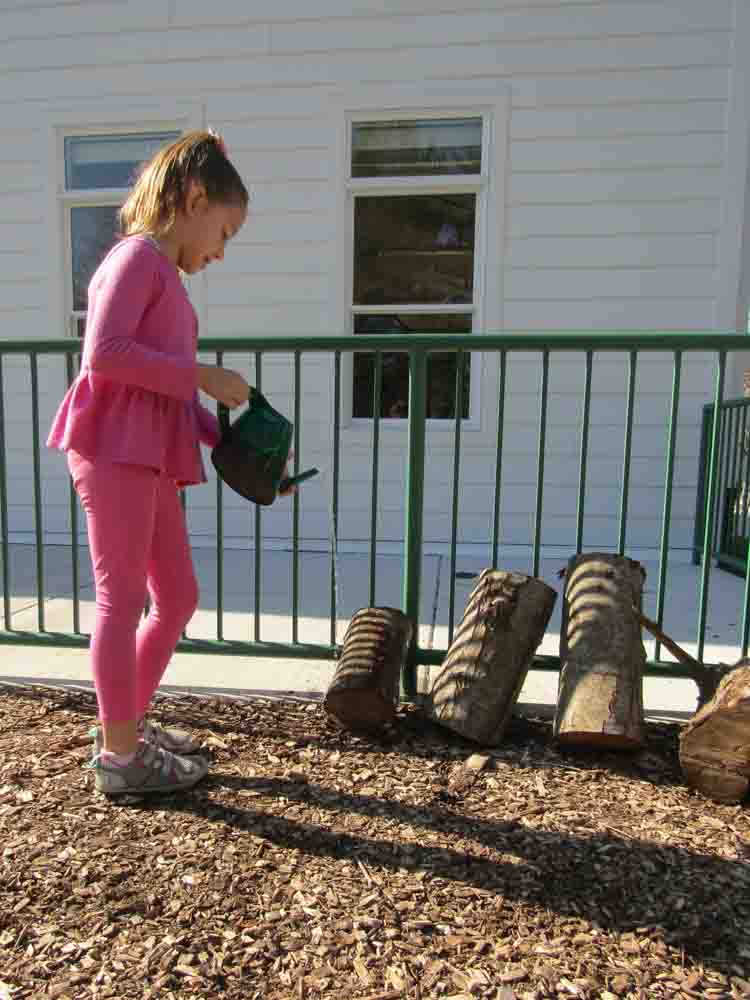
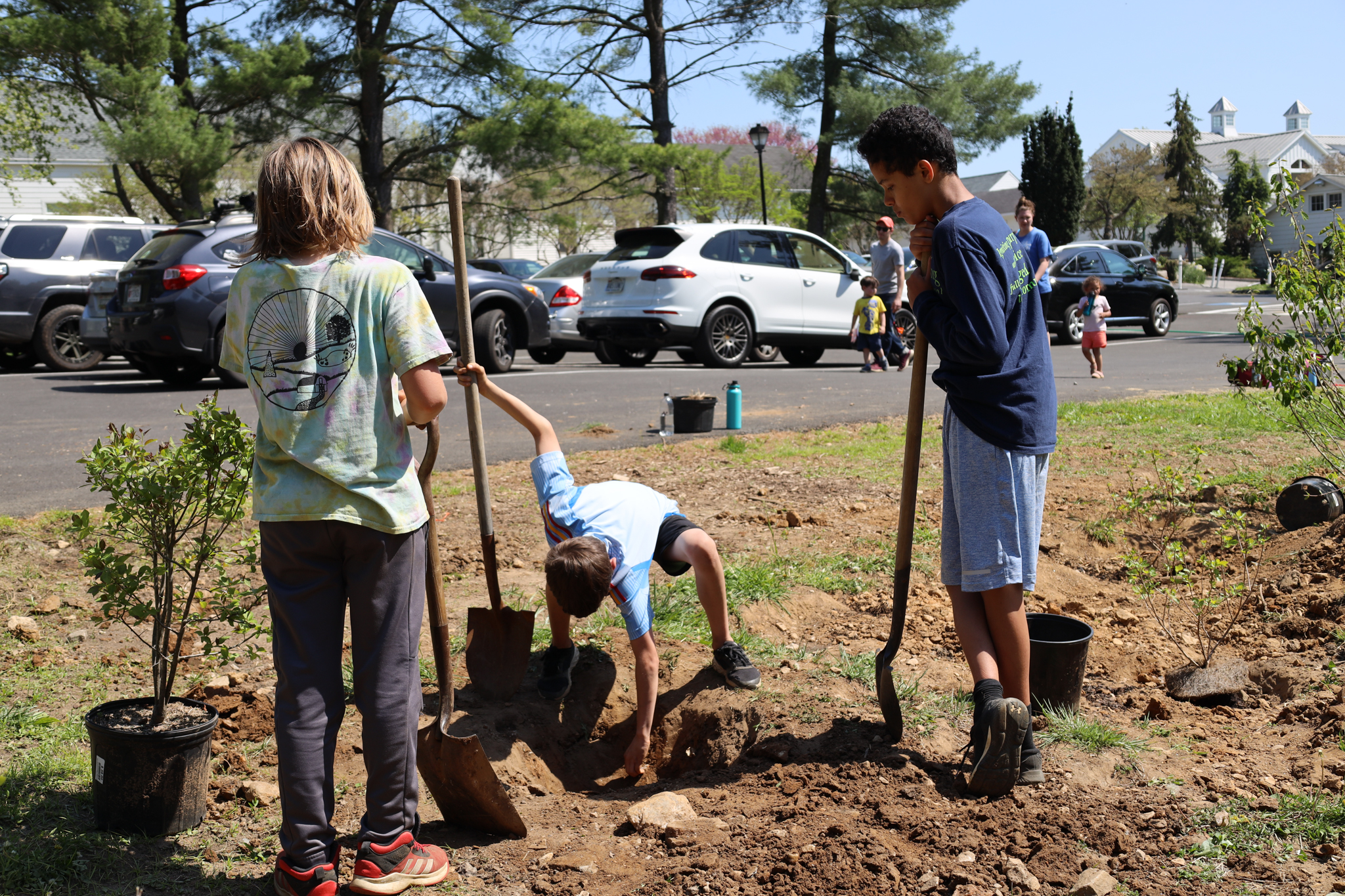
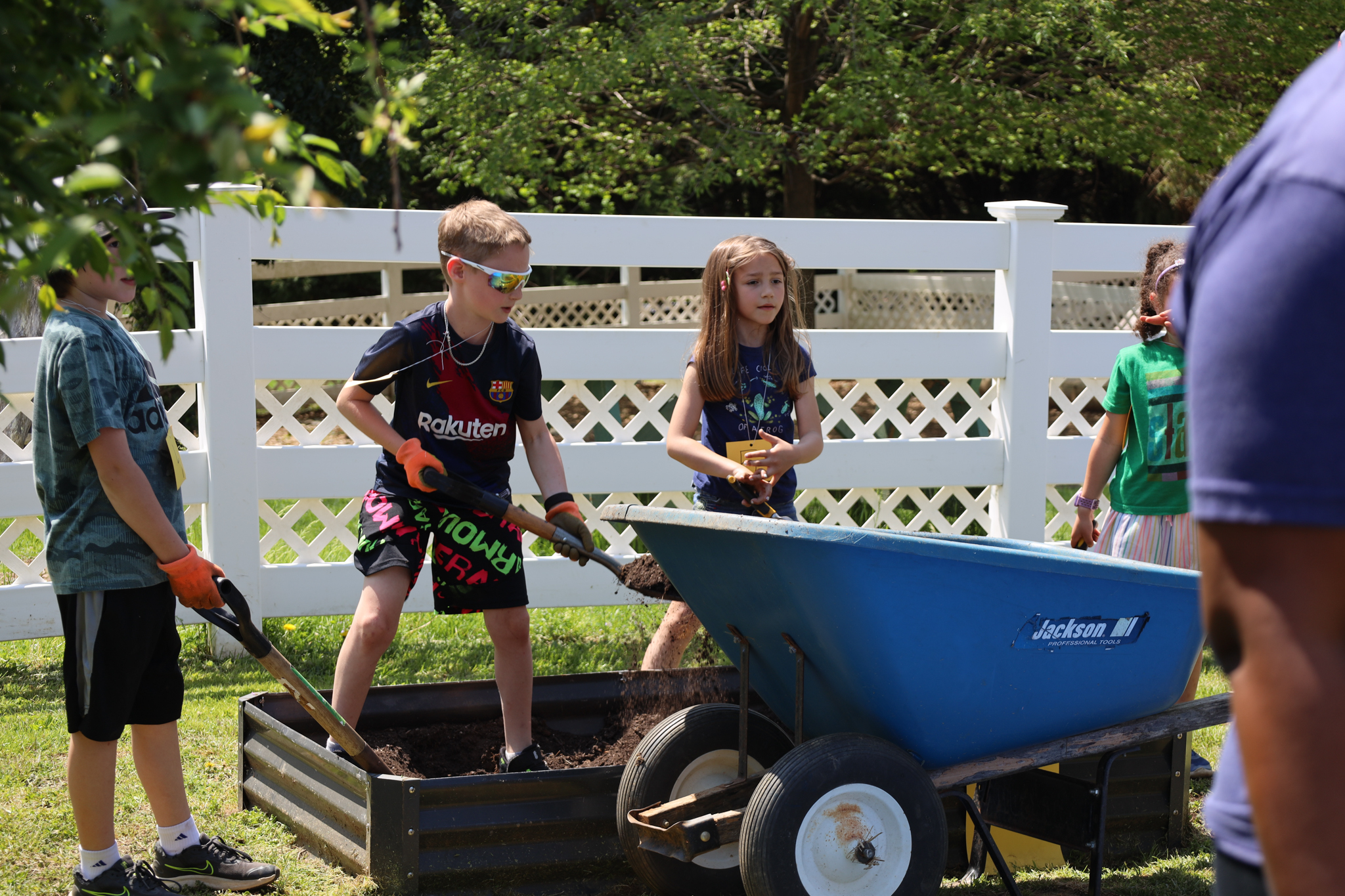
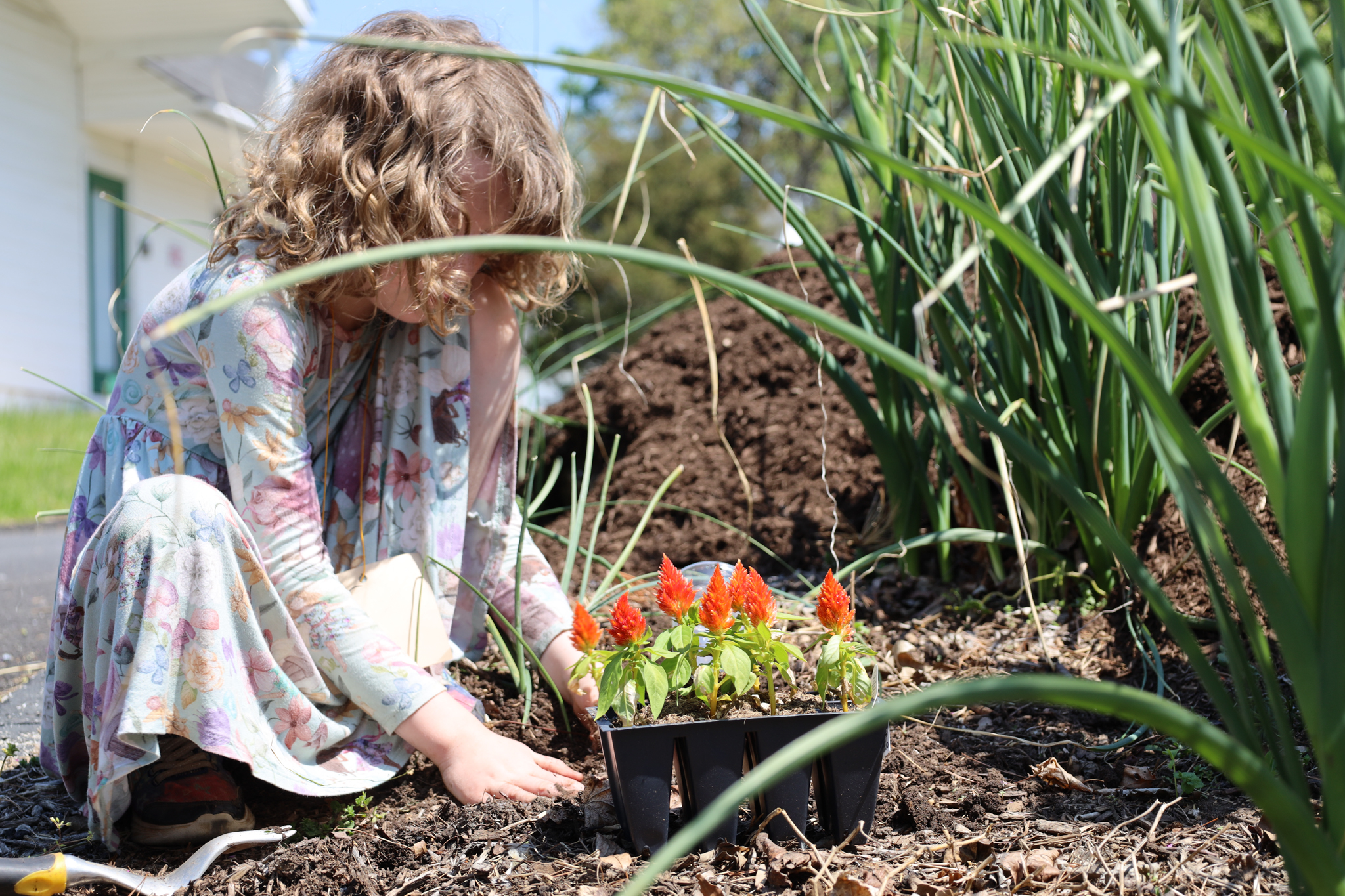
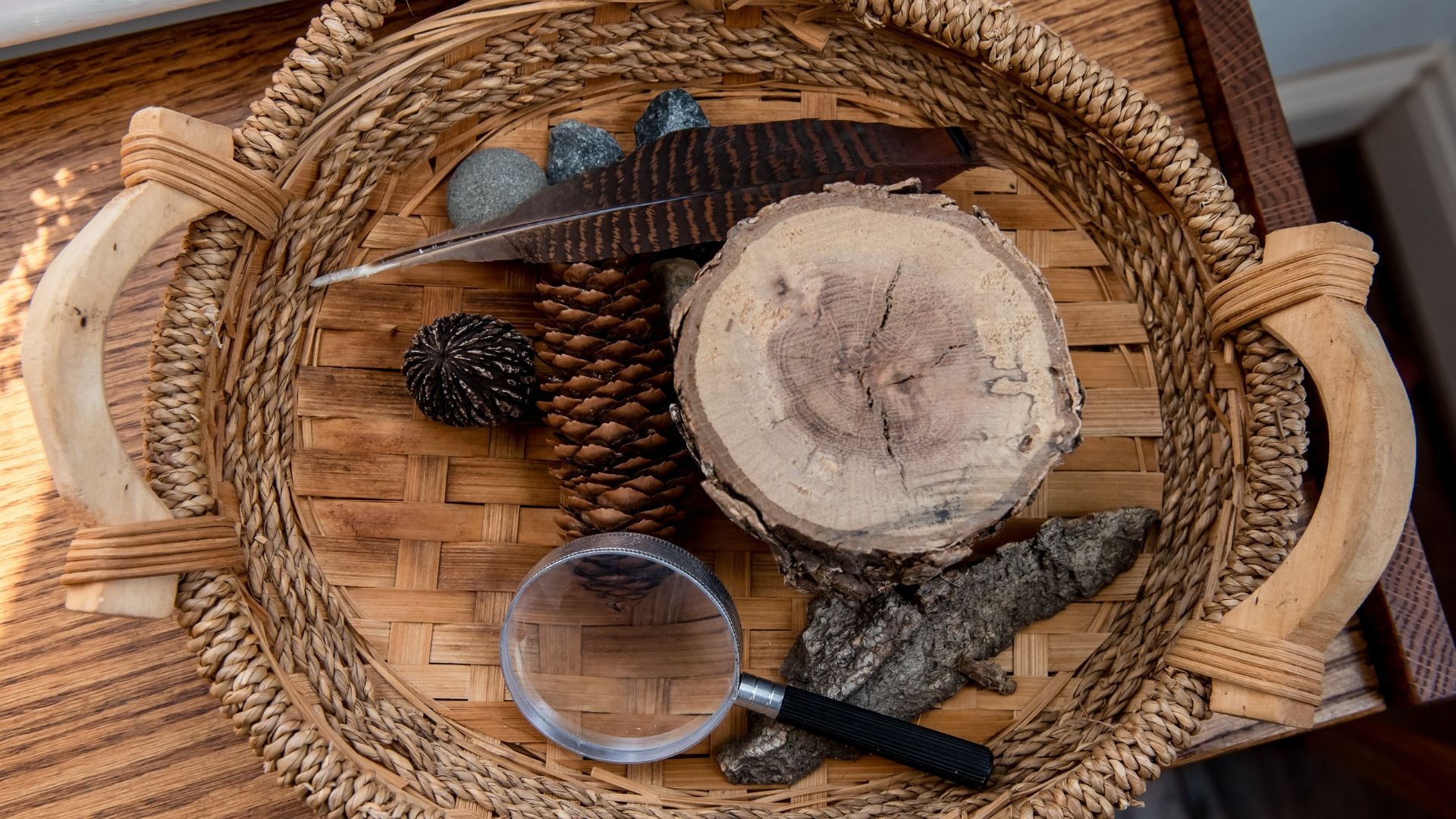
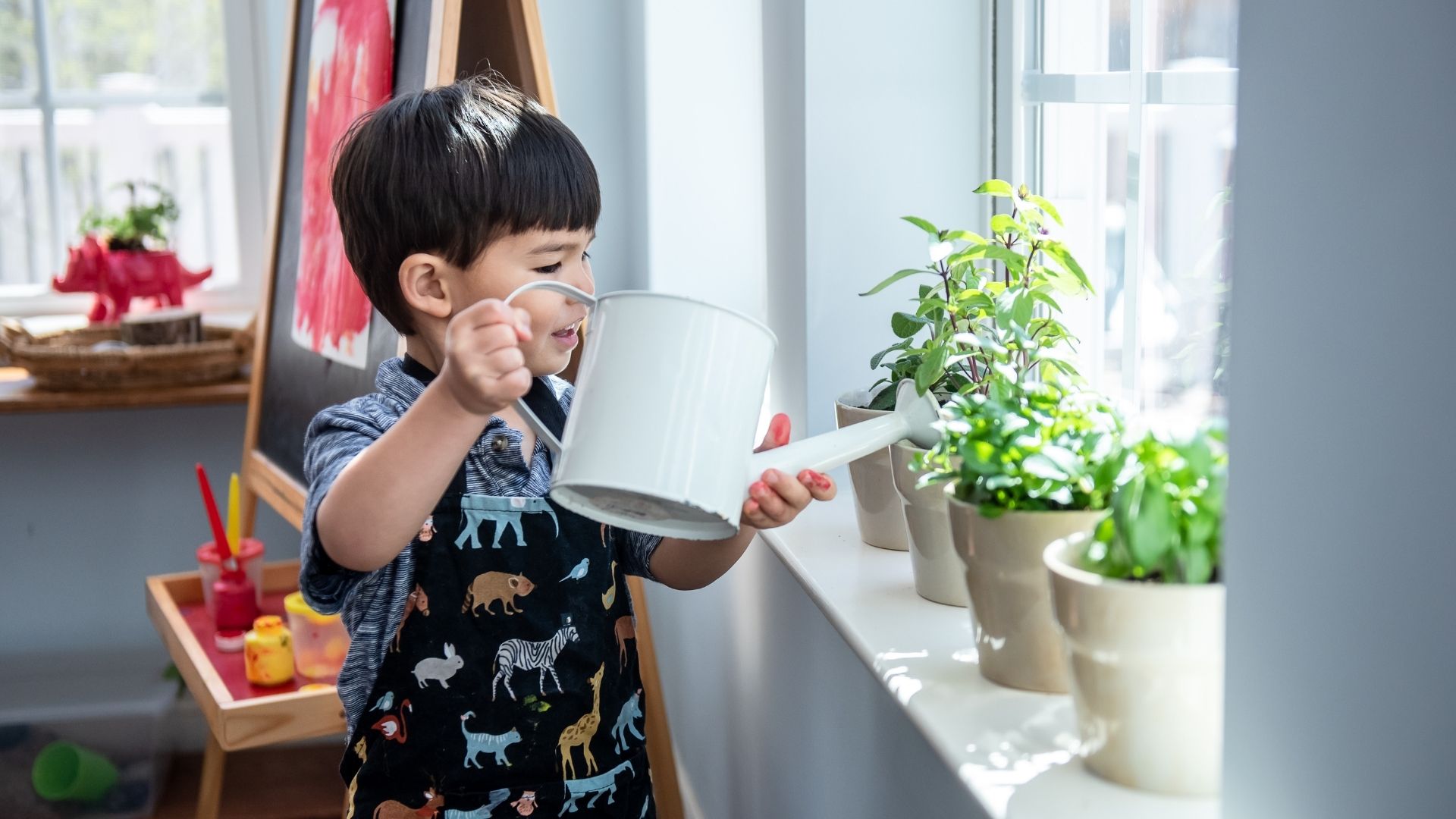
If possible, choose a room with natural light. House plants offer children a chance to take care of something, as well as add natural beauty to the room. Young children also love watching fish or other pets and they can learn to help feed and care for them as well. You might also consider setting up an outdoor play area where your child can dig in the dirt, water plants, enjoy sand and water play, and do messy art projects.
Every item has its place
Children have a sensitive period for order from birth through age five, peaking in early toddlerhood. You can see this through young children’s love for routine and repetition. Montessori environments support this desire for order by designating a specific spot for each material. In a play area, instead of a big toy bin full of many things, each toy has a space where it belongs on a shelf. Toys with multiple pieces, like blocks or play animals, can be organized in small baskets or trays on the shelf. You can even attach photos to each bin or shelf so that the child knows exactly where each toy belongs.
Provide a simple and beautiful space
Montessori spaces use more neutral colors and have very little hanging on the walls. What is displayed on the walls is carefully chosen and hanging at the child’s eye level. When choosing decor, choose artwork that is simple and thought-provoking for the child. Framed art hung at the child’s level can offer a peaceful feel to the space. Natural materials such as wood or wicker also offer a warmth and sensorial experience for the child. The goal is to reduce the visual stimulation of the environment so that the child will be attracted to the materials and be able to concentrate on their play and development.
Give it a try!
This might seem like a lot to think about, but you can pick and choose what works for your child and your home. You can experiment over time to see what works best. One of the most important pieces of Montessori philosophy is to take time to step back and observe. What do you notice your child is drawn to? Are there any spaces in the room that they are not able to access on their own? Feel free to “break the rules” and try new things in your space!
Photographs by Jen Snyder