Transitioning from the Toddler Community to the Children’s House
Written by Michelle Donohue and Kim McCaslin, Toddler Guides
“Thus it happens that at the age of three, life seems to begin again; for now consciousness shines forth in all its fullness and glory. We observe that a child occupied with matters that awaken his interest seems to blossom, to expand, evincing undreamed of character traits; his abilities give him great satisfaction, and he smiles with a sweet and joyous smile.” – Dr. Maria Montessori
Children grow and develop so quickly, and it is a remarkable and wonderful time of change as your child begins to look and act less toddler-like and more like a preschooler. They are getting ready to make the leap to Children’s House!
For any parent, the transition from the Toddler environment to the Children’s House environment may feel daunting. But rest assured that our Guides are here to make sure the transition goes smoothly. Because there are a few months before the transition to the Children’s House, there are a few things you can do now with your child to support their needs until school begins.
Socialization
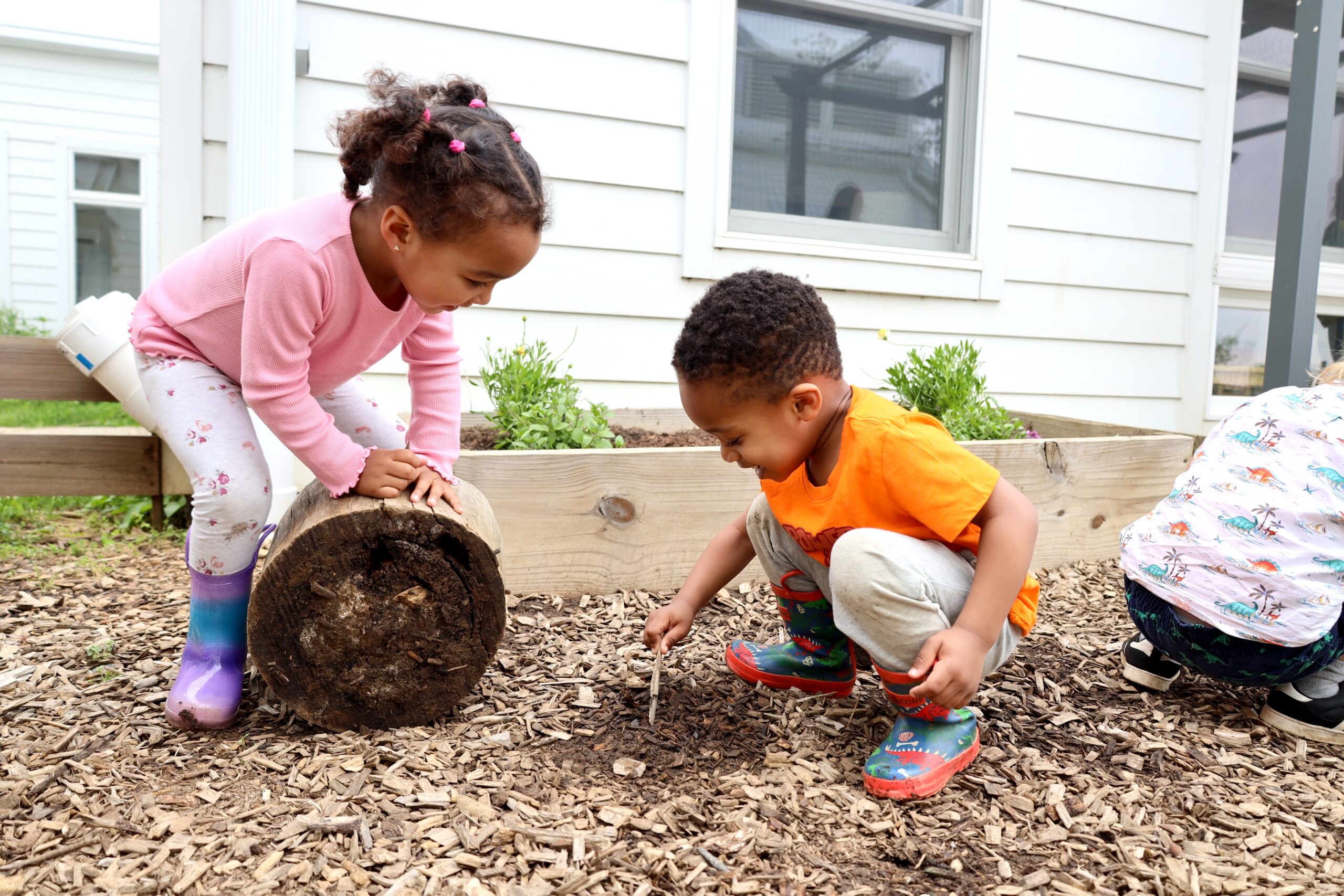
Socialization is still an important milestone for your preschooler, and the summer can be a great time to connect with other families so your preschooler can continue to build relationships with peers. Social events and playdates are encouraged. It’s so comforting for your child to see familiar faces on the first day of school!
Familiarity
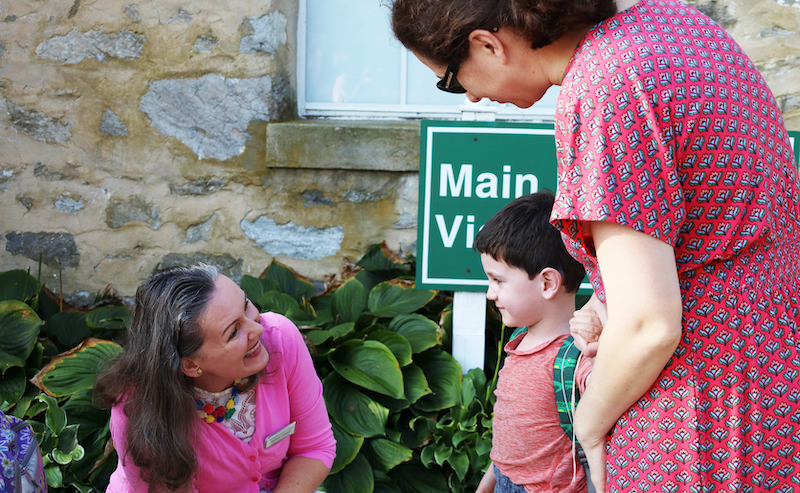
Start having conversations about the new classroom and Guides. You may want to visit the campus a few times during the summer months if your child is not already signed up for our Summer Program. We also host a classroom walk-through the week before school resumes so that your child can visit her new classroom, say hello to the Guides, and meet new friends. All of these strategies will help ease your child’s anxiety as we get closer to the new school year.
Practice
Your child has been building her concentration and strengthening her memory with work in the Toddler environment. Over the summer, you can continue to provide activities for them that have multiple steps and encourage your child to finish each to completion.
Food Preparation
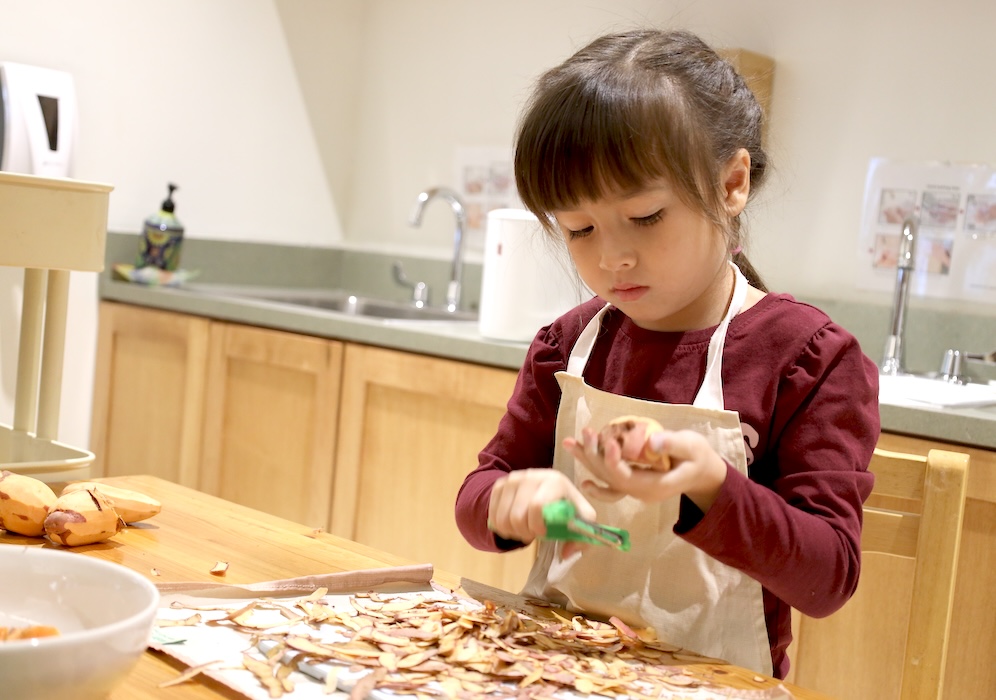
Our Toddler and Children’s House students find great joy in food preparation. You can extend this practice into the home by having your child help set the table and cook with you. Not only do they get involved and excited about cooking their own meals, but this work gives children practice with sequencing and helps strengthen their fine motor muscles that will later help with writing.
Dressing and Undressing
Your toddler has been practicing simple steps of caring for themselves including putting on their shoes and coats, dressing, and undressing. Plan a little extra time in the mornings and evenings to allow them the independence to work on these skills. In Children’s House, they will need to independently put on their socks, shoes, coats, and other clothing items.
Memory Games
Memory games are fun to play, too! Gather things around the house and ask your child if they know where they belong. This game continues to establish an internal sense of order. Other great games include naming rhyming words, practicing the sounds that letters make, and “I Spy.” And don’t forget to sing and share stories with each other! (You can talk about sequence – which comes first, second, and last. For example – the seed/sprout/plant.)
Care of Self and the Home
Children love taking care of the home, such as dusting, vacuuming, washing windows, feeding the pet, and helping with laundry. These are activities they will continue to practice during her time in Children’s House.

Toileting
One of the requirements for our Children’s House program is that the child be fully toilet independent. This means that the child is able to identify when they need to use the bathroom, pull their clothes down, wipe clean, and re-dress themselves. To support families in this transition, Toddler Guide Danuta Wilson led a webinar on working with your children to enable them to become toilet-independent – Watch the webinar here. We also have a helpful blog post on how to setup your bathroom for your child’s independence here. We encourage you to be in partnership with your child’s Guide in the spring months around toileting efforts so that your child becomes fully independent in the early spring and the skills are solidly in place before the end of the school year.
Connect with your child’s Guide
Your child’s new Guide will call you over the summer to learn more about your child and answer any question you may have about the transition. The first few weeks of school your child will have both emotional and social support from the Guide. As in the Toddler community, there will also be support with separation if needed. One of the perks with a mixed-age group is that the older children will help show the younger children what the expectations are of the classroom. And you can expect your child to come home very excited about all exciting work they are doing!
Learn more about Greenspring Montessori’s Children’s House program here.
Learn about the Children’s House Curriculum
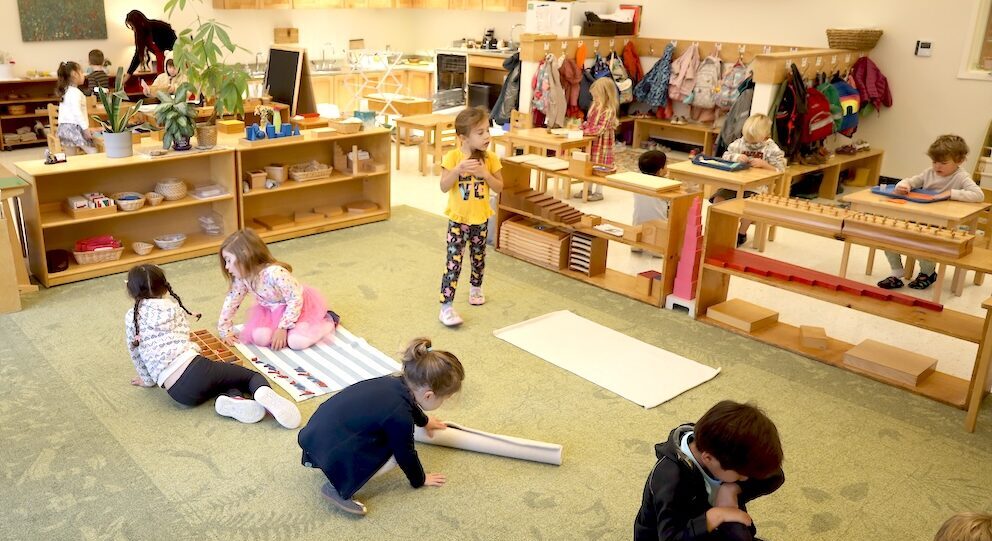
The Children’s House classroom will offer your child a new environment to meet and challenge them. They will be among a larger group of peers and they will have many new and inspiring materials that build upon their experiences in the Toddler Program.
Practical Life
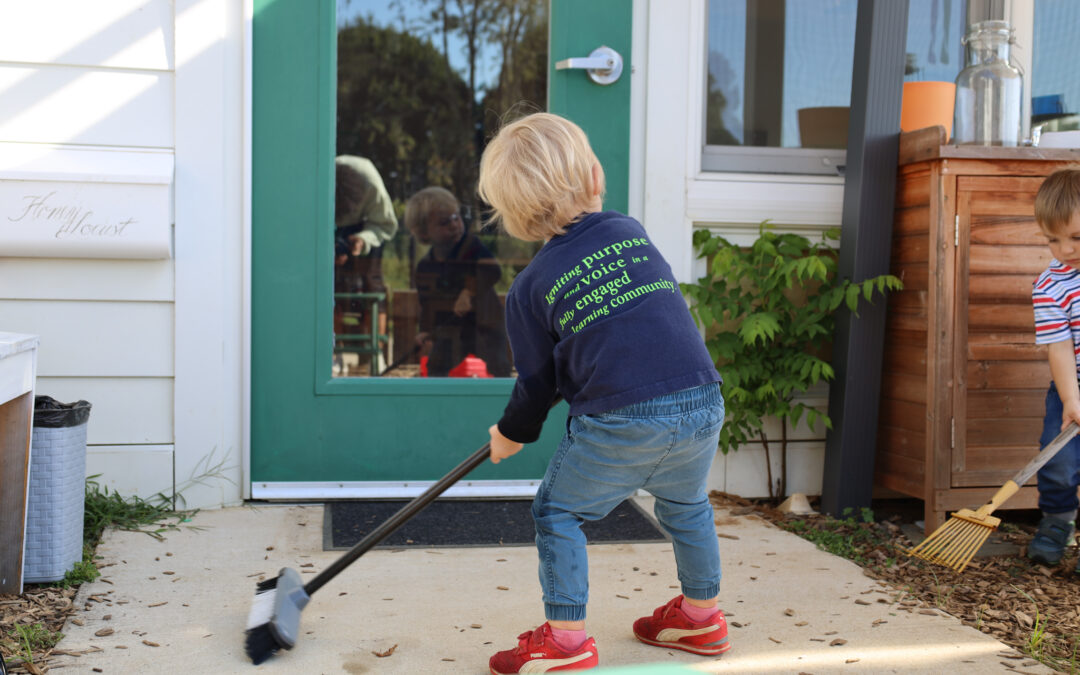
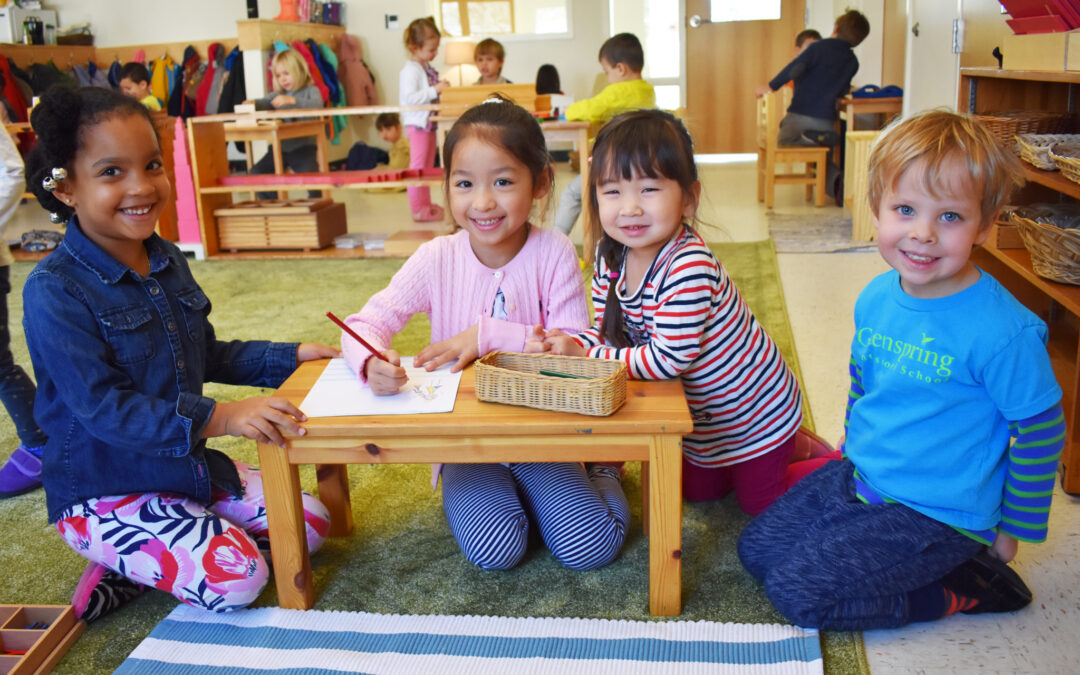
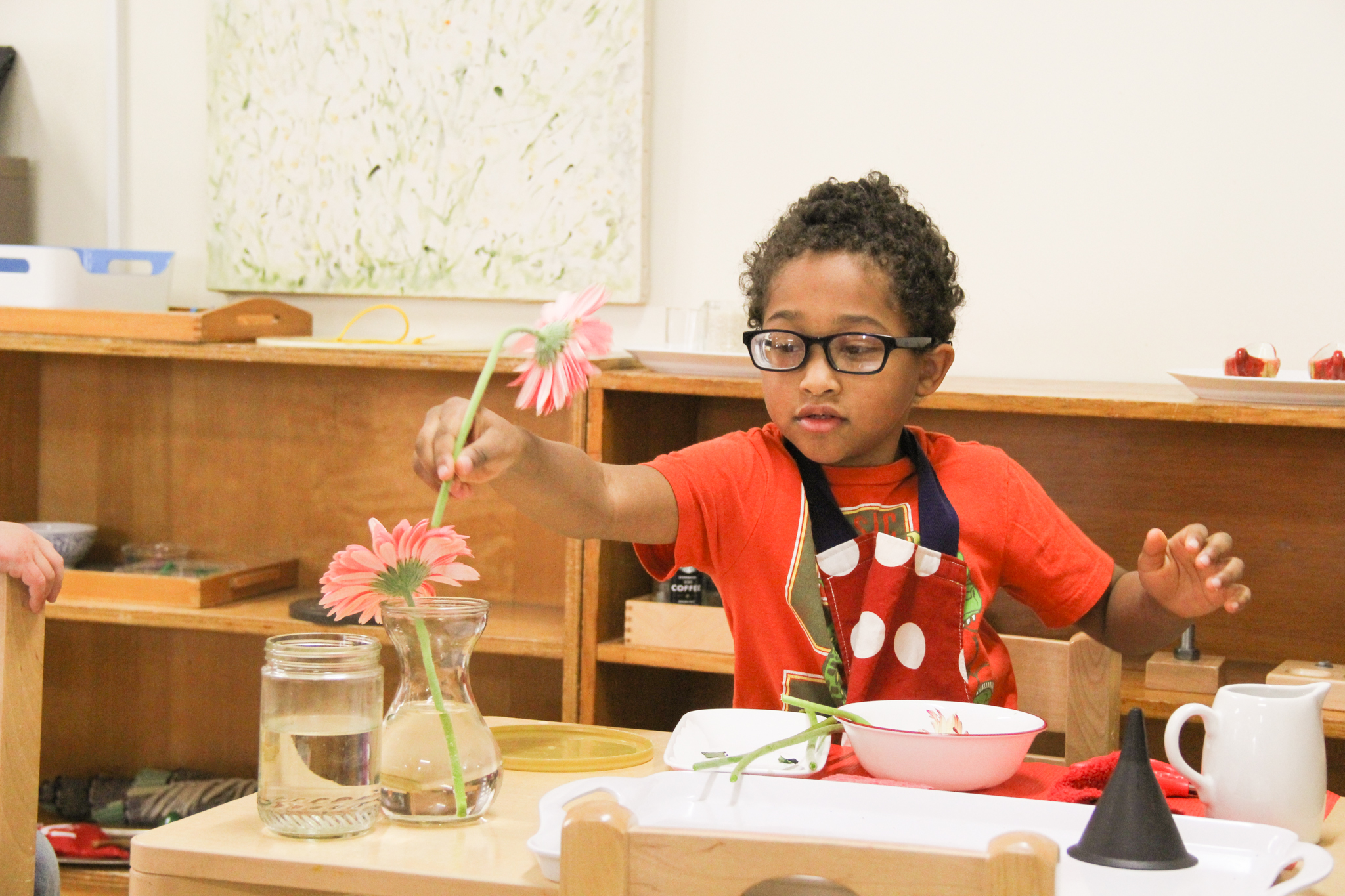
Practical Life and Sensorial exercises are a large part of the Toddler Montessori curriculum and are present in the Children’s House classrooms as well. Students coming from Toddler classrooms are very familiar with these works and the manner in which they are presented. This familiarity helps the children quickly become comfortable in their new classrooms. Some familiar Practical Life works include pouring, sponge transfer, spooning, and tong activities. Care of the environment is also familiar, with works such as window washing, cloth washing, cleaning up after lunch, table scrubbing, and caring for plants. All of these works are present in Toddler classrooms but are expanded on in Children’s House.
Sensorial Materials
Sensorial exercises are introduced in the Toddler environment, including color matching, smelling jars, observing various sounds in the environment, and tactile works such as sand, soil or water. Work in the Children’s House expands on this knowledge and adds materials not present at the Toddler level including the Pink Tower, the Brown Stair, Red Rods, and Fabric Swatches. The children feel comfortable and ready for these new materials because of the foundation they built in the Toddler environment.
Language
Children ages 3 to 6 are in a sensitive period where their language skills grow astronomically. The Children’s House environment provides a rich spoken language environment which opens the door to later writing and reading. During their three years in the program, children explore grammar and syntax through a variety of materials to introduce writing, reading, and the parts of speech.
Math
Children in this plane of development learn best through concrete, hands-on exploration. For this reason, all mathematical activity in Children’s House makes use of concrete materials that allow them to explore a concept.
Geography
Unique to the Montessori classroom, the geography curriculum introduces the child to physical geography with concrete hands-on materials that emphasize the area from a sensorial perspective. Cultural geography is introduced through images and stories of their culture and other cultures around the world.
Science
Like in the Toddler classroom, children’s natural curiosity is stimulated through discovery. Children observe daily in the classroom and outdoor environment, with many lessons that connect back to the world around them. Science study in Children’s House provides an introduction to logical thinking with lessons that allow children to observe a phenomenon and relate it to others.
Art and Music
The Montessori Children’s House program sees art as a continuing process in conjunction with the day-to-day work. Children work at their own pace in the classroom using a variety of media to stimulate choice and innovation. Singing songs is a daily activity that encourages children to develop memory, language, pitch, rhythm, and movement. This expression of joy brings the children together as they build early musical skills, including rhythm, volume, and tone.
Spanish Enrichment
In Children’s House, our students work with the Spanish Enrichment Guide during the week. Children explore Spanish using songs, games, finger plays, stories, and short activities to build vocabulary and expose them to the Spanish language.