
For those of you who do not know me, my name is Kimberly Zerfas and I am the Director of Marketing at Greenspring. I am also the mom of an exuberant 18-month old who will be joining the Young Toddler Program in the fall. Two months ago, our life was very normal. Our son was at a traditional daycare and we were beginning to lay the groundwork for his Montessori education. I never would have expected I would be working and parenting from home for months amid a global pandemic.
Now, our days look very different. Amid working remotely and my husband teaching public school online, we are now also responsible for our son’s education and care during those same waking hours. We’ve learned a lot through trial and error, and through books, articles, and just about any means we can get our hands on now. From feverishly scouring the internet on ways to get a toddler to eat to re-evaluating our thoughts on screentime because our son is so in need of any human connection – we’ve been there.
Some days are harder than others, but there have been a few things we’ve learned that have kept things moving along smoothly in our small corner of the universe. In our efforts to cope during these times, we’ve naturally begun adapting a Montessori approach at home. I’m going to dive in to some of the things that have worked, that haven’t worked, and the things that keep us sane during this time.
Before jumping in, I want to take a moment to acknowledge how truly privileged we are during all of this. We live in a two-parent household where we are both able to work remotely while sharing the division of labor. Our employers are flexible with our working hours and are constantly checking in to see what we need and understand what we are experiencing. We have access to greenspace and a number of child-friendly resources that were already in our home. We also have a working knowledge of child development from our careers, as well as a network of other educators to bounce ideas off of. We understand that each parent is going through this collective experience in a different way and not everything that has worked for us will work for you. That said, this is what I’ve observed these past five weeks.
Keeping to a routine
We have been firm believers in a routine for our son since he was born. But since we weren’t with him most days, we didn’t have a set structure for his waking time. On weekends, we would often go out to do things – going for a hike, going to the grocery store, taking swim lessons – anything to avoid boredom. So when the world basically shut down, we were left wondering, what do we do?
At first, we were determined to do a lot of education during those waking moments – learning words, reading books, sorting colors. This quickly diminished into survival mode, and our son actually showed us that he had more of his own internal sense of routine. When we scaled back to look at what pieces of a routine were absolutely necessary, it ended up matching closely to what is done in a Montessori toddler classroom. We focused first on his needs – we observed him to see when he needed to eat, when he needed to go to the bathroom (we are working on toileting – more on that later), and when he needed to sleep. We took our cues from him and then wrote out what seemed to be working best. Now, for about three weeks we have been following this schedule for basic needs.
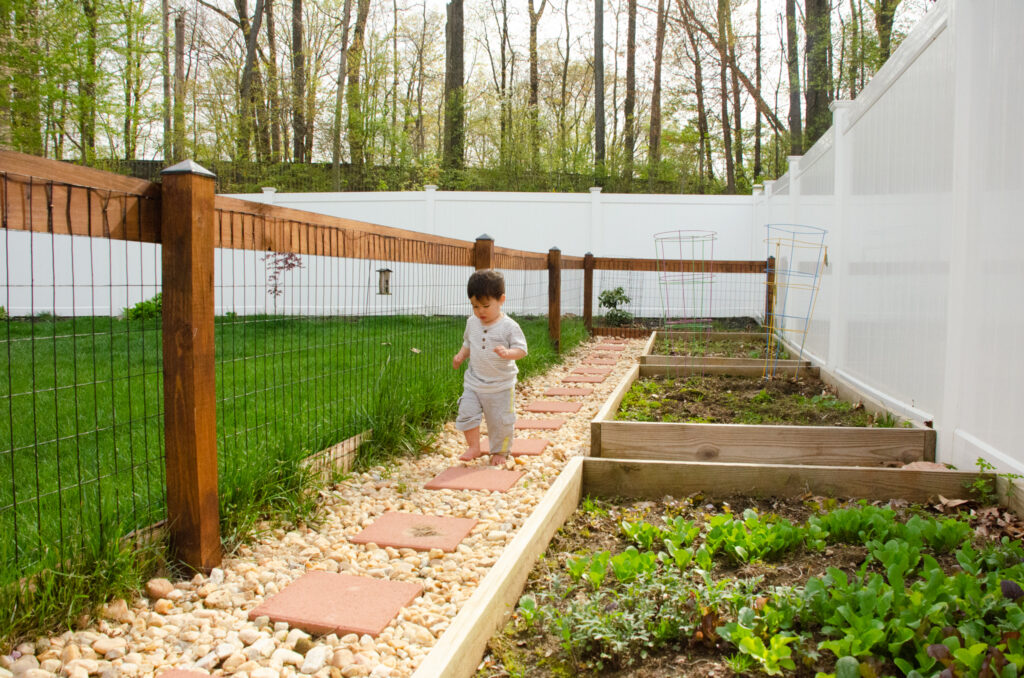
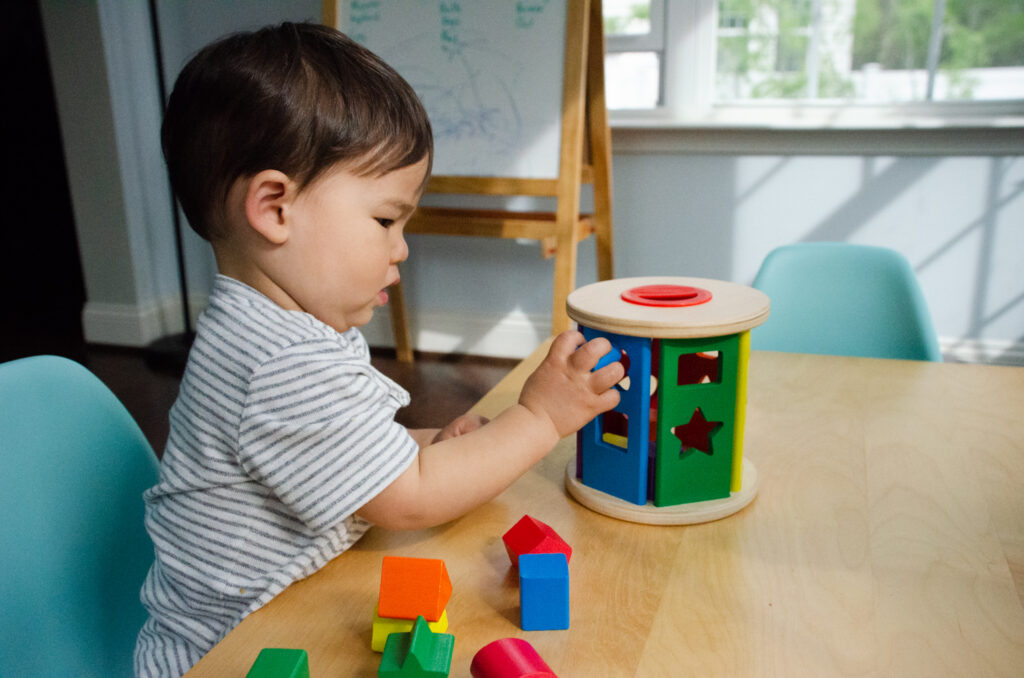
In addition to that schedule, we determined that there were a few other things we wanted to focus on during this time: outdoor time, human interaction, and independent play. So, we returned to our schedule to intentionally add in when we would go for walks around the neighborhood, enjoy free time outside, and provide opportunities for him to see other people (even if it meant being on a screen). We also set up a space for him to work independently – bringing up an unused end table from our basement and a few child-sized chairs. Having this space did so much for his desire to sit for longer periods with a toy or something that he was interested in. It doesn’t always mean that I am able to finish the dishes or craft an email – raising him is still very much hands-on – but we can see how it is helping with his concentration and independence.
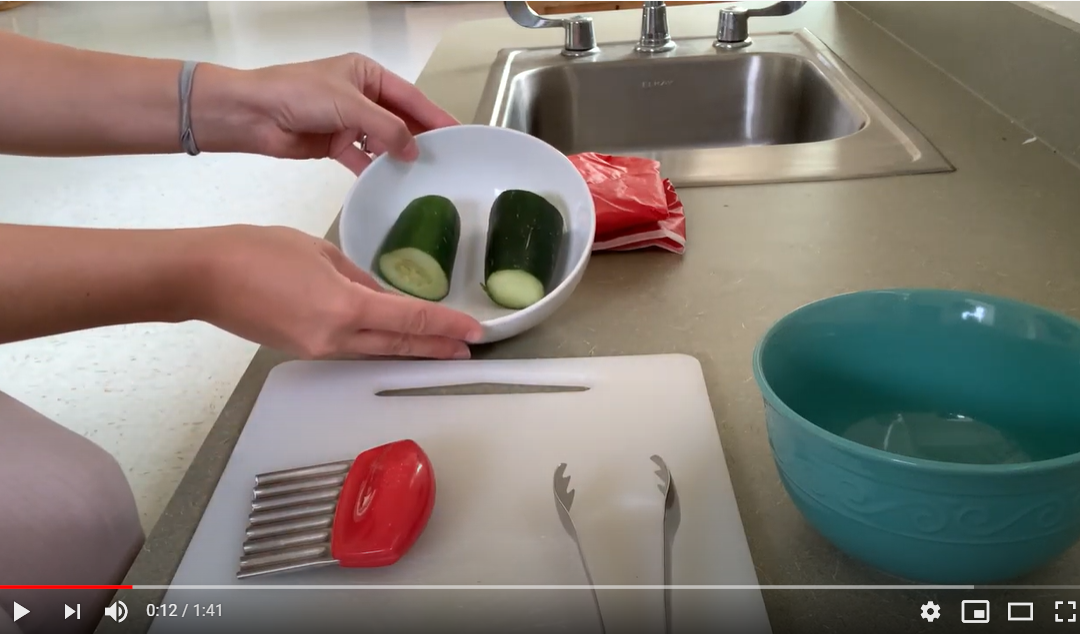
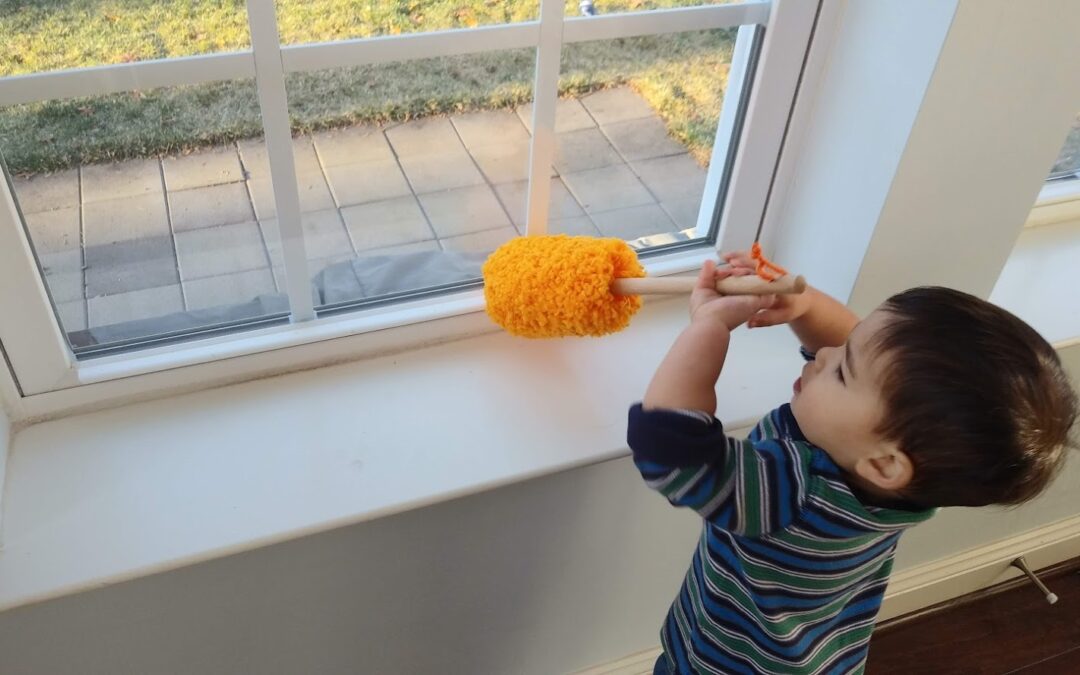
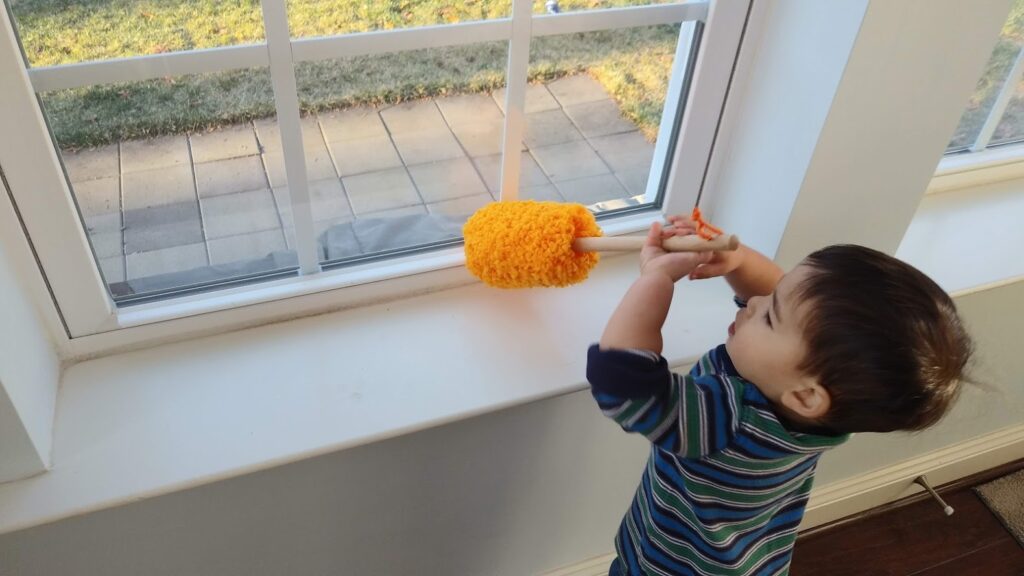
In between all of these scheduled moments, we create new learning opportunities out of day-to-day activities, such as folding the laundry, making a meal together, washing hands, and so on. One of the things that has really struck me was reading that just about anything is a teachable moment for this age. And we have seen it with our son – in just over a month, he has learned so many new words and gestures – not because we are practicing flashcards as we were in the beginning, but because we are conversing with him throughout the day about everything we are doing ourselves. Like in a Montessori classroom, we’ve been able to slow down and include him in more of our day-to-day activities, giving him some ownership.
As we move forward, we approach each day with flexibility – we may not be able to do everything we planned and we try to be kind to ourselves, even in those moments.
What’s worked well
 For us, setting up the independent workspace for him was imperative. We are now seeing all of the areas in our home that have been inaccessible to him – we had to hold him up to get on the toilet or wash his hands; he had no way to access food on his own; even his toys were primarily kept in a trunk that we opened when it was time to play. We are already brainstorming things we need, such as a learning tower in the kitchen, but we are also making our own solutions, such as using a step ladder in the bathroom for him to easily access the sink. This shut down has encouraged us to find new ways to use what we already have to meet our new and evolving needs for our son.
What we’ve adapted over the weeks
We entered into this new arrangement not only with some rigidity around learning and scheduling, but also around our expectations of ourselves. It is a stretch for any parent to manage work and raising a toddler during the same waking hours. By giving ourselves more grace to make mistakes and learn from them, we have really been able to reframe this time in our lives. It is still by no means easy, and we are ever-changing and evolving to his needs.
One example would be with toileting. We have been gradually introducing our son to toileting since January. We have been using a toddler-sized seat on the toilet and we have been taking him throughout the day. Early on in our stay at home, we decided we were going to switch to underwear cold turkey. But with this new added pressure of going every half hour, he began to resent going at all. We had more accidents during this time than any other. As soon as we relaxed our expectations and focused more on making the experience easier for him, the accidents stopped (most of the time). We still have toileting on our daily schedule, but we go hourly and we try to take our cues from him. He is now beginning to tell us when he needs to go, instead of us telling him!
What we most look forward to during our days
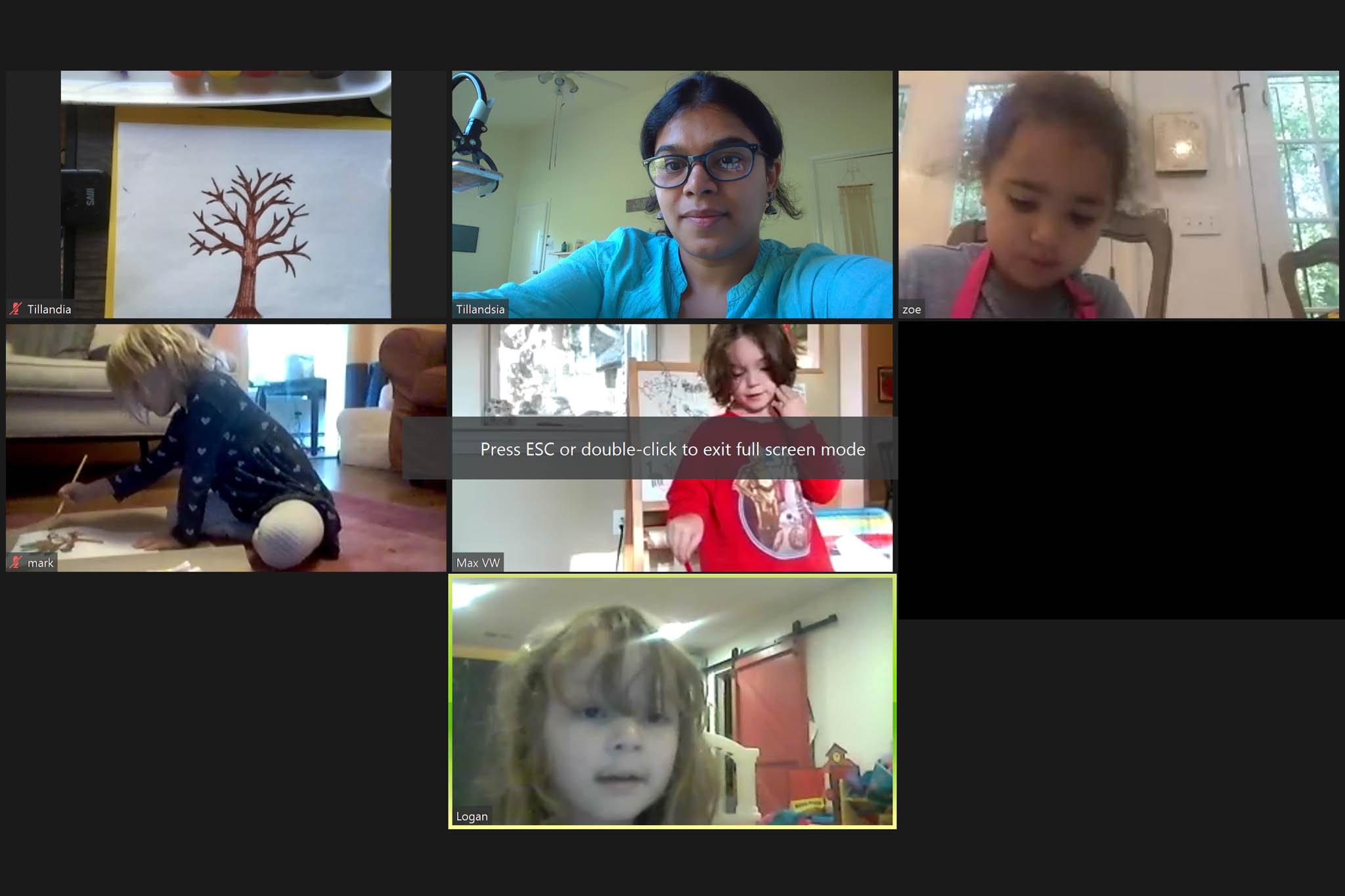
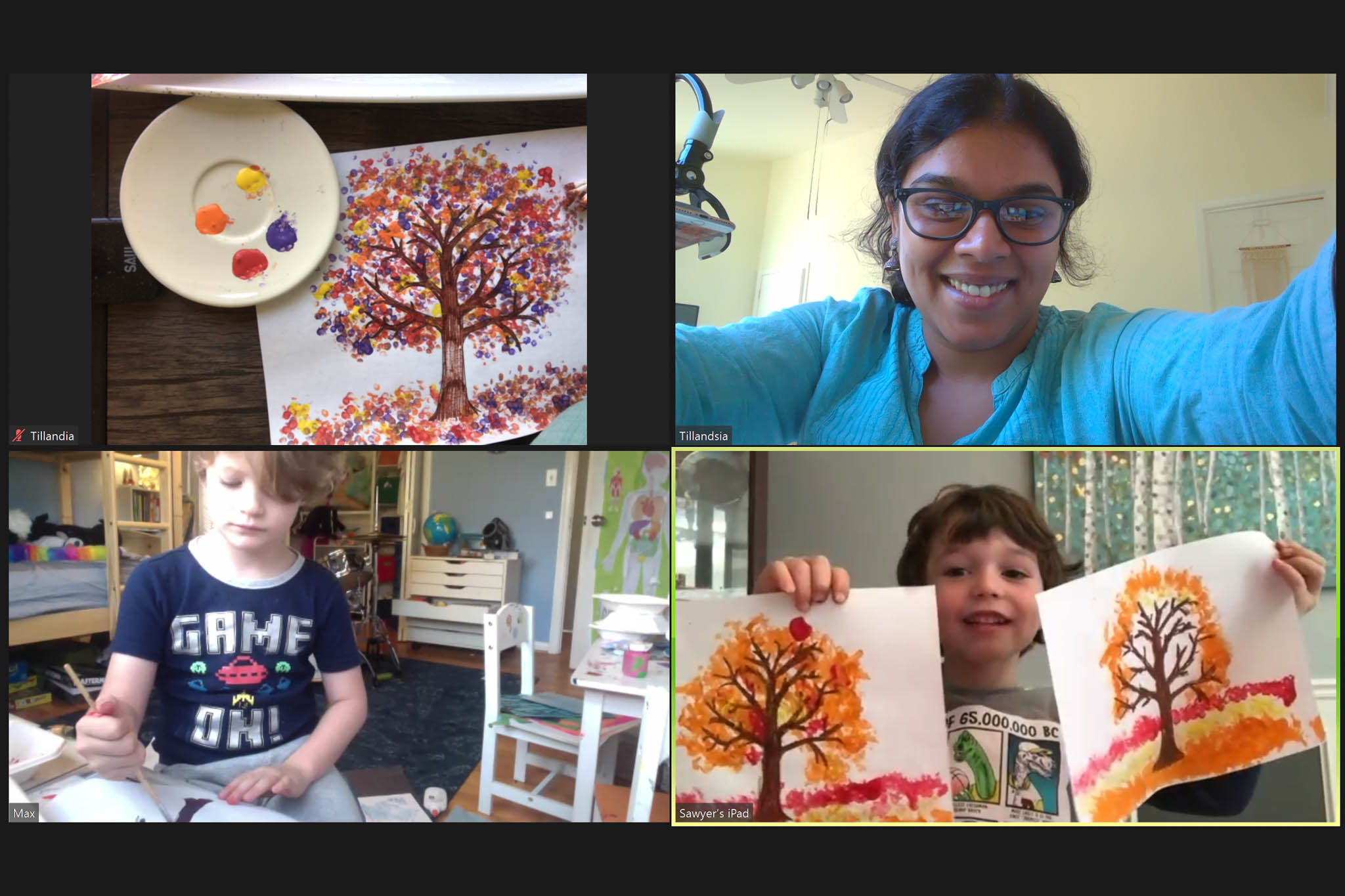
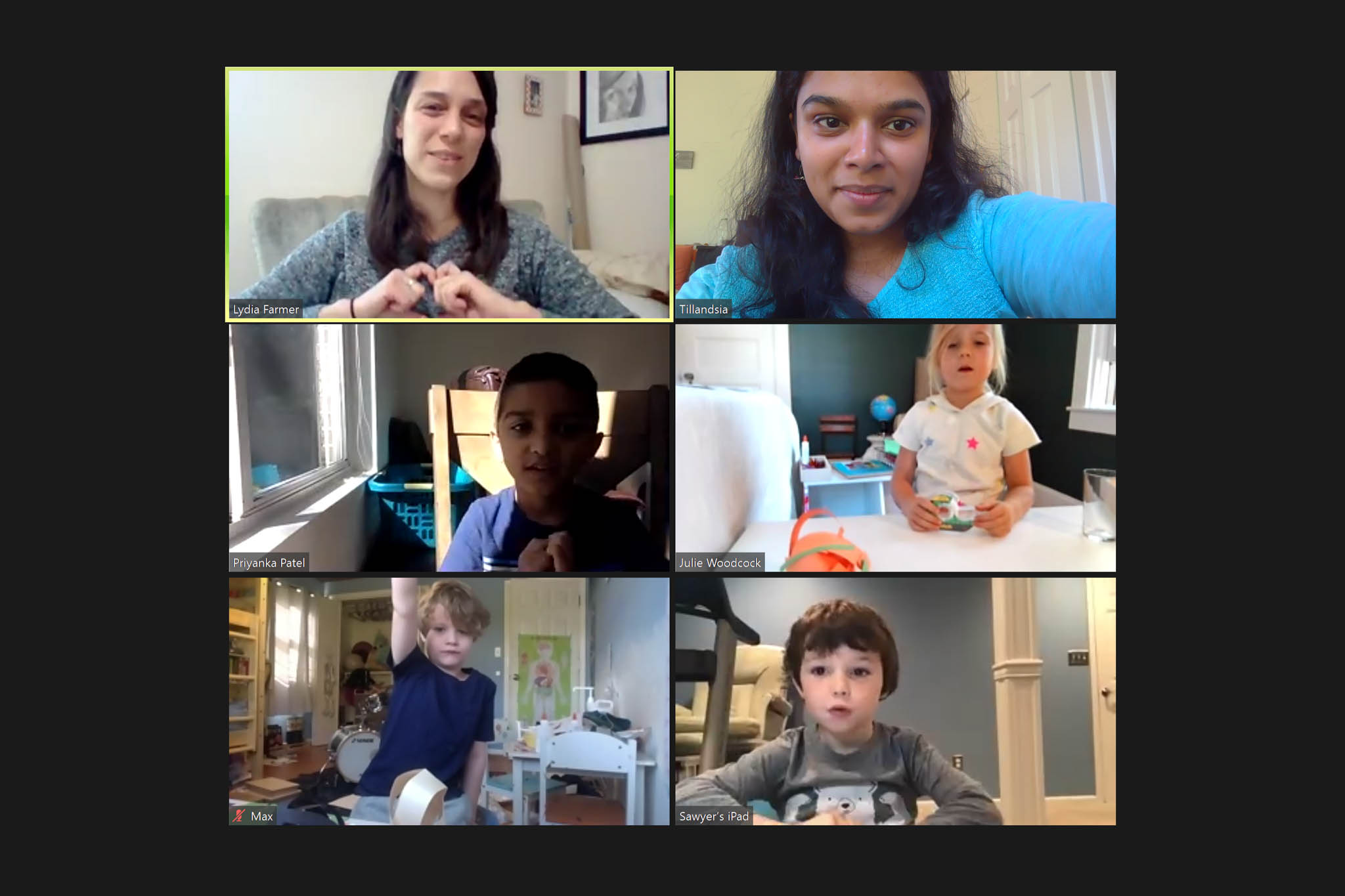
I honestly look forward to our walks around the neighborhood and anything active we can do together. From singing and dancing on a Zoom call (I’ve never known the words to so many kids’ songs in my life!) to waving to passing cars, I’ve found that my son really needs consistent and meaningful human interaction. He has begun telling me some of the things he sees on our walks – “dog”, “duck”, and “flower” – just another example of how much he is growing during this time.
I also love all of the little in-between moments. Before, I would find myself waiting until late at night to do laundry or other chores, but I’ve realized that he really enjoys helping. From pouring the dog food in the morning to prepping lunch, we are now always looking for ways that he can contribute meaningfully at home.
The parenting resources we’ve used
 I was in the process of reading No Drama Discipline by Daniel Siegel and Tina Payne Bryson when schools closed. This was a timely book for us and my husband decided to read it as well. In addition to that, I’ve been looking at resources from Hand in Hand Parenting, Aha! Parenting, and the Greenspring website. I’ve found that using the tools of a Montessori guide – observing the child, having a prepared environment, providing the time and space for independence, and embracing the day-to-day or “Practical Life” activities has served us especially well during this time.
We know that there is still a lot we will learn and we have a long way to go until life returns to “normal” – if that is even a word that can be used anymore. We know that things will be different once we get through this, and for us, that means having a better understanding of our son’s needs and how to support him in his ongoing development. It means that we will have a greater appreciation for each person who touches his life – from teachers and friends to his very special grandparents, aunts, uncles, and cousins.
How are you getting through this? What has worked well for you and your family? What do you most look forward to each day?