What Makes Montessori Elementary Different?
There are many differences between Montessori and conventional education. While these differences span the age levels, the Elementary Montessori classroom is unique in additional ways.
Prepared Environment
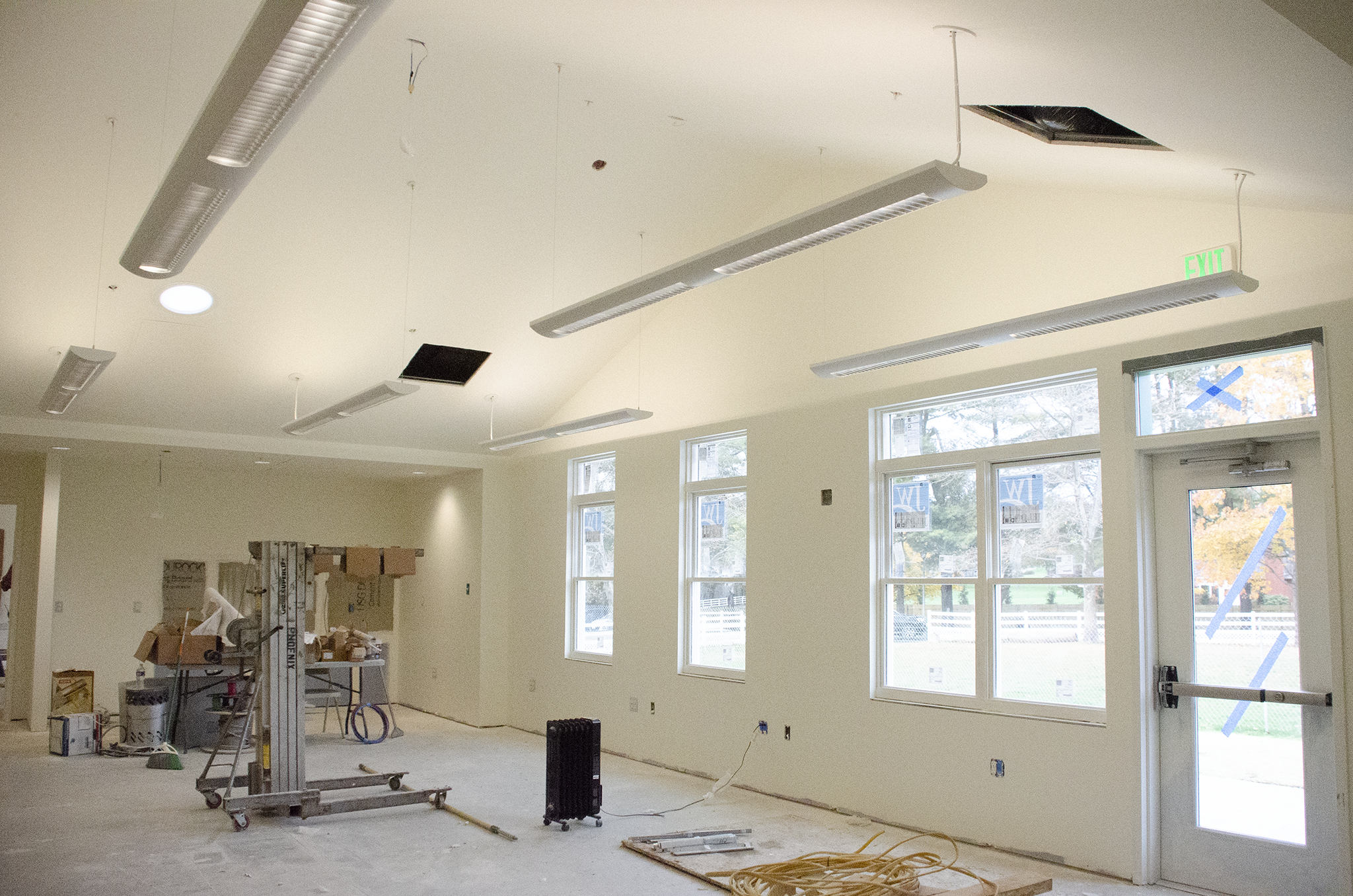
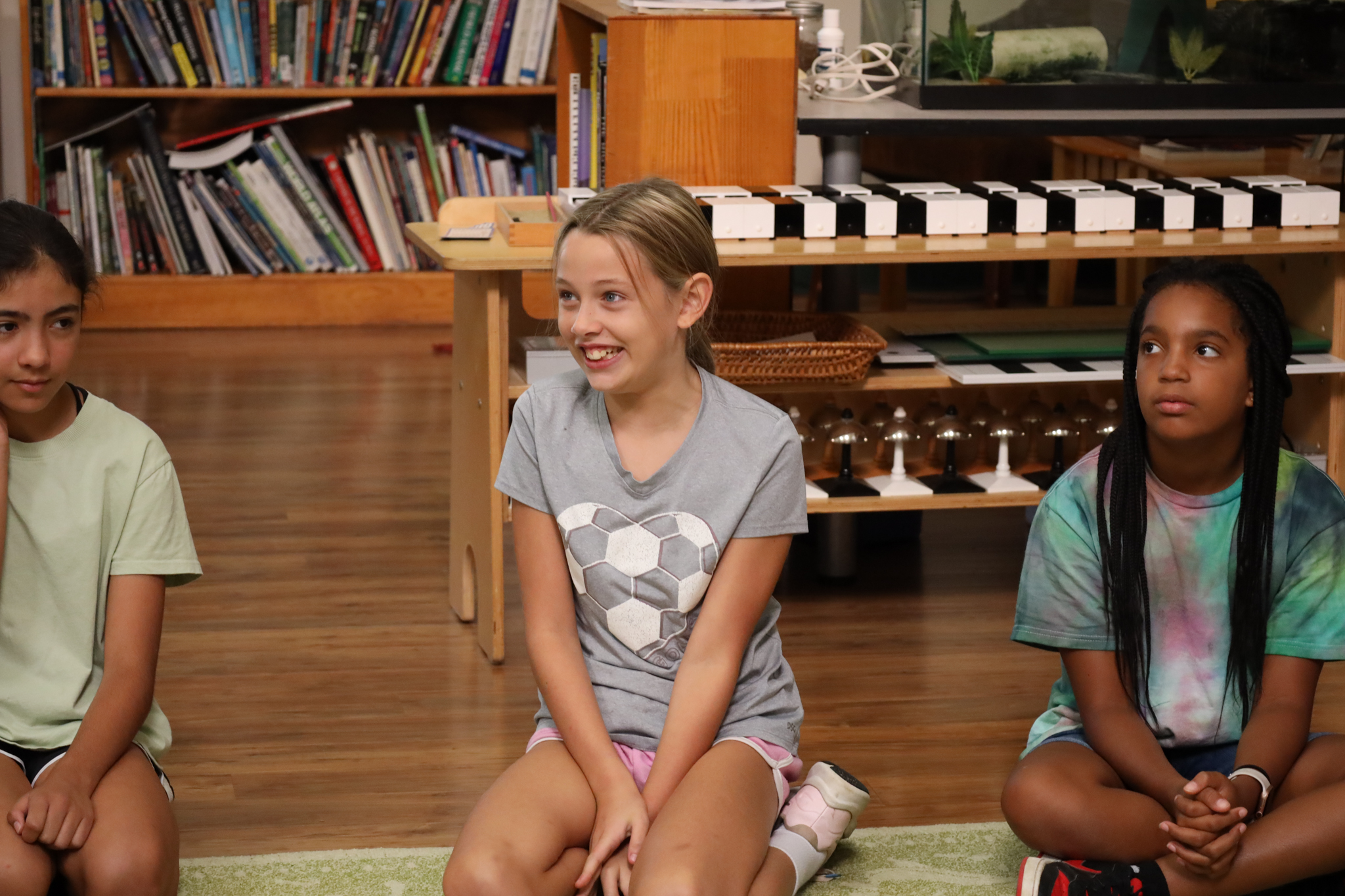
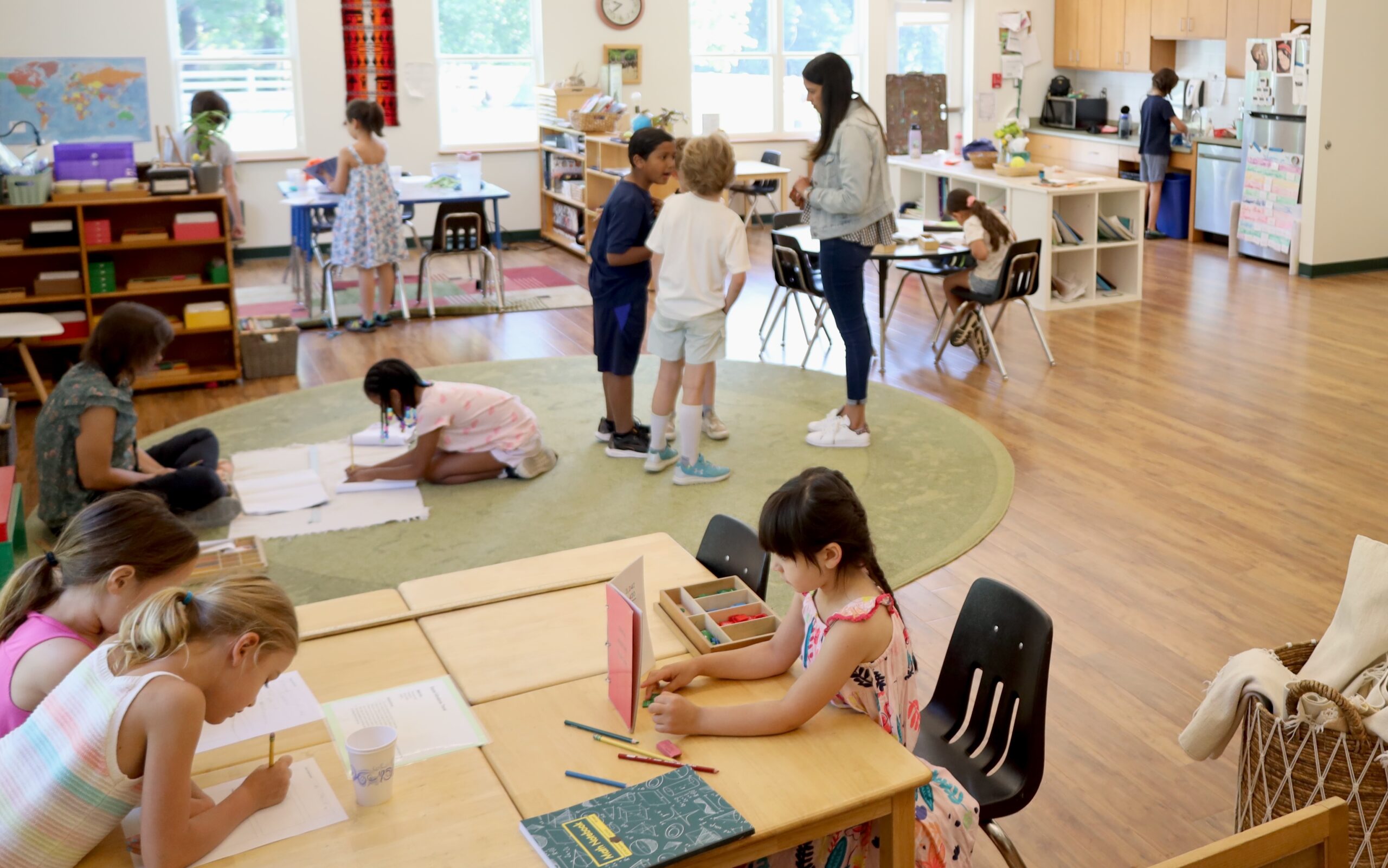
We refer to Montessori classroom spaces as prepared environments because they are carefully designed to maximize students’ independence, freedom of choice, and freedom of movement. Unlike traditional classrooms that often use bright colors, posters, and decorations to try and excite children, Montessori classrooms are organized and uncluttered, featuring simple décor such as plants and framed artwork. The environment is calming and draws attention to the beautiful hands-on materials, which are designed to entice the students to engage with them. Everything in the classroom is for the students’ use. You will not see a teacher’s desk or things mounted at adult eye level on the walls. Instead, the room features low, open shelving full of hands-on materials for students’ use. Because Elementary students are more social and often motivated by working with peers, open floor space and group tables support collaborative work.
Independence & Freedom
Throughout the day, students choose work that interests them, taking as much time as they need to complete it. Instead of being asked to sit at assigned desks or tables, students move freely about the classroom, choosing their work, as well as where and with whom they would like to work. Students are encouraged to use problem solving skills to work through challenges and rely on one another for support. Adults do not intervene or interrupt students unless their assistance is needed. Students are offered “freedom with responsibility,” which means they are afforded as much freedom as they can handle responsibly. Elementary students set goals with their Guide and are responsible for recording their work and monitoring their progress toward those goals.
Uninterrupted Work Cycles
In traditional classrooms, a block of time is allotted for each subject, and all students work on the same subject at the same time. In Montessori classrooms, students work during uninterrupted work cycles. During these three-hour blocks of time, students choose when and for how long to work on each activity, which ensures that they have the time to fully understand and complete their work without being interrupted. Many subjects are integrated, with new lessons being offered to students as they are ready for them. At the Elementary level, students have follow up assignments and long term projects, which gives them practice with planning, organizing, and budgeting their time. With support, they gain practice in building these executive functioning skills.
Mixed age groups
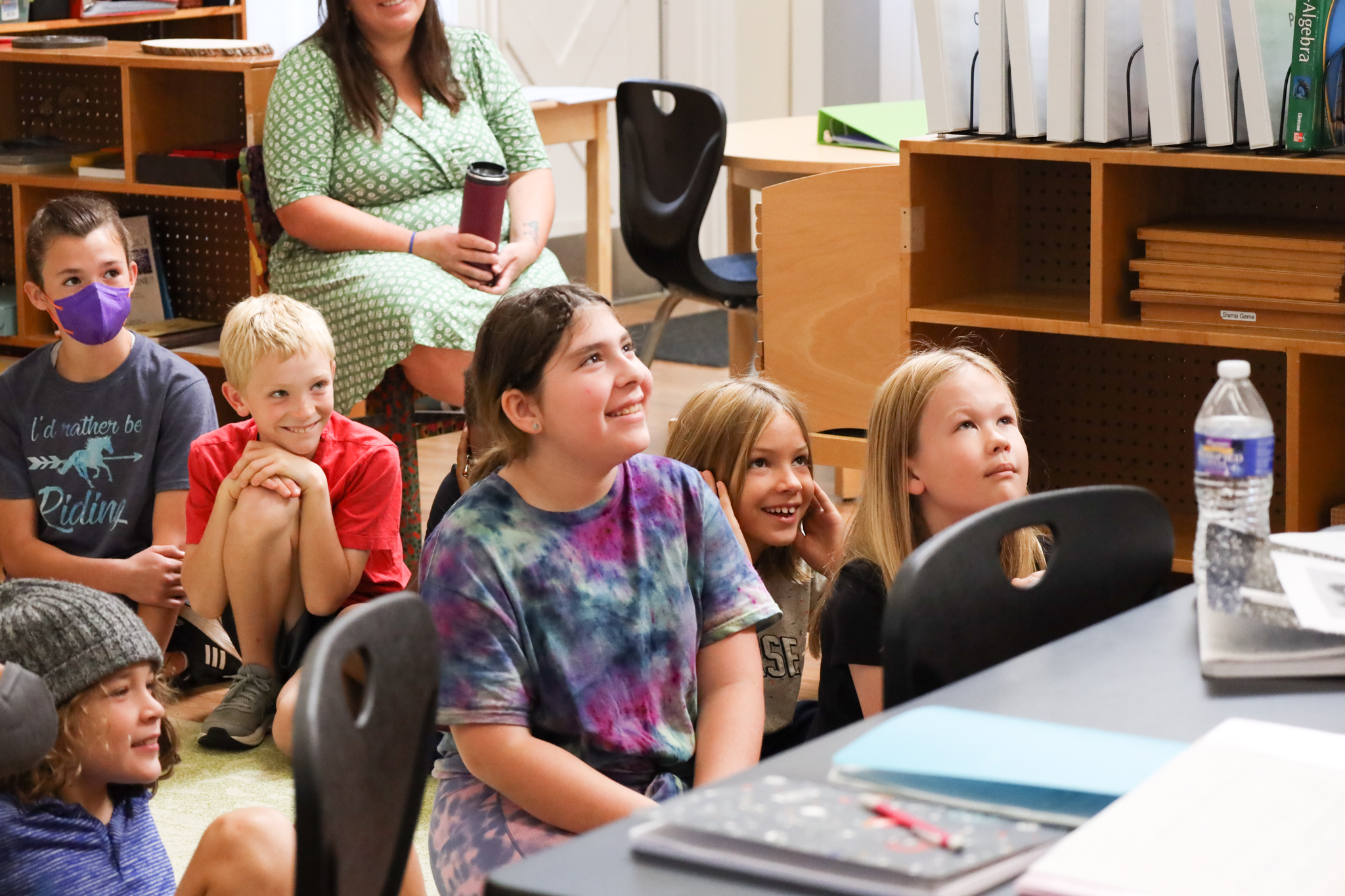
Montessori classrooms are unique because they include a three-year age range of students. This allows students and their families to build a close relationship with the same Guide over three years. It also means that the classroom enjoys consistency from year to year, with only a third of the group matriculating and a third of the group entering new each year. Older students often serve as role models for younger students, building their confidence and leadership skills. Lower Elementary classrooms are for 6-9 year olds (the equivalent of 1st, 2nd, and 3rd grade) and Upper Elementary classrooms are for 9-12 years olds (the equivalent of 4th, 5th, and 6th grade).

Individualized Instruction
In most traditional schools, a teacher gives direct instruction to the whole class and to groups of students, based on a predetermined curriculum. Children are forced to move at the pace of the group, regardless of whether they already understand the material or need more time to fully absorb it. In Montessori classrooms, lessons are given to individuals and small groups as they are ready for them, regardless of age or grade. In addition, students independently use self-teaching materials and learn from each other. Because students work at their own pace in all different subjects, students are not set up to compete with one another. Instead, students support and collaborate with one another. At the Elementary level there is a great deal of collaborative work. Students learn to negotiate, plan, delegate, advocate, and problem solve through these projects.
Hands On Materials
Inquiry Based Learning
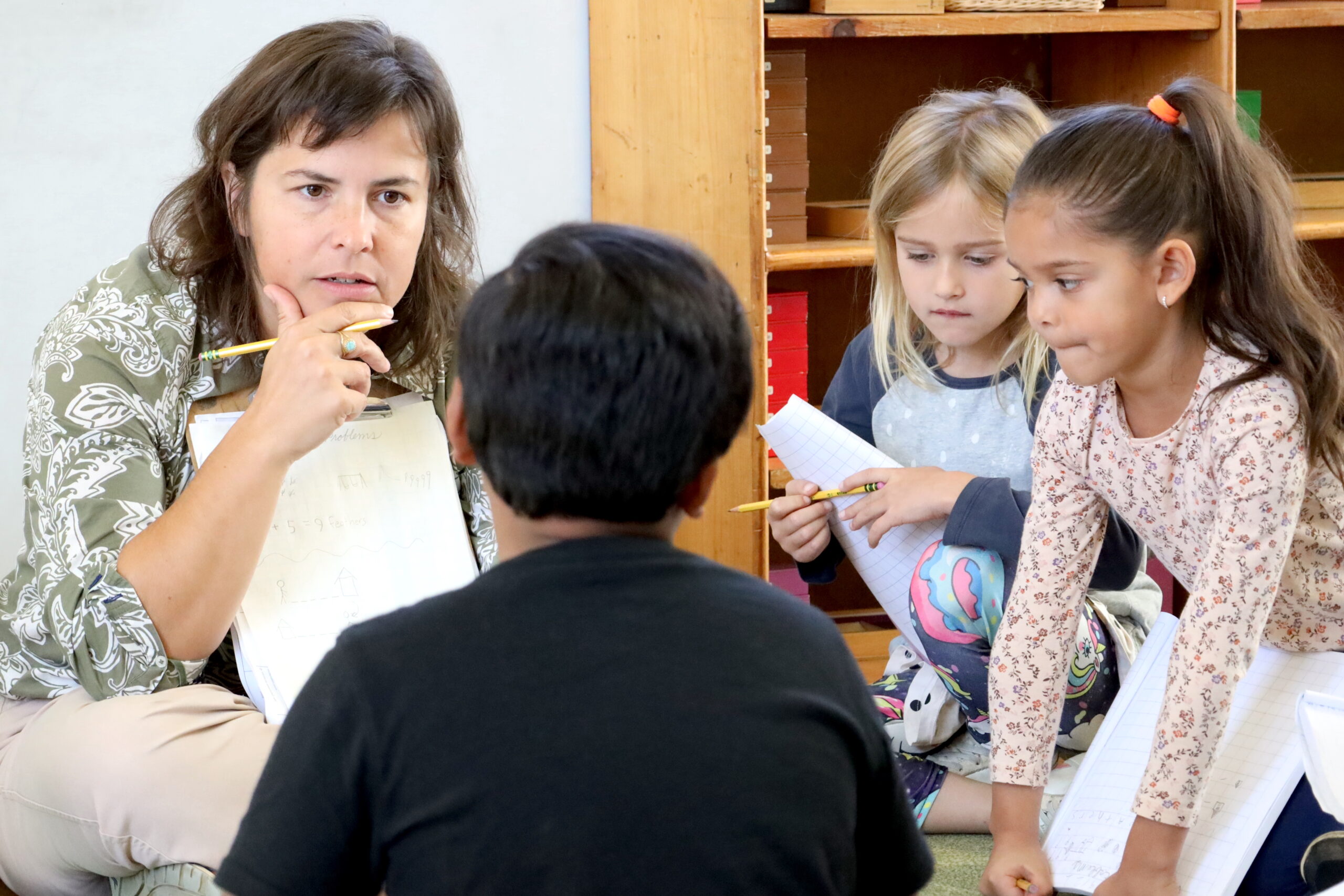
Individualized Lessons
Hands-on Learning
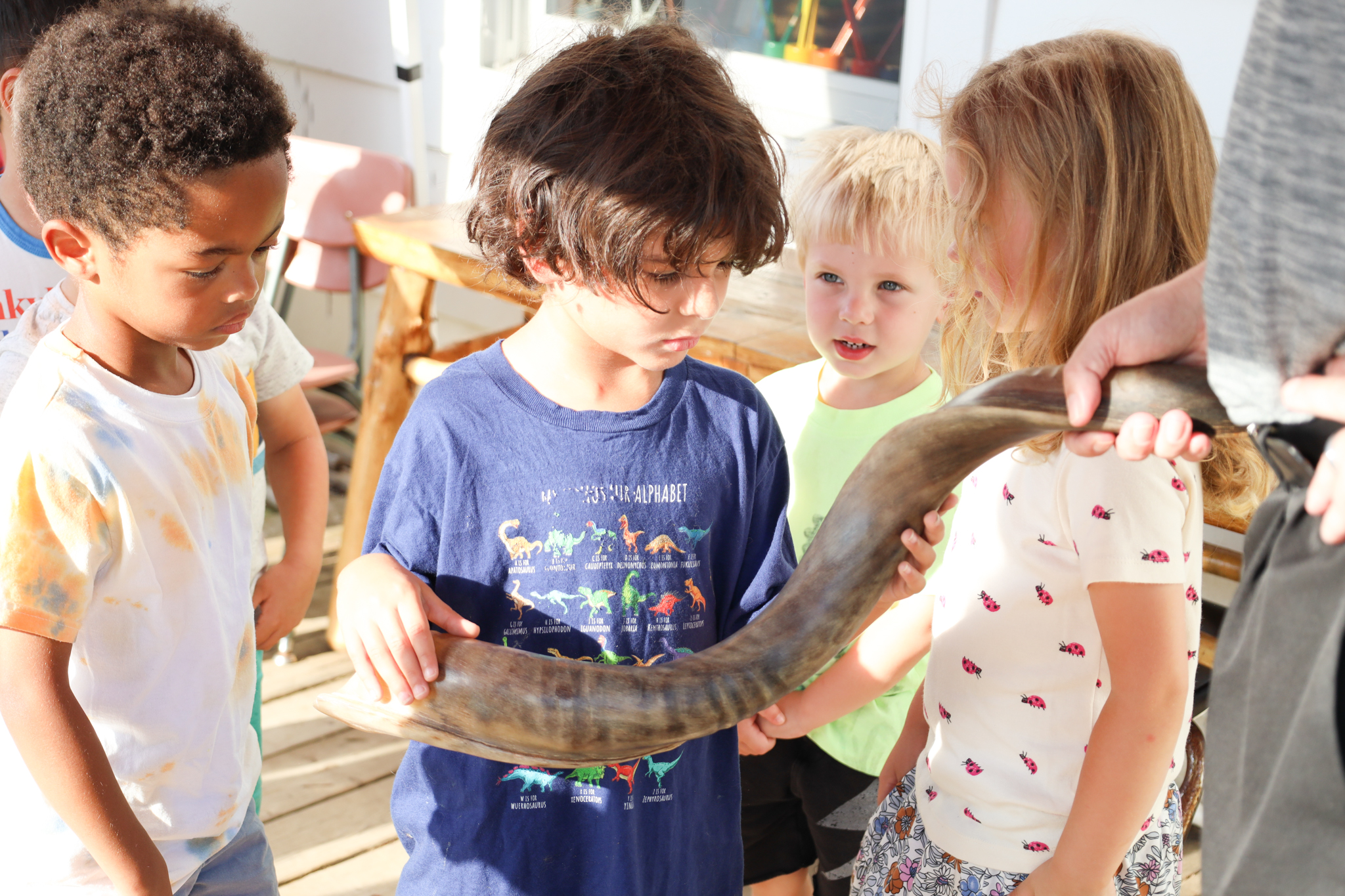
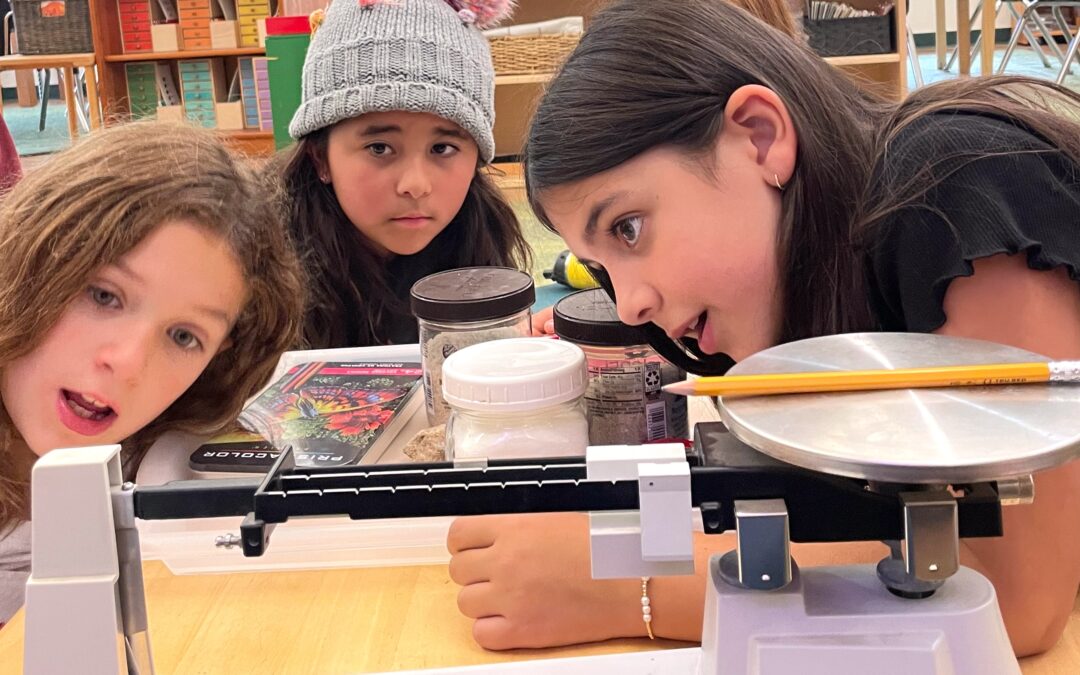
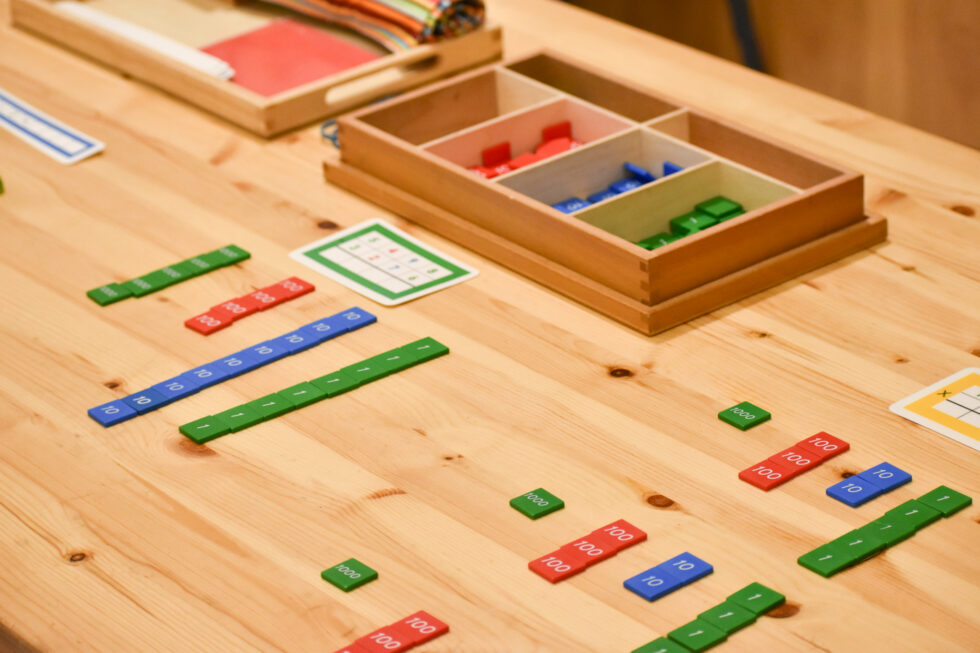
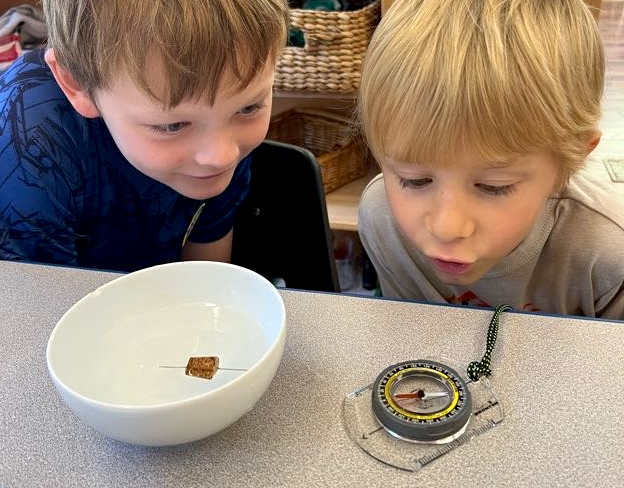
You will not see the use of worksheets, rote learning, and textbooks in Montessori classrooms. Instead, students use hands-on manipulatives that are concrete representations of concepts. These materials that appeal to the senses, and offer purposeful, real-life experiences. At the Elementary level, students begin the leap to abstract understanding with some concepts, as they are ready. Upper Elementary students especially are in transition, making the “leap to abstraction” in many areas. Elementary students also begin to learn outside the four walls of the classroom, making real world connections on expeditions called “Going Out.”
Grace and Courtesy
Many traditional classrooms are adult-centered, with the teacher controlling the classroom and enforcing discipline with the use of rules, rewards and punishments. Montessori classrooms are child-centered. The students agree on a set of community values and all are responsible for upholding their shared agreements. Additional expectations for behavior are taught through Grace and Courtesy lessons. The focus is on the whole child, so lessons that support social and emotional development are considered as important as academic lessons. At the Elementary level, students take even more ownership of their community, using community meetings to communicate concerns and solve problems collaboratively.
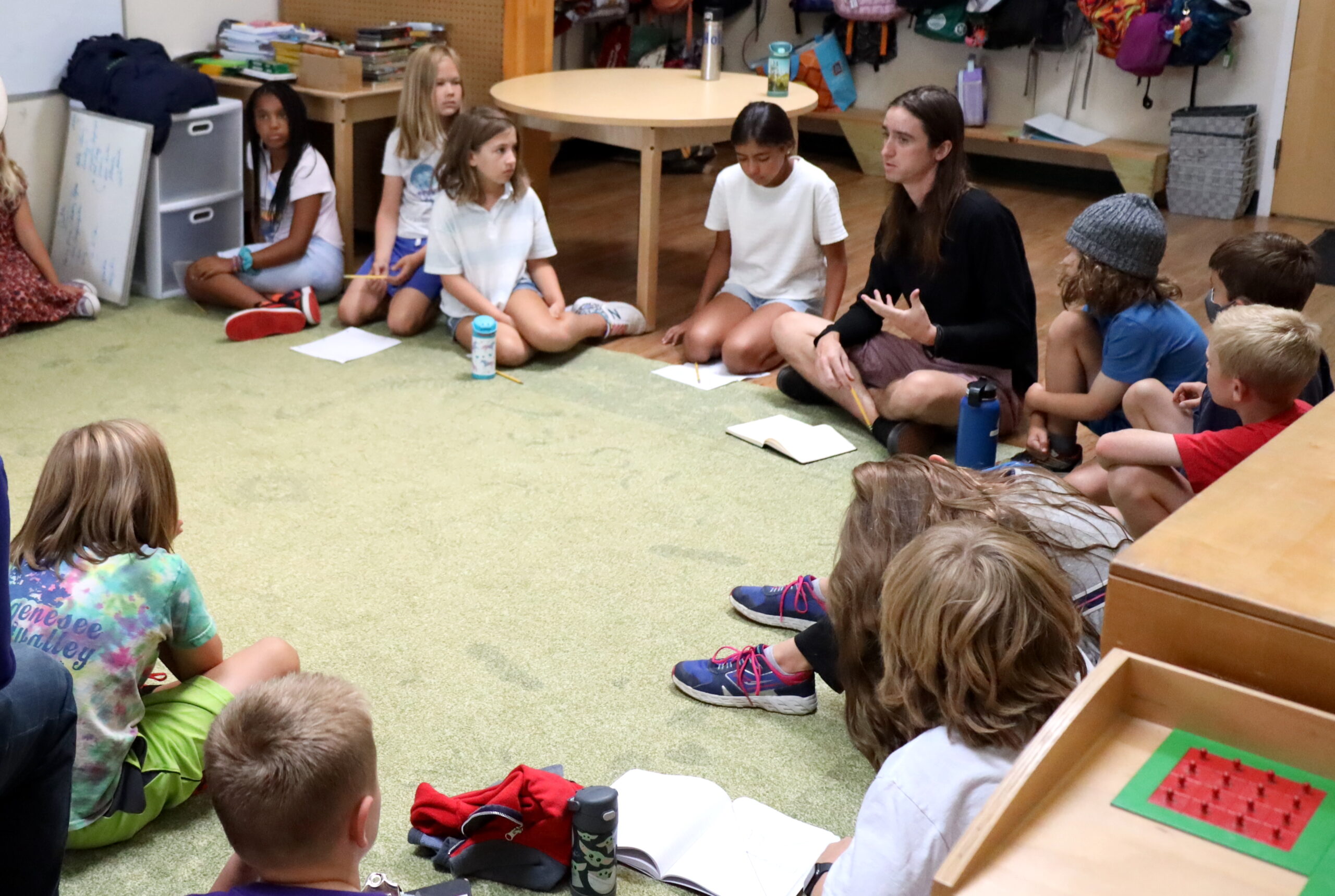
Community Meeting

Community Values
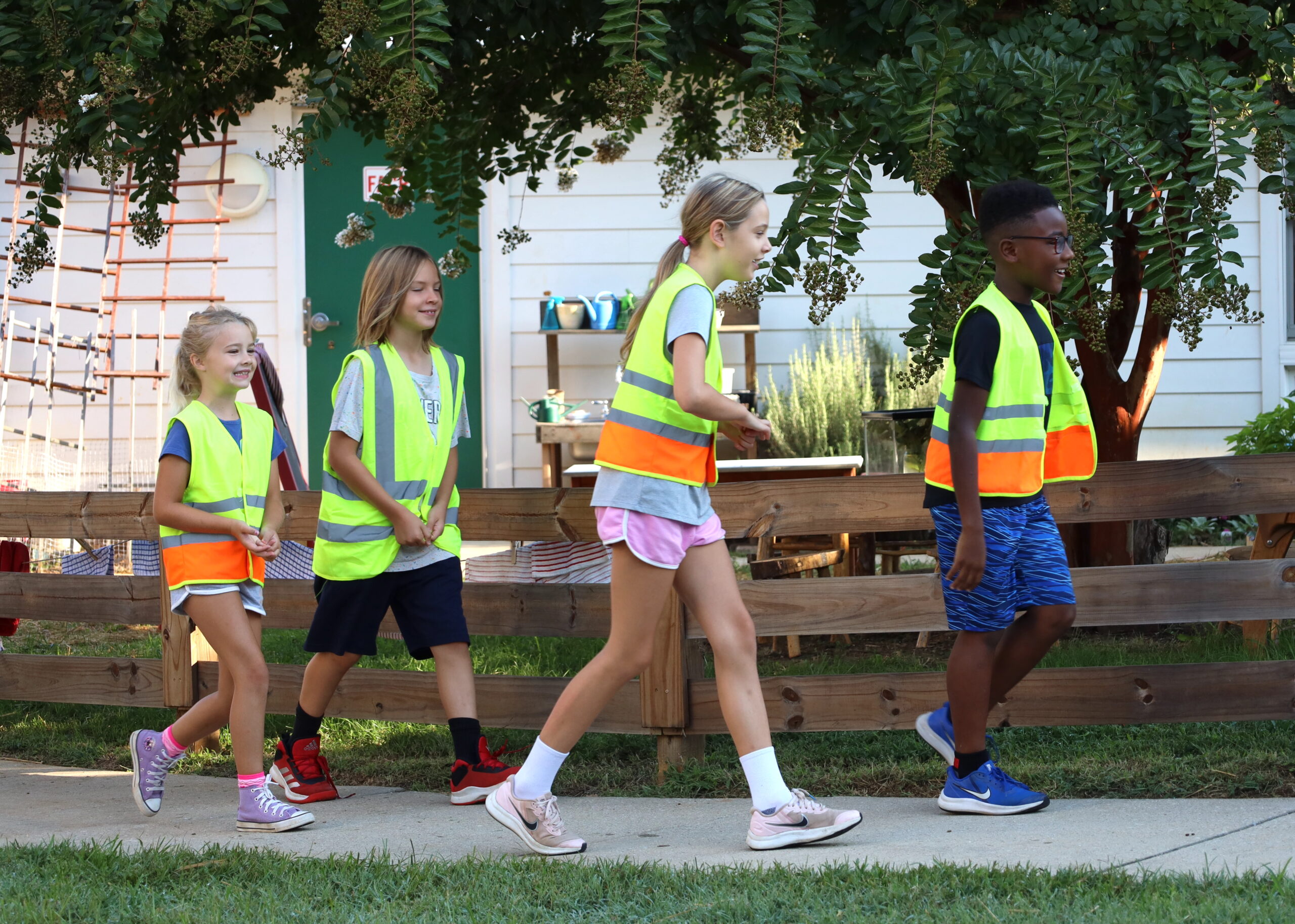
Community Service
Self-Construction
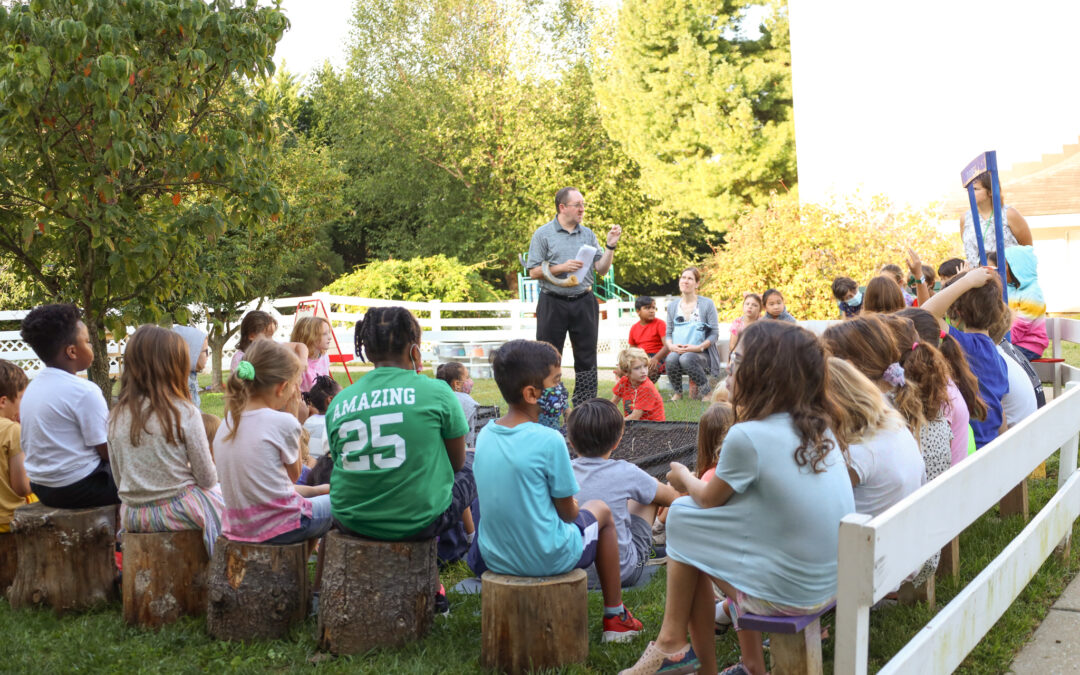
In traditional models of education, teaching is framed around the child’s perspective. (First we learn about our town, our state, our country…) In Montessori education, teaching is framed around a global perspective (the universe, the solar system, our planet, our continent…) At the Elementary level, this is taken even further with what is called the Cosmic Curriculum. Each year begins with the presentation of five Great Lessons which present the universe to the child, providing context for all subsequent lessons. With this broad perspective, students develop thinking of themselves as global citizens. Montessori students know that the ultimate goal of education is not to get good grades, be well behaved, or get into a good college. They grow up knowing a form of education that supports their self construction, which in turn, contributes to the betterment of society.
The child is capable of developing and giving us tangible proof of the possibility of a better humanity. He has shown us the true process of construction of the human being. The child is both a hope and a promise for mankind.