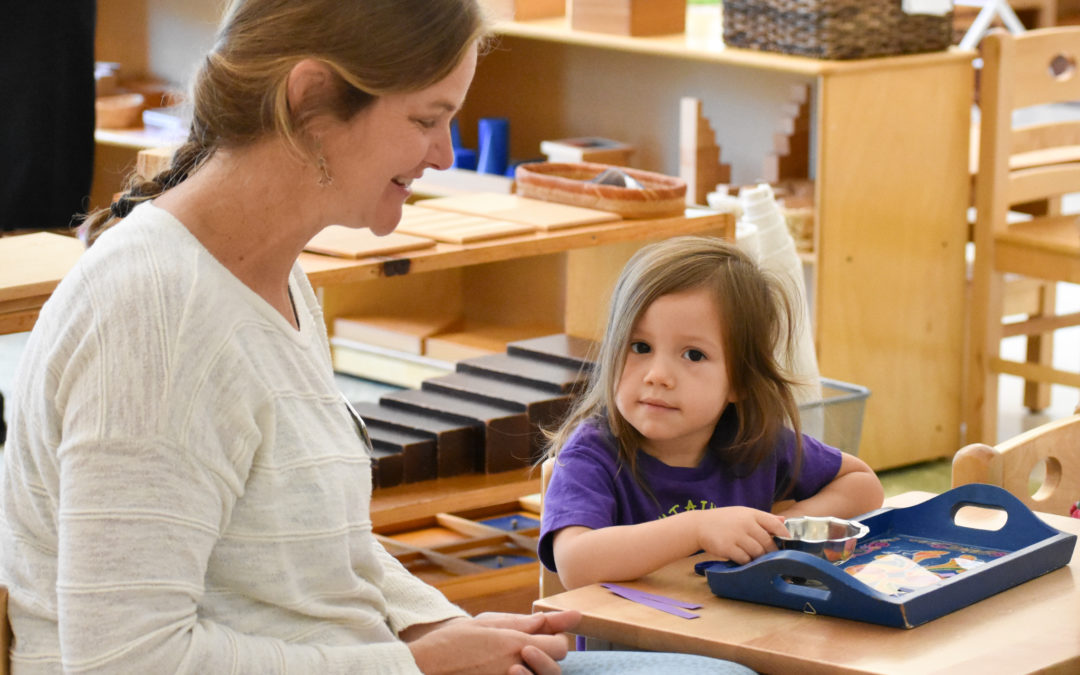
We are already deep into our work this school year and seeing so many interesting things happening in all of our classrooms. From our toddlers learning the simple joys of being together in a community for the first time to our Elementary students exploring the history of the first civilizations, Greenspring is an inspiring place to be in the fall and all year round. We have a dedicated, caring team of faculty and staff committed to your child’s individual growth. As a team, we came together to discuss something of growing importance in today’s society – photographs.
In today’s world of smartphones and social media, it is hard for us to go a single day without taking a photo of something happening in our lives or sharing a cute video. Our children are inundated with adults seeking to document their accomplishments, their personalities, and their adorable moments. Child YouTube sensations are making millions. Those of us who intentionally do not participate in social media are few and far between.
At our first Faculty Gathering, our guides and administration had an engaging, in-depth conversation about photographing children at school (especially while working in the classrooms). Here are some of the main points we discussed around this important topic:
In favor of photographing children at school:
- Powerful parent communication tool – as parents, it means so much to be able to see what/how our children are doing while at school. A picture is worth a thousand words!
- Education about Montessori methods – Montessori education is widely misunderstood. We want each and every parent in the world to be able to better understand what Montessori is, how it works, and why it’s so beneficial for children. Photos and videos can be a great support with this.
- Stimulates conversation at home – when children can see photographs in their classroom, they can talk more about their experiences, what they were working on, who their friends are, and how they felt throughout the day.
- Precious memories – we all love looking back at the children’s photographs as they grow and mature over the years.

Reasons to minimize photographs at school (particularly during the work cycle):
- Protection of the student’s work and concentration – when in the classroom, the work and concentration of each child is our number one priority. Often, pulling out a camera disrupts this important work, for both the child and for the adults.
- Keeping the classrooms a safe place/sanctuary for the students – many children have become accustomed to having a phone, tablet, or camera close by throughout the day. We find it important to offer them space where this is not the case.
- Respect for the children – some students do not want their photo being taken at all, and we owe it to them to honor that choice.
- It takes the adult’s attention away from the students – if the classroom Guides are focusing on capturing that perfect picture and sending it out to the world, it deters them from their top priorities of giving lessons and observing the children.
After much mindful discussion, thought, and debate around these points, we realized that the arguments for taking photographs in the classrooms generally meet the needs of the adult, while the arguments against taking photographs in the classrooms during the work cycle are generally aimed to meet the needs of the child. While both sets of needs are certainly important, our top priority here must always be the children. Being present with our children in their learning is fundamental to what we do here.
I’m sharing this with you to help you understand that in order to do the very best for your children and each student, you see a shift in the number of pictures of your children at school from your child’s Guide. We will continue to do our best to capture some precious moments and examples of academic works to be shared on our school-wide outlets – in email newsletters, on social media, on our website, and in printed materials such as the Memory Book, magazine, and calendar – because there are so many reasons for and benefits to doing this. Guides will share photos as they are able, without interrupting the concentration or their presence with the children. You will most likely see more photos of the children playing during recess, or of a presentation of polished work. Our partnership with you is so very important to us, and we constantly strive to maintain a balance of doing the very best for the students while also meeting your needs as parents.
If you have any questions about this, please feel free to reach out to me directly at bwimbrow@greenspringmontessori.org.

Written by Betsy Wimbrow, Director of Education

Ah, summertime! There is nothing like long, languid days that stretch slowly into the evening, running barefoot in the cool grass while chasing fireflies, and biting into cold crispy watermelon, the juice dripping down your chin. Summer is a time to relax, to play, to spend time with family and friends, to explore, daydream, and wonder.
There is a growing body of evidence that these same activities are key to developing important executive functioning skills. In the article “Why Free Play Is the Best Summer School“, Jessica Lahey states;
“Unscheduled, unsupervised, playtime is one of the most valuable educational opportunities we give our children. It is fertile ground; the place where children strengthen social bonds, build emotional maturity, develop cognitive skills, and shore up their physical health.”
This is great news for parents and children alike! No need to fill our children’s days with structured activities or for entertaining our children all summer long. The more unstructured “free” time we give our children the greater their chances of developing critical problem-solving skills, confidence in taking risks, and essential self-regulating skills. If you worry about loss of academic progress, relax! A recent study failed to prove such a slide exists for most children. You can read the details of the study, ”New Research Casts Doubt on the ‘Summer Slide’” Youki Terada at edutopia.org/article/new-research-casts-doubt-summer-slide.
So, sit back with a cold glass of lemonade and let yourself – and your children – just be. Dr. Montessori said it best,
“Let the children be free; encourage them; let them run outside when it is raining; let them remove their shoes when they find a puddle of water; and, when the grass of the meadows is damp with dew, let them run on it and trample it with their bare feet; let them rest peacefully when a tree invites them to sleep beneath its shade; let them shout and laugh when the sun wakes them in the morning as it wakes every living creature that divides its day between waking and sleeping.” (The Discovery of the Child)
I look forward to seeing you as the summer comes to a close, whether it be at an orientation for new parents or parents new to the next level, at one of our community picnics, or on your child’s first day of school. You needn’t wait until then to be in touch. I welcome your ideas, questions, and conversation at any time.

The American Montessori Society Peace Committee has awarded the Ursula Thrush Peace Seed Grant to Greenspring Montessori School and a partnering parent group to fund a project that promotes peace education.
This grant was created by the American Montessori Society Peace Committee to honor the memory of Ursula Thrush. Dr. Thrush’s extraordinary dedication to fulfilling Maria Montessori’s vision for peace through children inspired many Montessori educators to include peace education in their classrooms and communities. Among her numerous achievements, Ursula founded the Maria Montessori School of the Golden Gate in San Francisco and helped establish The Science of Peace Task Force and the Montessori Peace Academy.
Greenspring Montessori’s grant submission was prepared in partnership with a group of Greenspring Montessori parent volunteers who have been gathering to discuss their own challenges and aspirations for their children as it concerns diversity, equity, inclusion, justice, and belonging. In addition to supporting one another, the parent group felt called to support the school in providing whatever education, resources, materials, and open dialogue was needed to support Greenspring in becoming the embodiment of peaceful society Maria Montessori and Ursula Thrush envisioned.
“The Peace Seed Grant Committee is impressed with the originality of your project and the deep thought that has gone into it. We are pleased to award this grant for a project that is consciously working toward understanding and further Social Justice among the many teachers, parents and students at your school. We are also impressed with the 19 different languages that are already a part of the school. The timing of this project is excellent!” -Award letter from Lesley Nan Haberman, Sonnie McFarland, and Judi Bauerlein
The Ursula Thrush Peace Seed Grant will support the school to:
1. Provide an introductory professional development workshop for Greenspring Montessori School staff to clarify what diversity, equity and inclusion is, how it is relevant to their work, and to begin to explore why diversity, equity and inclusion learning is critical to deepen their understanding of and ability to provide proper support for the varying needs of Greenspring Montessori School’s diverse student base.
2. Offer a workshop to Greenspring Montessori staff and parents on identifying and combating unconscious and implicit bias.
3. Offer a workshop to Greenspring Montessori staff and parents on age-appropriate best practices for talking with your children about race.
The grant activities will begin in fall of 2019 and will be complete by January 2020. These activities are a small subset of a larger body of work in the areas of diversity, equity, inclusion, justice, and belonging that the school is committed to carrying out in the years to come.
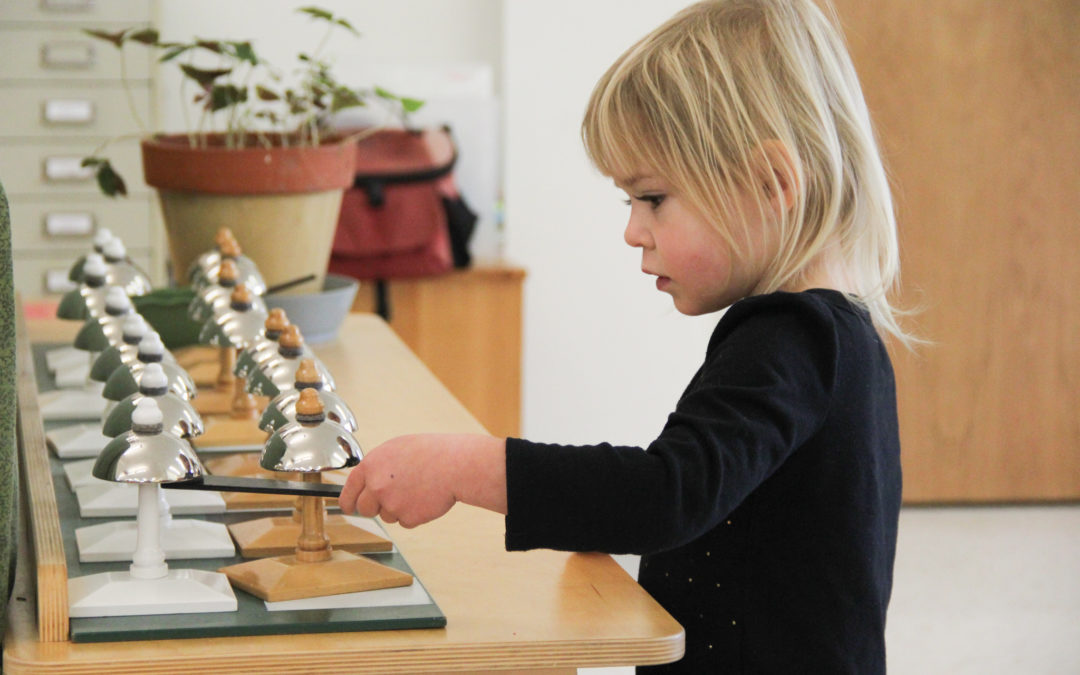
The ability to concentrate and focus is at the core of satisfying and successful experiences in many aspects of life. As adults we need to attend to what we’re doing, whether it be the details of a graph we’re explaining at a meeting, the particulars of a recipe, or the art of active listening to the people we engage with every day. This ability has many new challenges in times we live in. Children must be equipped with the ability to concentrate and Montessori education does so much to address this need.
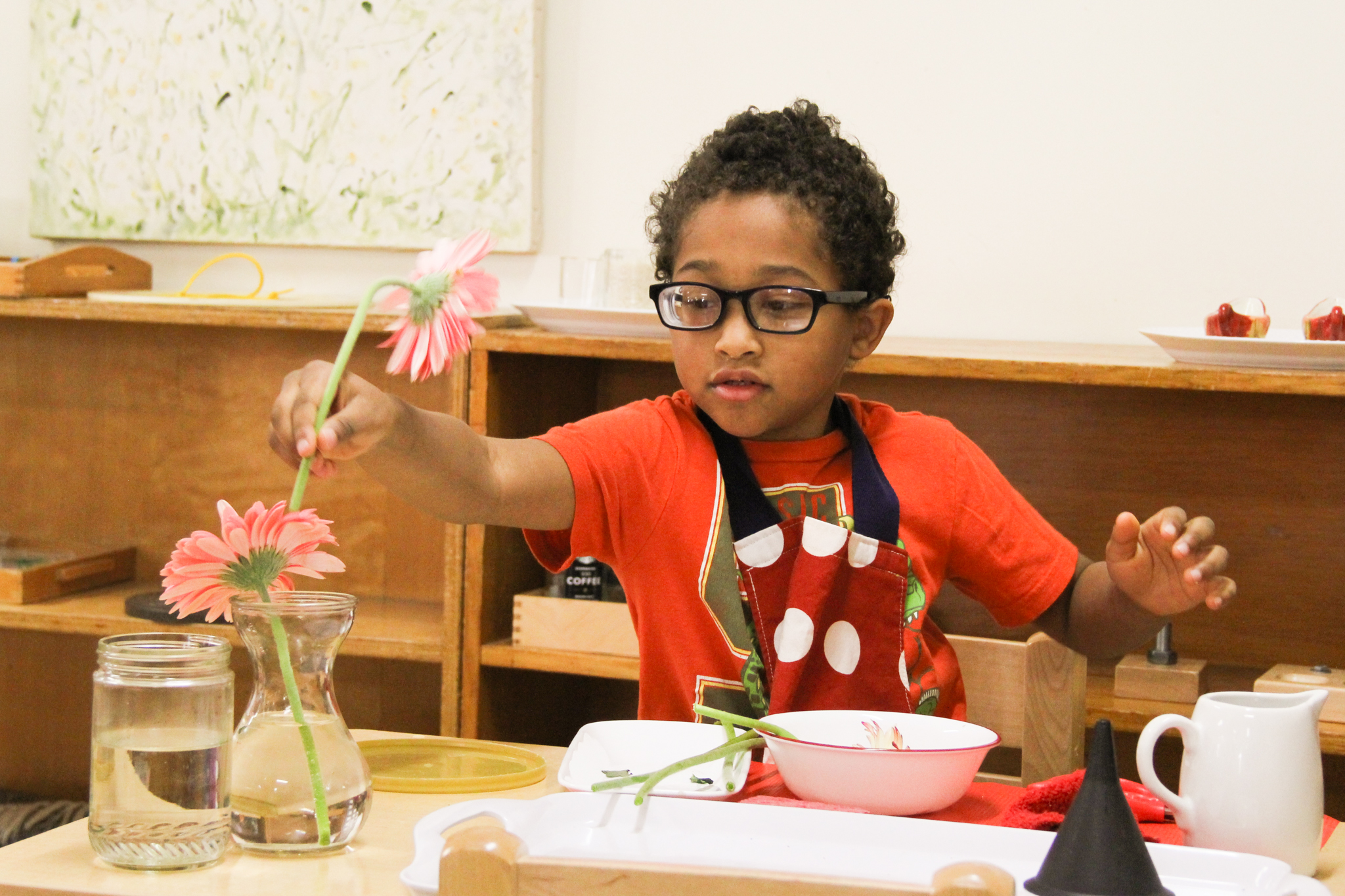
While concentration at the Children’s House level often looks like a student sitting alone with her work, engrossed in the task at hand, successful concentration looks a little different for the Elementary and Adolescent Community student. The Elementary child must learn to work collaboratively with others. This partner and group work means the child will be engrossed in their work, stop to talk to a friend for a few minutes, and then continue working. The ability to be interrupted and return to focused work is an incredible asset as an adult and the Montessori student practices this skill throughout the work cycle as he or she interacts with classmates during work and participates in lessons.
Similar to the Elementary student, the Adolescent Community student often works on projects in groups. Concentration for Elementary and Adolescent Community students means fully engaging in the projects and work. This is done when enough choice is given so that students can take ownership and invest in their work. In contrast, when everyone is given the same thing to do, some students will inevitably be more invested than others. However, students who are invited to choose within a particular assignment or project, tend to focus more because they are more engaged. Students are also focused when the work is challenging, but not so challenging that they give up.
The ability to focus on the present moment and attend to one’s work is challenging given the busy lives children lead, as well as the distraction of so many pinging and buzzing devices. At Greenspring, we support the students’ ability to concentrate with frequent opportunities for self-reflection that are built into the day. In Lower and Upper Elementary as well as Adolescent Community, students reflect on best practices after each work period, and often write in their work log about the work cycle. The process of reflection offers many insights into the child’s experience. Studies show that regular mindfulness-focused activities support concentration.

Home Challenge:
Challenge yourself to stand back and observe your child the next time he or she is focused on a project. This could be as simple as tying a shoe or as complex as building a Lego invention. See how long they are able to work independently to overcome the challenge and resist the overwhelming urge to swoop in and help. Be mindful of how often you are drawn to ask questions, fix the perceived problem, or otherwise distract from this process. A child’s ability to concentrate is a beautiful thing to observe!

Written by Judy Yormick, Elementary Guide
“No matter what we touch, an atom, or a cell, we cannot explain it without knowledge of the wide universe. What better answer can be given to those seekers for knowledge? It becomes doubtful whether even the universe will suffice. How did it come into being? How will it end? A greater curiosity arises, which can never be satiated; so will last through a lifetime.”
– Dr. Maria Montessori, To Educate The Human Potential
There are three main branches of the Montessori Elementary curriculum. Two of these are the Language curriculum and Math curriculum, which provide the building blocks of communication and calculation. They are necessary for the educational process as the means for exploration, interpretation, and development of understanding. The third branch, the Cultural curriculum, provides the inspiration and keys to understanding the Universe.


The Montessori Elementary Cultural curriculum evolves from a unique perspective compared to other systems of education. In a traditional educational experience, the journey begins with the child as the focus and radiates outward to include the family, neighborhood, country, continent, and on out to the Universe – thus placing the individual at the center of the Universe. The Montessori Cultural scheme, by contrast, responds to the Elementary child’s burgeoning questions and interest in the bigger concepts. “How big is the Universe?” “What is the biggest number?” “How does the world work?” etc. The journey of the Elementary curriculum begins with the creation of the Universe. It is from here that the beginnings of physical sciences, earth sciences, biological sciences, and history emanate. These curricular pieces begin with the big picture and through the elementary years lead chronologically to the individual, culminating during the sixth year. By this point the curriculum looks at the United States and local history, the human anatomy in biology, and more detailed earth and physical sciences.


The curriculum, whenever possible, begins with concrete representations by means of pictures, charts, physical demonstrations, timelines, and other experiential activities. These gradually lead to more abstract representations. The concepts are part of a spiraling curriculum where concepts are initially introduced in an age-appropriate manner and revisited through the elementary years with added complexity and abstraction. There is also an integration of concepts so that the child focusing on a topic such as an ancient civilization, as an example, is also looking at the historical, environmental, geographical, political, scientific, and biological factors involved. Children that experience this view of the Universe discover their place in the bigger picture and the integrated nature of the various disciplines. They also have a different understanding of the gifts that were given by those who came before and the inherent responsibility that they hold for the future.

Learn more about the Greenspring Montessori School Elementary Program.