This year, the Diversity, Equity, Inclusion, and Belonging (DEIB) Committee had an ambitious goal of creating lessons and resources for global holidays and cultural celebrations. The Committee strives to create thoughtful and authentic resources for our Guides without a tokenistic or “tourist” approach to exploring diversity with children. To do this, the Committee spoke to the faculty and staff about the holidays they celebrate at home and what aspects are most important to them. Below is a word cloud of all of the holidays celebrated by the faculty and staff at Greenspring. The staff was excited to see the many ways in which our community celebrates, and they were then invited to share with our students the special aspects of the holidays they celebrate at home.
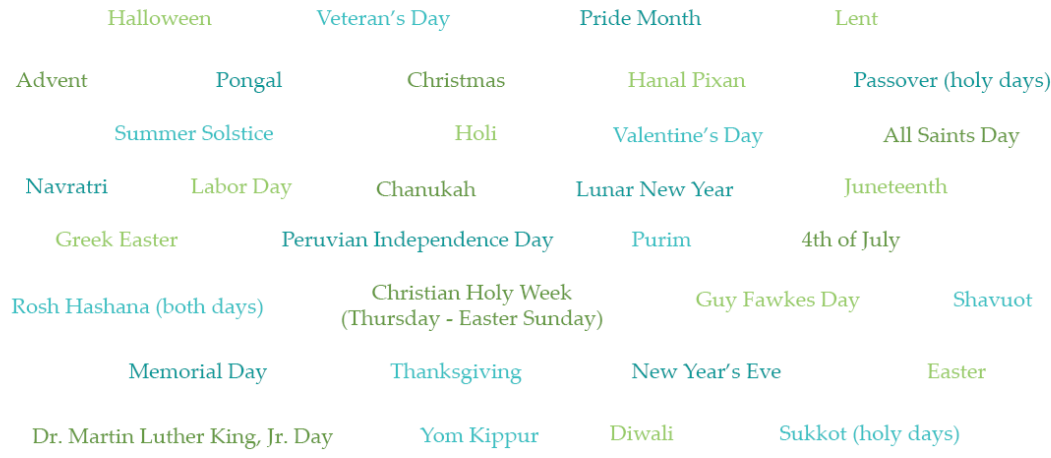
So far, our team has created lessons and resources for the following holidays and celebrations: Navratri, Indigenous Peoples’ Day, Diwali, Native American Heritage Month, Hanal Pixan and Día de los Muertos, Hanukkah, Winter Solstice, Christmas including traditions from the Czech Republic, Kwanzaa, Martin Luther King, Jr. Day, Chinese New Year, Black History Month, Purim, and Holi.
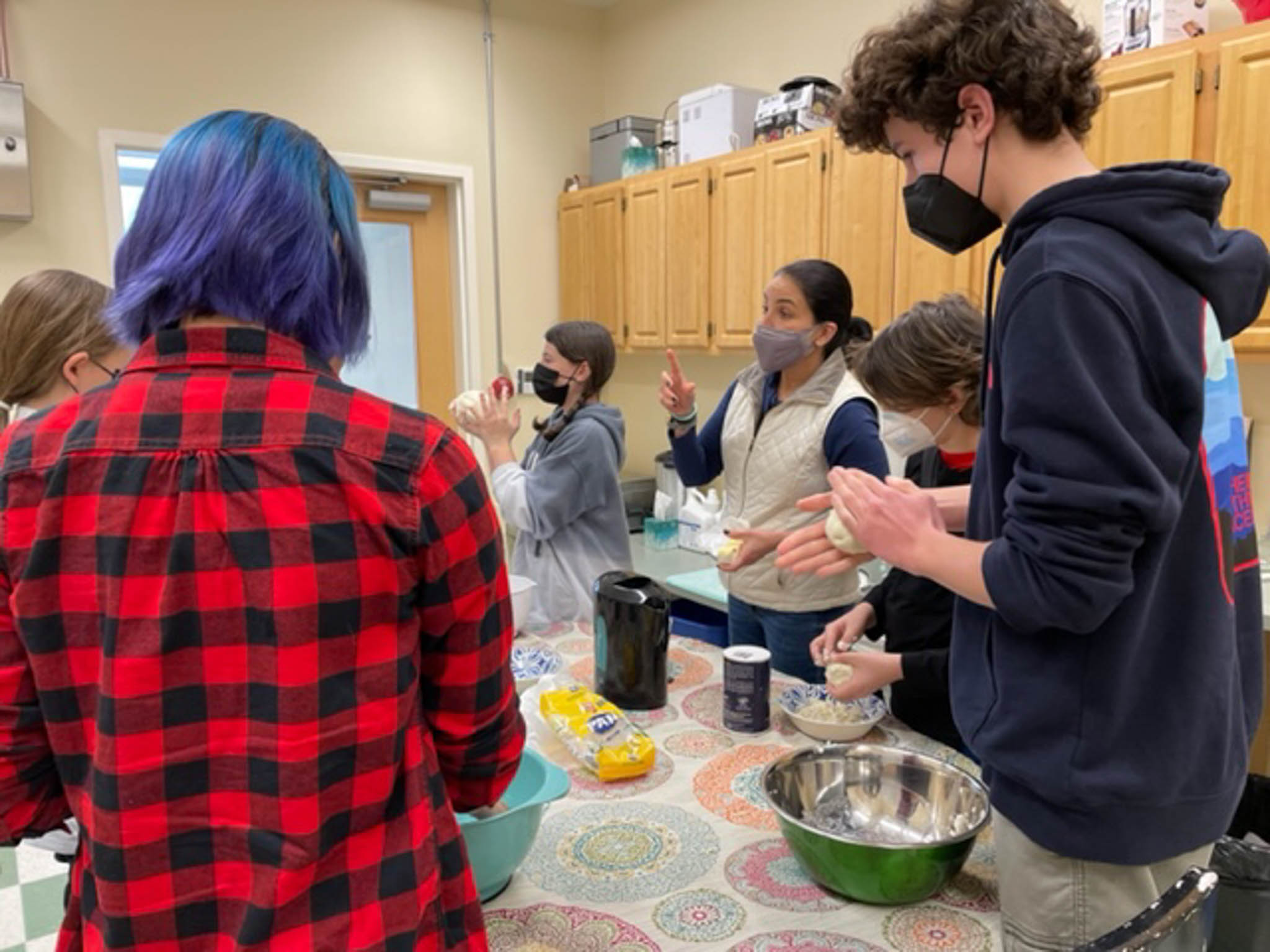
Some faculty worked with students to make traditional dishes, while others read stories and brought in artifacts from their culture to share with the children. The DEIB Committee worked with members of the faculty and staff to create Montessori nomenclature cards for children to learn more about aspects of the holidays if they were interested. In addition, interested staff members have been invited to speak to colleagues about the holidays they celebrate. This has been an important piece of belonging at Greenspring, and we have all learned so much from one another.
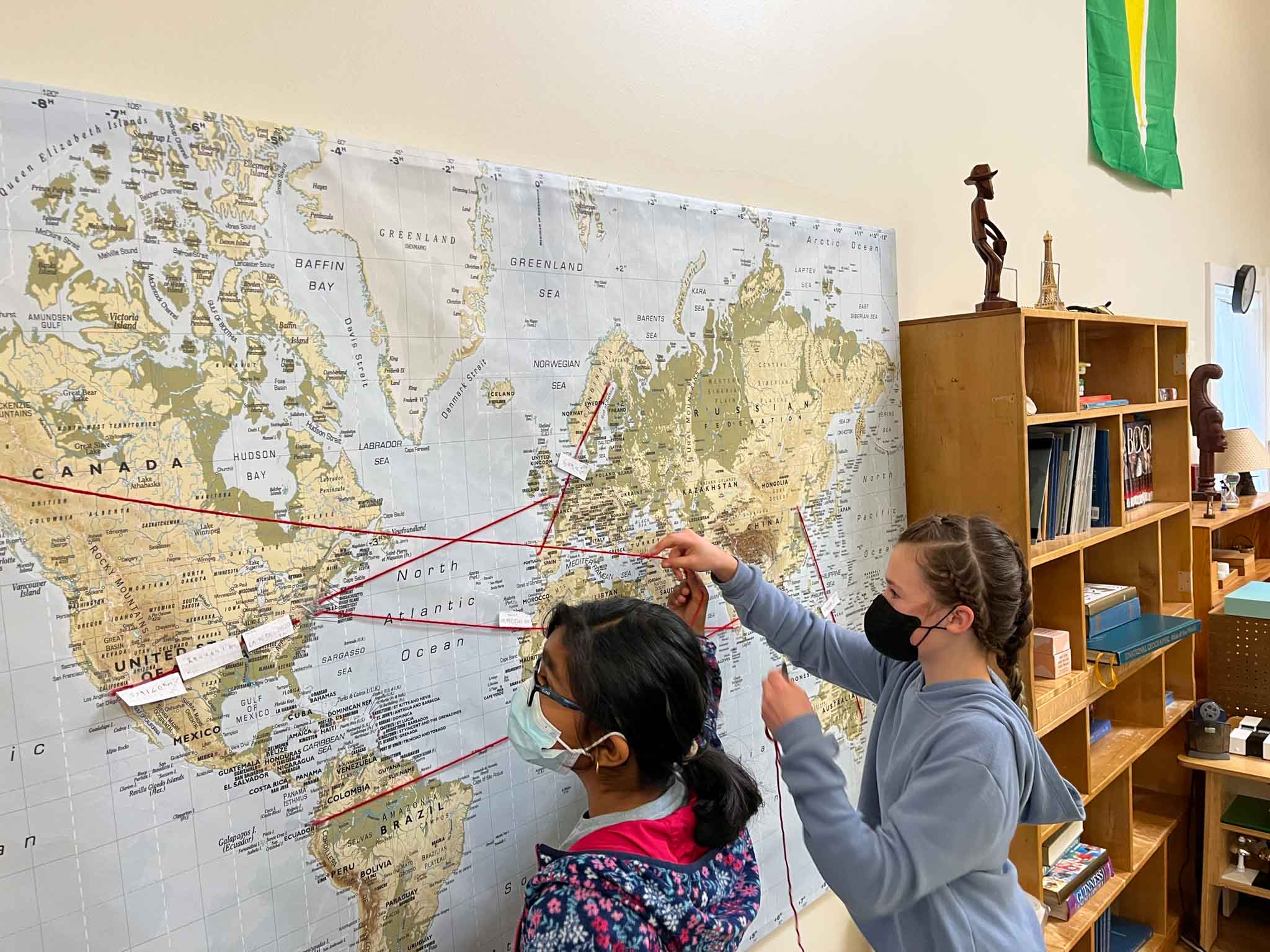
In addition to providing essential belonging cues to our staff, this work has become a staple in our classrooms. The children are eager to engage in conversations with one another about the holidays they too celebrate, and they are beginning to notice threads that are carried through various cultural celebrations. Children have noticed that many holidays across religions center around the lunar calendar. They have also begun to see how food and artifacts share similarities from cultures that are geographically dispersed. It is wonderful to see the ways in which the children are absorbing and interacting with this work.
The Diversity, Equity, Inclusion, and Belonging Committee at Greenspring Montessori School is a dedicated group of faculty and staff working to provide lessons and resources for Montessori educators to further the work of DEIB. To learn more about this work, please visit the Diversity, Equity, Inclusion, and Belonging page of our website.

The American Montessori Society Peace Committee has awarded the Ursula Thrush Peace Seed Grant to Greenspring Montessori School and a partnering parent group to fund a project that promotes peace education.
This grant was created by the American Montessori Society Peace Committee to honor the memory of Ursula Thrush. Dr. Thrush’s extraordinary dedication to fulfilling Maria Montessori’s vision for peace through children inspired many Montessori educators to include peace education in their classrooms and communities. Among her numerous achievements, Ursula founded the Maria Montessori School of the Golden Gate in San Francisco and helped establish The Science of Peace Task Force and the Montessori Peace Academy.
Greenspring Montessori’s grant submission was prepared in partnership with a group of Greenspring Montessori parent volunteers who have been gathering to discuss their own challenges and aspirations for their children as it concerns diversity, equity, inclusion, justice, and belonging. In addition to supporting one another, the parent group felt called to support the school in providing whatever education, resources, materials, and open dialogue was needed to support Greenspring in becoming the embodiment of peaceful society Maria Montessori and Ursula Thrush envisioned.
“The Peace Seed Grant Committee is impressed with the originality of your project and the deep thought that has gone into it. We are pleased to award this grant for a project that is consciously working toward understanding and further Social Justice among the many teachers, parents and students at your school. We are also impressed with the 19 different languages that are already a part of the school. The timing of this project is excellent!” -Award letter from Lesley Nan Haberman, Sonnie McFarland, and Judi Bauerlein
The Ursula Thrush Peace Seed Grant will support the school to:
1. Provide an introductory professional development workshop for Greenspring Montessori School staff to clarify what diversity, equity and inclusion is, how it is relevant to their work, and to begin to explore why diversity, equity and inclusion learning is critical to deepen their understanding of and ability to provide proper support for the varying needs of Greenspring Montessori School’s diverse student base.
2. Offer a workshop to Greenspring Montessori staff and parents on identifying and combating unconscious and implicit bias.
3. Offer a workshop to Greenspring Montessori staff and parents on age-appropriate best practices for talking with your children about race.
The grant activities will begin in fall of 2019 and will be complete by January 2020. These activities are a small subset of a larger body of work in the areas of diversity, equity, inclusion, justice, and belonging that the school is committed to carrying out in the years to come.

Every year, we celebrate the International Day of Peace here at Greenspring Montessori. This isn’t a particularly well-known holiday in many circles, I know, but to us this day is both a cause for celebration and a chance for reflection. Peace education is a huge aspect of the Montessori Method, and as a member of a Montessori community, the opportunity to honor and remember the importance of peace on this special day is one that I feel lucky to share.
Maria Montessori saw the education of young children as the human race’s opportunity to recreate itself in a way that would eliminate war. As with most things, Dr. Montessori did not think that meant children needed to be lectured on the subject, but rather that they needed to be given an opportunity to discover peace for themselves. From a very early age, our students learn to think globally about the human race and its place in the entire system of our planet. As they get older and their thinking becomes more abstract, they learn more about the ways that different cultures have coexisted with the geography and biology of their parts of the world to meet the basic needs that all humans have in common.
Once students get to our Adolescent program, they go through several-month units exploring questions like, “Are all humans created equal?” and “What brings humans together into groups?” Here, these questions are taken very seriously and are never assumed to have simple answers. We help children seek insight by looking at world history, at the differing cultures of the world’s people, and at the interactions between humanity and the environment. Perhaps most importantly, we think about how future history might be written in a way more in keeping with the harmony that seems possible between people and the world, or between one group of people and the next.
Peace is also, essentially, a habit that Montessori students learn. Lessons in Grace and Courtesy and the Peace Tables we have in every classroom teach our students the habit of viewing and treating others with respect, and then to continue to try to forge understandings where they encounter conflict. These lessons are present in Montessori classrooms from such an early age that the habits they create become as natural to our students as using a spoon, or putting on shoes.
The benefits of peace education are not just altruistic, but eminently practical – no matter your politics, or what you think about the current situation in Syria or Kenya. Most adults who have navigated the many changes to the world (or even just the job market) in the last several years have had reason to think about how much more connected everything seems to be getting – countries thousands of miles away can be regular business partners in ways that they might not have a decade or two ago, and people are truly mobile on a global scale for the first time in our planet’s history. Prejudice in favor of one’s own tribe – whether that tribe is formed by religion or geography or your school’s alumni association – has become more and more counterproductive to operating in a world where diversity cannot be avoided and is to be celebrated.
We so often encounter situations in which we need to work with people who are coming from different points of view. I wonder, as an adult who did not have a Montessori education, how much easier that might have been if from an early age I’d had the habits of respect, conflict resolution, and looking at the ways various groups have solved problems differently with more wonder and curiosity. Then I look at this school, and I talk with its faculty, and I meet other adults who did have the benefit of this education – and I know that the tools we are giving our students are incredible ones and am proud to be a part of making it happen.
Peace is an amazing concept, a useful tool, and, through Montessori education, an attainable goal. One worth celebrating and giving serious consideration to – and, to honor this holiday each year, we raise our voices to recognize its importance.