
Adolescent Igniting Voice on Social Justice Topics

Adolescent Igniting Voice on Social Justice Topics

In December, students in the Adolescent Community began their research by asking adults in their lives about social justice topics. They then participated in a speaker series, hearing from Greenspring parents Michelle Siri, Jen Brock-Cancellieri, and Jay Roy as well as Ximena Reyes Torres and Juliana Glassco, on social justice issues including the wage gap, ban the box (employment access for the formerly incarcerated), human trafficking, and national and global initiatives to fight hunger.

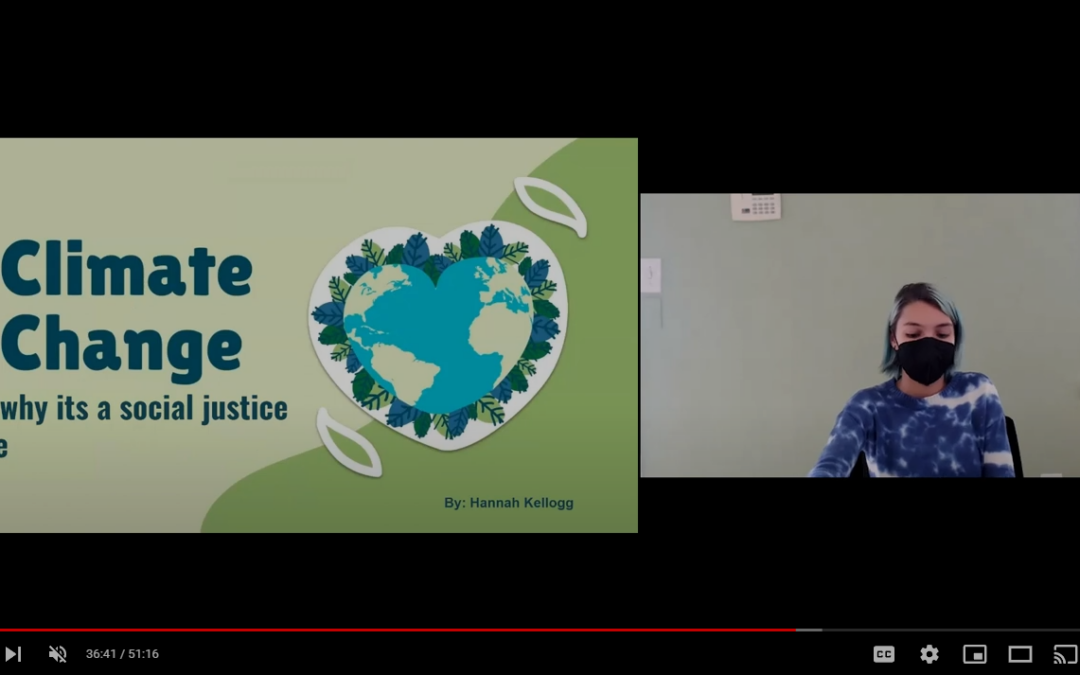
After that, the Adolescents selected a topic that is important to them, researched it, and created a presentation about what they’ve learned. Take a moment to watch their final presentations on environmental justice, the opioid crisis, fast food impacts, neurodiversity in schools, the gender pay gap, and police brutality. This work integrates data analysis, research, thesis-building, using supporting evidence, and presentation skills. 

Adolescent Studies of Food, Identity, and Access

Adolescent Studies of Food, Identity, and Access

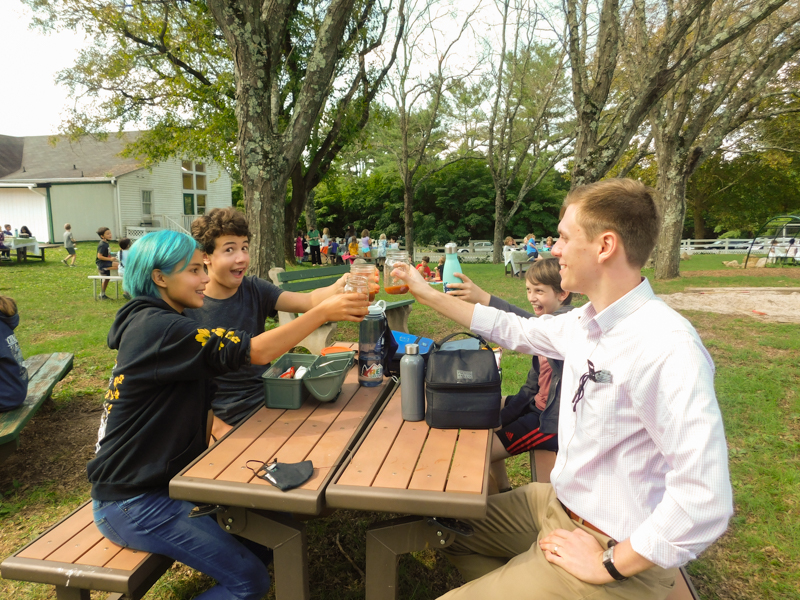
This year the Adolescent Community is exploring complex topics around food. They started with food systems and the biochemistry of food, and they are now beginning to study food as part of culture and issues of food accessibility in Baltimore.

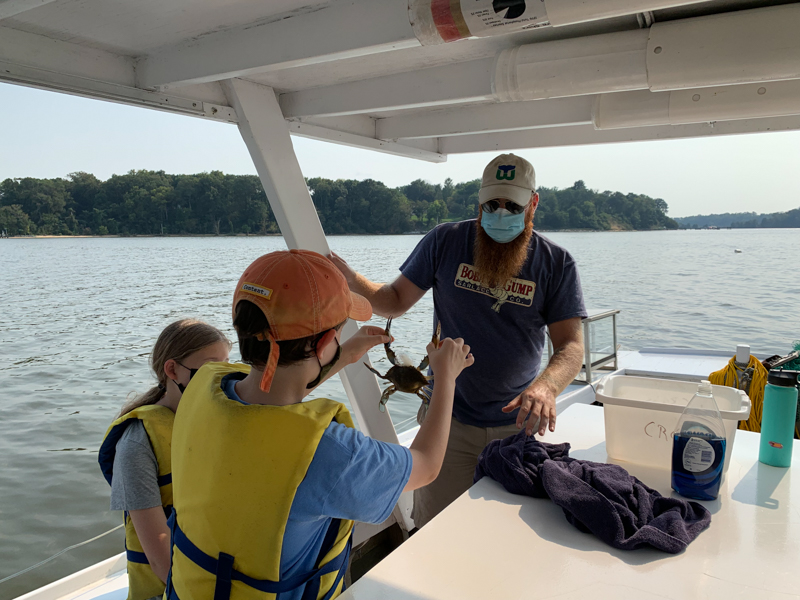
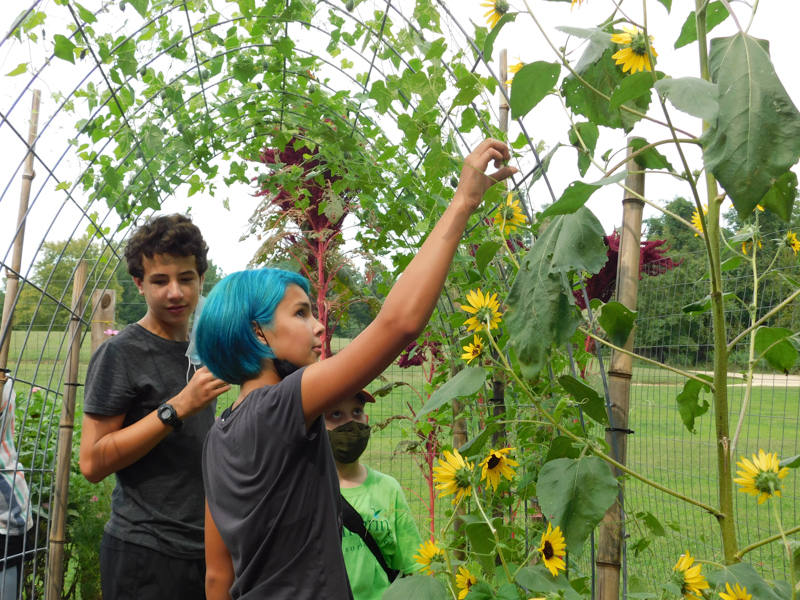
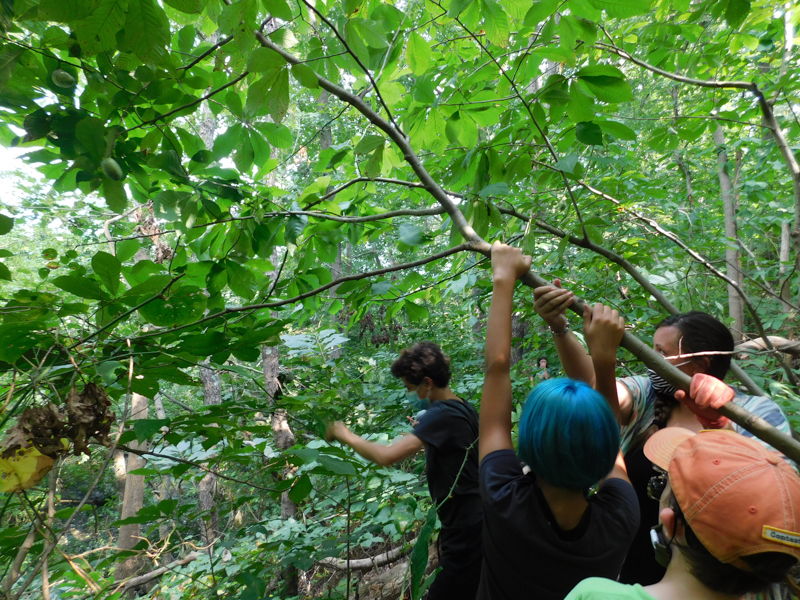
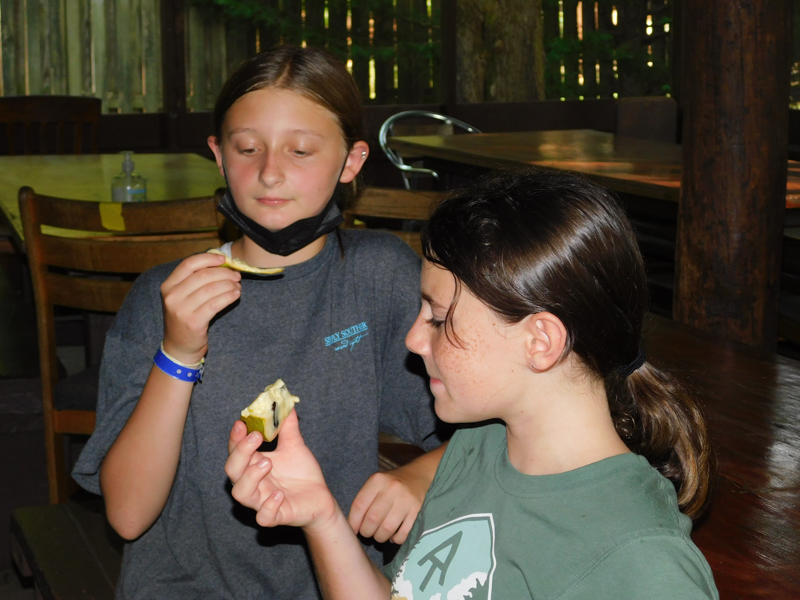
Students began the year on an Odyssey trip to Echo Hill Outdoor School to learn about food systems and where our local food is sourced. Students picked wild pawpaws and harvested pears, apples, cucamelons, peppers, and more from the gardens at Echo Hill. Then they spent several days on a fishing boat in the Chester River to learn about the local marine ecosystems and how fish, crabs, and other seafood are caught for the food industry.


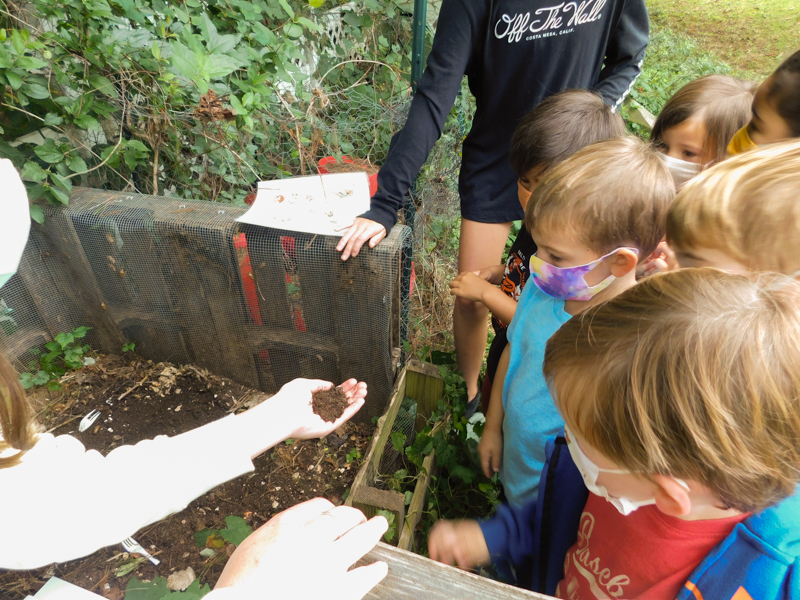
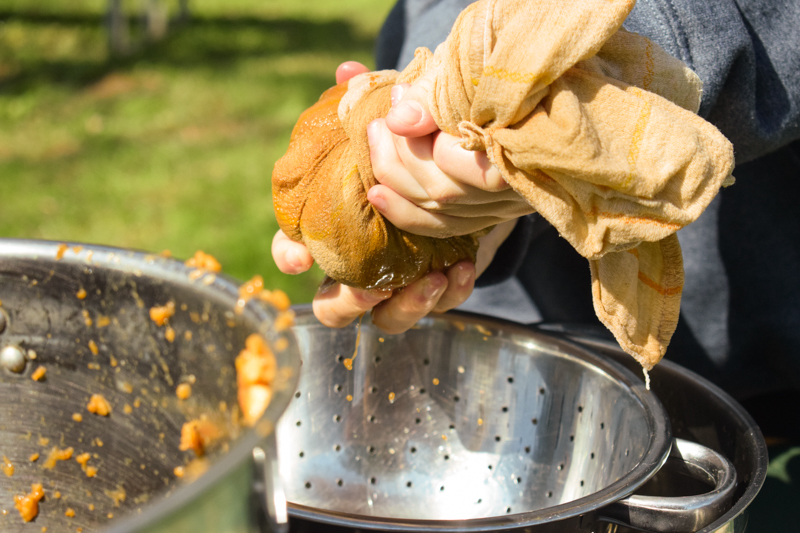
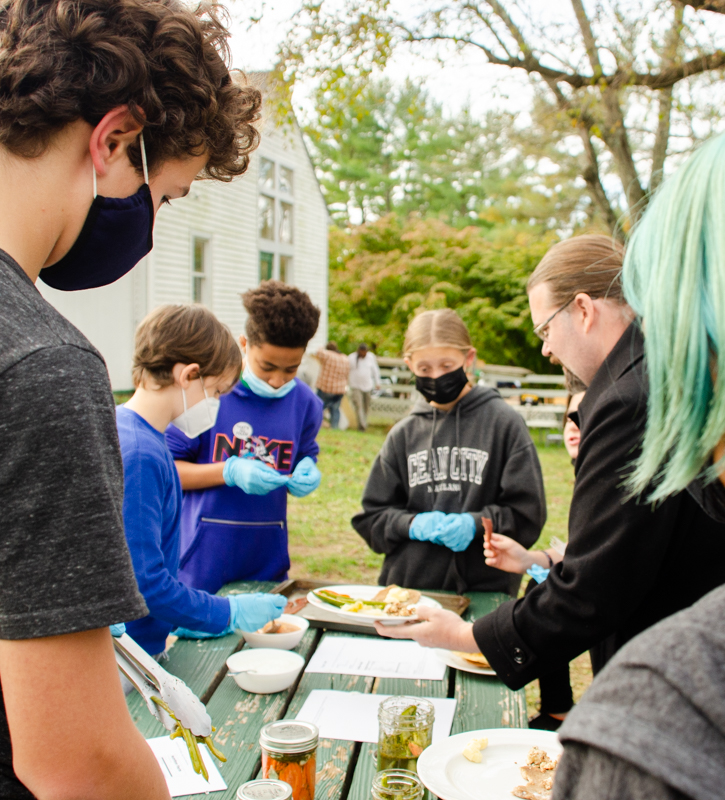
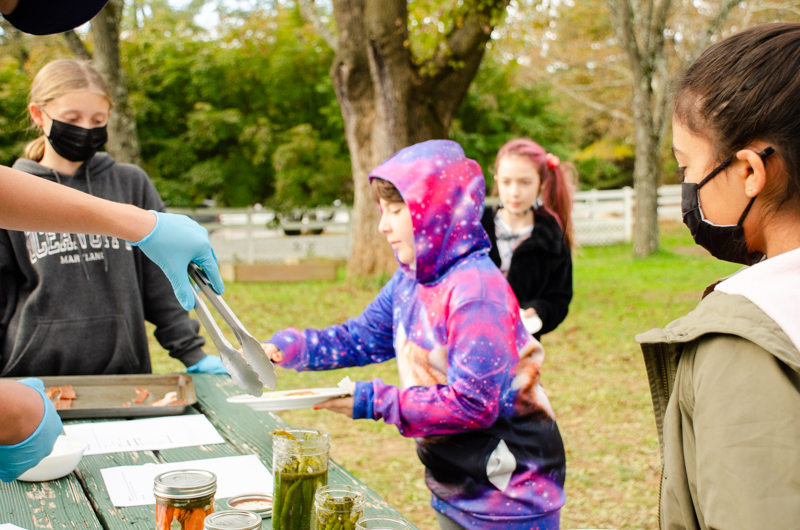
They then began a unit on the biochemistry of food, learning about the fermentation process and ways of food preservation, making homemade paneer (Indian cheese), chapati (made with whey from the paneer), butter, sourdough, yogurt, apple cider vinegar, and a variety of pickled vegetables. They also learned about the breakdown of nutrients back into the soil, starting a campus-wide composting program and giving lessons to the younger classes on how to compost at school.

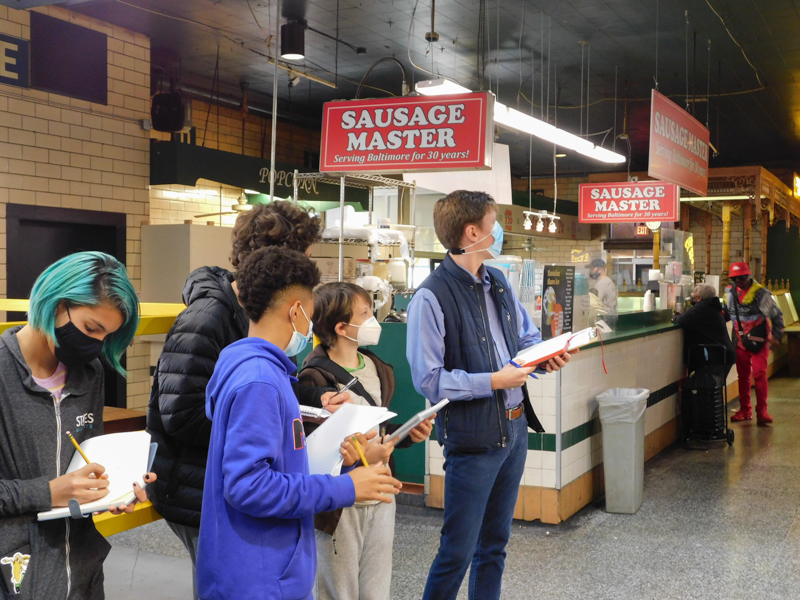
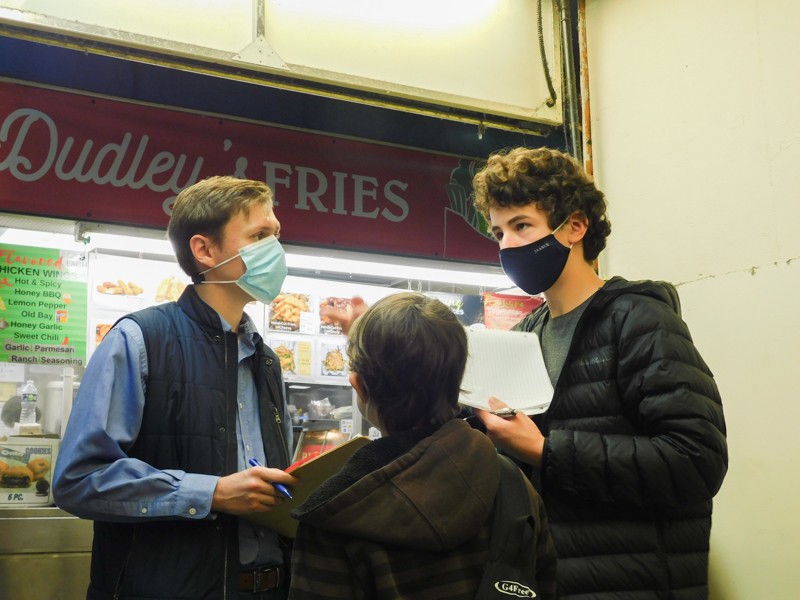
The students are currently studying the sociology of food, beginning with the fundamental needs of humans and exploring the cultural significance of food. Students ventured to Lexington Market in Baltimore to learn more about the many ways in which cultures cook and share food. They are also beginning to explore the ways that different communities are able to access food. As they explore neighborhoods and markets throughout Baltimore, they will continue to ask deep questions about culture, identity, and food.


Stay tuned for more details about the upcoming projects from the Adolescent Community as they begin to design new food systems.

The Adolescent and the Land

The Adolescent and the Land

As emerging adults, it is crucial that adolescents learn and grow in an environment that matches their development as well as gives insight into the time in which we live; we must improve each individual to improve society.

Dr. Montessori calls the Erdkinder the “school of experience in the elements of social life” where work is an introduction to both nature and civilization and provides a limitless field of scientific and historical studies. Adolescents work through experiences on the land: growing crops and caring for animals. They also run a shop where they buy and sell produce and handmade items, promoting personal craftsmanship over mass production. This allows them to fully engage with the two main independences indicative of this developmental stage: social and economic. The shop becomes a general meeting place for their extended community where they take responsibility for the corresponding financial and moral obligations associated with running their own business.

Adolescents volunteer with Real Food Farm in Baltimore City, growing fresh produce for communities in need.

An Adolescent organized a service project to clean up the Jones Falls waterways.

Throughout their educational studies, they meet with experts from various fields as they study the earth and living things, human progress and the building up of civilization, and the history of humanity. They will build a library of atlases, primary documents, and other resources that highlight the connection between peoples and cultures throughout time. They explore scientific progress in biology and chemistry through individual or small group projects that are related to the land whenever possible. All curriculum areas are interrelated and these connections are consciously discussed. This also includes self-expression: music, language, and the arts and the development of the personality that entails ethics, mathematics, and modern languages.

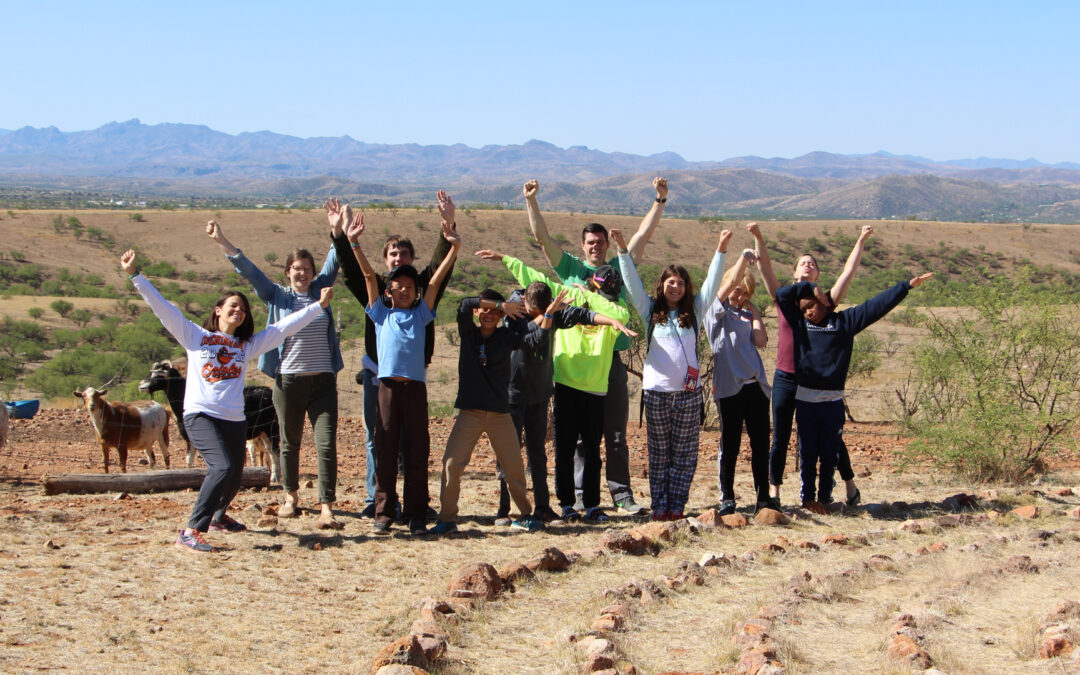
Adolescents learn water conservation from indigenous farmers in Arizona for their Spring Odyssey.

Adolescents clear brush on an Arizona farm.

Adolescents are brought closer together by their work on the land throughout the year.

Within this framework, the moral and physical care of the students is also a priority as they face difficult physical and emotional transitions. They must be provided with work that is in the open air of nature, promoting plentiful and nourishing food that is their own produce whenever possible. A space that allows them to peacefully reflect and meditate when the psychological characteristic of decreased attention takes hold. They learn about nutrition and how to properly care for themselves as they discuss health and wellness topics with adult role models that guide them towards informed decision-making. There is a division of labor, which leads to a genuine cooperative community.  They are diplomatic in their acceptance of other’s points of view through Socratic discussions.

Adolescents learn about the Chesapeake Bay watershed while fishing and living on a boat for their Fall Odyssey.

Work on the land provides natural consequences unmatched by any other environment. The plethora of studies inspired by the land also provides a true understanding for the range of careers available today; our wide and thorough education grows their professional interests so that they can take part in the science and technological applications being used to understand and solve the complex problems of our times. The land also provides the right type of freedom where they act on individual initiative within clear limits and rules that results in the self-discipline necessary for success. Our students will know how to put things right: how to adjust a machine, mend a broken window, build a shed, forge a path, and that most importantly, that they can be self-sufficient.

An Adolescent makes field notes on a Maryland native plant garden.

Schools today do not offer this essential balance of manual and intellectual work, leaving adolescents unprepared for taking an active role in society. Our environment acknowledges that these two kinds of work complete each other and are equally essential to a civilized existence and is designed to balance them so adolescents gain a clear understanding of the society for which they are about to join, one that demands a personality of character that adapts quickly and easily.

In order to emerge into the final plane of development, maturity, adolescents must be made to feel capable of succeeding in life by their own efforts and merits. Montessori reminds us that when adolescents’ needs are met within this framework, they can then provide humanity with the clues and hope for future progress.

A Montessori Education is More Important Than Ever Before

A Montessori Education is More Important Than Ever Before

As the pandemic surges through the summer and into the fall, we are beginning to see the ways in which our world is reshaping. From working remotely and learning from home to businesses being transformed forever by the economic turn, we are just beginning to see that our lives will not return to normalcy. Children are entering into a world that will be vastly different from what we grew up with, and they need to be ready. 

Montessori education was founded during another tumultuous time – the early 1900s in Europe. Through two world wars, a global pandemic, and a shattering economic crisis, Dr. Maria Montessori saw to it that her model equipped students with the tools to think critically, adapt, and persevere. Over 100 years later, her tenets are still followed today by a growing number of Montessori schools as well as parents adapting the Montessori method at home. 

The truth is: the world needs what Montessori children can do.

Anne Frank in her Montessori classroom in 1936.

Montessori children think creatively and innovate 

Unlike traditional learning in which the lesson and assessments are the heart of the school experience, exploration is emphasized in Montessori classrooms. Students are encouraged to follow their interests, decide how to demonstrate their learning, and share their discoveries with their peers. By learning at a young age to manage their time and think creatively, Montessori children are able to be thought leaders in the adult world, especially in science, engineering, technology, and mathematics. Montessori truly builds innovators.

Upper Elementary students dissect a cow brain as part of their chosen science work.

Montessori children develop strong leadership skills 

Whether learning remotely or on campus, our Guides are dedicated to setting up an environment that allows the child to work at their own pace, encouraging them to ask questions and push themselves to learn more. This shift allows for students to take ownership of their own learning, having a sense of pride around education and discovery. Multi-age classrooms expand upon this, with our older children taking on the role of leaders in the classroom, teaching their peers as they themselves begin to master a subject. From the start of their Montessori education, our youngest children learn that they can do hard things, setting the stage for the work to come in the Elementary and Adolescent classrooms.

Upper Elementary students attending the Montessori Model United Nations Conference in New York to represent the country of Gayana.

A Greenspring student presents his biography research to parents and peers.

Montessori children engage in thoughtful dialogue about our past histories 

Children are given the “big picture” – especially through the Cosmic Curriculum at the Elementary level. Academic subjects are not taught separately but woven together to show the interconnectedness of the disciplines. In our Elementary classrooms, children begin to wonder about how the world works, and we are consistently surprised and inspired by the ways in which these young people are ready to change the world for the better. In the Adolescent Community, students are eager to engage in respectful dialogue with their peers, discussing everything from moral philosophy to civil rights and beyond. 

An Adolescent student reads a speech she wrote in support of Leia’s Law for gun control on the steps of the Baltimore County Courthouse.

Montessori children have an unwavering commitment to supporting those most vulnerable in our communities 

In the Toddler and Children’s House classrooms, much of the child’s work involves the need and desire to serve the community in a way that challenges them. From serving tea and feeding classroom pets to organizing food and clothing drives and sharing art with people in a local retirement community, the children begin to generate their own service initiatives when they see there is a need in the world. Throughout their time at Greenspring, children and adolescents are taught that they have a voice and that they matter in the world. These early lessons help to define who they are and push them to continue making a difference, as we’ve seen with countless Greenspring alumni dedicated to service, the environment, and their communities.  

Adolescents plant seedlings with Real Food Farm in Baltimore to support people with limited access to healthy food.

As we look toward the coming year and beyond, we are inspired to think about the direction our children will take us. This is truly a pivot point in history and we as Montessori educators are here to help shape that world with our students. We are not just looking for ways for our children to catch up on academics. We are looking ahead in order to understand what our children need in this new world. 

To learn more about Montessori and learning options for your child, plan your visit today

STEM Educational Initiatives and the Montessori Method

STEM Educational Initiatives and the Montessori Method

Reposted from NAMC Montessori Teacher Training Blog

STEM science technology engineering math montessori method succulent plant
Math and science work harmoniously in nature.

Since the launch of Sputnik in 1957, the US has called for an increase in scientific and mathematical education. There is currently a movement underway to train and terrain 100,000 STEM (science, technology, engineering, and math) teachers. Across the country, there are new standards for STEM subjects, with educators being charged to be creative and engaging rather than just teaching from a textbook.

What does this mean for Montessorians?

STEM – Science, Technology, Engineering, and Math: Being Creative and Engaging in the Montessori Classroom

Montessori teachers have a jumpstart on their conventional counterparts. Since student engagement is at the forefront of the Montessori classroom, we are already actively engaging students in hands-on learning. Beginning in the Montessori preschool environment, students learn the fundamental rules of math and science through the discovery of natural laws through manipulation of didactic materials and problem-solving with peers. The work engages the senses and ensures the internalization of concepts, not just memorization of disjointed facts and figures. Through the Montessori concept of Cosmic Education, the curriculum reinforces that everything is interrelated; students see how math and science work harmoniously in nature, like in the Fibonacci sequence.
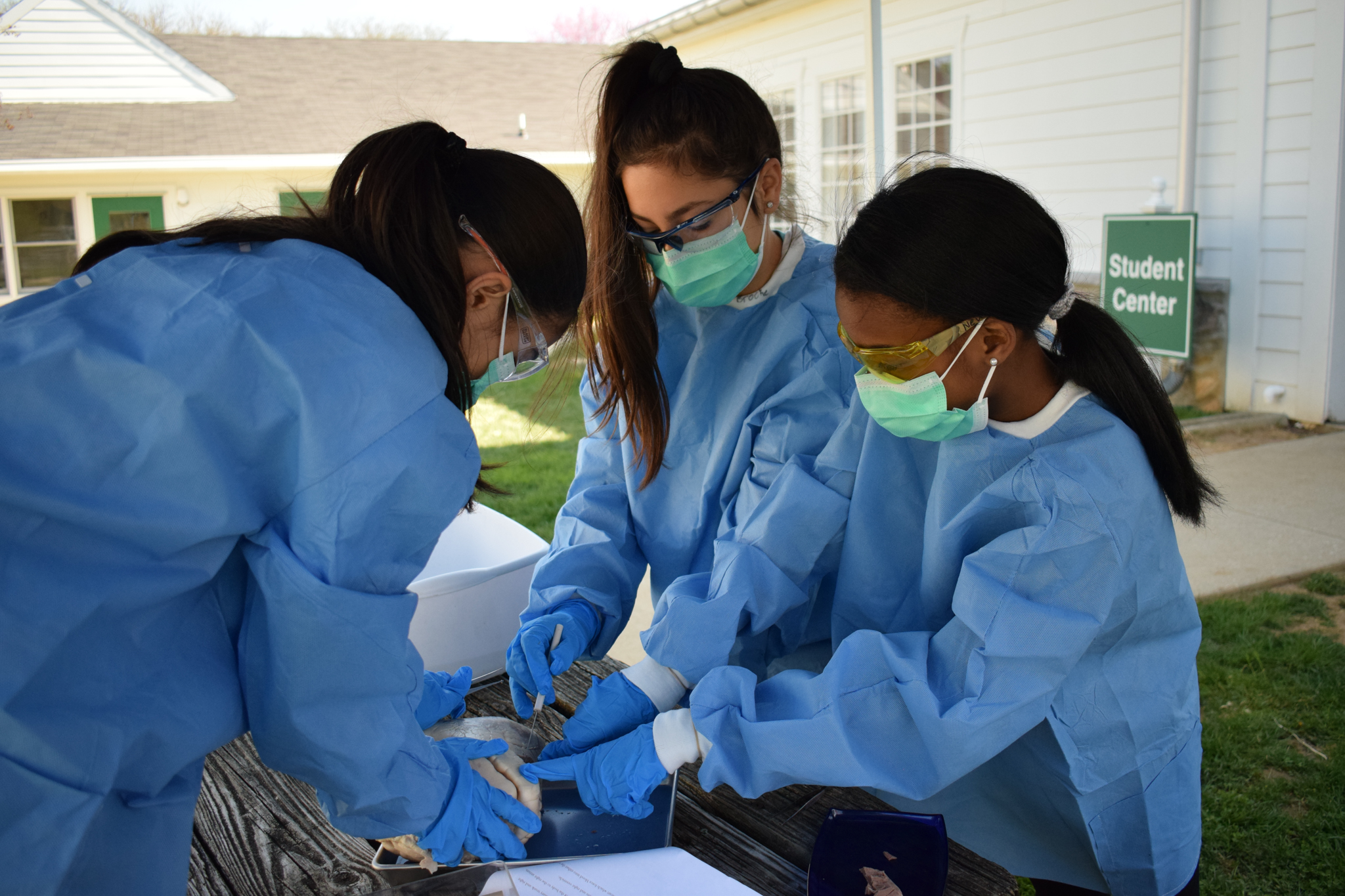
Upper Elementary students dissect a cow heart as part of their studies in anatomy.

On March 29, 2012, the National Governor’s Association issued a brief on “The Role of Informal Science in the State of Education Agenda”. It calls for an increase in hands-on discovery and practice of STEM concepts, something that is already happening across all levels in the Montessori community. It also calls for the use of outside resources such as museums, science centers, and other ‘real-life’ activities that engage and focus student’s attention in the areas of science, technology, engineering, and math. Again, Montessori teachers have been using “going-out” opportunities to pique student interest and foster real-life connections for over 100 years.

An Adolescent student shows one of their chicks to a Children’s House classroom, engaging in cross-level science work.

Larry Page and Sergey Brin, Co-founders of Google, have said that Montessori education allowed them to think for themselves. They credit Montessori with allowing them to question what was going on around them and to discover the answers for themselves. Former Montessori students, Jeff Bezos, founder of Amazon.com, and Will Wright, inventor of “The Sims” video game series, also credit Montessori for allowing them to ask questions, discover, and learn on their own terms.

The current STEM movement is calling for innovation, collaboration, and hands-on learning and problem-solving. To the Montessori community, this is nothing new. This is what we’ve been doing all along.