As the pandemic surges through the summer and into the fall, we are beginning to see the ways in which our world is reshaping. From working remotely and learning from home to businesses being transformed forever by the economic turn, we are just beginning to see that our lives will not return to normalcy. Children are entering into a world that will be vastly different from what we grew up with, and they need to be ready.
Montessori education was founded during another tumultuous time – the early 1900s in Europe. Through two world wars, a global pandemic, and a shattering economic crisis, Dr. Maria Montessori saw to it that her model equipped students with the tools to think critically, adapt, and persevere. Over 100 years later, her tenets are still followed today by a growing number of Montessori schools as well as parents adapting the Montessori method at home.
The truth is: the world needs what Montessori children can do.
Anne Frank in her Montessori classroom in 1936.
Montessori children think creatively and innovate
Unlike traditional learning in which the lesson and assessments are the heart of the school experience, exploration is emphasized in Montessori classrooms. Students are encouraged to follow their interests, decide how to demonstrate their learning, and share their discoveries with their peers. By learning at a young age to manage their time and think creatively, Montessori children are able to be thought leaders in the adult world, especially in science, engineering, technology, and mathematics. Montessori truly builds innovators.
Upper Elementary students dissect a cow brain as part of their chosen science work.
Montessori children develop strong leadership skills
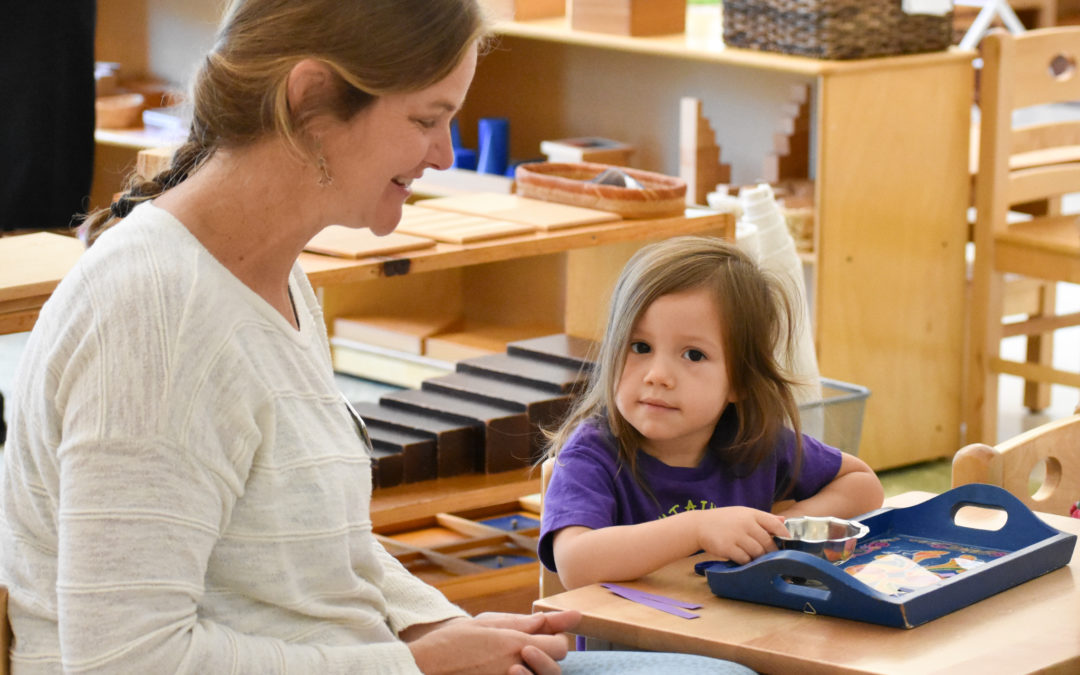
Whether learning remotely or on campus, our Guides are dedicated to setting up an environment that allows the child to work at their own pace, encouraging them to ask questions and push themselves to learn more. This shift allows for students to take ownership of their own learning, having a sense of pride around education and discovery. Multi-age classrooms expand upon this, with our older children taking on the role of leaders in the classroom, teaching their peers as they themselves begin to master a subject. From the start of their Montessori education, our youngest children learn that they can do hard things, setting the stage for the work to come in the Elementary and Adolescent classrooms.
Upper Elementary students attending the Montessori Model United Nations Conference in New York to represent the country of Gayana.
A Greenspring student presents his biography research to parents and peers.
Montessori children engage in thoughtful dialogue about our past histories
Children are given the “big picture” – especially through the Cosmic Curriculum at the Elementary level. Academic subjects are not taught separately but woven together to show the interconnectedness of the disciplines. In our Elementary classrooms, children begin to wonder about how the world works, and we are consistently surprised and inspired by the ways in which these young people are ready to change the world for the better. In the Adolescent Community, students are eager to engage in respectful dialogue with their peers, discussing everything from moral philosophy to civil rights and beyond.
An Adolescent student reads a speech she wrote in support of Leia’s Law for gun control on the steps of the Baltimore County Courthouse.
Montessori children have an unwavering commitment to supporting those most vulnerable in our communities
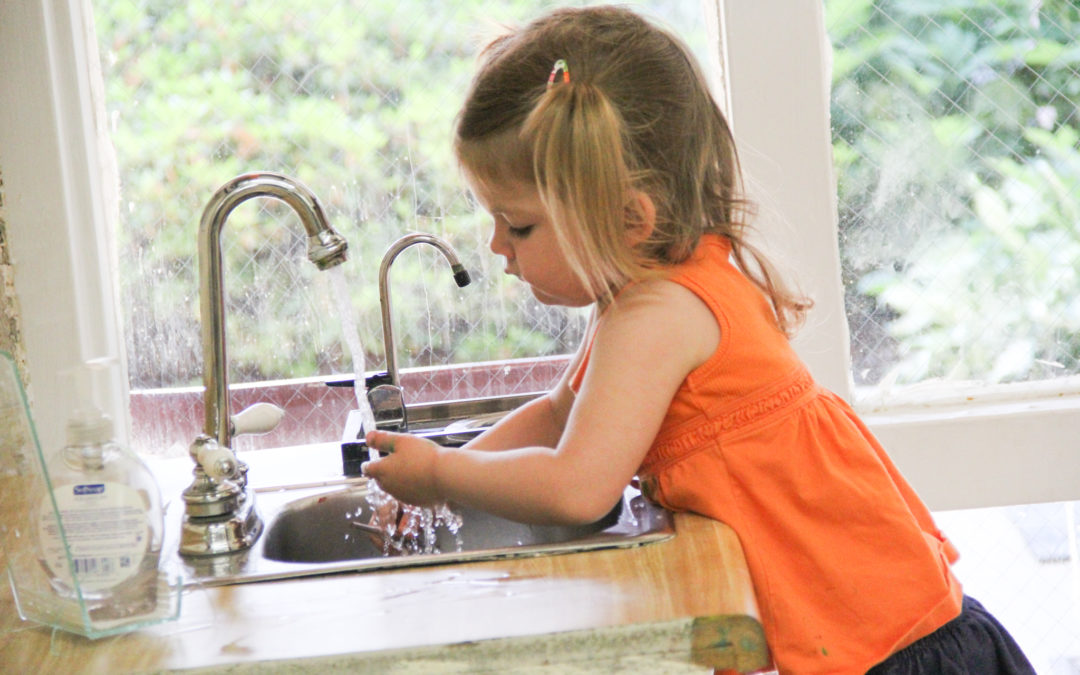
In the Toddler and Children’s House classrooms, much of the child’s work involves the need and desire to serve the community in a way that challenges them. From serving tea and feeding classroom pets to organizing food and clothing drives and sharing art with people in a local retirement community, the children begin to generate their own service initiatives when they see there is a need in the world. Throughout their time at Greenspring, children and adolescents are taught that they have a voice and that they matter in the world. These early lessons help to define who they are and push them to continue making a difference, as we’ve seen with countless Greenspring alumni dedicated to service, the environment, and their communities.
Adolescents plant seedlings with Real Food Farm in Baltimore to support people with limited access to healthy food.
As we look toward the coming year and beyond, we are inspired to think about the direction our children will take us. This is truly a pivot point in history and we as Montessori educators are here to help shape that world with our students. We are not just looking for ways for our children to catch up on academics. We are looking ahead in order to understand what our children need in this new world.
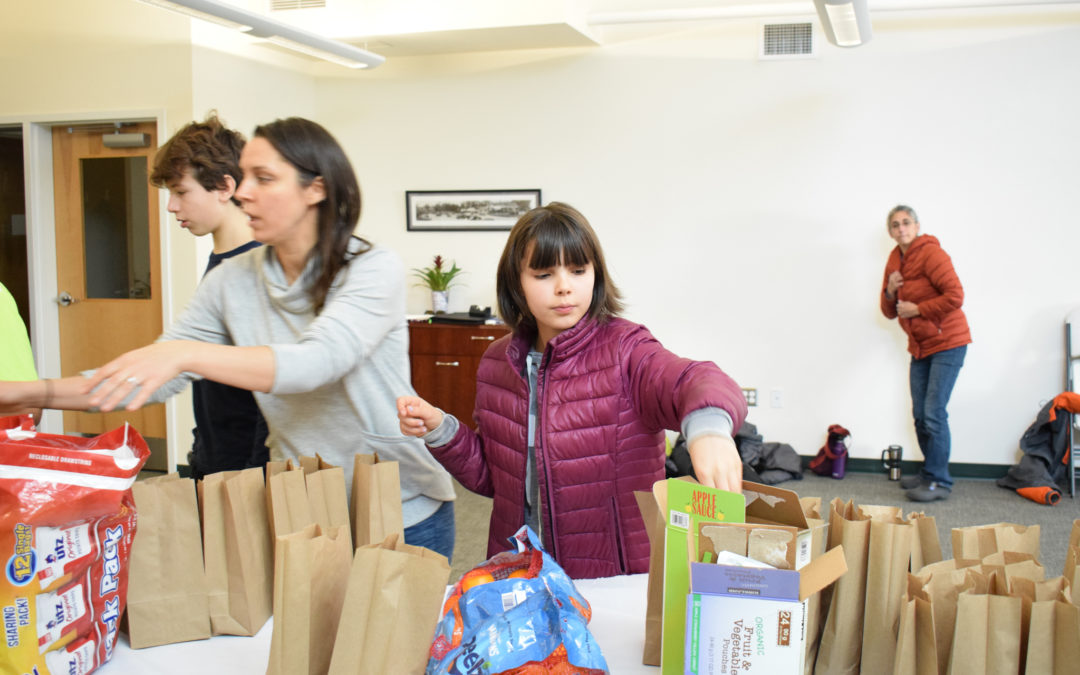
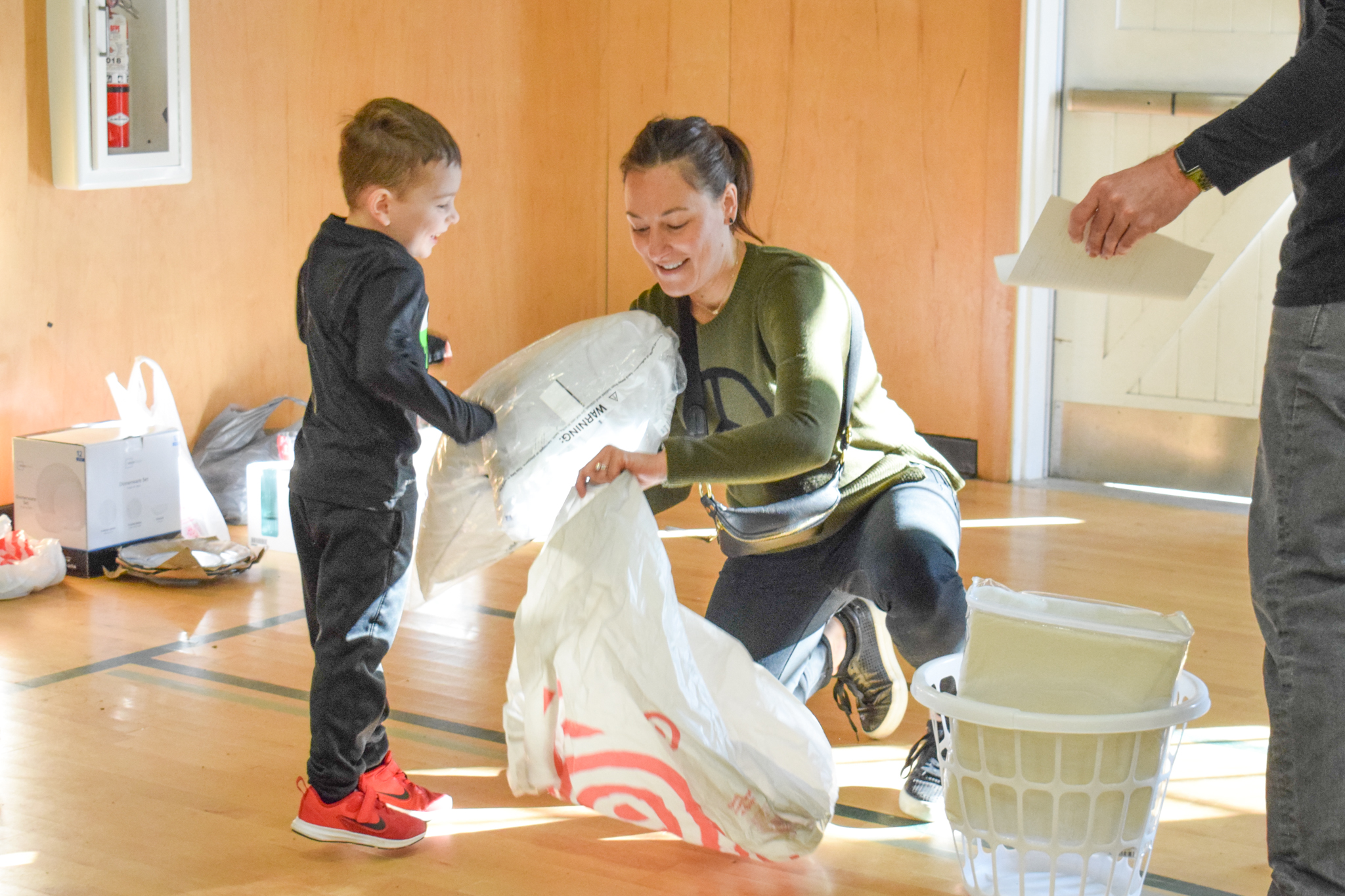
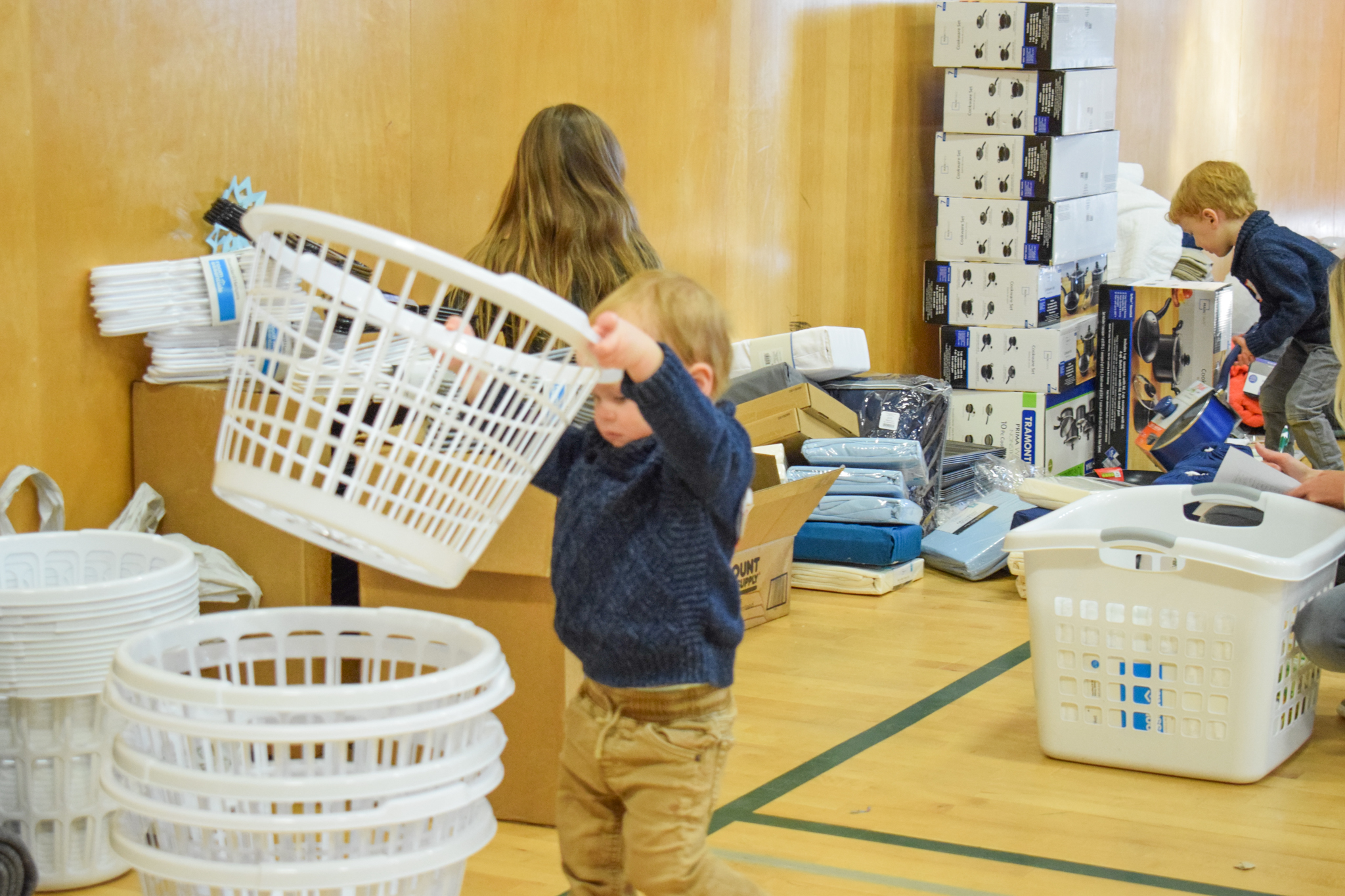
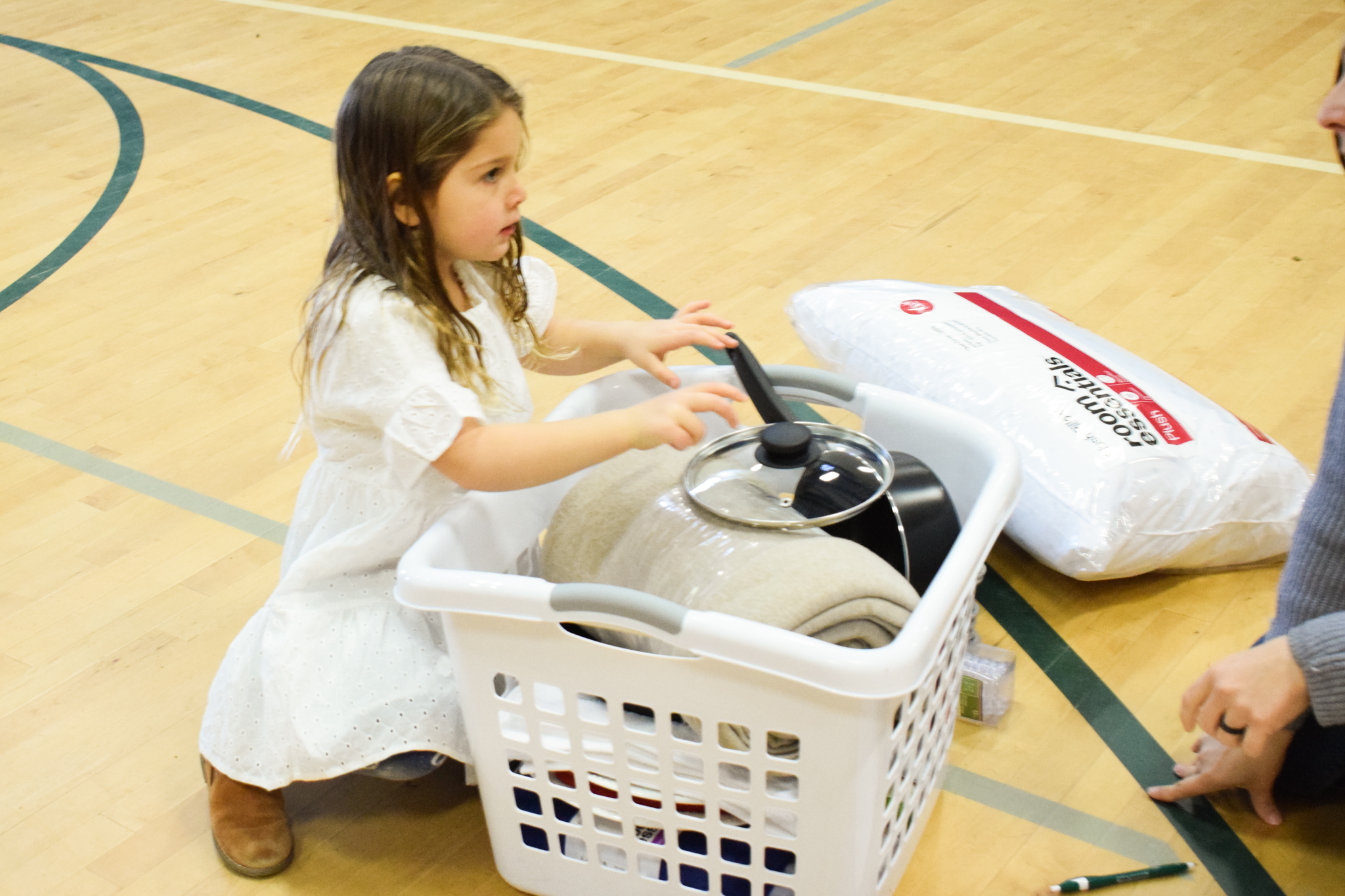
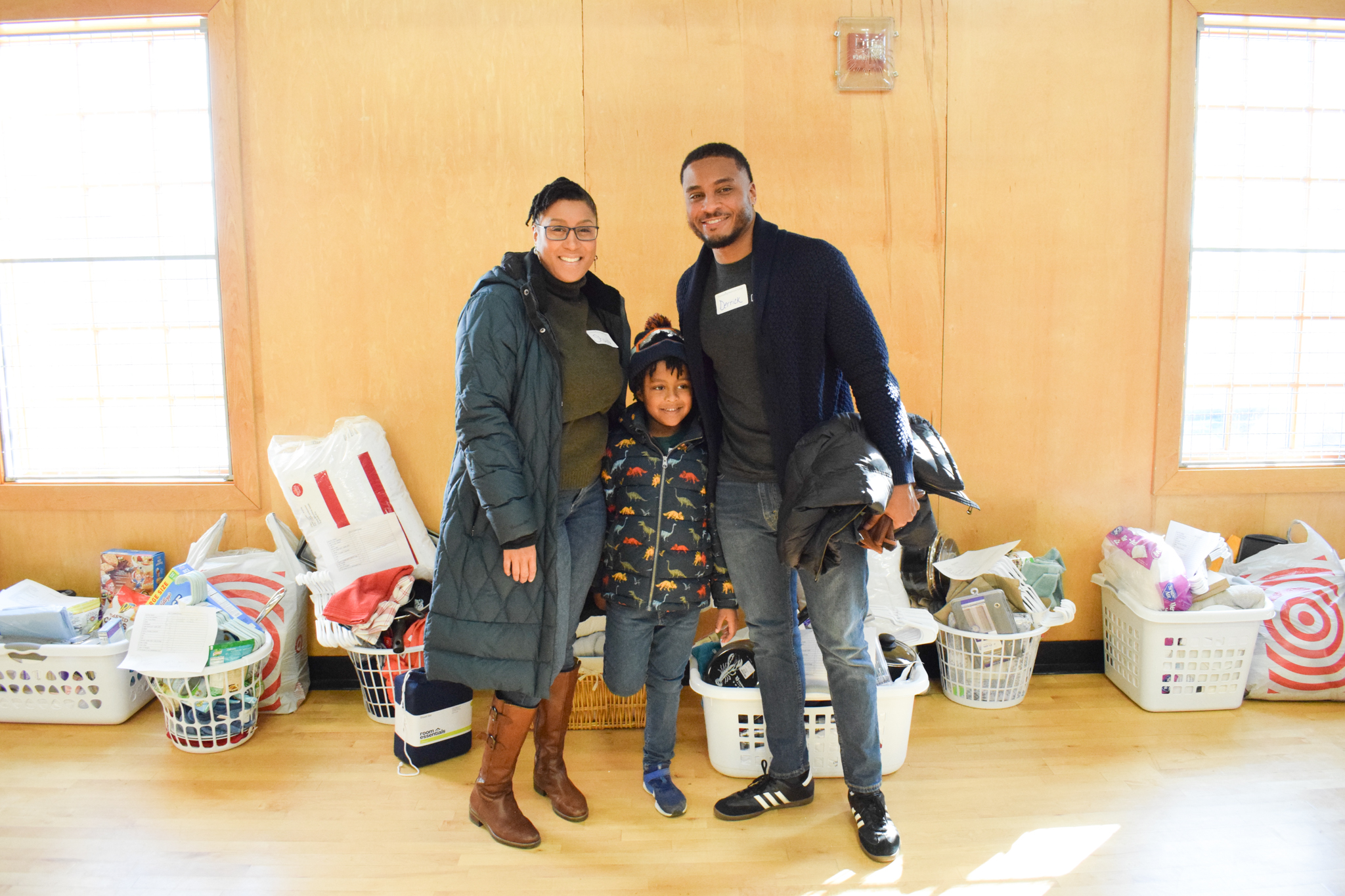
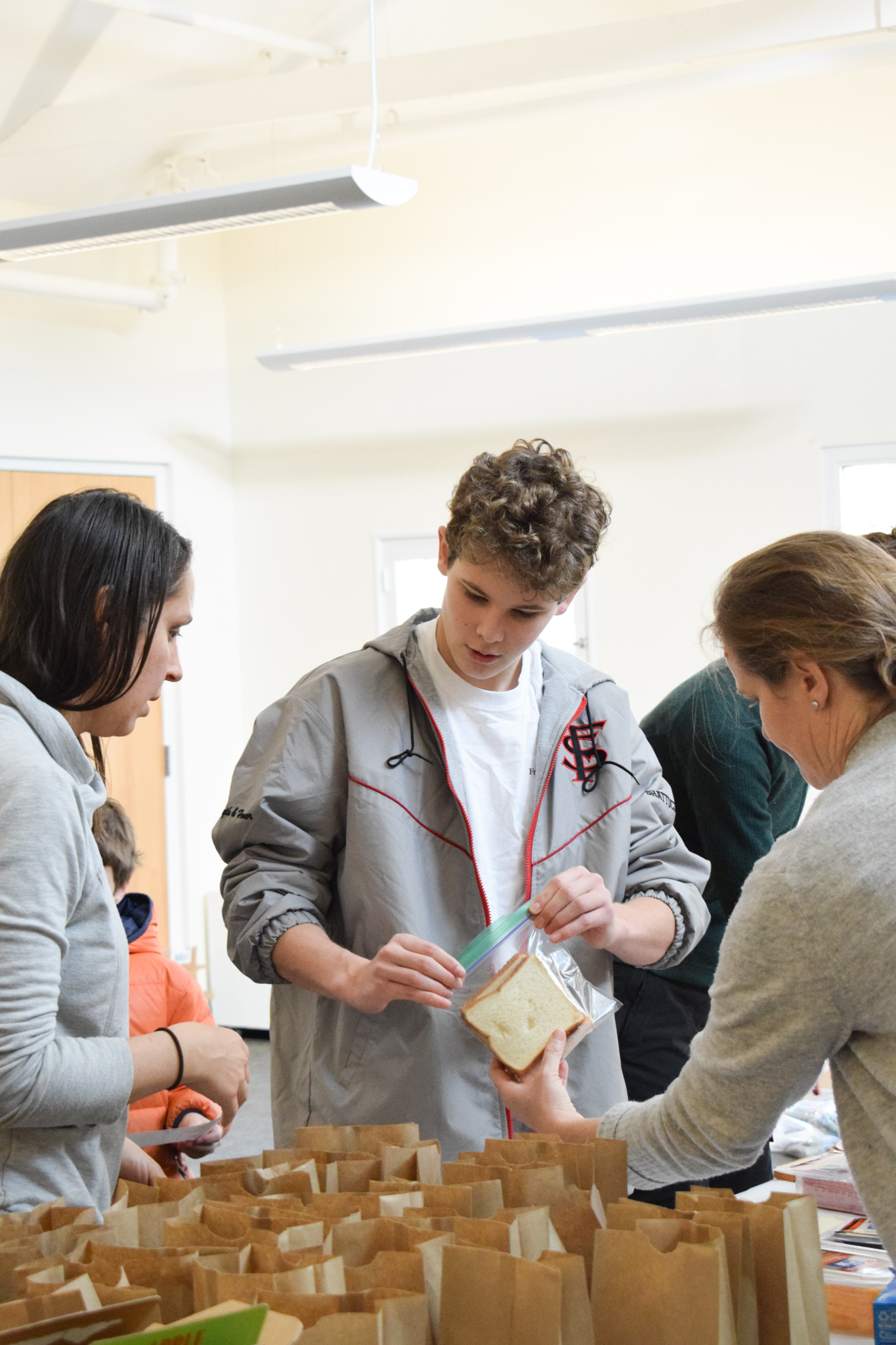
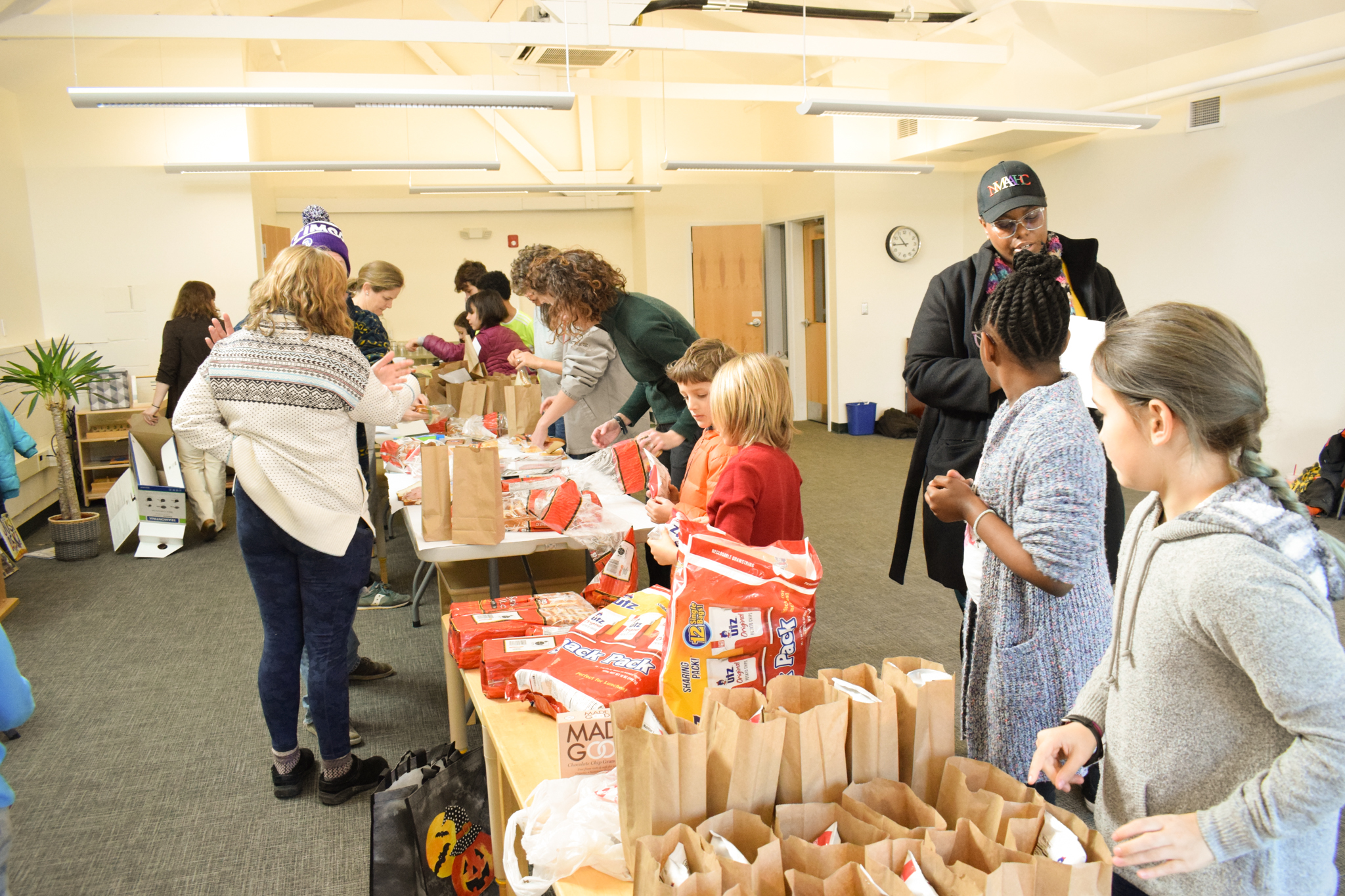
On Monday, January 20th, 95 parents, children, staff, and alumni gathered to participate in a Martin Luther King, Jr. Day of Service. Thank you to all of the families, staff, and alumni who participated. Our community assembled 30 housewarming baskets for people formerly experiencing homelessness who are now moving into new housing, 50 hygiene bags for people experiencing homelessness, and 120 bagged lunches for a local food pantry – all entirely comprised of items donated by our families. Another group of volunteers sorted 2,000 books at The Maryland Book Bank. (Watch closely for a few of our Lower Elementary students featured on Wbal-Tv.) Indeed, many hands make light work!
In considering our theme from last school year (Service & Stewardship) with this year’s (Diversity, Equity, Inclusion and Belonging) it seemed a natural fit to partner together in this way. Your generosity in providing supplies for the assembly projects was humbling, your partnership with your children in service of others was heartwarming, and our impact together was astounding!
Thank you sincerely for sharing yourself in this way. What a wonderful reminder of how, in Baltimore, we are all in this together. We look forward to being in service alongside you again soon!
A Lower Elementary student writes about the research she is doing.
In the Montessori Children’s House program, students learn letter sounds before the letter names. For example, they learn that the sound of “d” is “duh,” not “dee” and the sound of “b” is “buh,” not “bee.” (See our blog post about Language in the Children’s House for more information.) Spelling is not the focus during the Children’s House years because the focus is on children hearing and learning the letter sounds rather than recognizing the letter names.
A Children’s House student uses the Moveable Alphabet to craft a message.
By using the Moveable Alphabet, children are able to put different letter sounds together to form a word (long before they have the hand strength necessary to hold a pencil). When a young child is asked to form the word “photo” with the Moveable Alphabet, she sounds out how she hears the word, letter by letter.
“Fuh”, “oh”, “tuh”, “oh”.
She would likely place out Moveable Alphabet letters like so:
f-o-t-o
While the word is spelled incorrectly, it is phonetically correct. This “spelling” is age-appropriate for a student in the Children’s House.
Later, once students have a firm grasp of letter sounds and have associated the letter names with these sounds, we work to introduce phonograms, which are when you put two sounds together to make a new sound (think, ee, ea, y, e-e all make the sound “ee”). With this work, which often begins during the Children’s House and continues into Lower Elementary, students become aware that there are options in spelling and become conscious of how to spell words when writing.
Once the child begins to internalize the phonograms, we can begin to explore the complexities of the English language. (Unlike Dr. Montessori’s native language of Italian, English is not a phonetic language; there are so many exceptions to every rule!) We practice reading “sight words” and finding “rule breakers.” This feeds the interest of the Lower Elementary student, who naturally begins to show an interest in how to correctly spell words.
Spelling is reinforced through extensive reading. The more a child reads, the more they will be exposed to spelling patterns. As a result, children are able to edit their work to identify words that don’t “look” right in context and begin to self-correct. In addition, children use a variety of strategies to determine the correct spelling of a work. Things like “have a go,” where the child will write a word that is misspelled, then write it again to see if it is correctly spelled, and if not try again until they get it right. Another strategy children may use to spell longer words is to “chunk” the word into single syllable pieces. As they move to Upper Elementary, children are exposed to Latin roots, which helps them understand the spellings of many English words.
Lower Elementary students write in English and Spanish to their pen pals at a Montessori school in Spain.
Keep in mind that even with more emphasis on spelling in Elementary, guides will not correct students’ spelling while writing rough drafts of reports or stories. We allow the children to focus on developing their skills of self-expression. The expression of the idea and the flow of creativity is more important than the limiting, halting prospect of getting every word right. Corrections are made during the editing stage of the writing process – whether individually, with a peer, or with the assistance of a guide. As children begin to create more polished work to share with others, such as the letters to pen pals shown above, they are more internally motivated to edit and correct their spelling.
A Lower Elementary student reads through his spelling dictionary.
Lower Elementary students keep their own personal spelling dictionaries, in which they can write words they want to remember how to spell. It allows the children to help themselves!It also teaches the very basic and beginning steps of learning how to use a dictionary. But most importantly, the words the student put into their personal dictionaries have meaning to them.
Just as with all other areas of the curriculum, the Montessori approach to spelling is rich, interdisciplinary, and meaningful.
If you are interested in learning more about how to support your toddler’s growing independence at home, take a moment to watch this webinar with Greenspring Montessori School Toddler Guides, Allie Alexander and Michelle Donohue. Allie and Michelle have over twenty years combined teaching experience and they both have Montessori toddlers at home. They offer practical advice that is easy to impliment, as well as suggested products to aid in your child’s independence.
For a full list of products for your child, please take a look below:
Most water bottles found in the children’s section (not the baby section) will work well.
Ikea is also a great place to find inexpensive child-sized open cups, silverware, plates, etc. for when you are eating at the table. We recommend that parents avoid plates and bowls that suction to the table after 18 months.
Footwear
Soft-soled shoes are best for children learning to walk. Once your child’s dexterity begins to improve, we recommend shoes and boots that are also easy to pull on and off.
Many of these items can be purchased used on sites like Facebook Marketplace or at your local consignment shop if you are looking for some less expensive options.
We also recommend searching the For Small Hands website if you are looking for something specific for your child. They have a variety of child-sized materials for every area of the home.
Take a look at our Montessori in the Home series for more tips for toddlers and infants:
We are already deep into our work this school year and seeing so many interesting things happening in all of our classrooms. From our toddlers learning the simple joys of being together in a community for the first time to our Elementary students exploring the history of the first civilizations, Greenspring is an inspiring place to be in the fall and all year round. We have a dedicated, caring team of faculty and staff committed to your child’s individual growth. As a team, we came together to discuss something of growing importance in today’s society – photographs.
In today’s world of smartphones and social media, it is hard for us to go a single day without taking a photo of something happening in our lives or sharing a cute video. Our children are inundated with adults seeking to document their accomplishments, their personalities, and their adorable moments. Child YouTube sensations are making millions. Those of us who intentionally do not participate in social media are few and far between.
At our first Faculty Gathering, our guides and administration had an engaging, in-depth conversation about photographing children at school (especially while working in the classrooms). Here are some of the main points we discussed around this important topic:
In favor of photographing children at school:
Powerful parent communication tool – as parents, it means so much to be able to see what/how our children are doing while at school. A picture is worth a thousand words!
Education about Montessori methods – Montessori education is widely misunderstood. We want each and every parent in the world to be able to better understand what Montessori is, how it works, and why it’s so beneficial for children. Photos and videos can be a great support with this.
Stimulates conversation at home – when children can see photographs in their classroom, they can talk more about their experiences, what they were working on, who their friends are, and how they felt throughout the day.
Precious memories – we all love looking back at the children’s photographs as they grow and mature over the years.
Reasons to minimize photographs at school (particularly during the work cycle):
Protection of the student’s work and concentration – when in the classroom, the work and concentration of each child is our number one priority. Often, pulling out a camera disrupts this important work, for both the child and for the adults.
Keeping the classrooms a safe place/sanctuary for the students – many children have become accustomed to having a phone, tablet, or camera close by throughout the day. We find it important to offer them space where this is not the case.
Respect for the children – some students do not want their photo being taken at all, and we owe it to them to honor that choice.
It takes the adult’s attention away from the students – if the classroom Guides are focusing on capturing that perfect picture and sending it out to the world, it deters them from their top priorities of giving lessons and observing the children.
After much mindful discussion, thought, and debate around these points, we realized that the arguments for taking photographs in the classrooms generally meet the needs of the adult, while the arguments against taking photographs in the classrooms during the work cycle are generally aimed to meet the needs of the child. While both sets of needs are certainly important, our top priority here must always be the children. Being present with our children in their learning is fundamental to what we do here.
I’m sharing this with you to help you understand that in order to do the very best for your children and each student, you see a shift in the number of pictures of your children at school from your child’s Guide. We will continue to do our best to capture some precious moments and examples of academic works to be shared on our school-wide outlets – in email newsletters, on social media, on our website, and in printed materials such as the Memory Book, magazine, and calendar – because there are so many reasons for and benefits to doing this. Guides will share photos as they are able, without interrupting the concentration or their presence with the children. You will most likely see more photos of the children playing during recess, or of a presentation of polished work. Our partnership with you is so very important to us, and we constantly strive to maintain a balance of doing the very best for the students while also meeting your needs as parents.
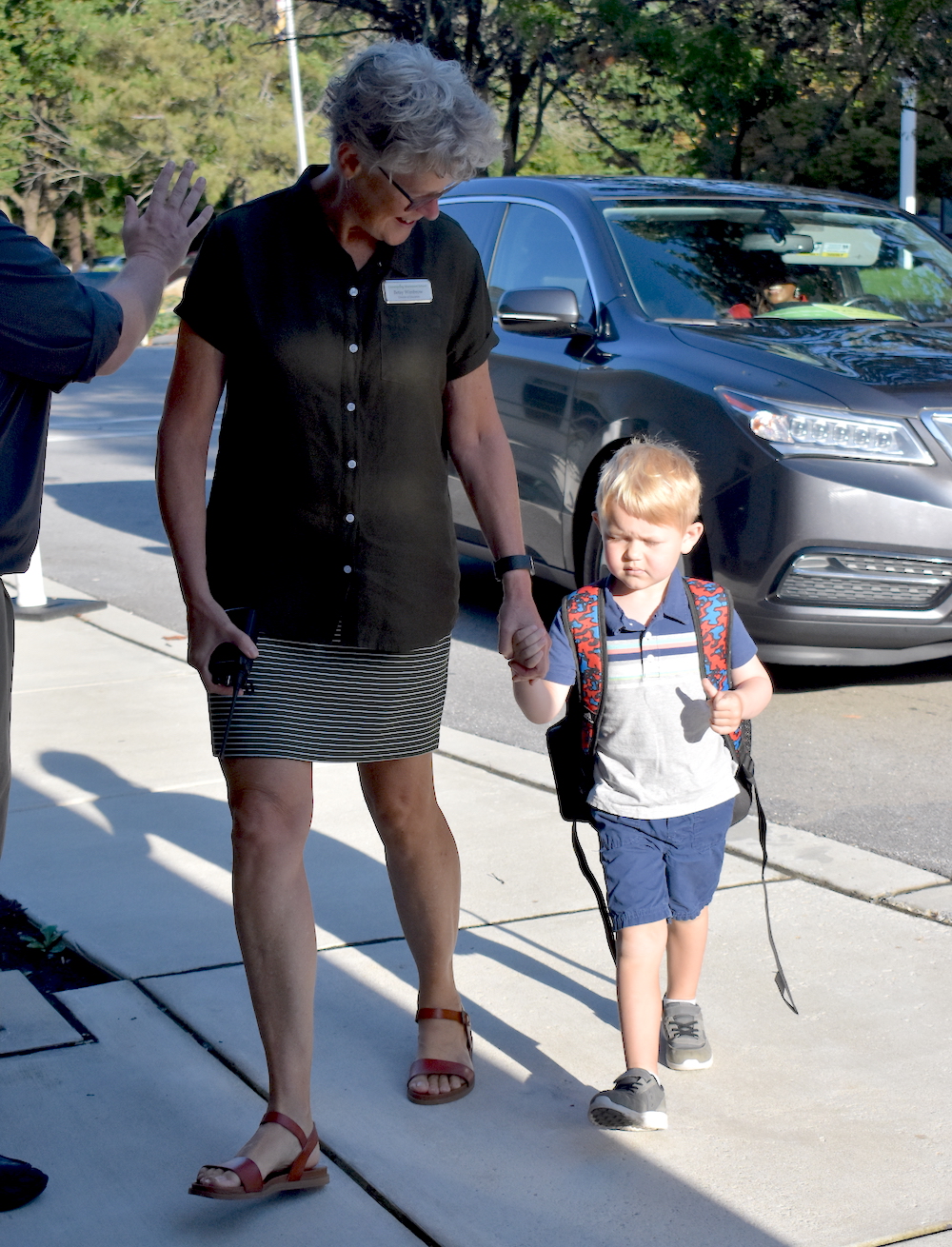
Beginning a new school year is a time of excitement and uncertainty for many new children. For some, it is their first time being away from home for a stretch of time. It is common for students (and parents) to experience feelings of anxiety; this is perfectly normal. These feelings are often caused by a fear of the unknown, as the child has no point of reference to draw upon when faced with a new environment or experience.
Separation anxiety can also be attributed to a child’s stage of development. Separation anxiety is a normal part of development, and most common for children aged eight months to two years; however, it can affect children of all ages. The first day of school, in a new room or level, can bring on a reoccurrence of separation anxiety in children who were previously settled. It takes time for young children to build relationships and establish a sense of trust with their new guides, so that they come to understand that their new environment is a safe and happy place. This is not uncommon, and is likely to settle once a new routine and relationships have been established.
Below you will find a number of strategies published by the Montessori Academy to help Montessori parents settle their children into preschool. Remember separation anxiety is a phase, it is perfectly normal, and will pass in time.
Positive Behaviors and Attitudes
Modeling positive behaviors and attitudes plays an important role in the success of the first day of school, and the weeks thereafter. Keep discussions about school positive, and focus on things that your child is likely to enjoy. Children pick up on parent’s feelings, behaviors, and emotions, and are likely to emulate them if you are feeling upset or uncertain.
Morning Routines
Establish a positive and happy morning routine for preschool days. For children over two, this may include encouraging your child to pack their own school bag or sing a happy ‘school day’ themed song. Always give yourself plenty of time to get ready and arrive on time. Feeling late or rushed can cause children to feel additional anxiety.
Acknowledge your Child’s Feelings
It is important to accept that your child’s unhappiness at being separated from you is real, very normal, and temporary. Reinforce that you understand that leaving your child makes them unhappy, but that it is important that you leave, and they will have a good time. Avoid offering your child bribes for good behavior or not crying as this is only a temporary solution. Learning to cope with sadness is an important part of your child’s development and learning about emotions.
Positive and Prompt Goodbyes
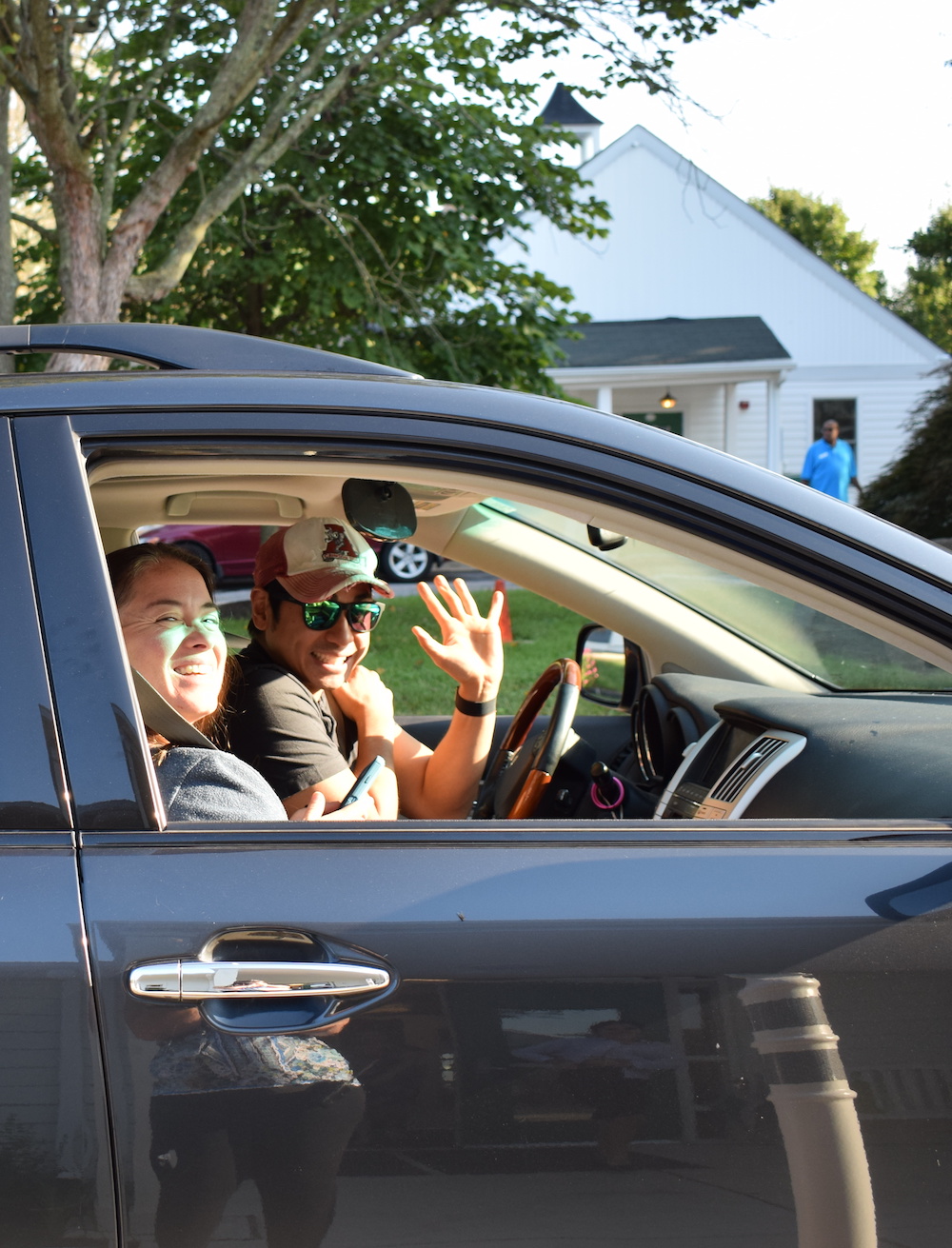
When you drop your child off, don’t linger outside the classroom or stay for “just one more minute.” As a parent, the best thing you can do is give your child a hug and a kiss as they get out of the car, let them know you love them, and reassure them that you will be back soon. It is important for your child that you do not delay the inevitable.
Establish a Goodbye Routine
Montessori parents who establish a consistent goodbye routine typically have better luck with successful goodbyes. Take a special moment with your child to say goodbye, and do it the same way, every day. This may be as simple as a kiss and a cuddle, giving your child a thumbs up, or establishing a ‘secret’ hand shake. A special goodbye is a great way for your child to start their day feeling happy and reassured.
Encourage Friendships
Make a point of getting to know your child’s friends and classmates at school, and encourage friendships outside of school. These friendships will help make your child’s transition to the new Montessori environment easier.
Pick Up Routines
It is important to be punctual when picking up your child. It easy to lose track of time, but no matter who is picking your child up, always be on time. If you are late, it can cause your child to feel more anxiety, and makes drop off the next time much harder.
Positive Daily Reflections
On the way home, establish a routine where you talk to your child about their school day. Focus on the positive aspects of their day, such as their favorite activity, or playing with their best friend. By consistently reinforcing the positive aspects of their school day, your child will learn that their new environment is a fun and happy place, and their feelings of anxiety will decrease over time.