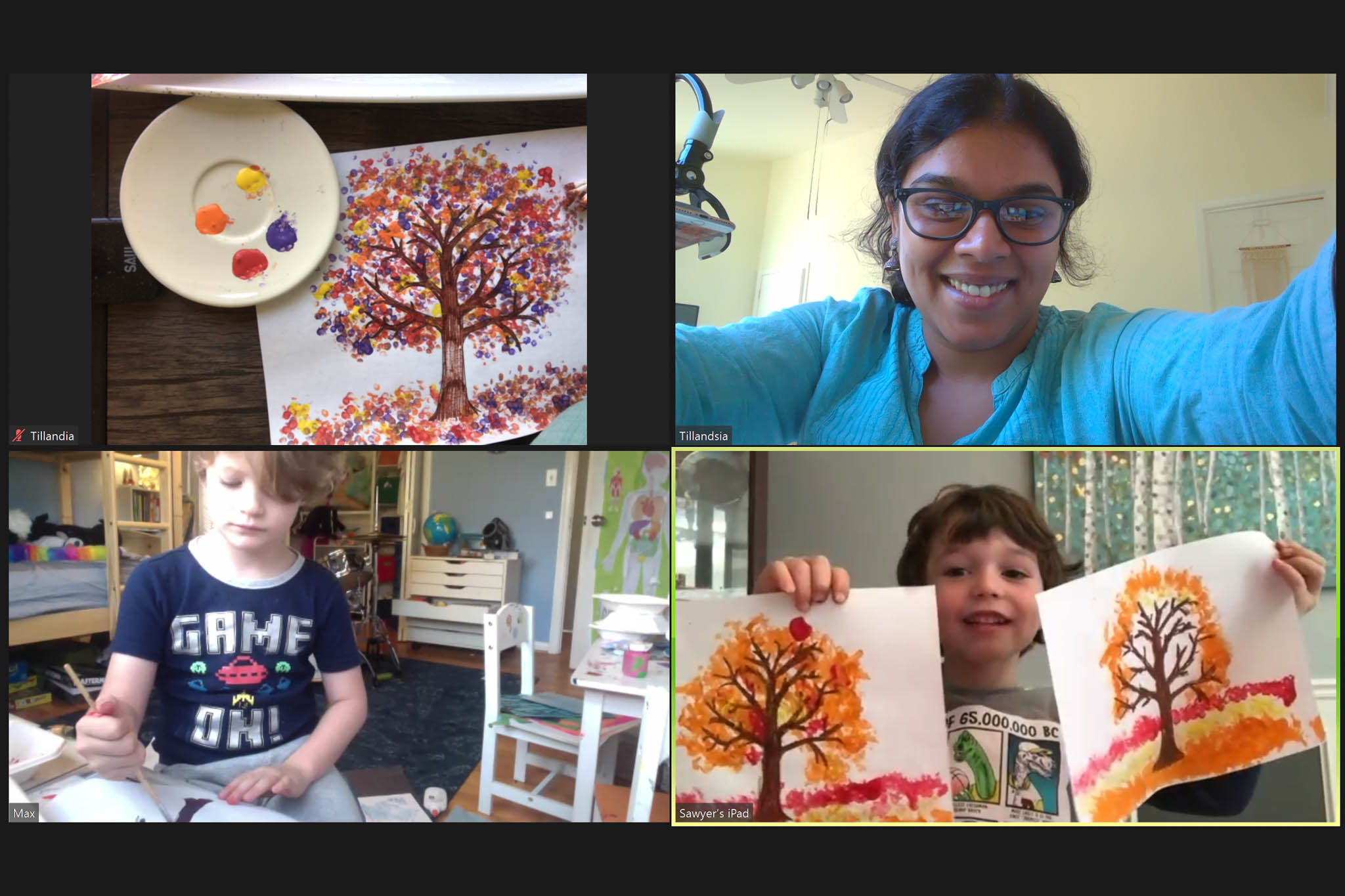
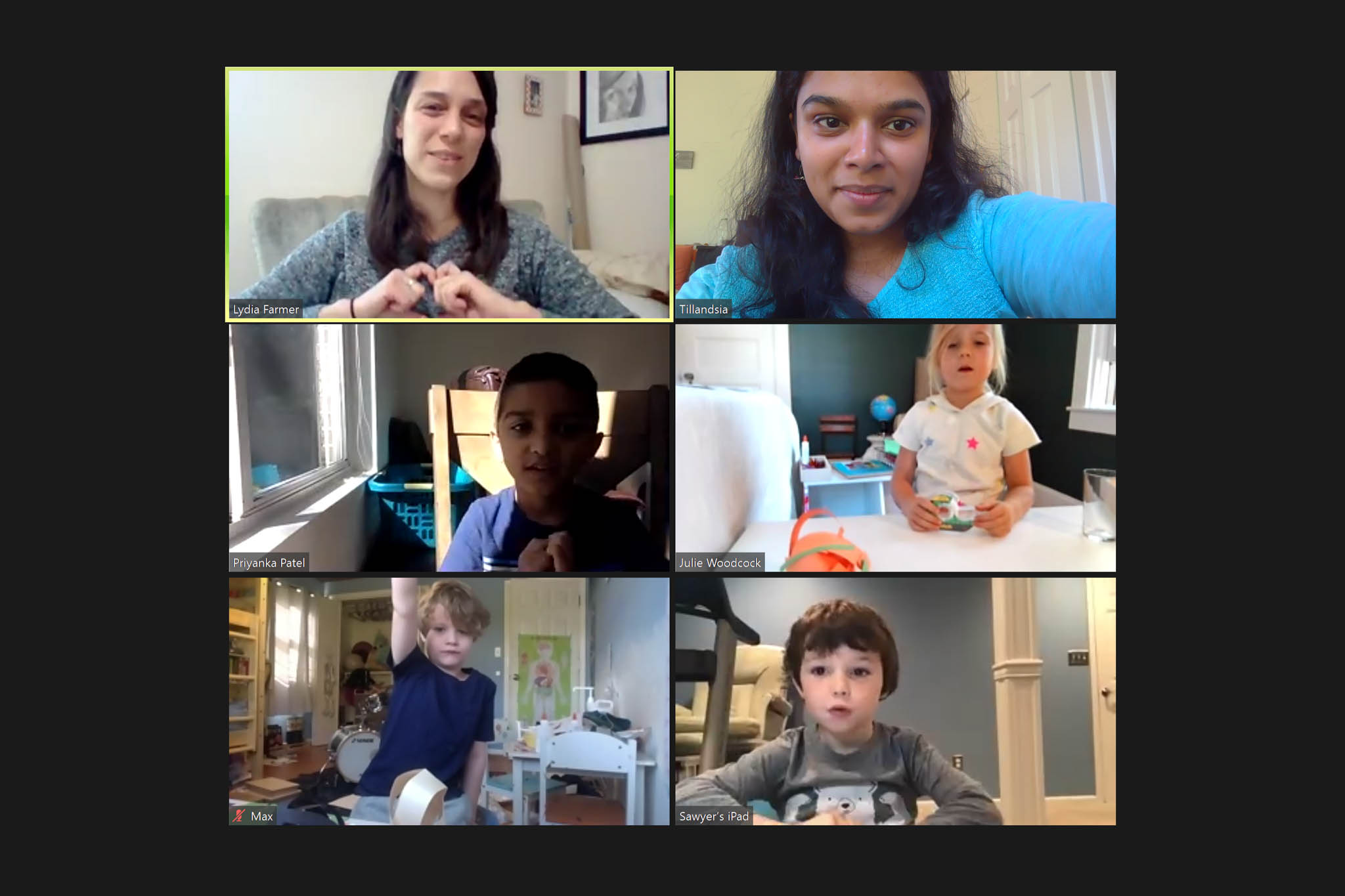
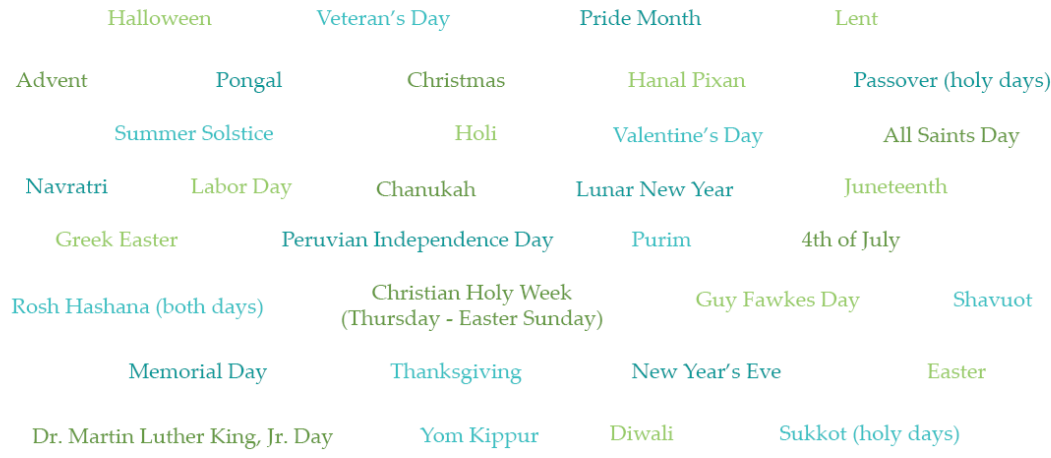
This year, the Diversity, Equity, Inclusion, and Belonging (DEIB) Committee had an ambitious goal of creating lessons and resources for global holidays and cultural celebrations. The Committee strives to create thoughtful and authentic resources for our Guides without a tokenistic or “tourist” approach to exploring diversity with children. To do this, the Committee spoke to the faculty and staff about the holidays they celebrate at home and what aspects are most important to them. Below is a word cloud of all of the holidays celebrated by the faculty and staff at Greenspring. The staff was excited to see the many ways in which our community celebrates, and they were then invited to share with our students the special aspects of the holidays they celebrate at home.
So far, our team has created lessons and resources for the following holidays and celebrations: Navratri, Indigenous Peoples’ Day, Diwali, Native American Heritage Month, Hanal Pixan and Día de los Muertos, Hanukkah, Winter Solstice, Christmas including traditions from the Czech Republic, Kwanzaa, Martin Luther King, Jr. Day, Chinese New Year, Black History Month, Purim, and Holi.
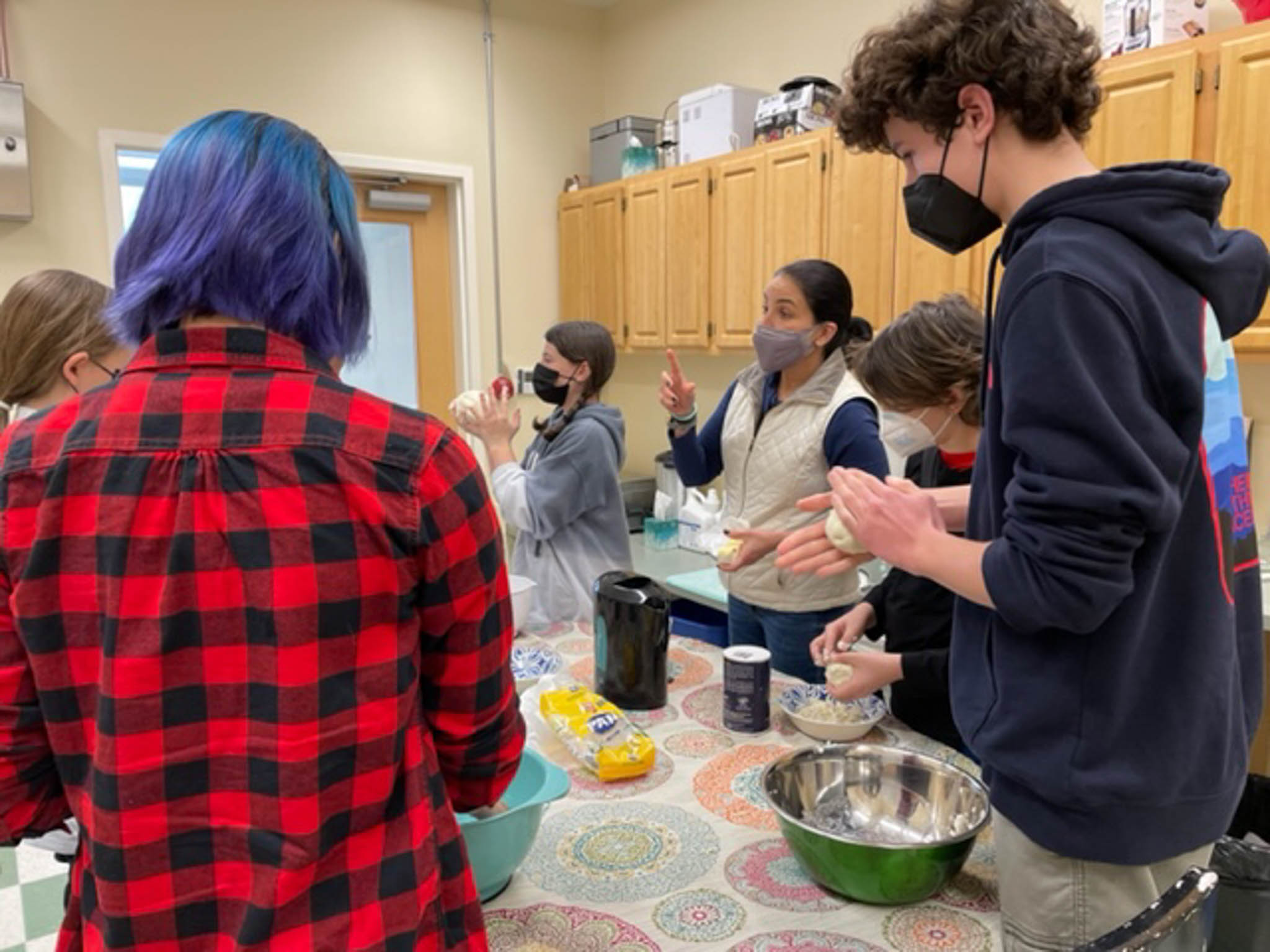
Some faculty worked with students to make traditional dishes, while others read stories and brought in artifacts from their culture to share with the children. The DEIB Committee worked with members of the faculty and staff to create Montessori nomenclature cards for children to learn more about aspects of the holidays if they were interested. In addition, interested staff members have been invited to speak to colleagues about the holidays they celebrate. This has been an important piece of belonging at Greenspring, and we have all learned so much from one another.
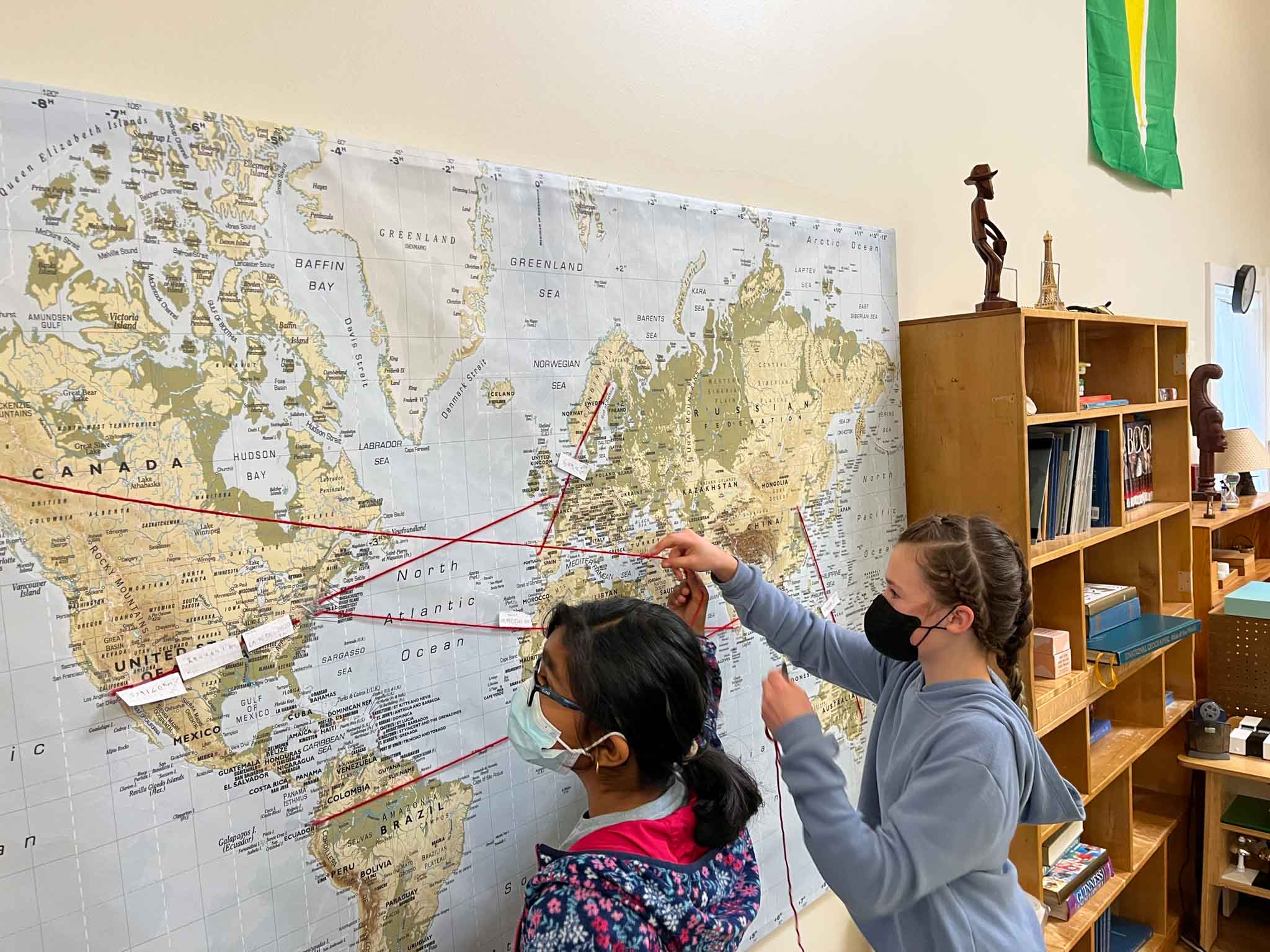
In addition to providing essential belonging cues to our staff, this work has become a staple in our classrooms. The children are eager to engage in conversations with one another about the holidays they too celebrate, and they are beginning to notice threads that are carried through various cultural celebrations. Children have noticed that many holidays across religions center around the lunar calendar. They have also begun to see how food and artifacts share similarities from cultures that are geographically dispersed. It is wonderful to see the ways in which the children are absorbing and interacting with this work.
The Diversity, Equity, Inclusion, and Belonging Committee at Greenspring Montessori School is a dedicated group of faculty and staff working to provide lessons and resources for Montessori educators to further the work of DEIB. To learn more about this work, please visit the Diversity, Equity, Inclusion, and Belonging page of our website.
As emerging adults, it is crucial that adolescents learn and grow in an environment that matches their development as well as gives insight into the time in which we live; we must improve each individual to improve society.
Dr. Montessori calls the Erdkinder the “school of experience in the elements of social life” where work is an introduction to both nature and civilization and provides a limitless field of scientific and historical studies. Adolescents work through experiences on the land: growing crops and caring for animals. They also run a shop where they buy and sell produce and handmade items, promoting personal craftsmanship over mass production. This allows them to fully engage with the two main independences indicative of this developmental stage: social and economic. The shop becomes a general meeting place for their extended community where they take responsibility for the corresponding financial and moral obligations associated with running their own business.

Adolescents volunteer with Real Food Farm in Baltimore City, growing fresh produce for communities in need.

An Adolescent organized a service project to clean up the Jones Falls waterways.
Throughout their educational studies, they meet with experts from various fields as they study the earth and living things, human progress and the building up of civilization, and the history of humanity. They will build a library of atlases, primary documents, and other resources that highlight the connection between peoples and cultures throughout time. They explore scientific progress in biology and chemistry through individual or small group projects that are related to the land whenever possible. All curriculum areas are interrelated and these connections are consciously discussed. This also includes self-expression: music, language, and the arts and the development of the personality that entails ethics, mathematics, and modern languages.

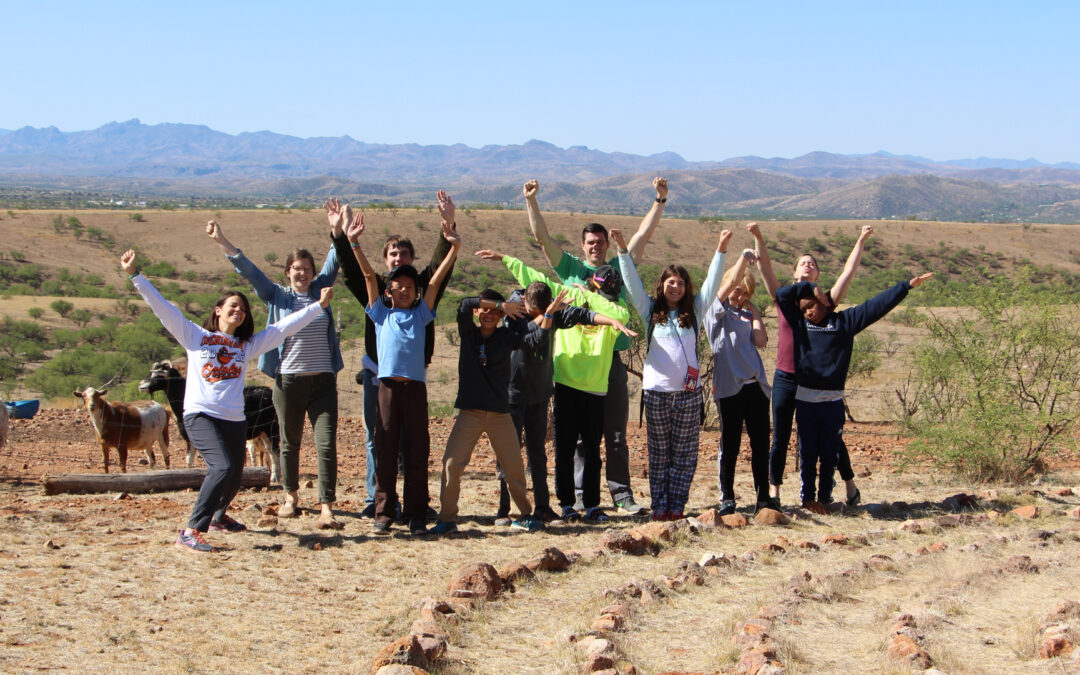
Adolescents learn water conservation from indigenous farmers in Arizona for their Spring Odyssey.

Adolescents clear brush on an Arizona farm.

Adolescents are brought closer together by their work on the land throughout the year.
Within this framework, the moral and physical care of the students is also a priority as they face difficult physical and emotional transitions. They must be provided with work that is in the open air of nature, promoting plentiful and nourishing food that is their own produce whenever possible. A space that allows them to peacefully reflect and meditate when the psychological characteristic of decreased attention takes hold. They learn about nutrition and how to properly care for themselves as they discuss health and wellness topics with adult role models that guide them towards informed decision-making. There is a division of labor, which leads to a genuine cooperative community. They are diplomatic in their acceptance of other’s points of view through Socratic discussions.

Adolescents learn about the Chesapeake Bay watershed while fishing and living on a boat for their Fall Odyssey.
Work on the land provides natural consequences unmatched by any other environment. The plethora of studies inspired by the land also provides a true understanding for the range of careers available today; our wide and thorough education grows their professional interests so that they can take part in the science and technological applications being used to understand and solve the complex problems of our times. The land also provides the right type of freedom where they act on individual initiative within clear limits and rules that results in the self-discipline necessary for success. Our students will know how to put things right: how to adjust a machine, mend a broken window, build a shed, forge a path, and that most importantly, that they can be self-sufficient.

An Adolescent makes field notes on a Maryland native plant garden.
Schools today do not offer this essential balance of manual and intellectual work, leaving adolescents unprepared for taking an active role in society. Our environment acknowledges that these two kinds of work complete each other and are equally essential to a civilized existence and is designed to balance them so adolescents gain a clear understanding of the society for which they are about to join, one that demands a personality of character that adapts quickly and easily.
In order to emerge into the final plane of development, maturity, adolescents must be made to feel capable of succeeding in life by their own efforts and merits. Montessori reminds us that when adolescents’ needs are met within this framework, they can then provide humanity with the clues and hope for future progress.

Dr. Martin Luther King, Jr. Day of Service is the only federal holiday observed as a national day of service — a “day on, not a day off.” This day of service helps to empower individuals, strengthen communities, bridge barriers, address social problems, and move us closer to Dr. King’s vision of a “Beloved Community.” While we will not be able to offer a community service project as we did last year due to COVID-19, we encourage families to participate in service projects at home!
Consider participating in one of the following:
- Organize care bags for people experiencing homelessness for Catholic Charities of Baltimore
- Collect pet care items for the Baltimore Humane Society
- Write letters or record videos to share with a nursing home or assisted living facility
- Collect diapers, wipes, and baby items for ShareBaby
- Offer to help an elderly neighbor with projects around the house
- Organize a stream or park clean up
- Sew masks for healthcare workers
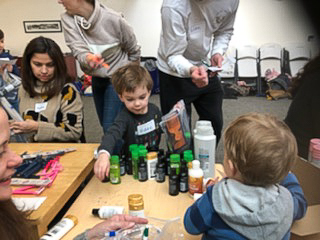
Toddlers fill care bags for Catholic Charities in January 2020. Even young children can get involved by sorting and filling bags.
The Washington Post recently published an article on children volunteering during the pandemic. In the article, Connie Chang states, “When so much is out of our control, the act of volunteering puts some control back in our hands. And with the normal rhythms of life still very much disrupted, it’s a good way to occupy and engage children who might otherwise feel stuck.” She goes on to talk about different ways that children can get involved in service – at home, virtually, and outdoors.
Now more than ever, it is important that we instill in our children a love of service to others and a dedication to community. Service and stewardship is a fundamental component of Montessori education throughout the year. In our classrooms, children contribute to their peers, their environment, and their community through our Grace and Courtesy curriculum. On any given day, a Toddler may be sweeping up a mess or watering a plant; a Children’s House student may be feeding fish or comforting a classmate; Lower and Upper Elementary students are learning ways to meaningfully engage with one another through jobs in the classroom and community meetings; children in our virtual classes are navigating respectful online presence and building community while apart. Still, there are many students who are missing the more hands-on service work they did pre-COVID. We’ve collected resources for families and children who would like to get involved with service projects outside of school while remaining socially distant.

A family participates in our home items drive during the 2020 Service Day.If you are looking for additional ideas on ways to get involved, please take a look at the following links:
January service projects for children and families in Baltimore
Search the Youth Service America website for projects that can be done at home
Visit the Doing Good Together website for COVID-safe activities for your family
Is your family participating in a service project for Dr. Martin Luther King, Jr. Day? Take a photo and share it with us at community@greenspringmontessori.org!