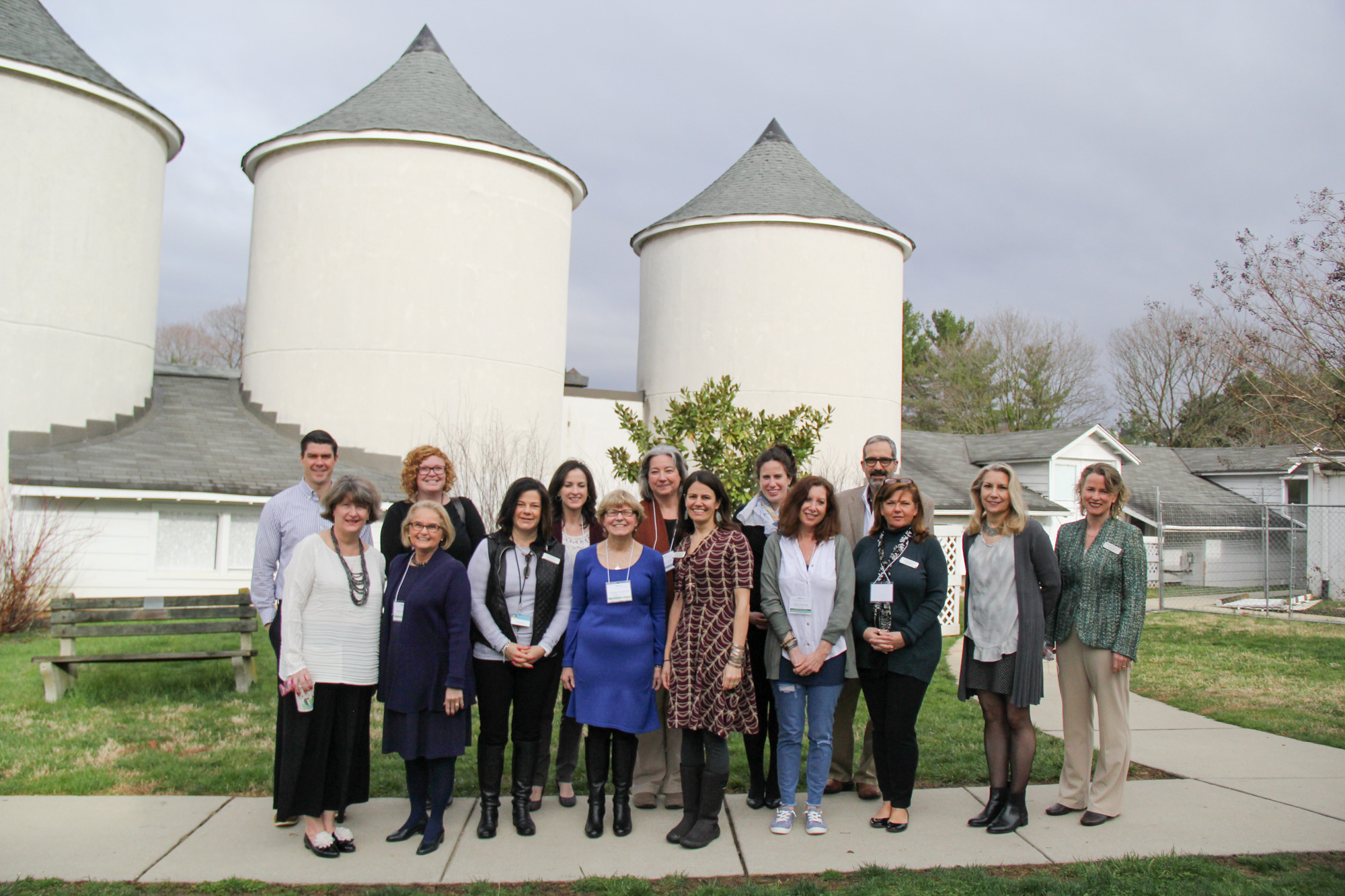

Just some of the presenters at the first annual Baltimore Montessori Conference.
On Saturday, April 1, 2017, Greenspring Montessori School opened it’s campus to the greater Montessori community for our first annual Baltimore Montessori Conference. The conference was created by the Maryland Center for Montessori Studies – the Montessori training center at Greenspring Montessori School. Our mission is inspiring and cultivating strong Montessori advocates and leaders as champions for the human spirit. To learn more about our Early Childhood Teacher Credential, please click here.
To all of our Participants, Presenters, and Volunteers who helped make the inaugural Baltimore Montessori Conference a huge success – THANK YOU!

Keynote speaker Jaqueline Cossentino presenting to an audience of more than 120 at Greenspring Montessori School.
Over 100 Montessori teachers, administrators, and parents from 6 states joined us for a day of workshops focusing around continuing our own education and understanding of Montessori practices. There were many workshops to choose from, with sessions led by inspiring life-long Montessorians including Marie Conti, Kathy Minardi, and Jen Cort!

The Director of Training for the Maryland Center for Montessori Studies, Lee Lanou, poses with two of our presenters.
To those who attended, we hope that you all enjoyed a day to refresh yourself and your Montessori practice, gain valuable theoretical insight, and practical information and ideas. We also hope that you were able to meet and connect with some new Montessori colleagues from other schools.
Be sure to mark your calendars for Saturday, April 7, 2018. We hope to see you there!
Written by Margaret Jarrell, former Lower Elementary Guide
“The mind takes some time to develop interest, to be set in motion, to get warmed up into a subject, to attain a state of profitable work. If at this time there is interruption, not only is a period of profitable work lost, but the interruption, produces an unpleasant sensation which is identical to fatigue.” – Dr. Maria Montessori
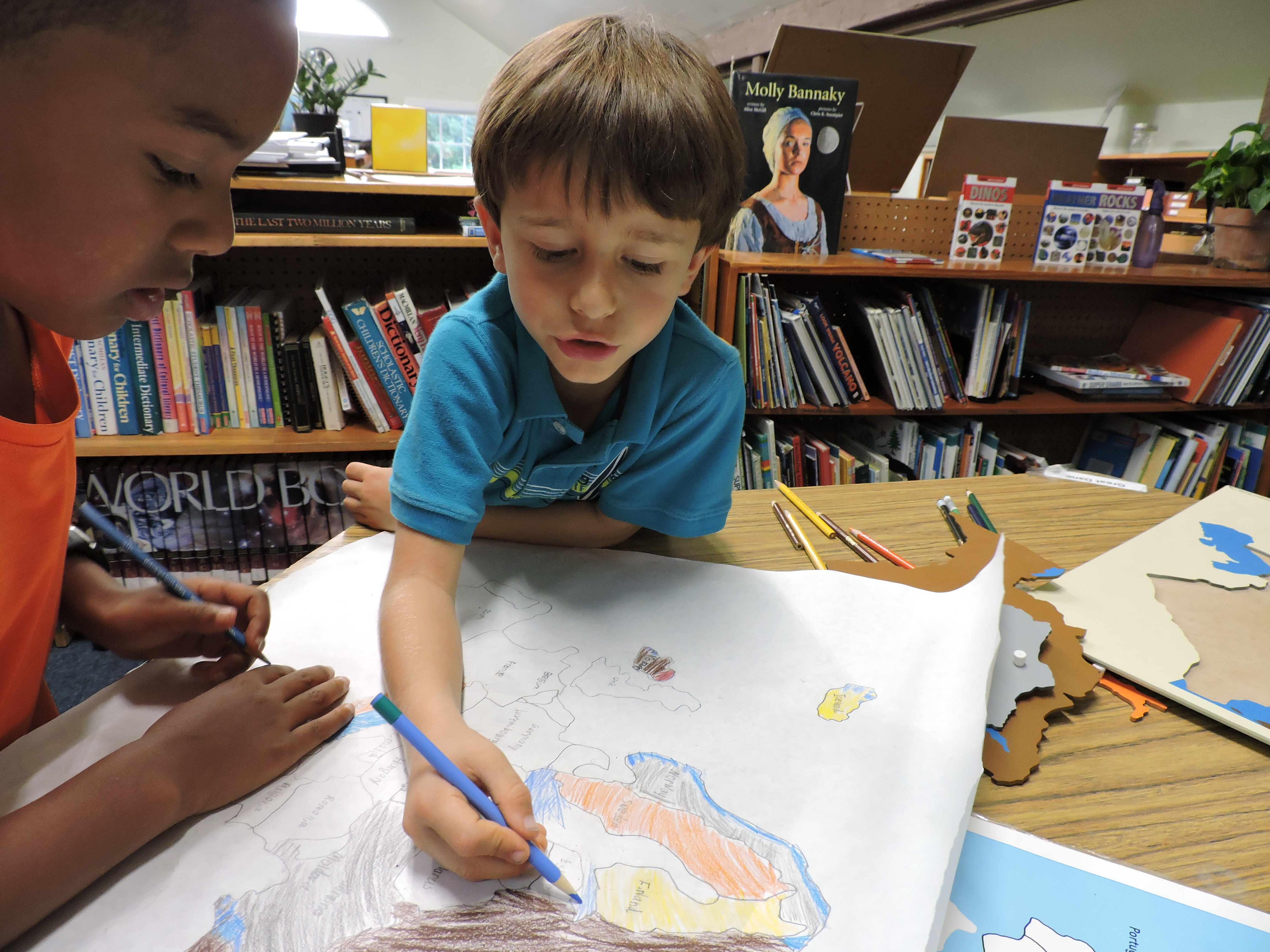
In many traditional classrooms, students move through a series of subject periods, in which they must start and stop their work on a given subject according to a predetermined schedule. Can you imagine the frustration you would feel if fully immersed in a task, deep in concentration, and were suddenly jarred out of your thoughts by the ringing of a bell? You were just about to make a breakthrough? Too bad! It’s on to the next subject. This is not how the real world works and it is also not how children learn best.


So what is the alternative? Dr. Montessori discovered that children as young as three are able to choose productive and challenging work, focus on the task at hand, finish a cycle of work, rest without interrupting those who are working, and repeat this sequence. The three-hour, uninterrupted work cycle allows students to freely choose work and engage in work more thoroughly. Based on her experiences observing children during an uninterrupted work period, Dr. Montessori wrote: “Each time a polarization of attention took place, the child began to be completely transformed, to become calmer, more intelligent, and more expansive.” In other words, children are able to develop better concentration skills and focus through undisturbed work.
Some parents might worry: “Won’t my child get tired of working? Doesn’t he need a break every 45 minutes or so?” In fact, Montessori students do take breaks – they are free to get a drink of water or use the bathroom as the need arises. They may choose to have a snack, stand up and stretch, or observe another student’s lesson. But regarding external interruptions of work, Dr. Montessori wrote, “A great variety of interesting research has been made into the question of change of work with identical results – namely, that frequent change of work causes greater fatigue than continuous work of one kind, and that a sudden interruption is more fatiguing than persistence.” Once the child’s concentration is broken, it is very difficult to try to engage them to the environment once again. Angeline Stoll Lillard, author of Montessori: The Science Behind the Genius, writes, “If we choose when to take breaks, then breaks work for us, but if the timing is externally imposed, breaks can be disruptive to concentration.”


Interestingly, there is a natural ebb and flow to children’s concentration during a three-hour period. Research on children in Montessori classrooms shows that after about 1.5 hours, there is a tendency for students begin to lose focus. Montessori educators call this “false fatigue.” Montessori guides don’t panic and send the students outside to run a few laps. We find instead that after ten to fifteen minutes of aimlessness, a student will redirect herself to a new activity in which she will become engaged at a heightened level of concentration, sometimes for as long as an hour. The student’s most meaningful work often takes place in the second half of the work cycle.
Lillard points out that, “Montessori teachers who adhere to three-hour work periods without interruption claim one can see the difference in the quality of the children’s concentration on days when children know they will be leaving the classroom in an hour for a field trip or doctor’s appointment or special music class.” Children who know they will soon be interrupted choose unchallenging “busywork” at best, and at worst become distracting to their peers. When children who don’t know an interruption is coming, they choose demanding work, become engrossed, and are understandably upset when the disruption takes place.
We want to give our children the opportunity to learn at their own pace, allowing them to concentrate and focus on the task at hand in an uninterrupted, peaceful environment. As Montessori guides, we follow the child’s schedule, not ours. One of the best gifts we can give our children is the opportunity to fully develop their concentration and independence, free from unnecessary adult interruptions.
Parent Challenge: Do an experiment. The next time you see your child deeply engaged in an activity, make a concerted effort not to interrupt your child’s concentration. Make a note of how long she persists with one task. The results may surprise you!


Learn more about the Greenspring Montessori School Elementary Program.
Written by Marketa Traband, Children’s House Guide
“In our work, therefore, we have given a name to this part of the mind which is built up by exactitude, we call it the ‘mathematical mind.’”
– Dr. Maria Montessori, The Absorbent Mind
Maria Montessori’s use of the term, ‘The Mathematical Mind,’ refers to the unique tendencies of the human mind, such as order, exactness, exploration, and orientation. Humans also have the unique abilities to imagine, create, and think abstractly. Montessori designed her math materials to incorporate the natural capabilities of a child’s mathematical mind.


All children have mathematical tendencies, and all children should be able to enjoy mathematical studies. Dr. Montessori proposed that the introduction of mathematics during the period of the absorbent mind (0-6 years) enables the child to form positive associations with numbers, which can be carried on throughout life. The key is to provide the child with hands-on experiences. For the young child, an explanation is not enough. Dr. Montessori wrote: “Education is a natural process carried out by the child and is not acquired by listening to words but by experiences in the environment.” Montessori demonstrated that if a child has access to concrete mathematical materials in his early years, she can come to her own understanding of abstraction concerning the concept. On the other hand, these same skills and facts may require long hours of laborious work if introduced later in abstract forms or simply asked to memorize.


To make a mathematical abstraction, the child must have a prepared foundation of experiences of order, sequence, and sensorial experience of things around her. So it is no accident that the basic materials of the Sensorial apparatus are based on the quantity of ten. Likewise, the area of Practical Life nurtures the mathematical mind of the child through its precision and order. Many materials in the Montessori environment have indirect aims that contribute to the development of the mathematical mind.
At a certain point in development, usually around the age of four, the child enters the sensitive period for numbers, and the child’s mathematical nature awakens. She graduates from purely sensorial explorations to interest in specific measuring and counting. Once begun, the child progresses through the math materials sequentially. The first group of exercises is work with numbers 1 to 10. The child learns the quantities from 1 to 10 through a very concrete experience with the number rods. After this, we introduce symbols and the child learns to associate quantity and symbol with the number rods and cards. The sandpaper numbers isolate the symbols for the quantities, and tracing them prepares the hand for writing numerals. With the spindle boxes, we are introducing zero as a concept and the child learns to isolate symbols and quantities – zero through 9.


With Cards and Counters, the child lays out the cards and the counters in a particular way. This work is also an introductory of odd and even numbers. With the Memory game, the child relates what she knows about numbers 0-10 to the environment.
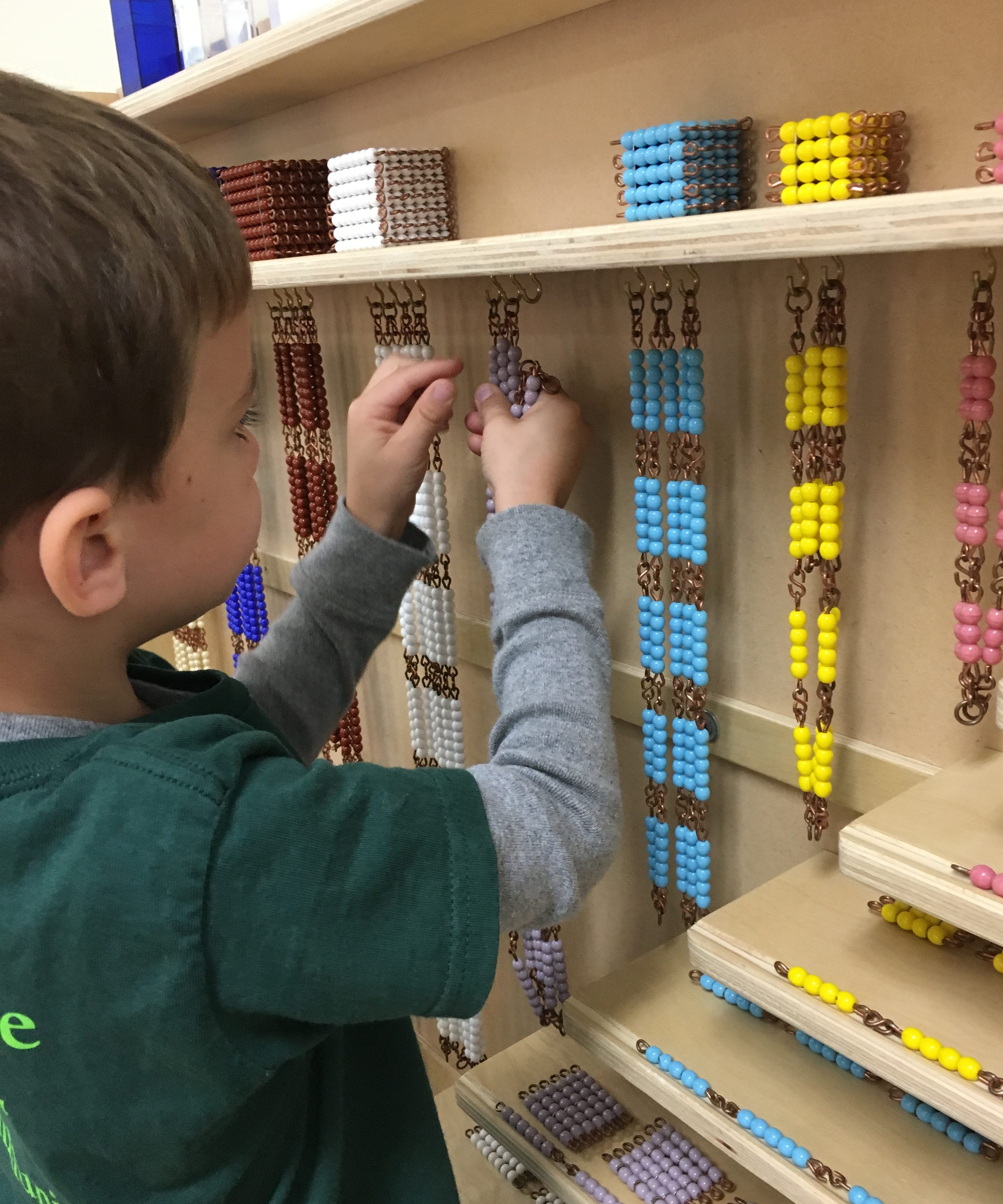
These exercises give the child experience allowing for variety and repetition. The presentation of The Golden Beads gives a visual and a very concrete experience of the decimal system. We begin with units, then tens, hundreds and thousands. It all begins with quantity and then the child is given the symbols. Later the child is putting quantity and symbol together. Following are the four operations; addition, subtraction, multiplication and division.
The Teens and Tens work isolates the linear aspects of the decimal system. The child learns the terminology of individual numbers and how to count and recognize numbers from one to 1000 and beyond.


The memory work contains exercises designed to give the child an understanding and the acts necessary to work with the material in abstract terms. The child is given lessons to support her work with addition, subtraction, multiplication and division in totally abstract terms.
One of the last math apparatus used in the primary class are fractions. This is a transitional material from primary to elementary.
During the sensitive period for numbers, the hands-on Montessori materials allow the child to form concrete impressions of the world of mathematics. This in turn, allows her to experience mathematics with positive associations and allow a child to experience the satisfaction of learning through self-discovery. The learning, therefore, is truly the child’s own and cultivates a lifelong love of learning!
Learn more about the Greenspring Montessori School Children’s House Program.

Written by Judy Yormick, Elementary Guide
“No matter what we touch, an atom, or a cell, we cannot explain it without knowledge of the wide universe. What better answer can be given to those seekers for knowledge? It becomes doubtful whether even the universe will suffice. How did it come into being? How will it end? A greater curiosity arises, which can never be satiated; so will last through a lifetime.”
– Dr. Maria Montessori, To Educate The Human Potential
There are three main branches of the Montessori Elementary curriculum. Two of these are the Language curriculum and Math curriculum, which provide the building blocks of communication and calculation. They are necessary for the educational process as the means for exploration, interpretation, and development of understanding. The third branch, the Cultural curriculum, provides the inspiration and keys to understanding the Universe.


The Montessori Elementary Cultural curriculum evolves from a unique perspective compared to other systems of education. In a traditional educational experience, the journey begins with the child as the focus and radiates outward to include the family, neighborhood, country, continent, and on out to the Universe – thus placing the individual at the center of the Universe. The Montessori Cultural scheme, by contrast, responds to the Elementary child’s burgeoning questions and interest in the bigger concepts. “How big is the Universe?” “What is the biggest number?” “How does the world work?” etc. The journey of the Elementary curriculum begins with the creation of the Universe. It is from here that the beginnings of physical sciences, earth sciences, biological sciences, and history emanate. These curricular pieces begin with the big picture and through the elementary years lead chronologically to the individual, culminating during the sixth year. By this point the curriculum looks at the United States and local history, the human anatomy in biology, and more detailed earth and physical sciences.


The curriculum, whenever possible, begins with concrete representations by means of pictures, charts, physical demonstrations, timelines, and other experiential activities. These gradually lead to more abstract representations. The concepts are part of a spiraling curriculum where concepts are initially introduced in an age-appropriate manner and revisited through the elementary years with added complexity and abstraction. There is also an integration of concepts so that the child focusing on a topic such as an ancient civilization, as an example, is also looking at the historical, environmental, geographical, political, scientific, and biological factors involved. Children that experience this view of the Universe discover their place in the bigger picture and the integrated nature of the various disciplines. They also have a different understanding of the gifts that were given by those who came before and the inherent responsibility that they hold for the future.

Learn more about the Greenspring Montessori School Elementary Program.
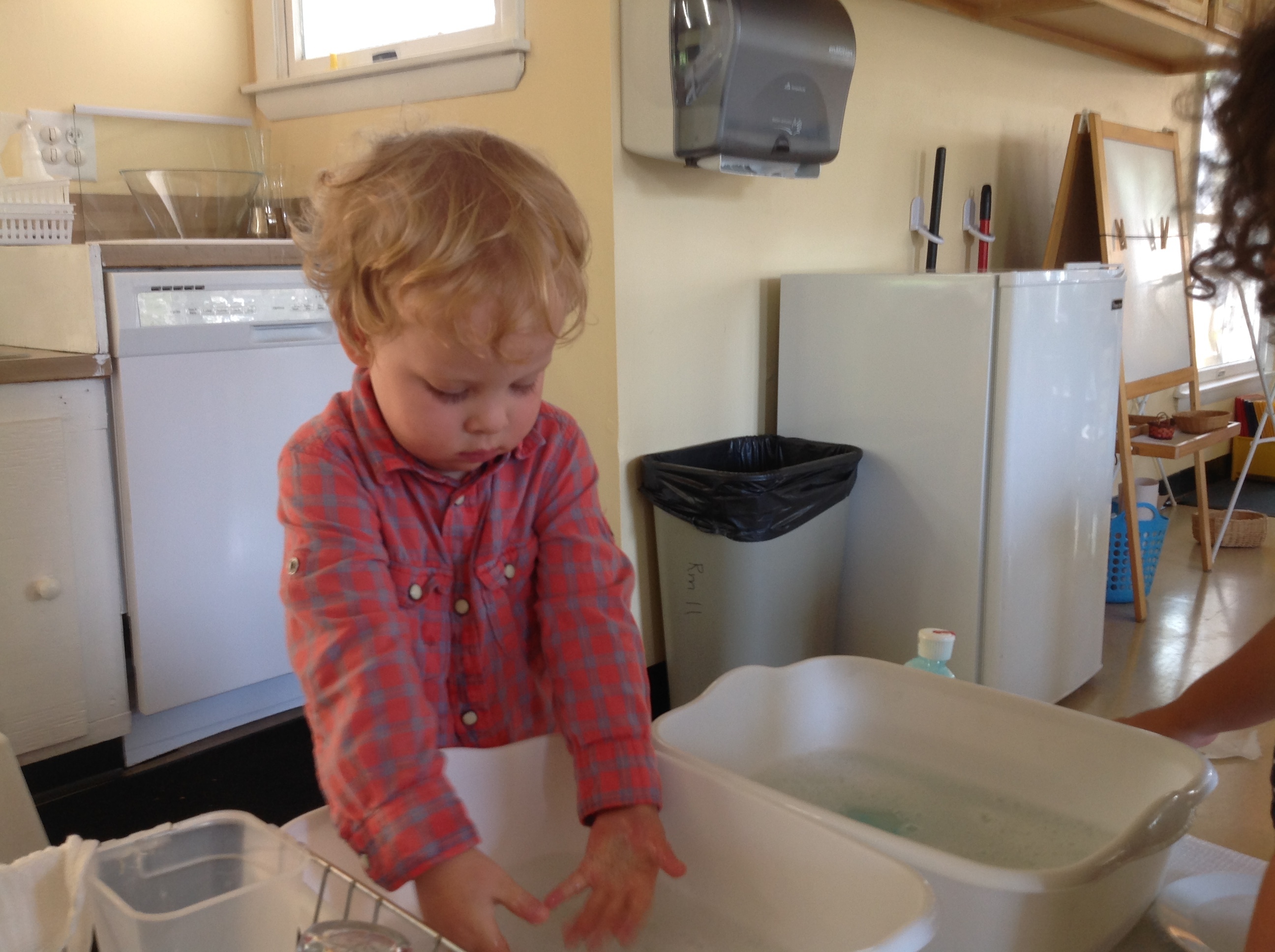
Written by Emily Shattuck, Children’s House Lead Guide (and Mother of Two)
“Your job as a parent is to put yourself out of a job by raising your kid to independent adulthood (where independence equals not turning to you to handle/fix/resolve everything) and when you appreciate that every day offers a chance to build that independence, no matter what age and stage your kid’s at.”
~ Julie Lythcott-Haims author of How to Raise an Adult: Break Free of the Overparenting Trap
I agree with this quotation, but as a parent, I am also saddened by its truth. We all love our children and take great pride in caring for them: feeding them, dressing them, making sure they get enough rest, waking them in the morning, cleaning them, entertaining them, and educating them. As a parent of a 16 year-old high school junior and a 12 year-old seventh grader, I have fond memories of caring for my children as infants, toddlers, pre-schoolers, and through the elementary years. It is wonderful to feel needed and loved by our children. Being a parent is a very rewarding, fulfilling, and exhausting job and we would not trade it for the world!
While my children were young, however, I also was wary of the cultural norms to over-parent or “helicopter parent.” I know my children needed to develop skills to eventually leave the house at 18 and find their way in the world and it is my job to prepare them. With just two years remaining before my daughter’s 18th birthday, I decided to prepare myself for the craziness of the college application process and I picked up How to Raise an Adult, written in 2015 by Julie Lyhtcott-Haim, the former Stanford Freshman Dean of students. As a Montessori Children’s House guide, I was delighted when Montessori education was mentioned throughout the book. It states, “Despite the evidence that Montessori’s student-driven learning approach is a springboard to success in life, Montessori has yet to become a mainstream model for education in the in the United States.” (p. 158) It was both a relief and a validation that my children were Montessori students and had the benefit of a Montessori education.


Although many aspects of the Montessori curriculum lends itself to creating resilient, creative, caring, responsible adults, the Practical Life lessons in the Children’s House build the strongest foundation for a path to independence. When developing her first school in Rome circa 1907, Maria Montessori observed that children between the ages of two and a half to six years delighted in helping to care for their classroom. Montessori created child-size tables, chairs, brooms, mops, and other materials so the children could practice sweeping, mopping, and cleaning. She noticed that children enjoyed helping prepare food, set the table, do laundry, garden, and clean as adults do. An entire curriculum was created to fulfill the child’s need to contribute to his community and the Exercises of Practical Life were born.
There are four components of the Practical Life curriculum: Preliminary Exercises, Applied Exercises, Lessons of Grace and Courtesy, and Control of Movement Exercises. The Preliminary Exercises are lessons to give the child the opportunity to practice movements that she will use on a daily basis to perform tasks such as pouring, using a spoon, spreading with a knife, cutting food, or folding laundry. In the Applied Exercises, the child utilizes these developing skills to care for herself and the classroom environment, such as with hand washing, dressing herself, washing a table, or mopping the floor. The lessons of Grace and Courtesy provide the child with the opportunity to learn and practice social graces. Grace and Courtesy lessons include blowing one’s nose, saying excuse me, greeting a guest, introducing oneself, and walking around a work rug. The Control of Movement Exercises help develop self-control and include walking on the line and the Silence Game. The aim of all the Practical Life lessons is to promote independence, responsibility, coordination, concentration, respect for one’s self and their environment, and provide the child the opportunity to develop their identity as a contributing citizen of the community.


As a parent, it is comforting to know that our children are exposed to the lessons of Practical Life and are establishing themselves as members of their Montessori community. But we can also help our children develop these skills by allowing them to play a contributing role in the home environment. “A longitudinal study conducted by Dr. Diana Baumrind concluded that those who were most successful began doing chores at age three or four years of age, whereas those who waited until their teen years to start doing chores were comparatively less successful.” (Lythcott-Haim p. 198) This is wonderful news to parents of current Children’s House children because your children are already accustomed to this role in the classroom. By bridging the gap between school and home, you can assist your child in developing resilience, responsibility, and independence.
Montessori guides have an advantage since they can design the entire environment to serve the construction of the child’s personality. At home the surroundings and pace of life are designed for adults. Our job, as parents, therefore, is to remove obstacles to our children’s independence in the home life. Parents can begin this process as the Montessori guide does – by observing the child. Observe what the child can do for himself already, his interests, what causes frustration, and which skills that he needs to work on. Once we have observed the child, we can begin to prepare lessons that will serve the child’s development. For instance, if we see that a child cannot put on his own shoes or pour his own drink for snack, we present simplified lessons so the child can practice these skills in order to gain mastery. This requires thoughtfulness and patience. We cannot rush the child when he is doing the hard work of self-construction. We should move slowly, carefully, and with precision. As adults, we do not realize how fast we are moving! Children at this age have not developed the visual acuteness to track fast movements, so we must remind ourselves to slow down when we are giving a child a lesson. The Practical Life Exercises are also given in silence. You can name the activity and the tools used for the work, but the movements are not accompanied by language. We are silent so that the children can process the steps and actions visually and are not confused or bogged down by auditory processing as well.


For instance, if you would like to give your child a lesson on washing his face you could introduce the lesson, “Today I will give you a lesson on washing your face.” You can name the tools used, “This is a wash cloth. This is soap. This is a towel.” Then you can demonstrate slowly how to turn on the faucet, wet the washcloth, rub it on the soap, rub it on your face, rinse the washcloth with water, rub your face again, turn off the faucet, hang up the washcloth to dry, and dry your hands and face. When preparing to give your child a lesson, practice yourself first and gather the necessary supplies. Make sure the supplies needed are suited to the child’s size and are accessible by the child independently. Practice the actions yourself, breaking them into steps, moving mindfully and slowly. When you are ready you can give a lesson to your child, finish the lesson by saying, “Now it’s your turn!” and give your child a turn to practice. You can end the lesson by saying, “You can wash your face whenever you like!” You do not praise the child, as the lesson it is not for your benefit, but a gift for your child.
Vicki Hoefle, author of Duct Tape Parenting, gives examples of skills and tasks children should learn and master at age four, including getting dressed on their own, making toast, brushing teeth, setting the table, taking dirty dishes to the dishwasher, making the bed, combing hair, packing own back pack, taking a bath, waking up with an alarm clock, wiping the table after meals, feeding pets, and cleaning the kitchen sink. (p. 143) Lythcott-Haims also includes tasks such as putting dirty clothes in the hamper, putting away toys, dusting, and washing one’s face (p. 167) as basic life-skills children age 3-5 should learn. “Children are innately interested and open to learning basic life skills, and if allowed and encouraged to do so, they grow into confident people who know that they matter within the family and within the community. This in turn affects how they develop socially. By the time they are teenagers, if they’ve mastered basic self and life skills, they can focus on developing their social skills.” (Hoefle p. 133)


Keep in mind that you must have patience, understanding, and self-restraint to actually make this work in your home. Your child is not going to perform these tasks perfectly the first time, or maybe even the 60th time. This is a process. It is our job to observe, give the lesson, and then move out of the way! Above all, do not follow behind them and do it for them if it is not done to your standards! That undermines their work and their self-worth. Also these tasks or chores should not be tied to an allowance, reward, or praise. They should be expectations as your child’s contribution to the household. (If you do want to introduce an allowance to help your child learn about financial responsibility, more guidance is given in Duct Tape Parenting.)
For more ideas on how to raise respectful, responsible, and resilient children, I highly recommend reading Duct Tape Parenting. If you are concerned that you may be one of those parents on the path to writing your child’s college essays, then I suggest How to Raise an Adult.
Your challenge this month:
Choose a time of day that you wish your child was more independent (for example, preparing for school, mealtime, or bedtime) and observe for fifteen minutes without stepping in. Then make a plan to determine what is going well and what your child needs to still work on. Develop a lesson to support your child with one skill. Then observe over the next few weeks to see how your child is progressing.
I hope you are as inspired as I am about current parenting books echoing what Maria Montessori knew over a century ago. “Children are the constructors of men whom they build. Childhood constructs with what it finds. If the materials are poor, the construction is also poor.” (Maria Montessori, letter to a government official,1947) And how fortunate to have your own child beginning the exciting work of creating the person he is to become!


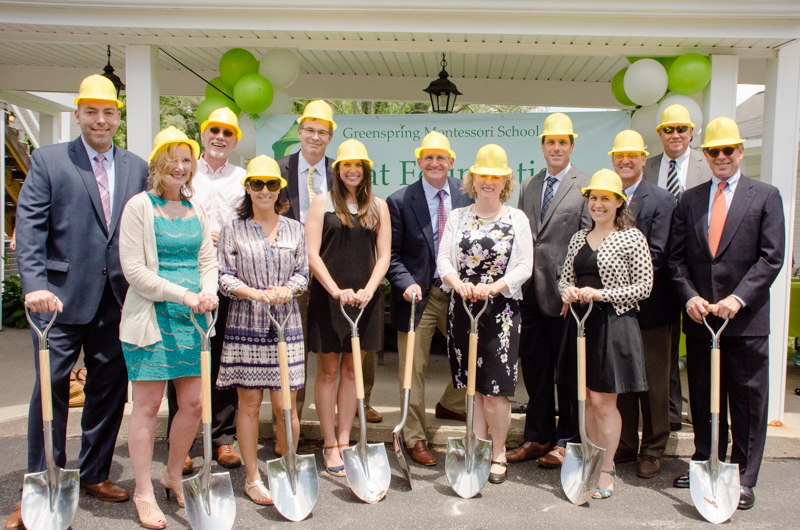
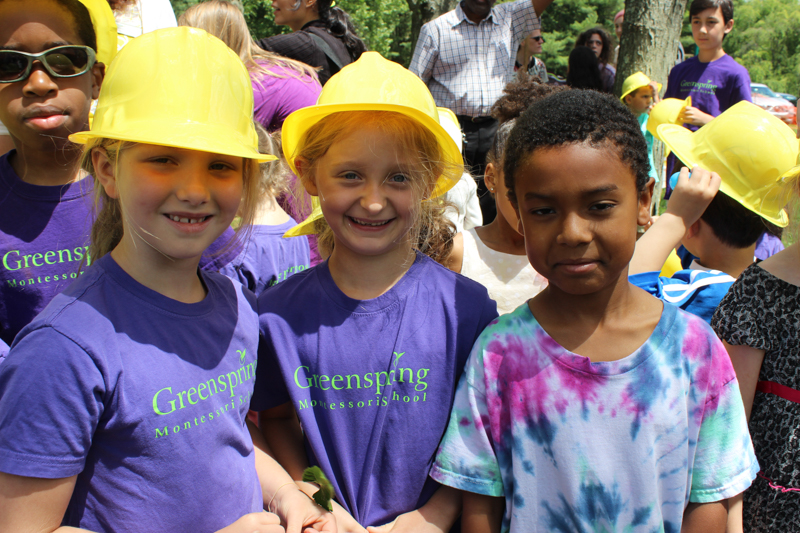
Greenspring Montessori School hosted a ceremonial Groundbreaking on Wednesday, June 8, 2016 for a building project to renovate nearly 30,000 square feet and construct 7,500 square feet of additional classroom space on its historic seven-acre campus. Head of School, Tamara Balis, spoke to the community about our progress, and our Chair of the Board of Trustees, Fred Brown, and Councilwoman Vicki Almond shared their support. Students, parents, and staff dug in with their shovels, ceremoniously marking the beginning of this transformation.
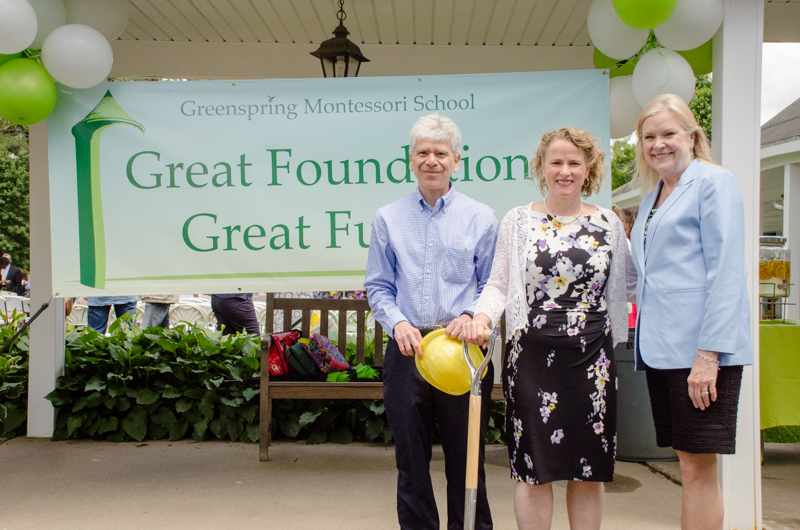
Originally known as Emerson Dairy Farm, the iconic white barns and silos have been an important part of the Greenspring history since the 1920’s. Currently home to over 250 children, toddler through grade 8, Greenspring Montessori School is committed to its mission of “igniting purpose and voice in a fully engaged learning community.”
True to the Montessori philosophy, the upcoming building project will provide thoughtfully designed classrooms with free access to outdoor space, community kitchens, and child-sized features such as cabinets, sinks, toilets, and more.
The school is compelled to complete this renovation to improve its beloved but aging facilities to be safer, healthier, and more environmentally-friendly, with buildings reimagined to fit the school’s growing needs. This collaborative effort will provide lasting benefits – social, developmental, academic, physical, and financial – that touch every member of Greenspring Montessori School’s community.
Learn more about our Building Project.