For those of you who do not know me, my name is Kimberly Zerfas and I am the Director of Marketing at Greenspring. I am also the mom of an exuberant 18-month old who will be joining the Young Toddler Program in the fall. Two months ago, our life was very normal. Our son was at a traditional daycare and we were beginning to lay the groundwork for his Montessori education. I never would have expected I would be working and parenting from home for months amid a global pandemic.
Now, our days look very different. Amid working remotely and my husband teaching public school online, we are now also responsible for our son’s education and care during those same waking hours. We’ve learned a lot through trial and error, and through books, articles, and just about any means we can get our hands on now. From feverishly scouring the internet on ways to get a toddler to eat to re-evaluating our thoughts on screentime because our son is so in need of any human connection – we’ve been there.
Some days are harder than others, but there have been a few things we’ve learned that have kept things moving along smoothly in our small corner of the universe. In our efforts to cope during these times, we’ve naturally begun adapting a Montessori approach at home. I’m going to dive in to some of the things that have worked, that haven’t worked, and the things that keep us sane during this time.
Before jumping in, I want to take a moment to acknowledge how truly privileged we are during all of this. We live in a two-parent household where we are both able to work remotely while sharing the division of labor. Our employers are flexible with our working hours and are constantly checking in to see what we need and understand what we are experiencing. We have access to greenspace and a number of child-friendly resources that were already in our home. We also have a working knowledge of child development from our careers, as well as a network of other educators to bounce ideas off of. We understand that each parent is going through this collective experience in a different way and not everything that has worked for us will work for you. That said, this is what I’ve observed these past five weeks.
Keeping to a routine
We have been firm believers in a routine for our son since he was born. But since we weren’t with him most days, we didn’t have a set structure for his waking time. On weekends, we would often go out to do things – going for a hike, going to the grocery store, taking swim lessons – anything to avoid boredom. So when the world basically shut down, we were left wondering, what do we do?
At first, we were determined to do a lot of education during those waking moments – learning words, reading books, sorting colors. This quickly diminished into survival mode, and our son actually showed us that he had more of his own internal sense of routine. When we scaled back to look at what pieces of a routine were absolutely necessary, it ended up matching closely to what is done in a Montessori toddler classroom. We focused first on his needs – we observed him to see when he needed to eat, when he needed to go to the bathroom (we are working on toileting – more on that later), and when he needed to sleep. We took our cues from him and then wrote out what seemed to be working best. Now, for about three weeks we have been following this schedule for basic needs.
In addition to that schedule, we determined that there were a few other things we wanted to focus on during this time: outdoor time, human interaction, and independent play. So, we returned to our schedule to intentionally add in when we would go for walks around the neighborhood, enjoy free time outside, and provide opportunities for him to see other people (even if it meant being on a screen). We also set up a space for him to work independently – bringing up an unused end table from our basement and a few child-sized chairs. Having this space did so much for his desire to sit for longer periods with a toy or something that he was interested in. It doesn’t always mean that I am able to finish the dishes or craft an email – raising him is still very much hands-on – but we can see how it is helping with his concentration and independence.
In between all of these scheduled moments, we create new learning opportunities out of day-to-day activities, such as folding the laundry, making a meal together, washing hands, and so on. One of the things that has really struck me was reading that just about anything is a teachable moment for this age. And we have seen it with our son – in just over a month, he has learned so many new words and gestures – not because we are practicing flashcards as we were in the beginning, but because we are conversing with him throughout the day about everything we are doing ourselves. Like in a Montessori classroom, we’ve been able to slow down and include him in more of our day-to-day activities, giving him some ownership.
As we move forward, we approach each day with flexibility – we may not be able to do everything we planned and we try to be kind to ourselves, even in those moments.
What’s worked well
For us, setting up the independent workspace for him was imperative. We are now seeing all of the areas in our home that have been inaccessible to him – we had to hold him up to get on the toilet or wash his hands; he had no way to access food on his own; even his toys were primarily kept in a trunk that we opened when it was time to play. We are already brainstorming things we need, such as a learning tower in the kitchen, but we are also making our own solutions, such as using a step ladder in the bathroom for him to easily access the sink. This shut down has encouraged us to find new ways to use what we already have to meet our new and evolving needs for our son.
What we’ve adapted over the weeks
We entered into this new arrangement not only with some rigidity around learning and scheduling, but also around our expectations of ourselves. It is a stretch for any parent to manage work and raising a toddler during the same waking hours. By giving ourselves more grace to make mistakes and learn from them, we have really been able to reframe this time in our lives. It is still by no means easy, and we are ever-changing and evolving to his needs.
One example would be with toileting. We have been gradually introducing our son to toileting since January. We have been using a toddler-sized seat on the toilet and we have been taking him throughout the day. Early on in our stay at home, we decided we were going to switch to underwear cold turkey. But with this new added pressure of going every half hour, he began to resent going at all. We had more accidents during this time than any other. As soon as we relaxed our expectations and focused more on making the experience easier for him, the accidents stopped (most of the time). We still have toileting on our daily schedule, but we go hourly and we try to take our cues from him. He is now beginning to tell us when he needs to go, instead of us telling him!
What we most look forward to during our days
I honestly look forward to our walks around the neighborhood and anything active we can do together. From singing and dancing on a Zoom call (I’ve never known the words to so many kids’ songs in my life!) to waving to passing cars, I’ve found that my son really needs consistent and meaningful human interaction. He has begun telling me some of the things he sees on our walks – “dog”, “duck”, and “flower” – just another example of how much he is growing during this time.
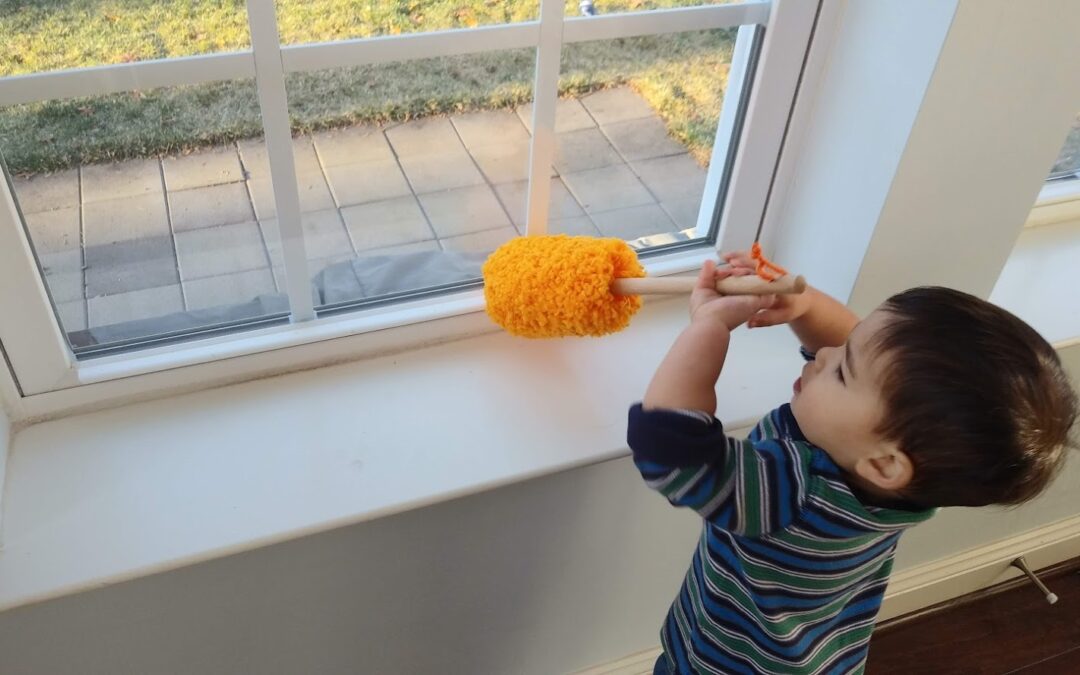
I also love all of the little in-between moments. Before, I would find myself waiting until late at night to do laundry or other chores, but I’ve realized that he really enjoys helping. From pouring the dog food in the morning to prepping lunch, we are now always looking for ways that he can contribute meaningfully at home.
The parenting resources we’ve used
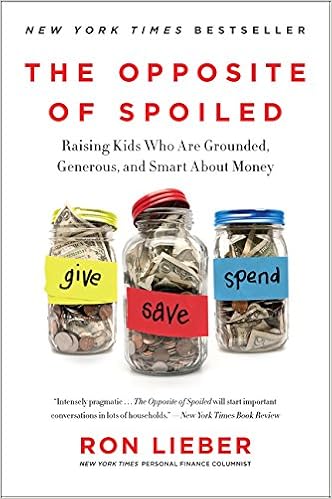
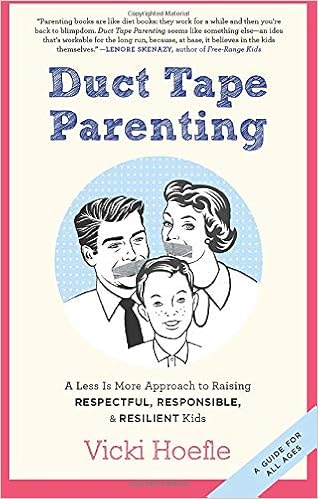
I was in the process of reading No Drama Discipline by Daniel Siegel and Tina Payne Bryson when schools closed. This was a timely book for us and my husband decided to read it as well. In addition to that, I’ve been looking at resources from Hand in Hand Parenting, Aha! Parenting, and the Greenspring website. I’ve found that using the tools of a Montessori guide – observing the child, having a prepared environment, providing the time and space for independence, and embracing the day-to-day or “Practical Life” activities has served us especially well during this time.
We know that there is still a lot we will learn and we have a long way to go until life returns to “normal” – if that is even a word that can be used anymore. We know that things will be different once we get through this, and for us, that means having a better understanding of our son’s needs and how to support him in his ongoing development. It means that we will have a greater appreciation for each person who touches his life – from teachers and friends to his very special grandparents, aunts, uncles, and cousins.
How are you getting through this? What has worked well for you and your family? What do you most look forward to each day?
Whether you have a five-year-old or a fifteen-year-old, you can find easy ways to create partnerships at home. During this webinar, you will learn steps to implement structures around family meetings, active listening, and allowances – all designed to support you and your child or adolescent in your partnership at home.
Resources for Empowering and Partnering with your Child
If you have any questions about this webinar or suggestions for future topics, please let us know! You can email us at learn@greenspringmontessori.org or comment below.
“Never help a child at a task which he feels can succeed.” -Dr. Maria Montessori
If you are lucky, your family members – especially those proud grandparents! – are excited and eager to learn more about your child’s Montessori journey. While we can’t expect our extended family to completely rearrange their homes or lifestyles, there are some simple ways that they can support your child in building independence.
Simple ways for family members to help your child’s growing independence
Allow the child to make decisions with limited choices
You can allow a child opportunities to make decisions without giving up all control. Consider offering two choices – both of which you are happy with. “Would you like a grilled cheese sandwich or chicken noodle soup for lunch?”
Allow the child to do things for herself
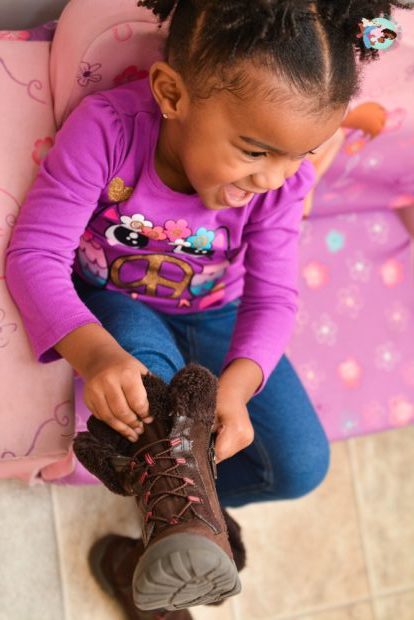
It is the natural instinct of a loving family member to make life “easier” for a child. But when we take away opportunities to overcome worthy challenges, we inhibit them from learning new skills and building self-esteem. For example, it may take much longer for a young child to zip up her own coat, but when time allows, give her the opportunity to try. If she begins to get frustrated, provide the minimal amount of help needed (such as holding the bottom of the coat to create tension, while the child pulls up the zipper).
Prepare the environment for independence
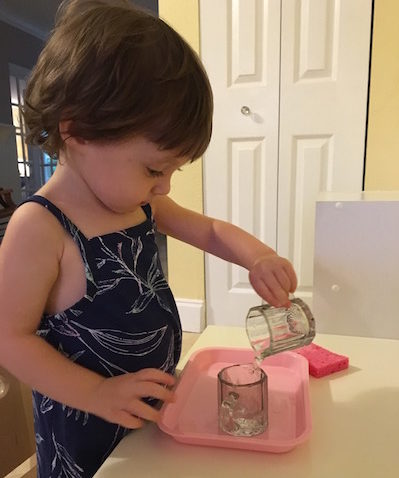
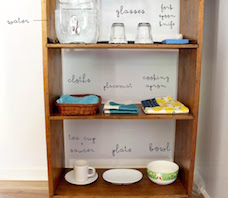
Allowing a child to do things for herself may require some support. Consider providing a stool at the bathroom sink so the child can reach the faucet to wash her hands. Consider putting out a small pitcher of water and a small glass so she can help herself when she is thirsty. If dishes, napkins, and silverware are placed in a lower cabinet, the child can help set the table for a meal.
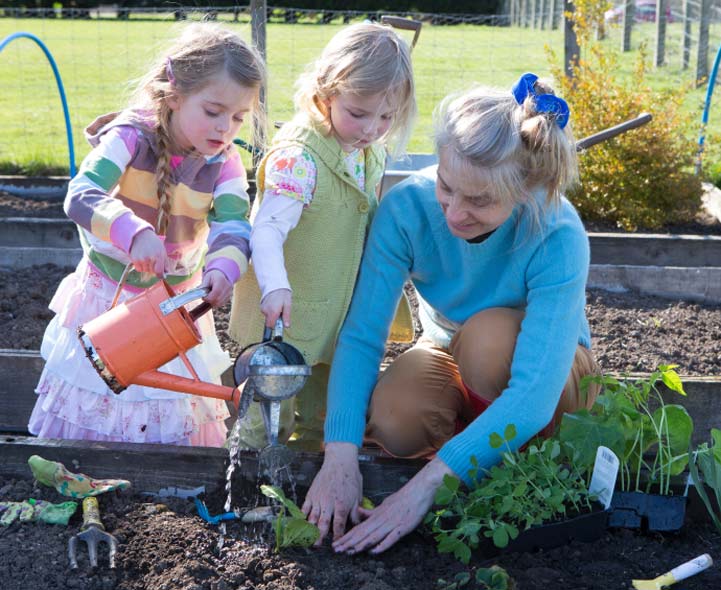
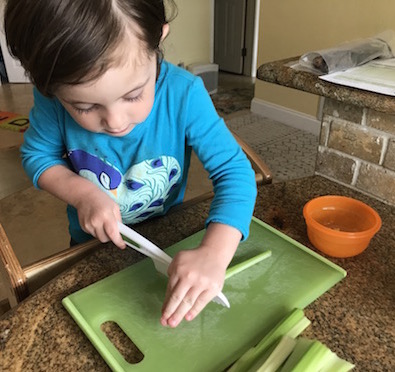
Involve the child in activities of daily life Not every visit with Grandma and Grandpa needs to involve a trip to the zoo. Children want to do what you do! Invite them to join you peeling vegetables, feeding pets, watering the flowers, etc. You may need to provide child-size tools for some of these activities, such as a small watering can or acrylic knife, so that your child can participate fully.
Create order in the environment Instead of piling toys in a basket, consider setting up a small open bookshelf where only a few toys are accessible. This helps the child make independent choices and give more focused attention to the chosen activity. (Toys can be rotated in and out to keep the child’s interest.) A minimal, organized toy area will also help the child clean up independently because there is a clear place for everything.
Be careful of praise
Dr. Montessori found that praise can inhibit children from gaining independence because they begin to rely on the judgement of others. As an alternative, encouragement can be empowering. So instead of “Good job!” “Good girl,” or “You are so smart,” you can try, “You did it!” “Thank you for your help,” or “I can tell you worked really hard on this.”
How to help family members get on board
Model rather than preach!
Most family members won’t appreciate being given a list of rules about how to behave around your child. But you can provide a powerful example by modeling these approaches in front of your family.
Gentle reminders
Feel free to give family members gentle reminders, such as “Please don’t help him; he can do it himself” You can also make it clear what the child is capable of, such as “Lila likes to choose her own clothing. She can get dressed herself but she might need help if her arms get stuck. Please don’t worry if she puts things on the wrong way.”
Provide resources
If a family member seems receptive, you might share an article with a brief introduction to Montessori at Home, such as this one. For those who wish to know more, a nice introductory book is How to Raise an Amazing Kid the Montessori Way by Tim Seldin. Though not all of it will apply to extended family, it’s a quick read with lots of beautiful photos that provides a nice overview of Montessori for families. If you would like to help family members find child-size tools or suggest gifts that would be appreciated, you can give them a copy of the For Small Hands catalog or share a link to their website. You may also consider creating an Amazon wish list.
“The greatest gifts we can give our children are the roots of responsibility and the wings of independence.” -Dr. Maria Montessori
With a little help from family, we can create even more consistency between school and home and provide more opportunities for the child to build independence.
Greetings from Florida! For those of you who don’t know me, I was a Lower Elementary guide and then the Director of Admissions at Greenspring before moving to Florida. I began this series on Montessori in the Home to help parents find creative ways to implement Montessori practices at home. My daughter, Lila, just turned four. Her play space has evolved since she was an infant, but the guiding principles remain the same.
Setting up a Montessori-inspired play space at home does not require a great deal of time or expense. The goal is simply to create a space that encourages independence and concentration. Here are some key components to keep in mind:
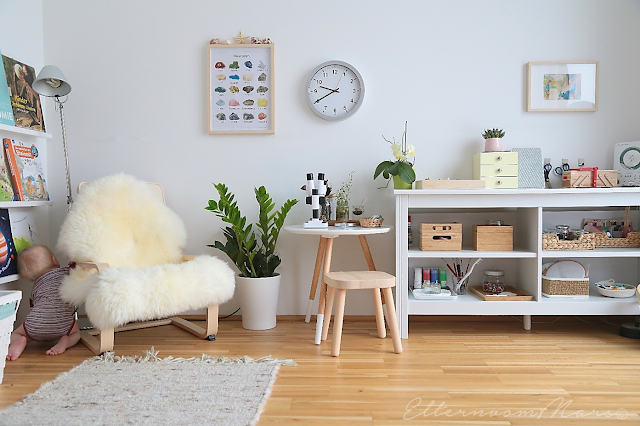
Simplify: Montessori spaces use more neutral colors and have very little (or nothing) hanging on the walls. What is displayed on the walls is carefully chosen and hanging at the child’s eye level. The goal is to reduce the visual stimulation of the environment, so that the child will be attracted to the materials (toys) and be able to concentrate on her work (play).
A sample play space for a young toddler A sample play space for a six year old
Reduce: Consider reducing the number of toys available. You may use a small shelving unit with two or three shelves and just a few items on each shelf. Putting out just a few toys at once, and rotating them regularly, allows your child to focus on what’s available. Also, rotating toys will rekindle your child’s interest in older toys that they haven’t seen for a while. When a toy has remained on the shelf for a whole week untouched, you know it’s time to put it away and put out something different.
Organize: Children have a sensitive period for order from birth through age five, peaking in early toddlerhood. You can see this through young children’s love for routine and repetition. Young children are most comfortable when their physical environments are orderly. Montessori environments support this desire for order by designating a specific spot for each material. In a play area, instead of a big toy bins full of many unrelated things, each toy has a space where it belongs on a shelf. Toys with multiple pieces, like blocks or play animals, can be organized in small baskets or trays on the shelf. You can even attach photos to each bin or shelf so that the child knows exactly where each toy belongs.
Provide varied work spaces: The furniture in Montessori classrooms is child-sized and the materials are kept on low shelves so that the child can access them independently. If you have the space at home, it’s ideal to include a child-size table and chair(s), an open space allowing for movement and large floor work, and a cozy spot for resting or recovering from an upsetting moment.
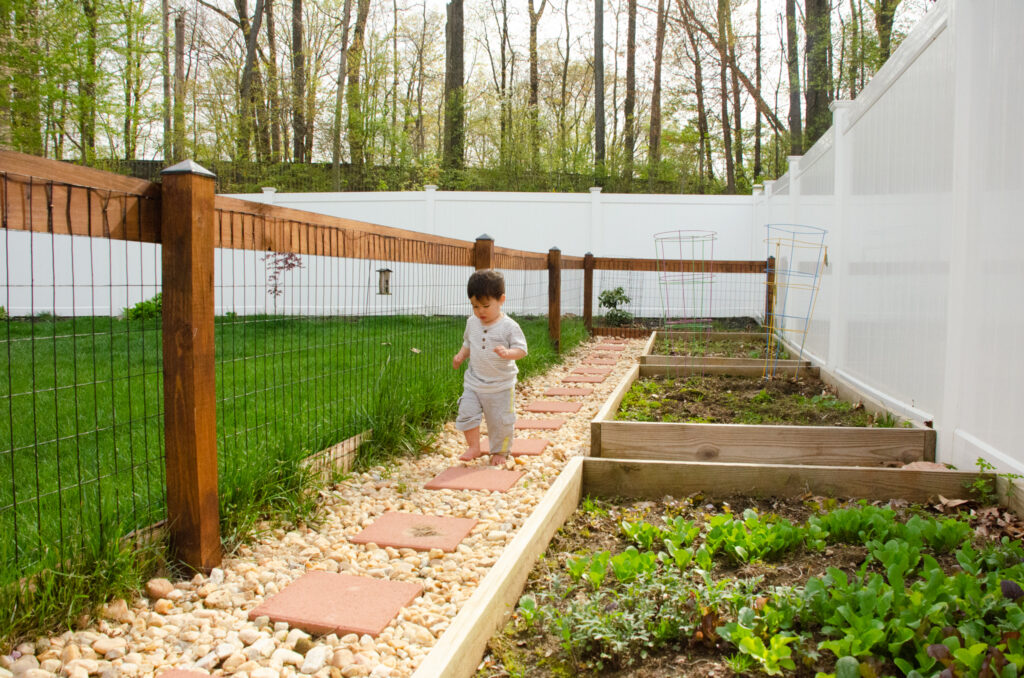
Include nature: If possible, choose a room with natural light. House plants offer children a chance to take care of something, as well as adding natural beauty to the room. Young children also love watching fish or other pets and older children can help feed and care for them as well. You might also consider setting up an outdoor play area where your child can dig in the dirt, water plants, enjoy sand and water play, and do messy art projects.
Choose toys carefully: While there is no need to fill your home with “academic” work, you can select toys that help your child develop in different ways. You might think about including toys that develop fine motor (small muscles), gross motor (big muscles), art and music, books, and open-ended items (like blocks) for creative play. It’s also important to include toys that offer a varying degree of difficulty. You want a mix of challenging toys and things that are easy and familiar for her to play with when she needs a mental break. Open-ended toys that engage rather than entertain (such as those that light up or make noises) will encourage creativity and concentration.
Give it a try! This might seem like a lot to think about, but you can pick and choose what works for your child and your home. I feel free to “break the rules.” I still keep all of Lila’s stuffed animals in one large bin. And though most gifts made of plastic or requiring batteries “disappear” after a few days, a few favorites have been allowed to stay. And despite my best intentions, getting Lila interested in “clean up time” is still a constant struggle. So don’t be too hard on yourself. Just have fun with it!
*By the way, you don’t need to spend a lot of money on toys, especially for young children. These have been some of Lila’s favorites over the years:
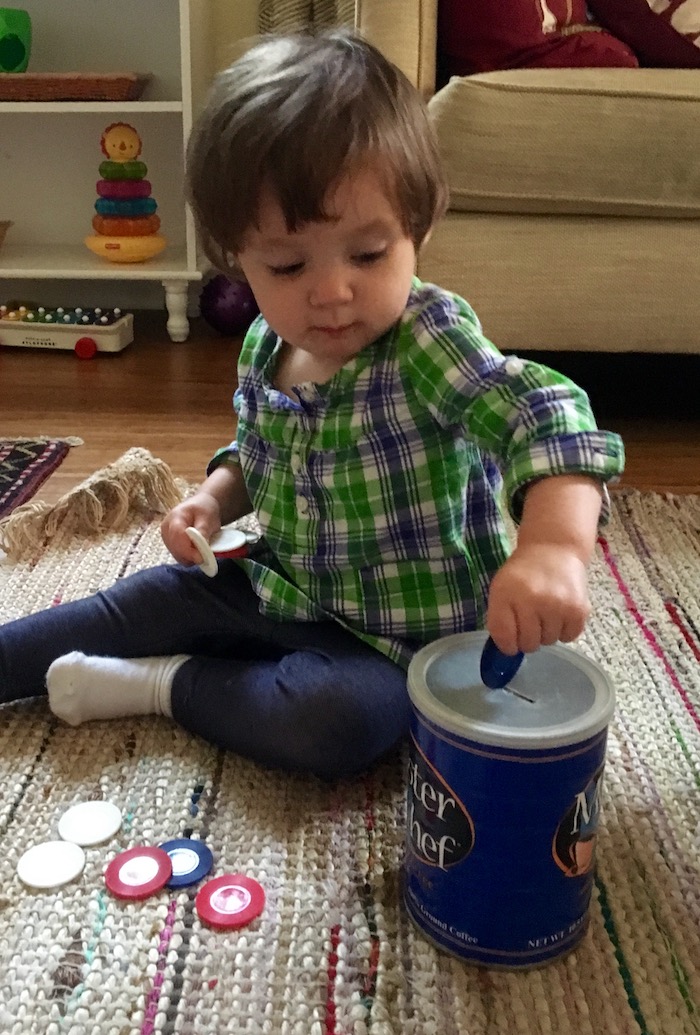
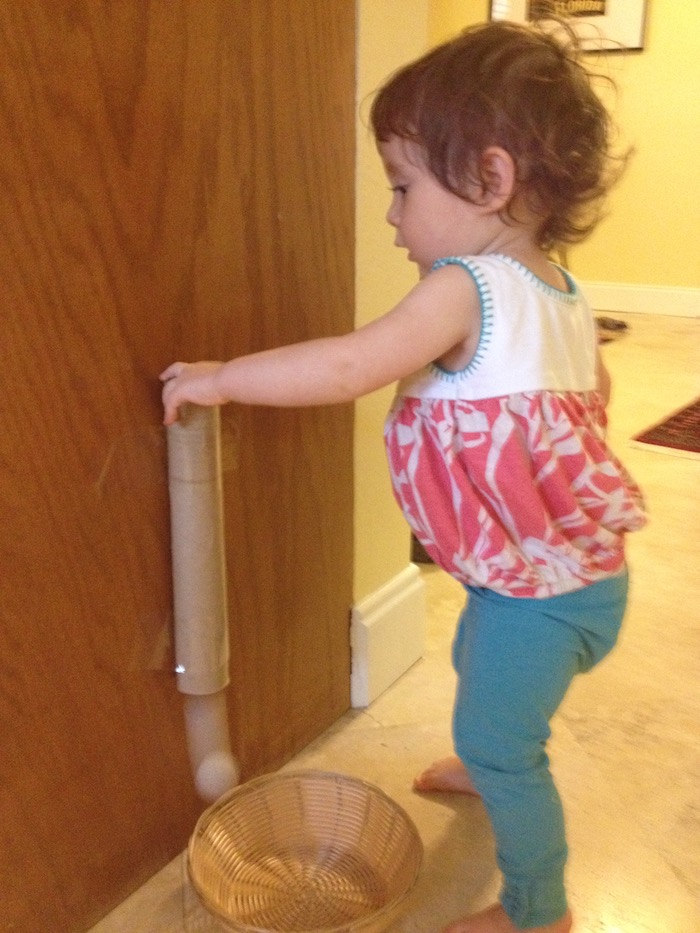
Scooping jingle bells into a metal muffin tin, posting poker chips into a coffee can, and posting ping pong balls through a paper towel tube.
As a toddler, Lila enjoyed the sound that polished stones made when dropped into a glass bowl; later she enjoyed sorting them by size and color; now she is interested in rocks and minerals.
Lila keeps a collection of natural treasures; recyclable materials make wonderful art supplies. Now Lila stops me on the way to the recycling bin and says, “Wait, we can make art with that!”
Greetings from Florida! For those of you who don’t know me, I was a Lower Elementary guide and then the Director of Admissions at Greenspring before moving to Florida. I have begun this series on Montessori in the Home to help parents find creative ways to implement Montessori practices into day-to-day activities at home. My daughter, Lila, is now three and a half and loves to work in the kitchen!
Getting Involved
Lila has been an active participant in the kitchen since she was very small. Early activities included stirring batter, washing and scrubbing fruits and vegetables, peeling clementines and bananas, pouring coffee beans into the grinder, and dipping bread into eggs for french toast.
These activities help build the essential skills of coordination, concentration, order, and independence. The work also exposes the child to tasting new foods. Lila was always more interested in eating something that she helped to prepare.
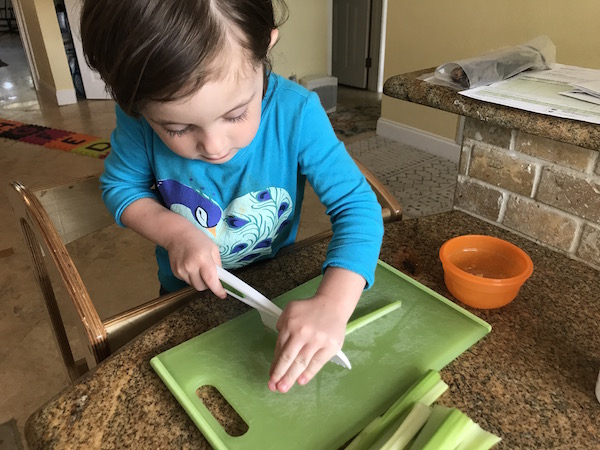
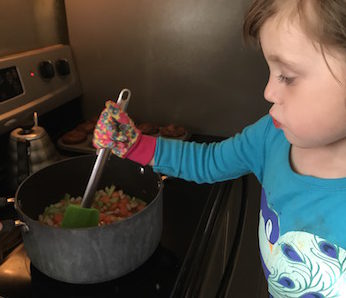
As her fine motor coordination increased, Lila started shucking corn, rolling dough, peeling and slicing eggs and bananas with special tools, and peeling carrots and cucumbers with a peeler and wavy chopper. Now Lila is also slicing vegetables with an acrylic knife, grating cheese, and juicing oranges. Child-size gardening gloves allow Lila to stir soup and flip pancakes without fear of touching the hot pan.
Involving a toddler at dinner time when everyone is tired can be challenging. If I have a few extra minutes earlier in the day, I will prepare part of the meal while Lila is still at school. This will allow me to focus more energy on her participation during the meal preparation. Sometimes I plan our joint projects for the weekends when I have more energy.
There are other ways besides cooking that children can help. Setting the table, sweeping up crumbs, and placing dirty dishes in the dishwasher are other ways that little ones can contribute. Montessorians know that children’s self-esteem comes from making meaningful contributions, rather than receiving compliments. So allowing children to be active participants in the family is a tremendous gift!
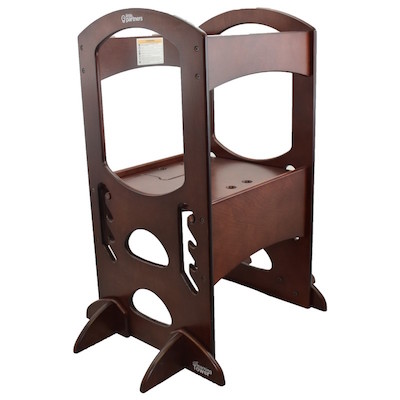
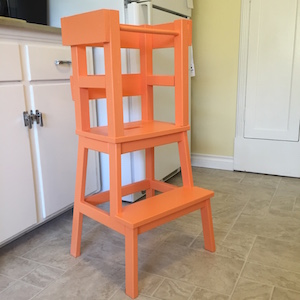
Learning Tower The single most important tool you will need to allow your child to participate in the kitchen is a safe stool. We put the “Learning Tower” on our baby gift registry before Lila was born. Three and a half years later, we are still using it every day. When Lila was very small, we wrapped the sides with saran wrap so she couldn’t fall out. Soon she was able to climb in and out independently. The adjustable height allows the stool to grow with her. And you don’t need to worry about her falling off a regular stool.
I have seen some great “hacks” on the internet for converting an Ikea stool into a learning tower, for a much lower cost. If you’re handy, this is definitely worth a try!
Eating Independently As much as your child will enjoy helping prepare food, she will also be highly motivated to eat independently. When Lila was very small, she sat in a Bumbo or high chair. As soon as she was able to sit in a chair without falling off, we moved her to a toddler-size table and chair. (The table was bought from Ikea with the legs chopped to make it shorter.)
While she still sat in a high chair for family dinner at the dining table, all other meals and snacks were eaten at her special table. Soon, Lila began rejecting the high chair. That’s when we switched to a booster seat in a regular dining chair.
Montessori Services makes child-size glass dishes that are very sturdy. While I don’t like to replicate too many Montessori lessons in the home (as I like them to remain special at school and be presented by the experts!), I did invest in two small glass pitchers so that Lila could practice pouring. I have a full list of recommended supplies below.
In order to further increase independence, you can make child-size dishes, utensils, kitchen tools, and cleaning supplies available at the child’s level. This can be a special shelf or just a lower kitchen cabinet that you dedicate for your child’s kitchen items.
You might consider creating a water and snack station on a low shelf or table. By having water and healthy snacks available at all times, your child can help herself to food when she is hungry. You can also dedicate a low shelf of the refrigerator for your child’s use and keep liquids in smaller containers that are easy to pour.
Don’t feel like you need to tackle all of this at once. Try picking just one new system to implement in your home and see how it works!


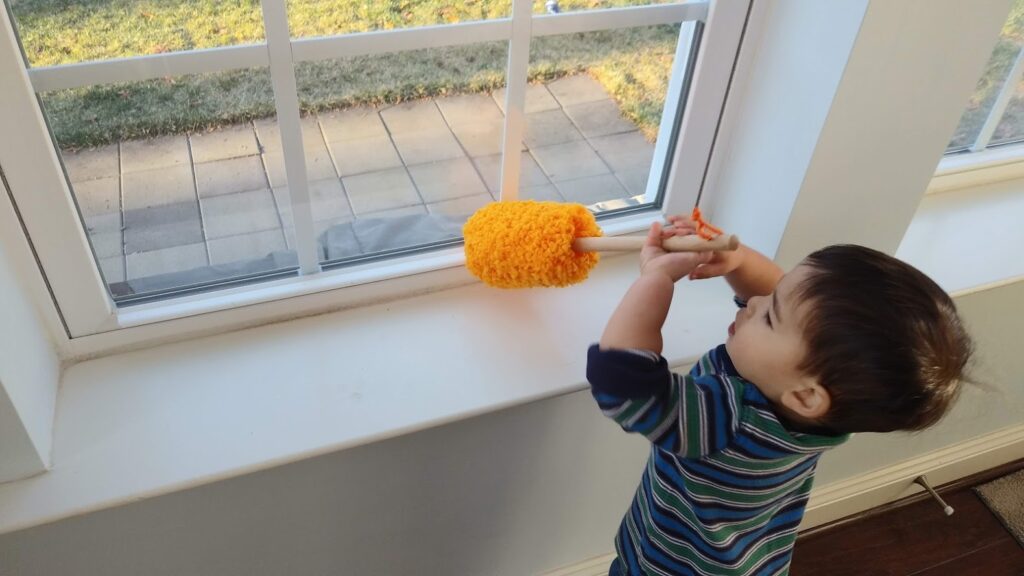
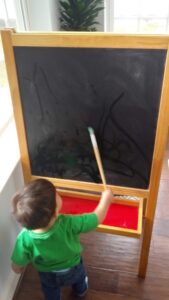 For us, setting up the independent workspace for him was imperative. We are now seeing all of the areas in our home that have been inaccessible to him – we had to hold him up to get on the toilet or wash his hands; he had no way to access food on his own; even his toys were primarily kept in a trunk that we opened when it was time to play. We are already brainstorming things we need, such as a learning tower in the kitchen, but we are also making our own solutions, such as using a step ladder in the bathroom for him to easily access the sink. This shut down has encouraged us to find new ways to use what we already have to meet our new and evolving needs for our son.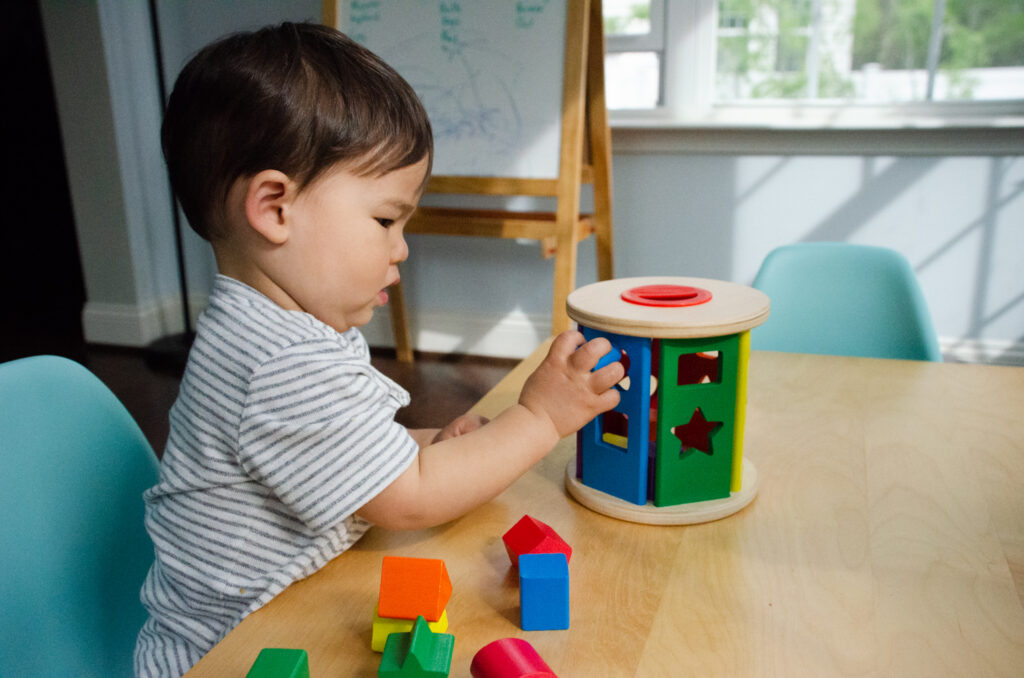
 I was in the process of reading No Drama Discipline by Daniel Siegel and Tina Payne Bryson when schools closed. This was a timely book for us and my husband decided to read it as well. In addition to that, I’ve been looking at resources from Hand in Hand Parenting, Aha! Parenting, and the Greenspring website. I’ve found that using the tools of a Montessori guide – observing the child, having a prepared environment, providing the time and space for independence, and embracing the day-to-day or “Practical Life” activities has served us especially well during this time.