Written by Shannon Brown, Children’s House Guide

An Adolescent reading to Children’s House friends.
Perhaps the most dramatic jump in language development is the growth of vocabulary that occurs between the ages of two to six. This explosion in language does not occur at any other time in your child’s life! This is why Montessorians refer to this timeframe a “sensitive period” for language.
Children exposed to rich language during this window will seemingly absorb new vocabulary, spark new interests, develop conversational skills, as well as build social confidence and greater independence.
The child’s sensitive period for language shows itself as an insatiable hunger for words. We use rich vocabulary in the classroom (rhombus, vibration, translucent, etc.), not for the purposes of memorization, but expose your child to the richness of language and the world around him. Your child is ecstatic to learn and apply this new vocabulary. As we get to know your child’s interests, we provide (and often create new) materials to reflect those interests. These materials often spark the interest of others in the class and the energy is infectious! Guides often find themselves learning alongside the children.

Ms. Marketa offers a lesson to two Children’s House children.
The Children’s House environment provides your child countless opportunities to listen and to speak – ie, the art of conversation. These lessons begin the first day your child walks through the door. Whenever a Guide or Assistant is sharing a “true story,” eliciting a conversation from your child’s drawing, singing a song, or reading a book to the group, she is serving as a model for language. Whenever your child is sharing a personal anecdote with us, we elicit conversation to help him formulate, organize, and refine his thoughts. We ask basic comprehension questions to help him identify the characters and the setting. Who was with you? Where did that happen? Did you enjoy it?
When we respond to what your child has said and ask him to provide more detail, we are modeling the dynamics of having a conversation. When we are listening to your child, we do so with interest and presence, because we want your child to feel that what he says has great value. We make eye contact and show your child that he has our undivided attention. These are essential social skills that will benefit your child throughout his life! Practicing conversations will also support the child in developing clear enunciation and pronunciation, which are important aspects of communication. Finally, these experiences will strengthen your child’s listening skills, for in order to listen effectively, one must inhibit talking, which requires the development of the will.
The nurturing environment of the Montessori classroom provides a safe and supportive space for your child to find his voice and feel comfortable to express his thoughts and opinions. With time, he will grow his confidence and ability to communicate his thoughts to others. Developing confidence in his ability to express himself frees your child from being dependent on others to speak for him. He will be empowered to express his feelings to others, and learn to resolve his conflicts independently.
Parent Challenge of the Month:
Listen carefully to the language you use with your child. Is it mostly directive (giving instructions) or is it full of rich vocabulary? Challenge yourself to sit down and have a conversation with your child at least once a day for the next month. You’ll be amazed as she begins to use colorful adjectives and specific verbs in her conversations!
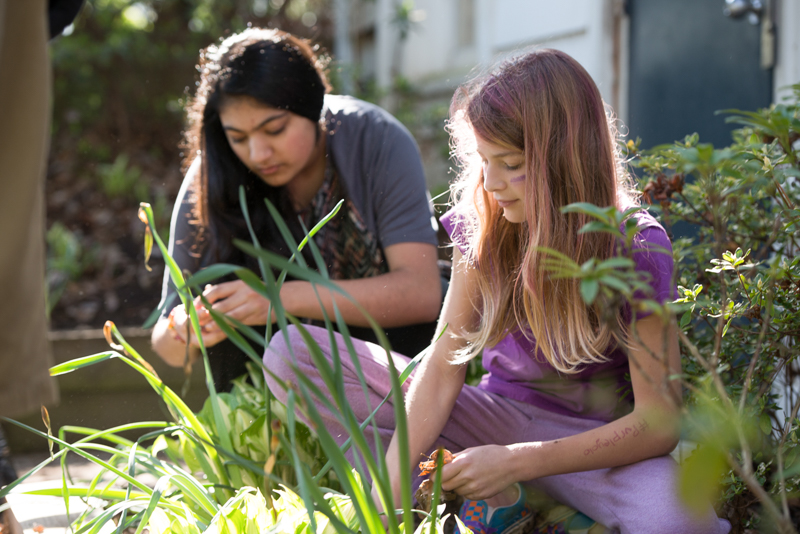
“There’s no such thing as bad weather, only unsuitable clothing” –Alfred Wainwright
In education today, there’s a forward momentum towards STEM (Science, Technology, Engineering, and Math). There are robotics clubs, programming camps, and circuitry courses. We want our children to enter the world prepared in math and science. However, if you look to the natural world, there are so many ways for your child to become a natural scientist and mathematician.
The etymology of “science” comes from the Latin scire, “to know”, and etymologists note that it probably originally meant “to separate one thing from another, to distinguish.” Yet, in our natural world, there is so much to know, to distinguish, that has fallen through the cracks in the education of our youth, and perhaps even ourselves. In the Montessori classroom, distinguishing and classifying starts in the Children’s House, in practically every subject area. This practice not only helps the child to fine tune their observation skills and hone in their level of concentration, but the child is organizing and classifying information in their brain.

In the Elementary classroom, children continue to use their observational and analytical skills to study, classify, and understand the distinguishing characteristics of the natural world. Elementary children are provided a high level introduction to this field of study. For instance, in botany and zoology, the child learns how each organism lives and what satisfies that organisms needs. Then the child learns about the function and parts, such as the function of limbs, skin, or leaf to that particular living organism. At this point, the child may explore variety. This exposure to variety is what impels the child to classify. A leaf is not merely a leaf, but a maple leaf – or even distinguished further, a red maple. Nor is a feather just a feather, but that very plain, brown feather is a bald eagle feather. By learning and practicing this skill, the child is practicing scientific observation.
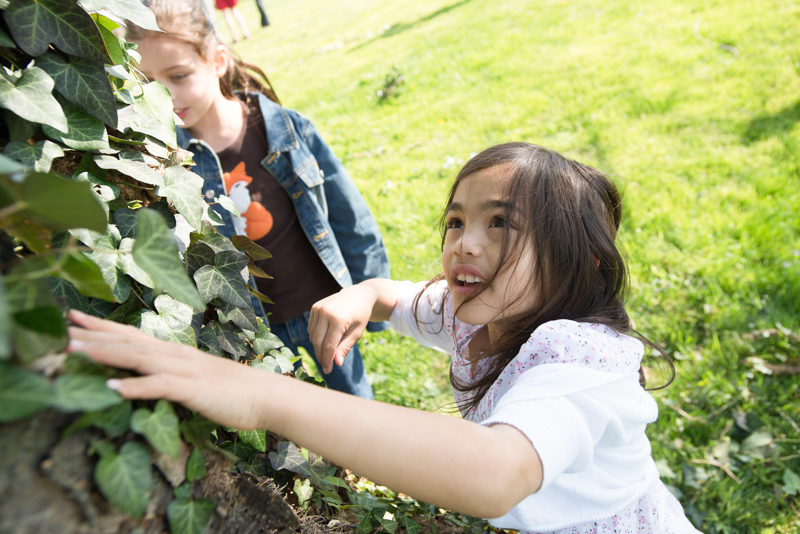
In the Adolescent Community, the child explores science and nature through Occupations Studies. Occupations is essentially a study of the land and offers the student a chance to apply scientific concepts such as soil and water chemistry, botany, and microbiology to agricultural practices. The Adolescent Community is committed to the study of the environment and science studies focus on environmental ethics, conservation, and renewable energy. The child conducts their own science experiments and writes full lab reports to explore cause-and-effect relationships. This serves as a means to be fully connected with wanting to distinguish, to know, more about our world.
In order to fully experience science, and even more, love it, the child needs to be in constant connection with the outdoors. No matter the weather, no matter the season, experiencing nature is the best complementary experience to teaching STEM. Pick up a child friendly field guide at a local used book store. Find an even more detailed one for yourself. Then explore – together. Your children will ask the most amazing, inquisitive questions – and you’ll be there with them, modeling scientific observation and inquiry.
To learn more about Montessori education, please visit us.

A student is developing fine motor skills by working with scissors, glue, and crayons.
Art in the Montessori Classroom
An Essential Part of the Child’s Work
Written by Michelle Dickson-Feeney, Art Enrichment Guide
www.michelledickson.com
Art is an essential component of learning in Montessori classrooms. In each classroom there are dedicated art shelves ensuring students always have access to art materials for creative expression. We are focused on providing our students with the skills, materials, and exposure to art that they need in order to express their creativity at their own pace and level. From Toddlers to Adolescents, you will see students naturally turning to art in response to what they are learning and studying in other lessons. For example, a student in Children’s House learning about the parts of a plant may want to make a painting about it, while a Lower Elementary student studying France may spend weeks in Open Studio building an intricate model of the Palace of Versailles.
In the Toddler and Children’s House classrooms, art plays an important role in developing fine motor skills, hand strength, and coordination. Cutting, gluing, modeling, crayoning, and painting are five foundational skills that prepare students for the next phase in their creative journeys. Once students master basic lessons in these areas they move on to activities which involve more steps, colors, and materials.

Children’s House students enjoy art and creativity in the classroom.
Supporting your child’s creative process
In these lessons, the process is about the focus, not the product. Toddlers and younger Children’s House students often won’t even want to keep their artwork. For them it is entirely about the process—the act of cutting, gluing, or painting. It’s our job as guides and parents to respect this and not force our feelings onto the child. Of course we’re proud of their accomplishments and want to say, “Good job!” but this creates a cycle where the child begins to make art to elicit that “approval” reaction from us, instead of satisfying herself.
A more appropriate guideline to go by is to match the child’s response to her work. If a toddler has made a painting and abandoned it on the table, resist the urge to bring it to her and praise it. That doesn’t mean you have to throw it away—you can keep it for yourself! Remember, we are working towards reflecting children’s feelings about their art, not our own.
If a child is excited about what she has made and brings it to you with the question ”Do you like it?” now is the perfect time to celebrate her accomplishment and engage in a discussion about the work. Match her excitement, but try to direct the conversation back to the art itself. Ask her to tell you about it, or ask what she likes about it, or make an observation about something you see. Be genuine and encouraging—never judgmental. Just telling a child that you like it is certainly easier, but it often ends the conversation and again, it makes it about us and our approval—not the child. Responding instead with real questions and observations shows the child that you see what they’ve made and you are interested.

Students work on art of their choice during open art studio.
Responding to a child’s disappointment
In the situation where a child comes to you with art she is not happy with, accept this as a valid emotion. Tell her that artists don’t like everything they make (as a working artist I can definitely vouch for that!) and maybe share an experience you have had. Resist the urge to reassure her that her artwork is good and that you like it. This often will frustrate the child further. Instead, ask them what they don’t like about it and brainstorm how to make it better if they’re interested. It’s also fine for them to throw it away. Is there a part they do like? Maybe they can cut it out and use it to start a new piece.

In preparation for Elementary Big Works Day, many students visited the Open Art Studio to work on their models.
When I began teaching at Greenspring Montessori School I was unfamiliar with this approach to art education. At first I was worried that my students wouldn’t develop art skills if I didn’t teach a project based lesson where everyone made different versions of the same thing. It was really hard (and still is at times!) for me to stop saying “Good job!” and “I like it!” But the more I read about it and observed in the classrooms, the more I came to believe that this is the best way to teach art. I see my students taking real ownership over their art, because it is truly theirs.
Students retain skills better because it’s something they care deeply about, rather than something they were told to do. At Greenspring Montessori, students become creative problem-solvers as they figure out what materials they need and how to use them to bring their ideas to life.
-
-
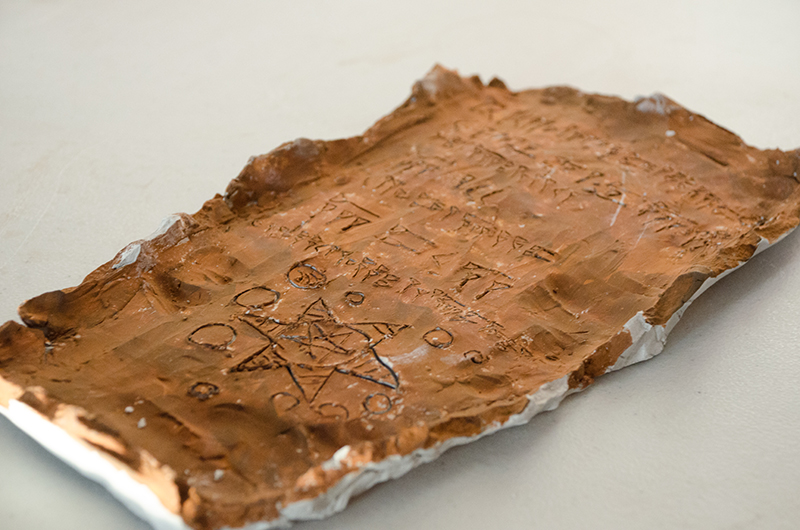
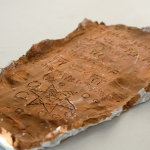
An Elementary student’s model representation of a clay tablet from ancient Sumer.
-
-
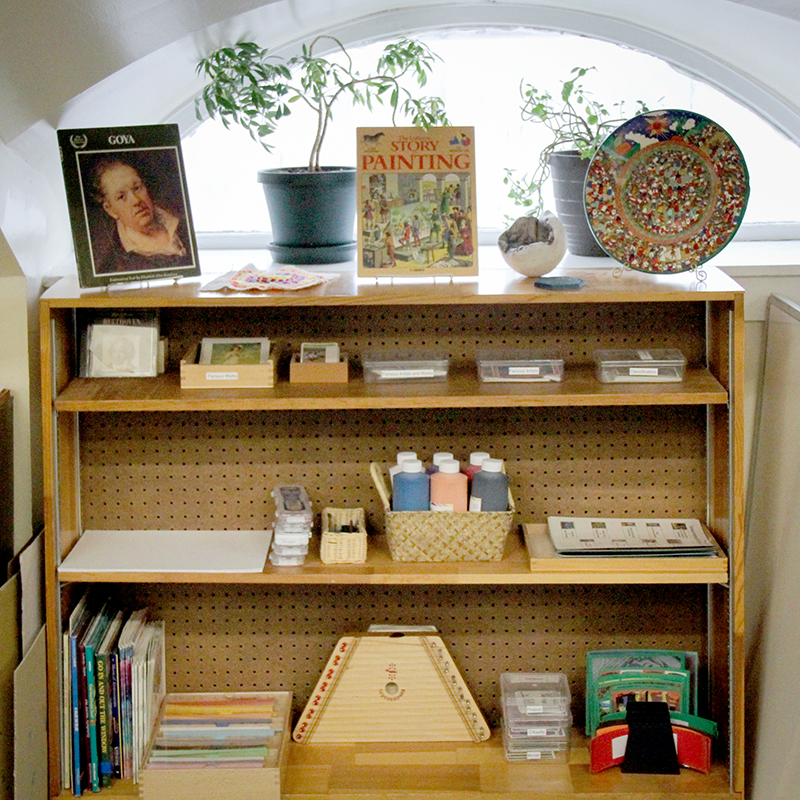
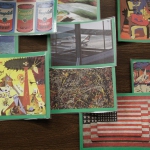
Art shelves in classrooms give students access to materials and art history resources.
-
-
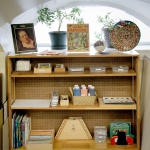
Art shelves in classrooms give students access to materials and art history resources.
-
-
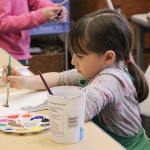
A student paints during Open Art Studio.
-
-
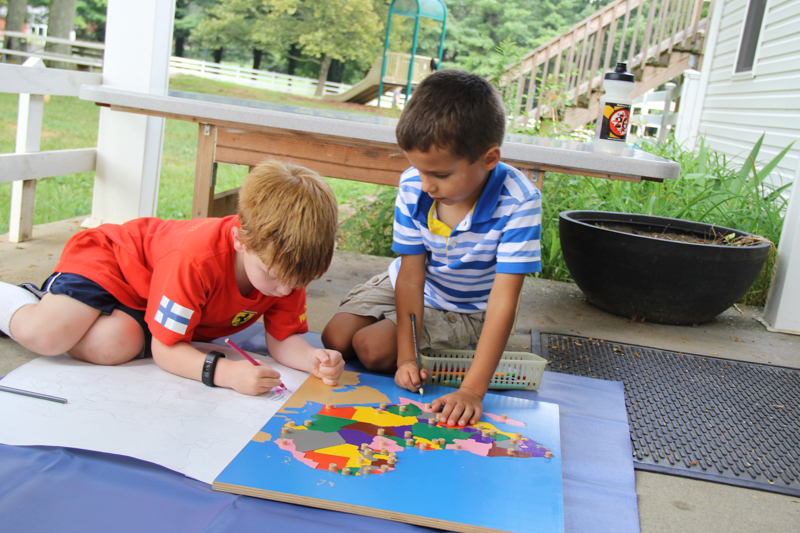
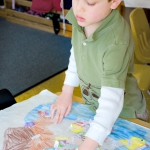
A Children’s House student painting a detailed map of Europe in his classroom.
-
-
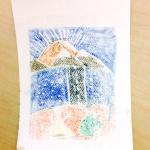
A Lower Elementary student’s styrofoam plate print.
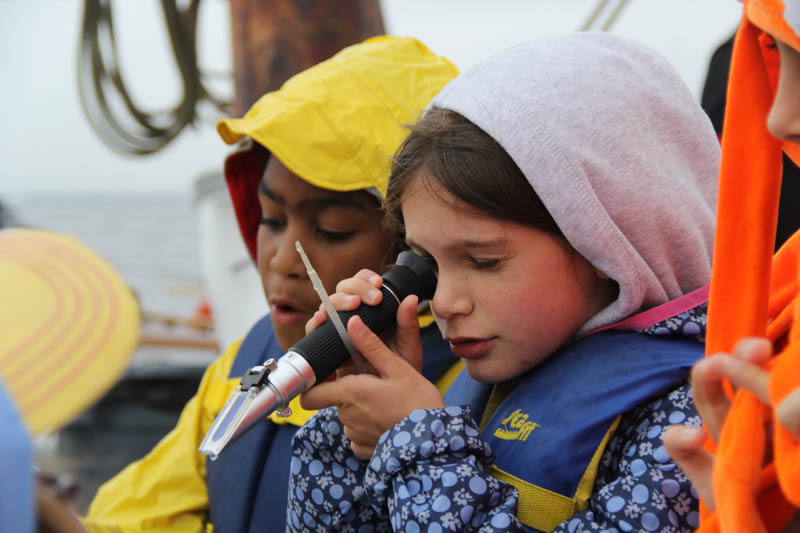
Montessori As Preparation for the “Real World,” written by Lower Elementary Lead Guide, Cheri Gardner
In Montessori classrooms, we don’t insist that our students sit at desks all day, do the same work that everyone else does, or stop doing things they’re immersed in because a bell rings. Parents unfamiliar with Montessori often say, “That sounds great, but how does Montessori prepare children for the ‘real world?’”
We ask these parents to consider that traditional educational methods were developed during the industrial revolution when students were being trained for work in factories. Students needed to learn how to walk in lines, follow directions, memorize procedures, and start and stop work at the signal of a bell. This is clearly no longer the world in which we live or work.
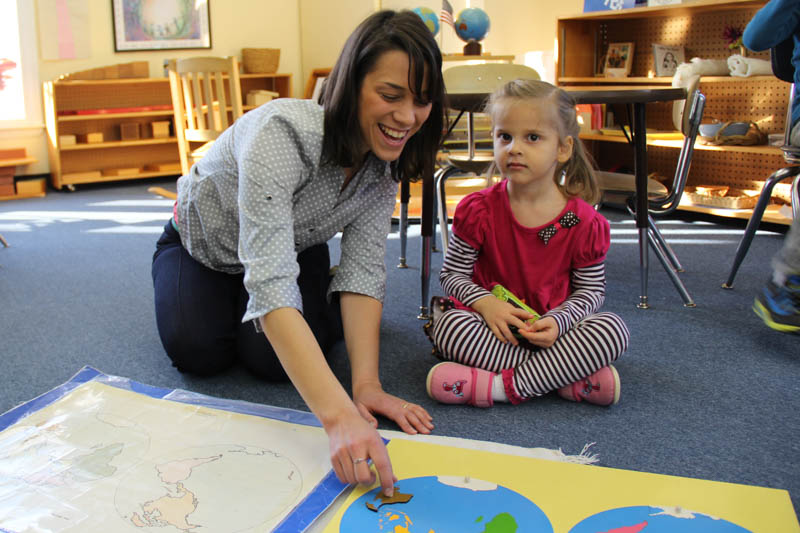
So what skills are needed to succeed in the “real world” today? Success in the global economy comes from the ability to think, show ingenuity, and take purpose-driven action. Success comes from working cooperatively with others – as well as by oneself. Success comes from the ability to both define and solve the problem. Success results when we persevere in the face of difficulty, and keep trying even when our first (and second, and third!) attempts are failures. Success comes when we have the desire to make a significant contribution.
Daniel Pink, author of Drive and A Whole New Mind, said, “Human beings have an innate inner drive to be autonomous, self-determined, and connected to one another. And when that drive is liberated, people achieve more and richer lives. Maria Montessori figured this out a long time ago.”
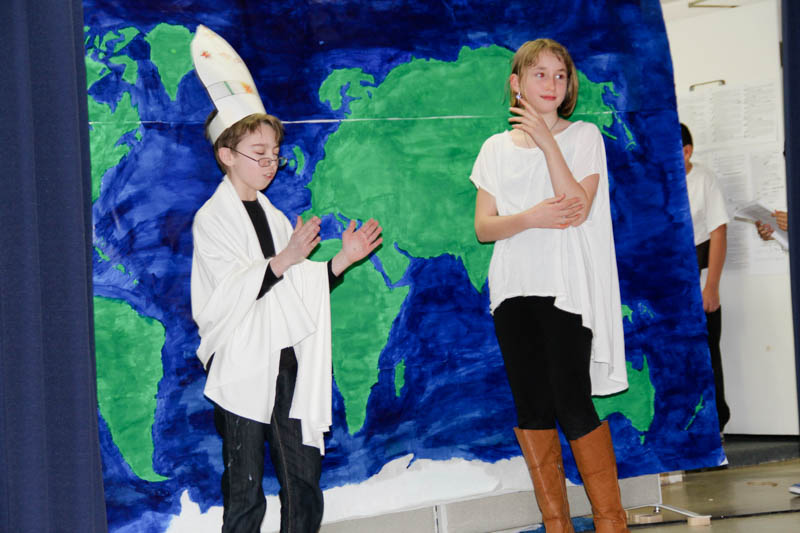
The structured freedom of the Montessori environment fosters the development of inner discipline, responsibility, and intrinsic motivation. The collaborative nature of the Elementary Montessori classroom challenges students to both advocate and empathize, listen and lead, visualize and reflect – all real world skills that will serve them for a lifetime. With a strong foundation in methods supported by scientific research, Montessori education has a clear record of success in preparing students for high school, college, and adulthood.
Larry Page and Sergey Brin, the founders of Google, explicitly credit Montessori with their success. “We both went to Montessori school,” Mr. Page said, “and I think our success was part of that training of not following rules and orders, and being self-motivated, questioning what’s going on in the world, doing things a little bit differently.”
So we declare proudly, Montessori IS education for the real world!
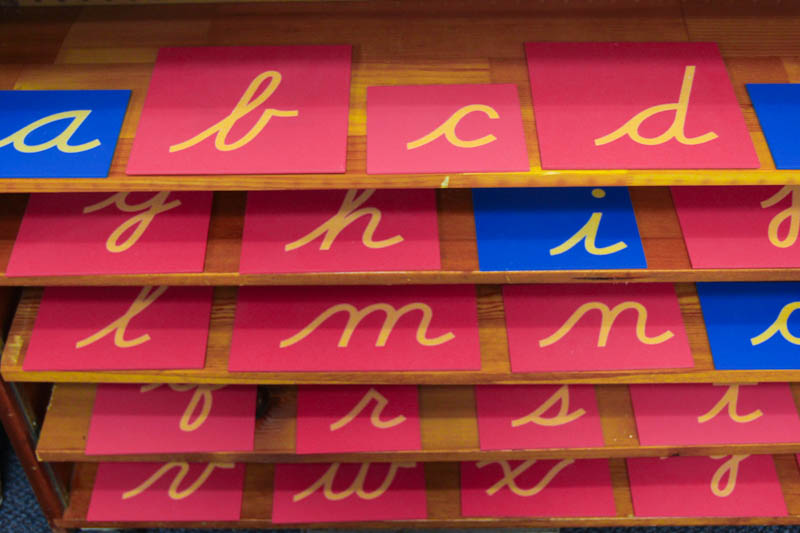
“Learning cursive is good for children’s fine motor skills, and writing in longhand generally helps students retain more information and generate more ideas. Studies have also shown that kids who learn cursive rather than simply manuscript writing score better on reading and spelling tests, perhaps because the linked-up cursive forces writers to think of words as wholes instead of parts.” – Katy Steinmetz, Time Magazine
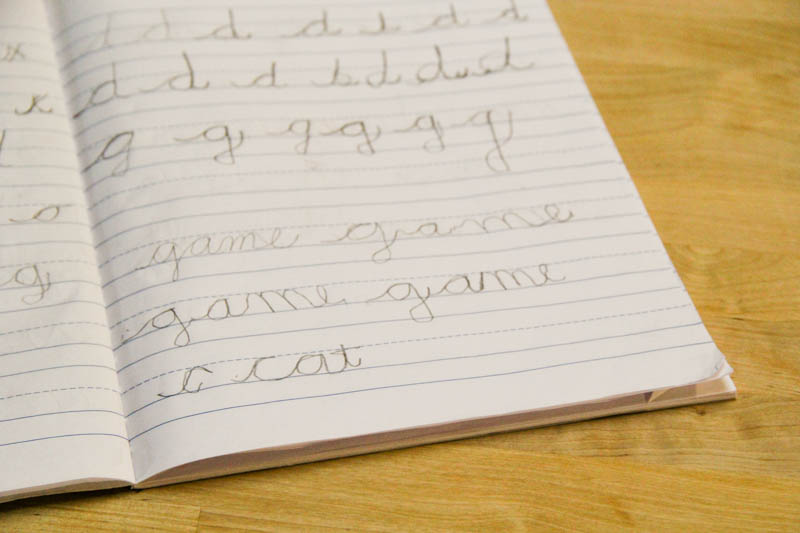
A sample of early cursive writing from a Lower Elementary (first grade) student at Greenspring Montessori School.
At Greenspring Montessori School, we have extended our commitment to teaching cursive writing to our Children’s House students. Starting at age 3, students now have access to cursive sandpaper letters, cursive name tags, and lessons on cursive handwriting.
It been proven that cursive writing engages more of the brain and helps students become better at spelling. As they are writing, children are able to slow down and focus on the precision, allowing them to think about what they are trying to say, instead of simply copying letter for letter. Our Children’s House guides look out for signs that an individual student is ready to begin learning cursive, as they also work on their print handwriting.
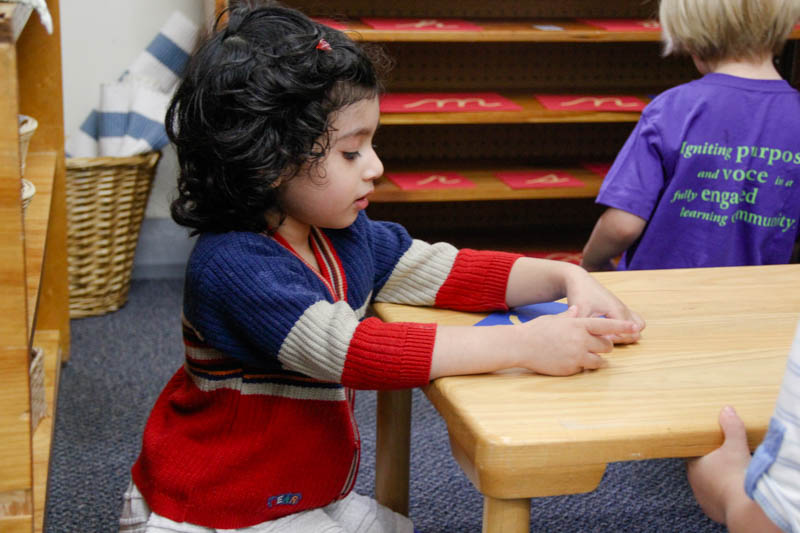
True to the Montessori model, our guides teach to the individual child. We know our students learn in different ways and at different speeds. In any one of our Montessori Children’s House classrooms, the students are spread about working on all kinds of different activities that interest them. If a student, for example, is drawn to the cursive sandpaper letters, the guide may give the child a lesson on the different parts of the letters, or on spelling out words using the large tangible pieces. If they are working on their pencil grip, the guide may suggest they try a word they know in cursive.
By the time the child enters Lower Elementary, they are working on the precision of their handwriting, creating more elaborate writing pieces to express themselves.
Want to learn more about our emphasis on cursive writing? Please contact us at inform@www.greenspringmontessori-b.dev.
Here are a few more articles and resources on cursive writing:
“5 Reasons Kids Should Still Learn Cursive Writing,” Time Magazine.
“Ten Reasons People Still Need Cursive,” The Federalist.
“What’s Lost as Handwriting Fades,” The New York Times.