Written by Emily Shattuck, Children’s House Lead Guide (and Mother of Two)
“Your job as a parent is to put yourself out of a job by raising your kid to independent adulthood (where independence equals not turning to you to handle/fix/resolve everything) and when you appreciate that every day offers a chance to build that independence, no matter what age and stage your kid’s at.”
~ Julie Lythcott-Haims author of How to Raise an Adult: Break Free of the Overparenting Trap
I agree with this quotation, but as a parent, I am also saddened by its truth. We all love our children and take great pride in caring for them: feeding them, dressing them, making sure they get enough rest, waking them in the morning, cleaning them, entertaining them, and educating them. As a parent of a 16 year-old high school junior and a 12 year-old seventh grader, I have fond memories of caring for my children as infants, toddlers, pre-schoolers, and through the elementary years. It is wonderful to feel needed and loved by our children. Being a parent is a very rewarding, fulfilling, and exhausting job and we would not trade it for the world!
While my children were young, however, I also was wary of the cultural norms to over-parent or “helicopter parent.” I know my children needed to develop skills to eventually leave the house at 18 and find their way in the world and it is my job to prepare them. With just two years remaining before my daughter’s 18th birthday, I decided to prepare myself for the craziness of the college application process and I picked up How to Raise an Adult, written in 2015 by Julie Lyhtcott-Haim, the former Stanford Freshman Dean of students. As a Montessori Children’s House guide, I was delighted when Montessori education was mentioned throughout the book. It states, “Despite the evidence that Montessori’s student-driven learning approach is a springboard to success in life, Montessori has yet to become a mainstream model for education in the in the United States.” (p. 158) It was both a relief and a validation that my children were Montessori students and had the benefit of a Montessori education.


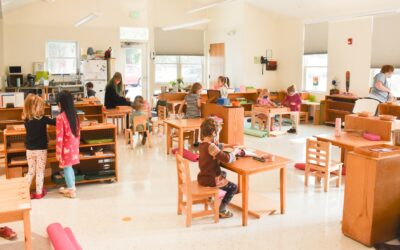
Although many aspects of the Montessori curriculum lends itself to creating resilient, creative, caring, responsible adults, the Practical Life lessons in the Children’s House build the strongest foundation for a path to independence. When developing her first school in Rome circa 1907, Maria Montessori observed that children between the ages of two and a half to six years delighted in helping to care for their classroom. Montessori created child-size tables, chairs, brooms, mops, and other materials so the children could practice sweeping, mopping, and cleaning. She noticed that children enjoyed helping prepare food, set the table, do laundry, garden, and clean as adults do. An entire curriculum was created to fulfill the child’s need to contribute to his community and the Exercises of Practical Life were born.
There are four components of the Practical Life curriculum: Preliminary Exercises, Applied Exercises, Lessons of Grace and Courtesy, and Control of Movement Exercises. The Preliminary Exercises are lessons to give the child the opportunity to practice movements that she will use on a daily basis to perform tasks such as pouring, using a spoon, spreading with a knife, cutting food, or folding laundry. In the Applied Exercises, the child utilizes these developing skills to care for herself and the classroom environment, such as with hand washing, dressing herself, washing a table, or mopping the floor. The lessons of Grace and Courtesy provide the child with the opportunity to learn and practice social graces. Grace and Courtesy lessons include blowing one’s nose, saying excuse me, greeting a guest, introducing oneself, and walking around a work rug. The Control of Movement Exercises help develop self-control and include walking on the line and the Silence Game. The aim of all the Practical Life lessons is to promote independence, responsibility, coordination, concentration, respect for one’s self and their environment, and provide the child the opportunity to develop their identity as a contributing citizen of the community.


As a parent, it is comforting to know that our children are exposed to the lessons of Practical Life and are establishing themselves as members of their Montessori community. But we can also help our children develop these skills by allowing them to play a contributing role in the home environment. “A longitudinal study conducted by Dr. Diana Baumrind concluded that those who were most successful began doing chores at age three or four years of age, whereas those who waited until their teen years to start doing chores were comparatively less successful.” (Lythcott-Haim p. 198) This is wonderful news to parents of current Children’s House children because your children are already accustomed to this role in the classroom. By bridging the gap between school and home, you can assist your child in developing resilience, responsibility, and independence.
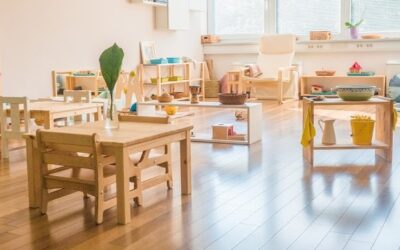
Montessori guides have an advantage since they can design the entire environment to serve the construction of the child’s personality. At home the surroundings and pace of life are designed for adults. Our job, as parents, therefore, is to remove obstacles to our children’s independence in the home life. Parents can begin this process as the Montessori guide does – by observing the child. Observe what the child can do for himself already, his interests, what causes frustration, and which skills that he needs to work on. Once we have observed the child, we can begin to prepare lessons that will serve the child’s development. For instance, if we see that a child cannot put on his own shoes or pour his own drink for snack, we present simplified lessons so the child can practice these skills in order to gain mastery. This requires thoughtfulness and patience. We cannot rush the child when he is doing the hard work of self-construction. We should move slowly, carefully, and with precision. As adults, we do not realize how fast we are moving! Children at this age have not developed the visual acuteness to track fast movements, so we must remind ourselves to slow down when we are giving a child a lesson. The Practical Life Exercises are also given in silence. You can name the activity and the tools used for the work, but the movements are not accompanied by language. We are silent so that the children can process the steps and actions visually and are not confused or bogged down by auditory processing as well.


For instance, if you would like to give your child a lesson on washing his face you could introduce the lesson, “Today I will give you a lesson on washing your face.” You can name the tools used, “This is a wash cloth. This is soap. This is a towel.” Then you can demonstrate slowly how to turn on the faucet, wet the washcloth, rub it on the soap, rub it on your face, rinse the washcloth with water, rub your face again, turn off the faucet, hang up the washcloth to dry, and dry your hands and face. When preparing to give your child a lesson, practice yourself first and gather the necessary supplies. Make sure the supplies needed are suited to the child’s size and are accessible by the child independently. Practice the actions yourself, breaking them into steps, moving mindfully and slowly. When you are ready you can give a lesson to your child, finish the lesson by saying, “Now it’s your turn!” and give your child a turn to practice. You can end the lesson by saying, “You can wash your face whenever you like!” You do not praise the child, as the lesson it is not for your benefit, but a gift for your child.
Vicki Hoefle, author of Duct Tape Parenting, gives examples of skills and tasks children should learn and master at age four, including getting dressed on their own, making toast, brushing teeth, setting the table, taking dirty dishes to the dishwasher, making the bed, combing hair, packing own back pack, taking a bath, waking up with an alarm clock, wiping the table after meals, feeding pets, and cleaning the kitchen sink. (p. 143) Lythcott-Haims also includes tasks such as putting dirty clothes in the hamper, putting away toys, dusting, and washing one’s face (p. 167) as basic life-skills children age 3-5 should learn. “Children are innately interested and open to learning basic life skills, and if allowed and encouraged to do so, they grow into confident people who know that they matter within the family and within the community. This in turn affects how they develop socially. By the time they are teenagers, if they’ve mastered basic self and life skills, they can focus on developing their social skills.” (Hoefle p. 133)


Keep in mind that you must have patience, understanding, and self-restraint to actually make this work in your home. Your child is not going to perform these tasks perfectly the first time, or maybe even the 60th time. This is a process. It is our job to observe, give the lesson, and then move out of the way! Above all, do not follow behind them and do it for them if it is not done to your standards! That undermines their work and their self-worth. Also these tasks or chores should not be tied to an allowance, reward, or praise. They should be expectations as your child’s contribution to the household. (If you do want to introduce an allowance to help your child learn about financial responsibility, more guidance is given in Duct Tape Parenting.)
For more ideas on how to raise respectful, responsible, and resilient children, I highly recommend reading Duct Tape Parenting. If you are concerned that you may be one of those parents on the path to writing your child’s college essays, then I suggest How to Raise an Adult.
Your challenge this month:
Choose a time of day that you wish your child was more independent (for example, preparing for school, mealtime, or bedtime) and observe for fifteen minutes without stepping in. Then make a plan to determine what is going well and what your child needs to still work on. Develop a lesson to support your child with one skill. Then observe over the next few weeks to see how your child is progressing.
I hope you are as inspired as I am about current parenting books echoing what Maria Montessori knew over a century ago. “Children are the constructors of men whom they build. Childhood constructs with what it finds. If the materials are poor, the construction is also poor.” (Maria Montessori, letter to a government official,1947) And how fortunate to have your own child beginning the exciting work of creating the person he is to become!