
Alternatives to Saying Good Job

Alternatives to Saying Good Job

You may have heard your child’s Guide talk about the importance of offering children encouragement rather than praise. But why is that important? And what does that look like in real life?

Why It’s Important

For the past ten years, psychologist Carol Dweck and her team at Columbia (she’s now at Stanford) studied the effect of praise on students (preschool to graduate school) and found that praise has these negative outcomes:

  • Children become more cautious, more likely to avoid challenges
  • Causes them to lose interest
  • Encourages competition among children
  • Motivation shifts from internal to external (creating “praise junkies”)
  • Children more likely to think that intelligence or talent is something you either have or don’t have (fixed mindset)
  • Reduced their achievement

While well-intentioned, it is clear that praise can have some unintended negative consequences.

What You Can Do Instead

In his article, Five Reasons to Stop Saying “Good Job!”, Alfie Kohn suggests:

Say nothing. Some people insist a helpful act must be “reinforced” because, secretly or unconsciously, they believe it was a fluke. If children are basically evil, then they have to be given an artificial reason for being nice (namely, to get a verbal reward). But if that cynicism is unfounded – and a lot of research suggests that it is – then praise may not be necessary.

Say what you saw. A simple, evaluation-free statement (“You put your shoes on by yourself” or even just “You did it”) tells your child that you noticed. It also lets her take pride in what she did. In other cases, a more elaborate description may make sense. If your child draws a picture, you might provide feedback – not judgment – about what you noticed: “This mountain is huge!” “Boy, you sure used a lot of purple today!”

If a child does something caring or generous, you might gently draw his attention to the effect of his action on the other person: “Look at Abigail’s face! She seems pretty happy now that you gave her some of your snack.” This is completely different from praise, where the emphasis is on how you feel about her sharing

Talk less, ask more. Even better than descriptions are questions. Why tell him what part of his drawing impressed you when you can ask him what he likes best about it? Asking “What was the hardest part to draw?” or “How did you figure out how to make the feet the right size?” is likely to nourish his interest in drawing. Saying “Good job!”, may have exactly the opposite effect. 

What is Encouragement?

While praise includes value judgements that can make children dependent on external validation, encouragment focuses on the child’s efforts and contributions, fostering motivation that comes from within.

In their book Positive Discipline in the Montessori Classroom, Jane Nelson and Chip DeLorenzo write about encouragement that it:

Focuses on the process. “I notice that you sketched first and then painted. Tell me more about that.”

Focuses on effort. “You must have worked really hard on this.”

Connects a child’s effort with the result. “You have been spending a lot of time on memorizing your math facts. I notice that your long division is taking much less time now.”

Focuses on the deed, not the doer. “You reached your goal. Congratulations!”

Focuses on improvement. “Look how far you’ve come!”

Focuses on trust. “I trust your judgement.”

The long term effect of encouragement is that children become more independent, motivated, and self-evaluative.

Examples

Instead of saying, “I’m so proud of you.” Try, “This was hard for you, but you stuck with it.” or “You must be so proud of yourself.”

Instead of saying, “You are so smart.” Try, “You figured it out.”

Instead of saying, “Good job!” Try, “You reached your goal!” or “You did it!”

Instead of saying, “This is a great report.” Try, “You must have worked really hard on this.”

Instead of saying, “I love it!” Try asking, “What do you think about it?” or “Tell me about your picture.”

You May Be Thinking…

This feels strange! These comments are cheesy! Will my child respond to encouragement?

Alfie Kohn writes, “It can seem strange, at least at first, to stop praising; it can feel as though you’re being chilly or withholding something. But that, it soon becomes clear, suggests that we praise more because we need to say it than because children need to hear it. Whenever that’s true, it’s time to rethink what we’re doing.

What kids do need is unconditional support, love with no strings attached. That’s not just different from praise – it’s the opposite of praise. “Good job!” is conditional. It means we’re offering attention and acknowledgement and approval for jumping through our hoops, for doing things that please us.”

Encouragement is powerful! It’s all in your tone and level of interest. If you are fully present, make eye contact, smile, and show genuine interest, this is much more powerful than a simple compliment.

Are all compliments harmful?

No! This doesn’t mean that all compliments are harmful. Just be mindful of your long-term goals and notice the effects of what you say.

Where do I start?

Just changing the words “I like” to “I notice” is one easy shift from praise to encouragement. 

Want to Learn More?

Articles:
Five Reasons to Stop Saying Good Job, Alfie Kohn, 2001
How Not to Talk to Your Kids by Po Bronson, New York Magazine, 2007
The Difference between Praise and Encouragement by Vicki Hoefle, PBS Kids, 2015

Books:
Punished by Rewards by Alfie Kohn, 2018
The Perils and Promises of Praise by Carol Dweck (Chapter 7 of On Formative Assessment: Readings from Educational Leadership), 2016

Children’s Books:
Your Fantastic Elastic Brain: A Growth Mindset Book for Kids to Stretch and Shape Their Brains
by JoAnn Deak Ph.D. & Sarah Ackerley
Good Night to Your Fantastic Elastic Brain: A Growth Mindset Bedtime Book for Kids by JoAnn Deak & Terrence Deak
The Owner’s Manual for Driving Your Adolescent Brain: A Growth Mindset and Brain Development Book for Young Teens and Their Parents by JoAnn Deak & Terrence Deak

Websites for Parents:
Growth Mindset Institute https://www.growthmindsetinstitute.org
Positive Discipline https://www.positivediscipline.com
Websites for Teachers:
Mindset Works https://www.mindsetworks.com
Positive Discipline for the Montessori Classrsoom https://chipdelorenzo.com


What is Going Out?

What is Going Out?

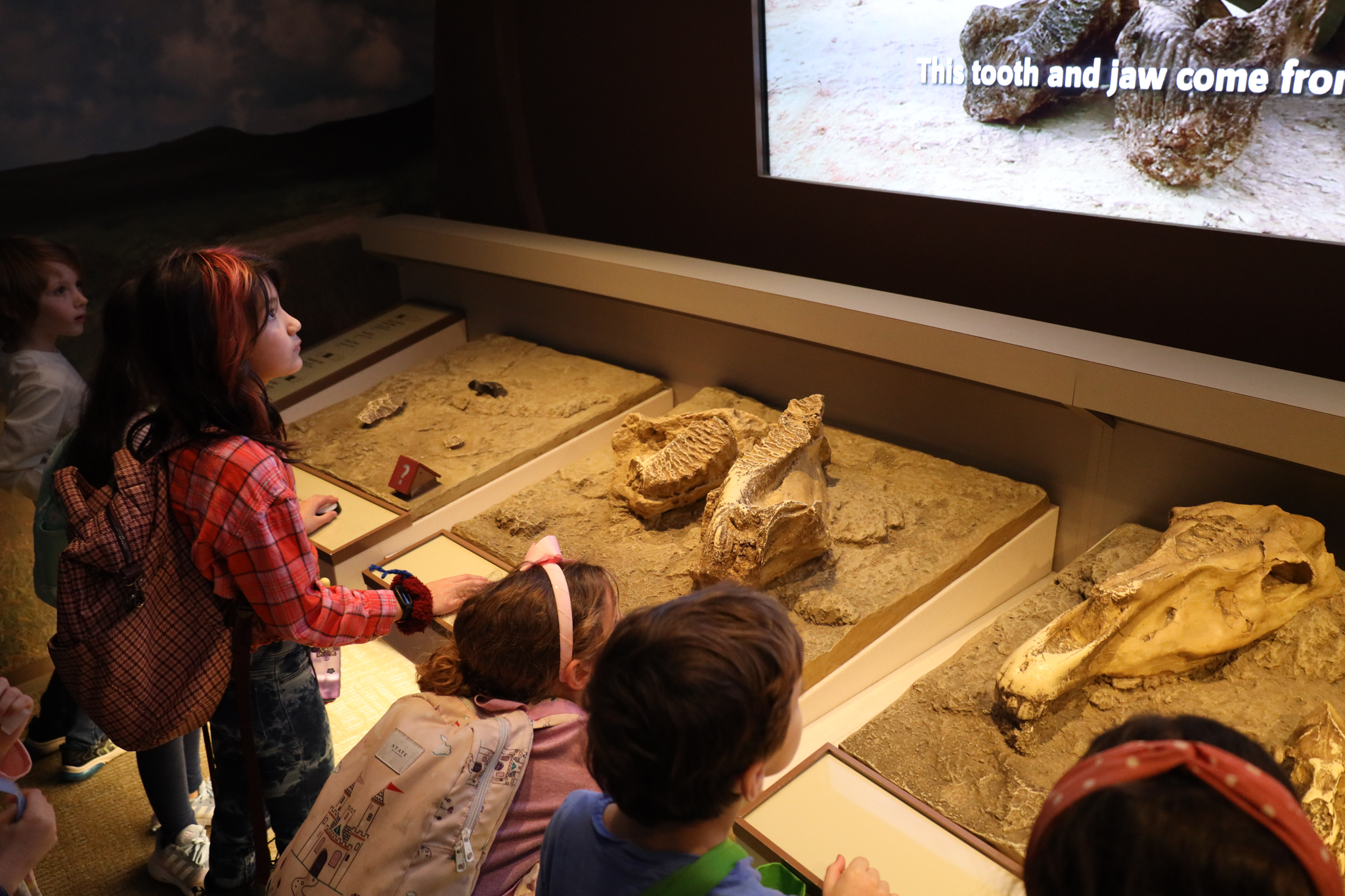
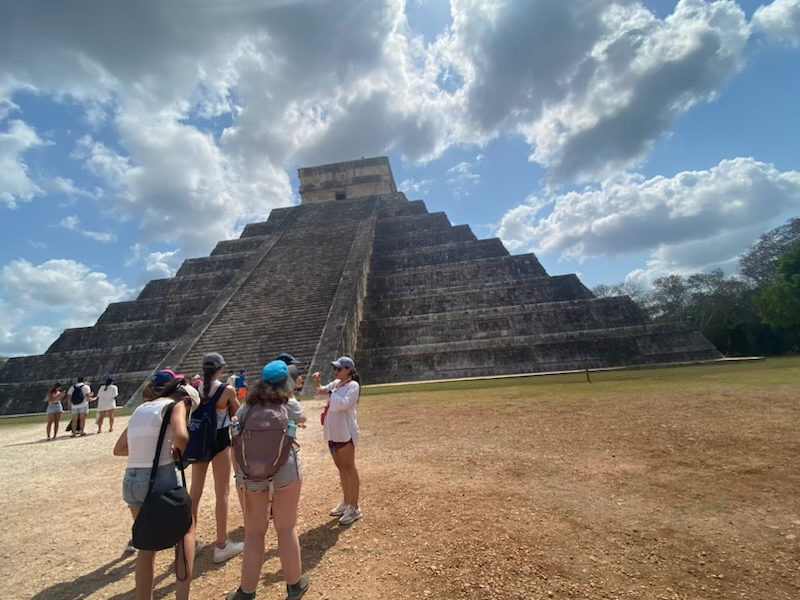
The Montessori practice of Going Out begins during the Elementary years and continues through the Adolescent Community. In Montessori classrooms, students are empowered to find the answers to their own questions with the materials and resources provided in a prepared environment. But what happens when students exhaust the resources of the classroom and still want to learn more? This is a golden opportunity to deepen their study in the form of a Going Out trip.

“Instruction becomes a living thing. Instead of being illustrated, it is brought to life. In a word, the outing is a new key for the intensification of instruction ordinarily given in the school.”

– Dr. Maria Montessori

Going Out for Elementary Students

When an individual or small group of students has been studying a topic in depth for several weeks, they may decide they have exhausted the resources of the classroom and school library, but still with to learn more. The group can propose a Going Out trip to deepen their study. If approved by their Guide, the students are responsible for planning and arranging every aspect of the outing—from researching the location, hours, and cost of the visit to arranging for their own transportation and supervision by staff or parent volunteers.

This work requires that students practice the executive functioning skills necessary to plan and carry out projects:

  • Delegation and division of labor
  • Sharing resources
  • Making group decisions
  • Taking responsibility for their actions
  • Celebrating the success of peers

Conflict is not uncommon; it is a necessary and important part of the child’s work. The Montessori Guide models and supports constructive and respectful problem solving. Going Out allows students to apply these skills outside of the classroom.

The Grace and Courtesy lessons that Montessori students have enjoyed since their youngest days are now given real-world applications. For example, students learn how to schedule an appointment over the phone, the acceptable protocol and attire for visiting legislators in the State House, the etiquette for conducting an interview, or proper behavior when dining at a fancy restaurant. These are significant life lessons!

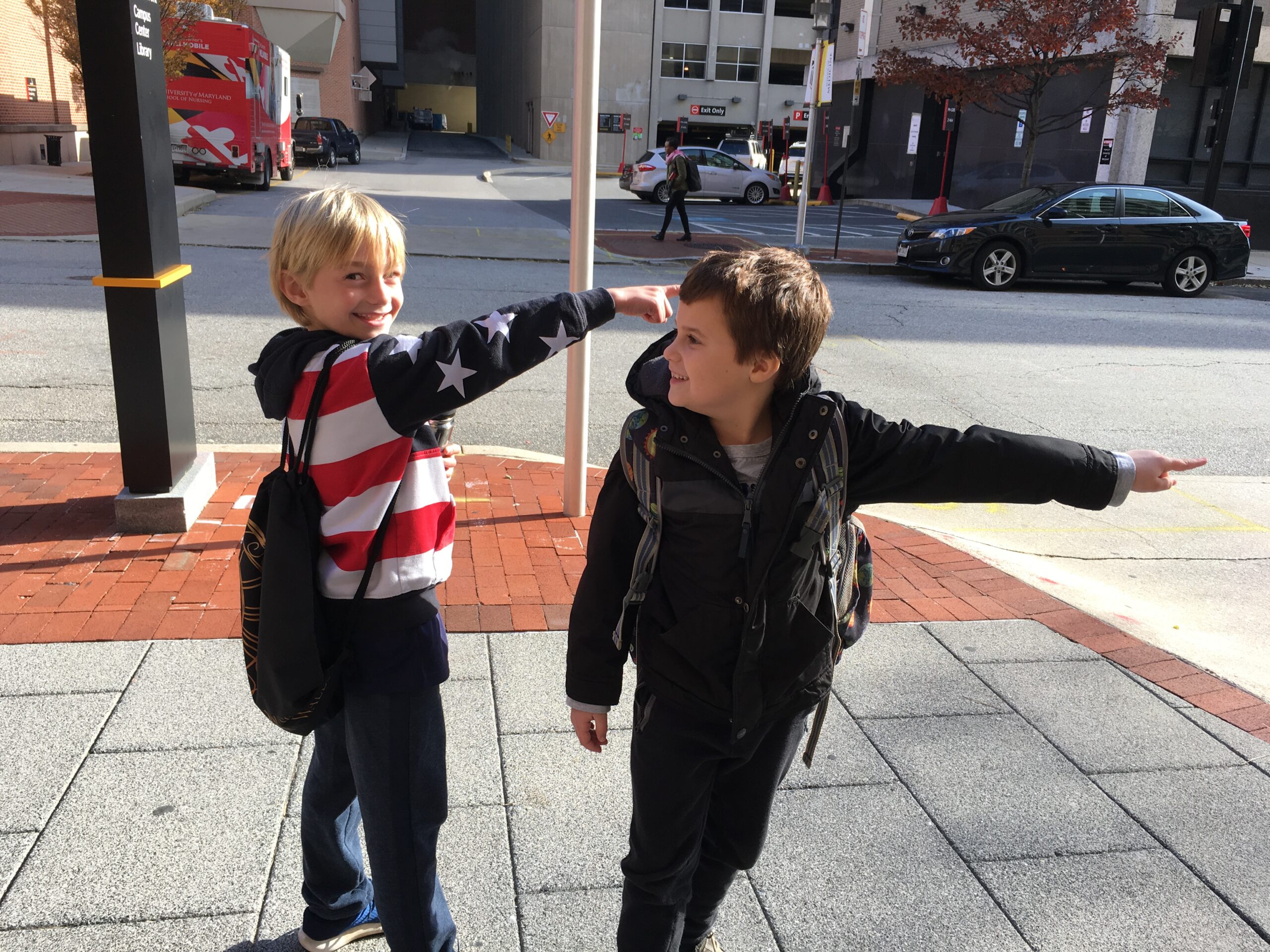
During the outing, adult chaperones are trained to allow the students to take the lead. One Montessori parent described following a group of students as they walked in the wrong direction, away from the museum they wished to visit. Finally, one of the children realized they were lost and the entire group mobilized to read the map, ask for directions, and solve the problem. Even though they lost a few minutes in the museum, who’s to say that wasn’t the biggest learning experience of the day? Each Going Out is an entire course of study on independence, responsibility, and good citizenship. This is what Practical Life looks like at the Elementary level.

Going Out for Adolescents

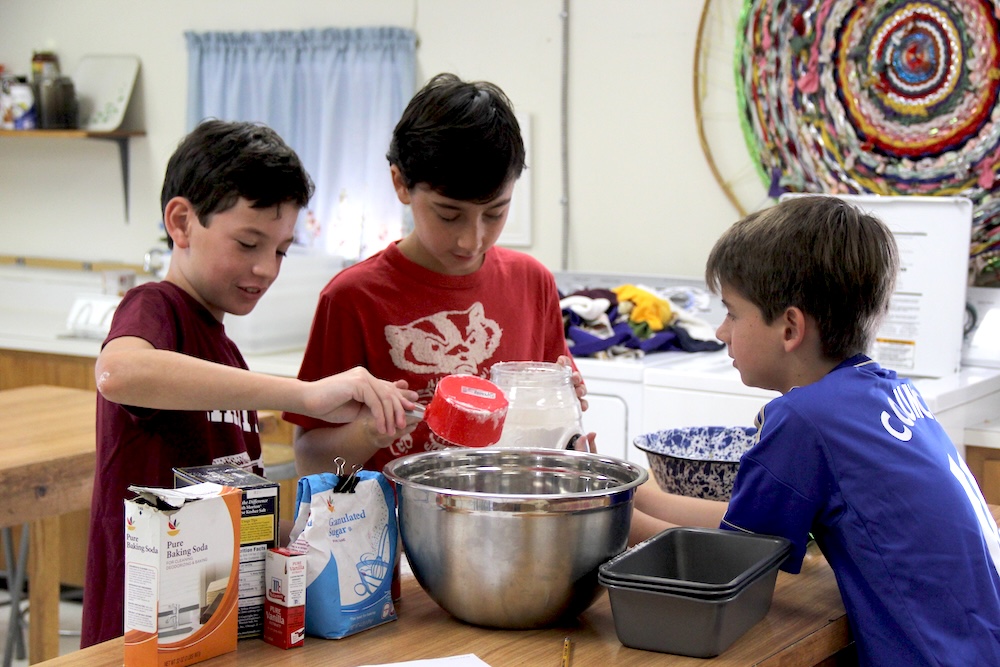
Going Out may look different depending on the age of the students. For Elementary students, outings may be focused more on the social learning experiences and developing leadership skills, while Adolescents are actively seeking to determine their role in the larger society and bring about meaningful change in the world around them. Adolescents also feel great desire to make improvements in their communities. They may develop their own community service projects, fundraising efforts, and opportunities to mentor younger children. “What will I use this for?” is an oftenasked question of the adolescent, as he is determined to use knowledge to do something in the world. Projects such as monitoring the neighborhood watershed, building and maintaining a large garden, or baking bread, are real world opportunities for many lessons in science, language arts, and practical life skills. Students work as a group to find ways of making money, their first direct experiences of the economic connections in a society.

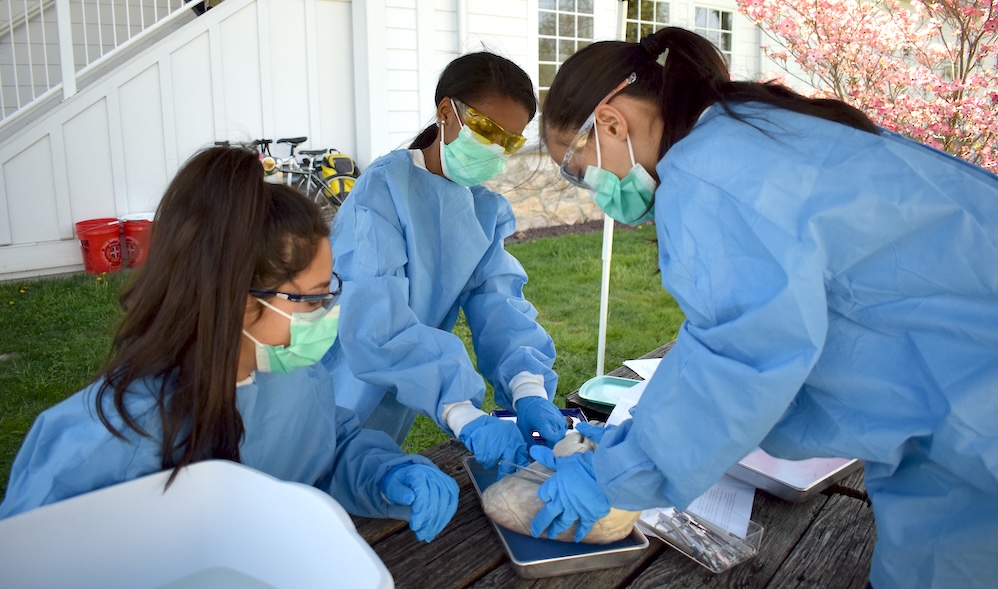
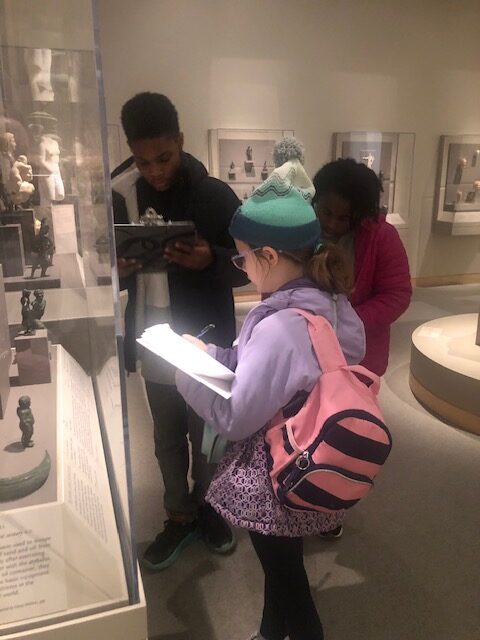
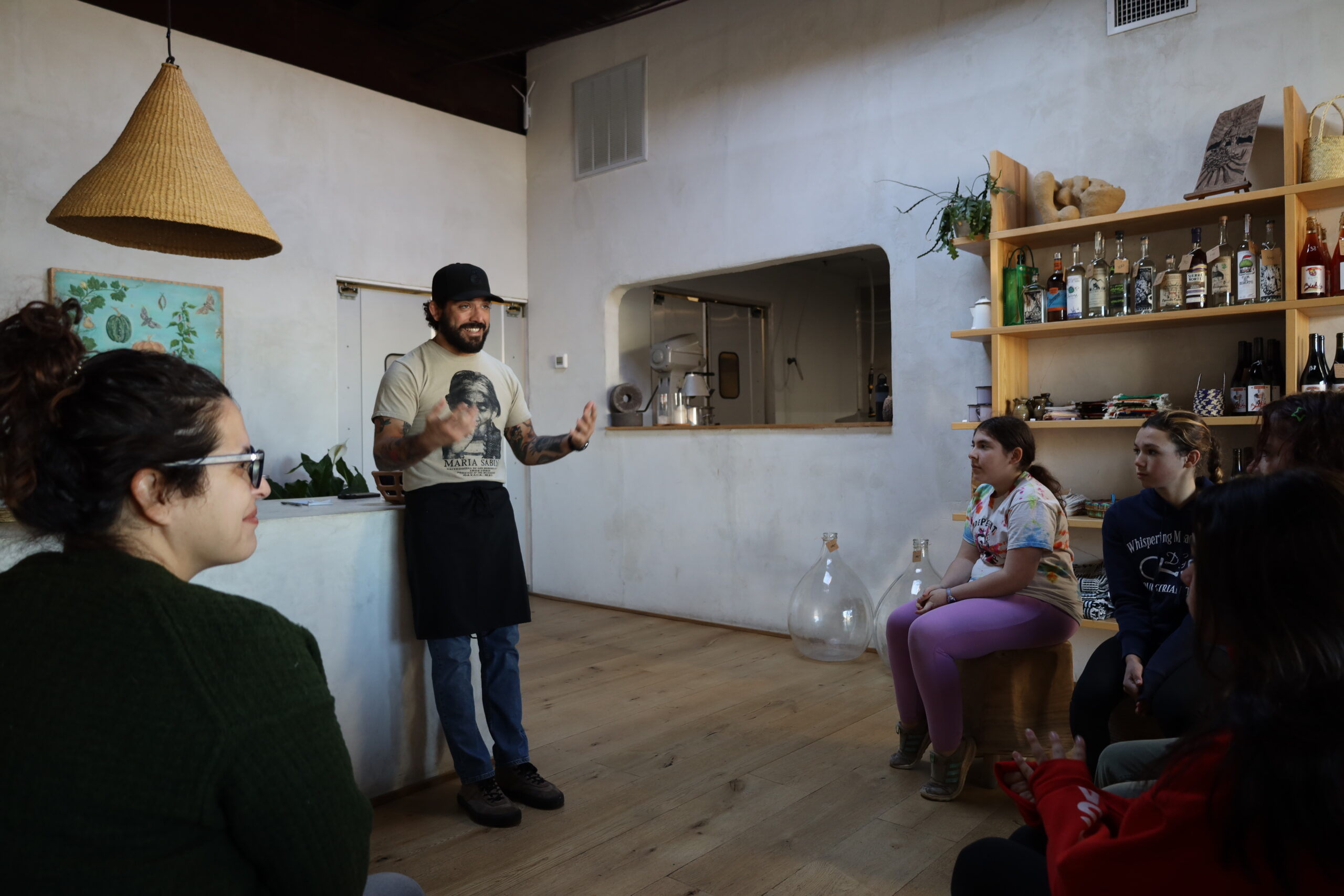
In the Adolescent Community, Going Out trips are also used as field research to complement various studies. For example, Greenspring adolescents have visited places of worship as they study World Religions, preparing questions for their hosts to more deeply understand each world religion. Adolescents have presented their engineering projects to seniors at JHU Mechanical Engineering School and collaborated with college seniors in the design lab.
When students return from these trips, they share their experiences with the rest of the class. The culture of the classroom is now changed. New experiences breathe fresh life into the group and inspire others; new levels of independence have arisen; and new appreciation for the larger world has been brought to the group. Clearly, Going Out is not just an extended walk or a field trip. Going Out is a process of fanning the spark of imagination, allowing students to develop leadership skills and make meaningful contributions to the community.

A Parent’s Perspective on Going Outs

Amy Scott shared that one of her favorite experiences as a Greenspring Montessori parent was taking Lower Elementary students on Going Out trips.

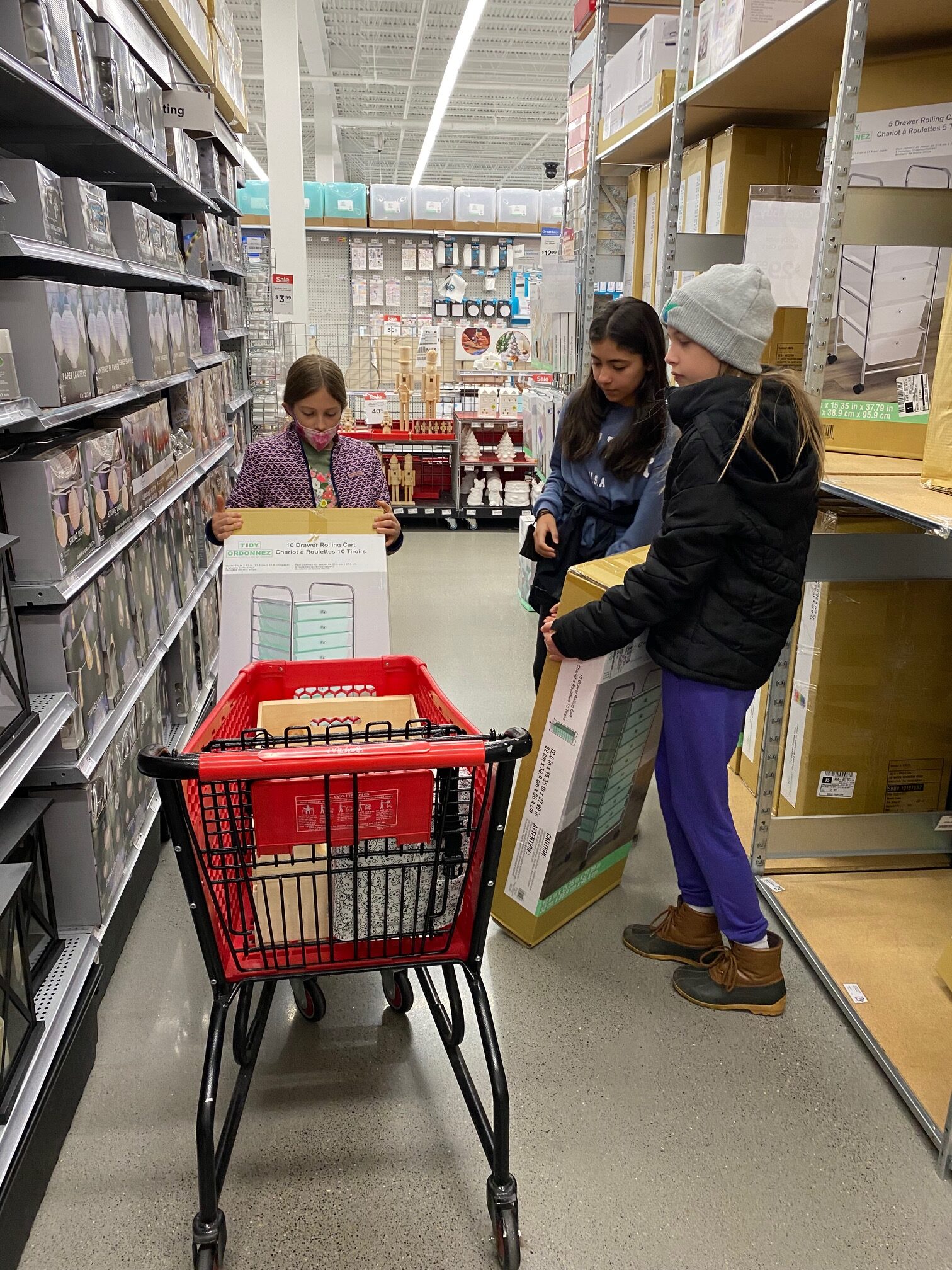
Amy described the challenges of accompanying a group: “Keep quiet. No problem, I thought. I’ve got this. It proved way more challenging than I had anticipated. We went to Pet Smart and wandered. They needed to buy crickets. They looked for 30 minutes before one of the kids thought to ask a staff member for help. They almost bought the wrong number of crickets. Certainly, I could correct that mistake? It would save time. Wait, I’m not here to save time! I had to remind myself of that repeatedly.”

“As a busy mom, I am hard wired to save time. I had to stop myself from stepping in SO many times. Was this a lesson for them or for me?”

Amy also told us of a challenging trip to the grocery store: “The students needed ten items. Who knew there were so many kinds of tomato sauce products?!?! The right one was just in front of them! No, not that kind. No, not that size! Oh boy, I was getting triggered. I took a deep breath and turned back to the students. They were focused. They had learned that I wasn’t going to step in so they weren’t even asking. They were figuring it out. And so what if they bought the wrong kind of tomato sauce or ground beef?!”

“Would we as parents rather have a perfectly cooked lasagna or kids who have learned to navigate an enormous grocery store by themselves? Kids that feel a crazy awesome sense of empowerment for picking out the ingredients and paying for them on their own?”

Learn more about Montessori Going Outs

Fall 2023 Enrichment Update

Fall 2023 Enrichment Update

Scroll through this post to see what our students have been up to in our Enrichment classes this fall. 

Art Enrichment

Jackie Dorr

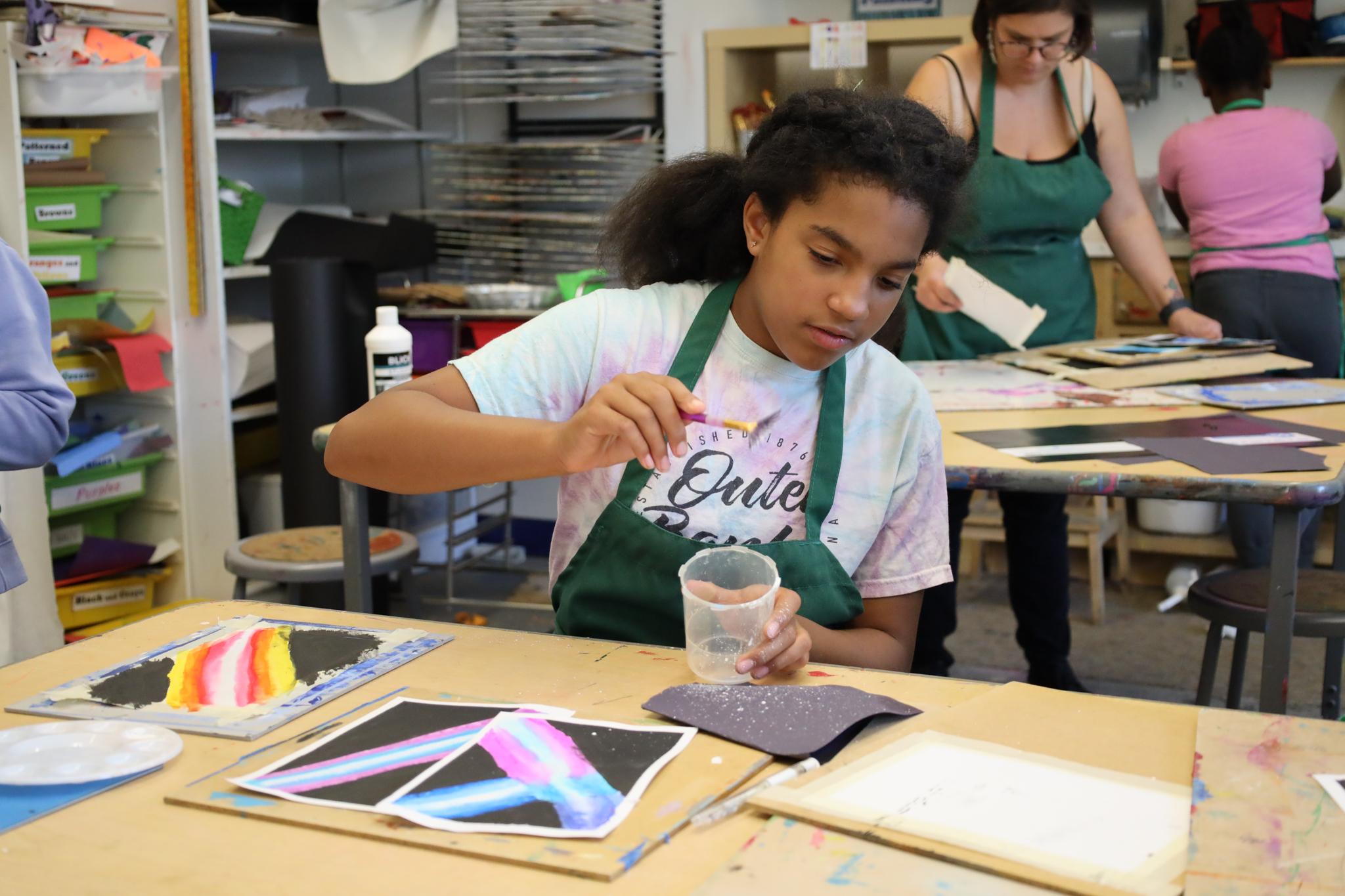
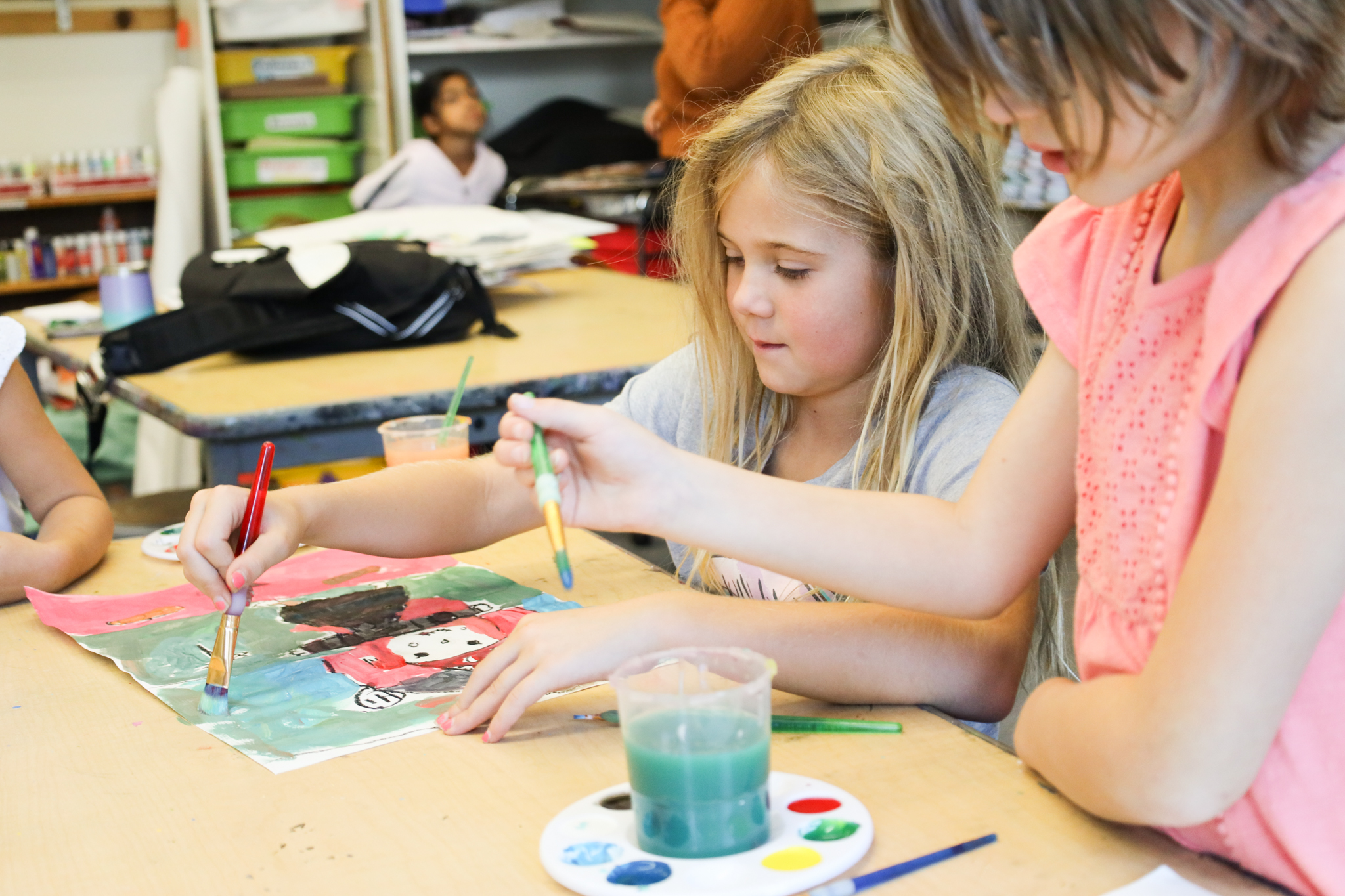
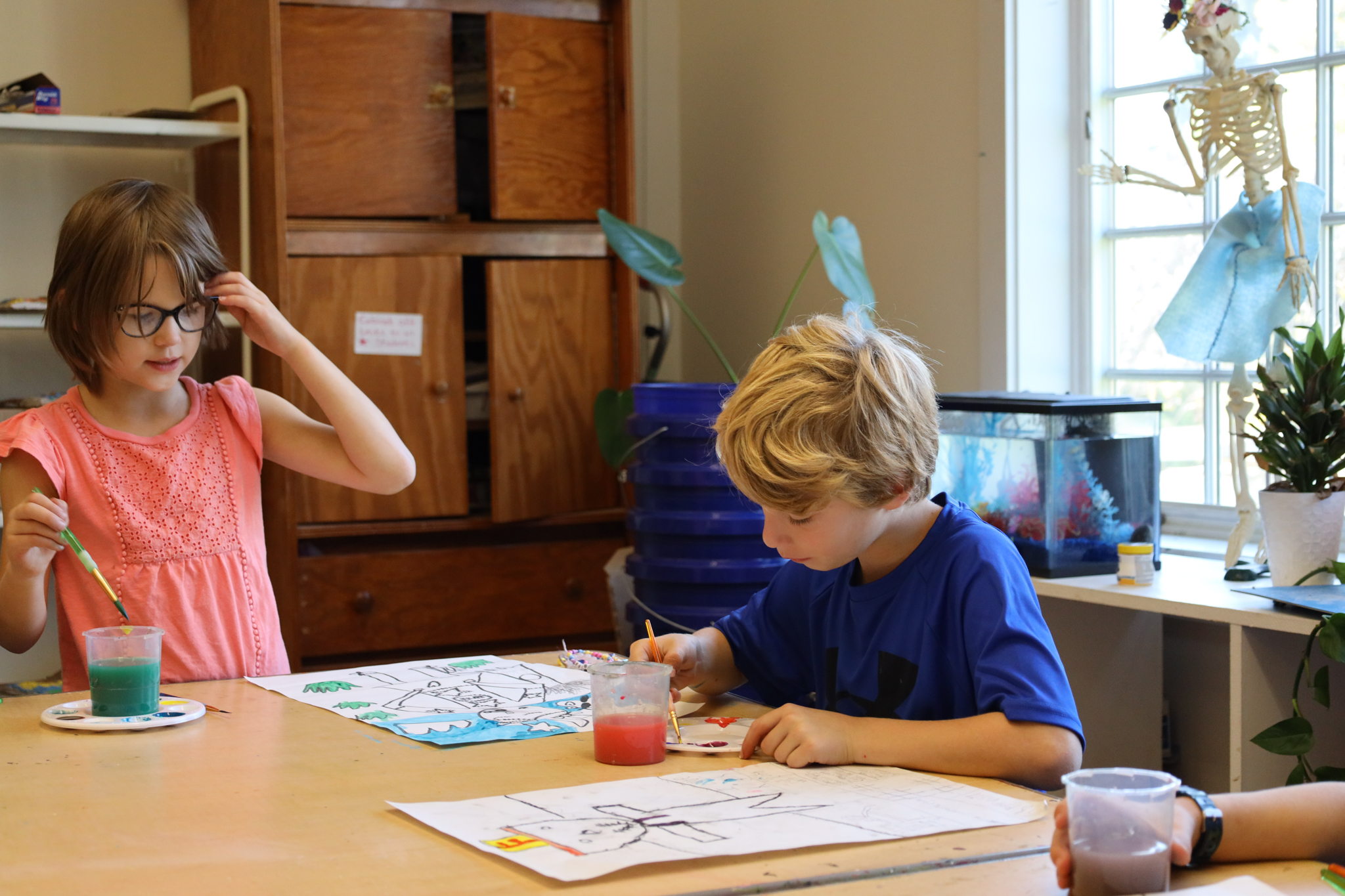
This semester in Lower Elementary Art, the students built mosaic nature sculptures. Then they began a unit on drawing where the students had a guided drawing lesson on how to draw scarecrows in a crop field. We had a lengthy discussion where they were encouraged to make their scarecrows unique and their own. After drawing the scarecrows, the students outlined their pencil drawing with oil pastels. Lastly, we had a discussion about color theory as they painted their scarecrows. They were encouraged to create their own shades and tints of colors as they painted their drawing in their own, unique way.

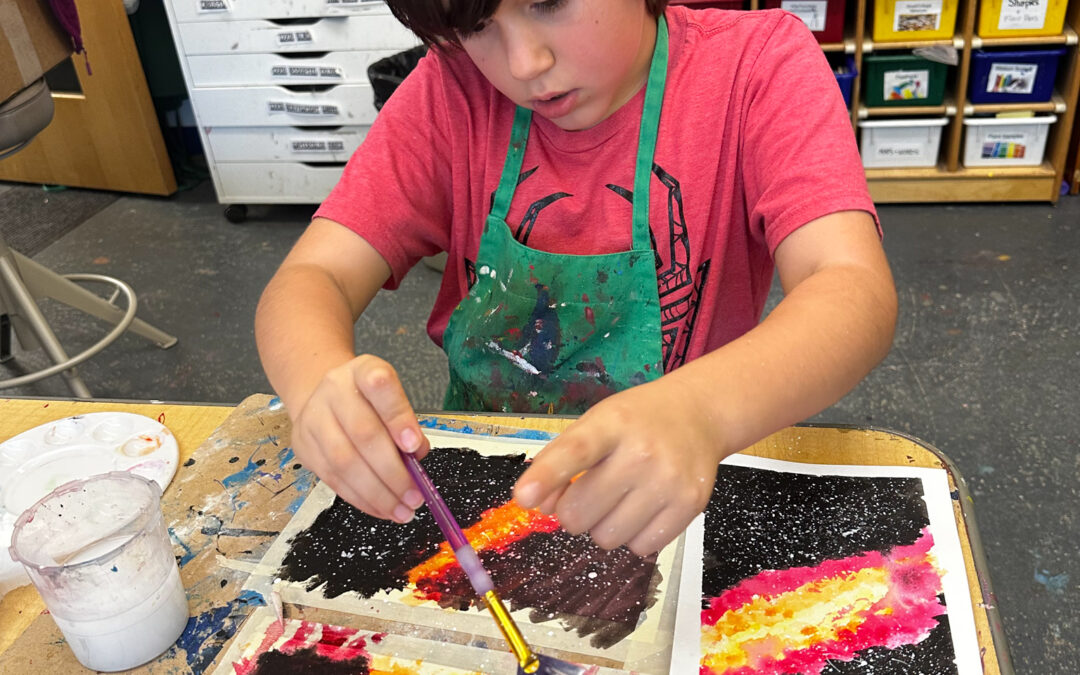
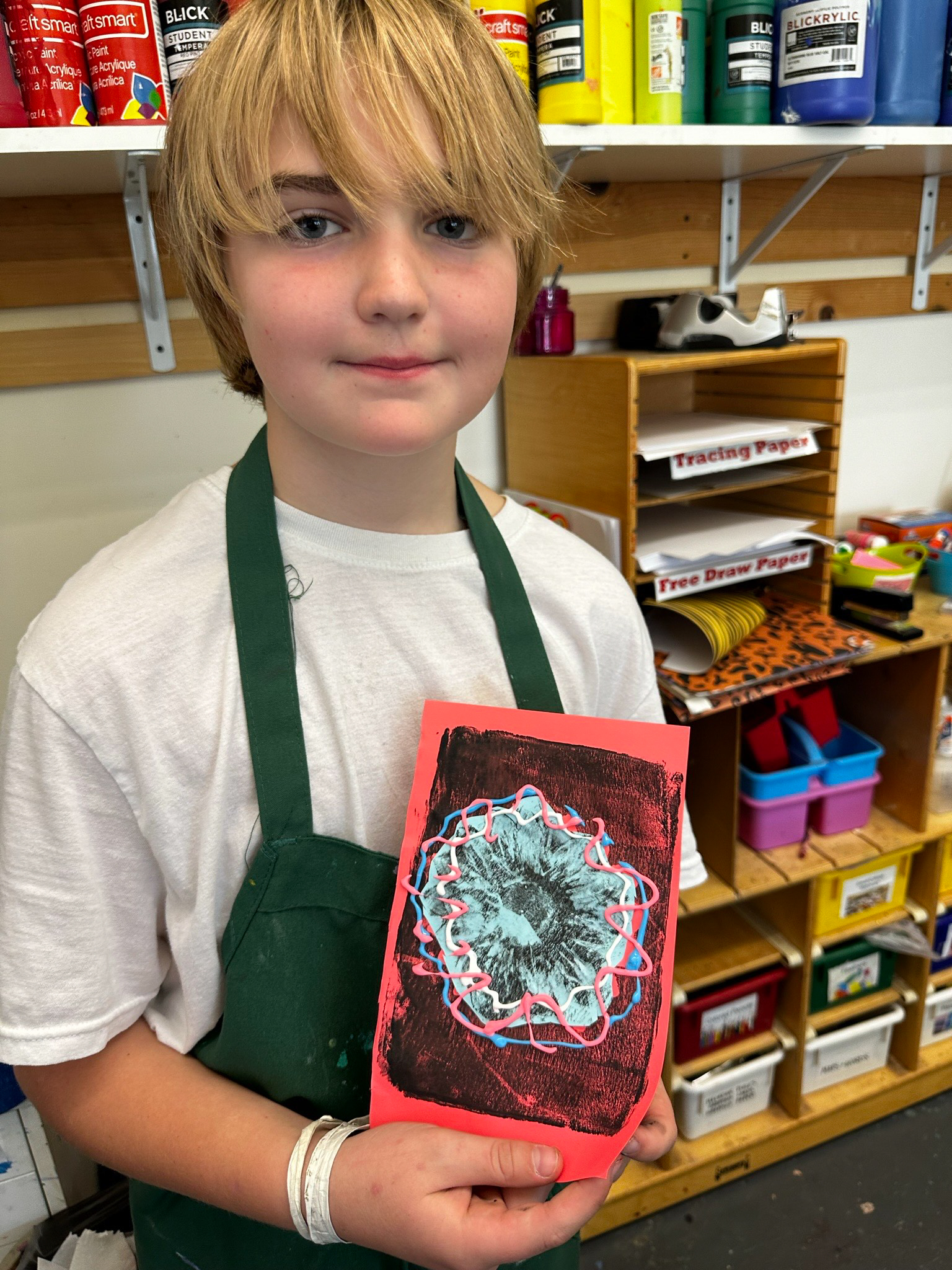
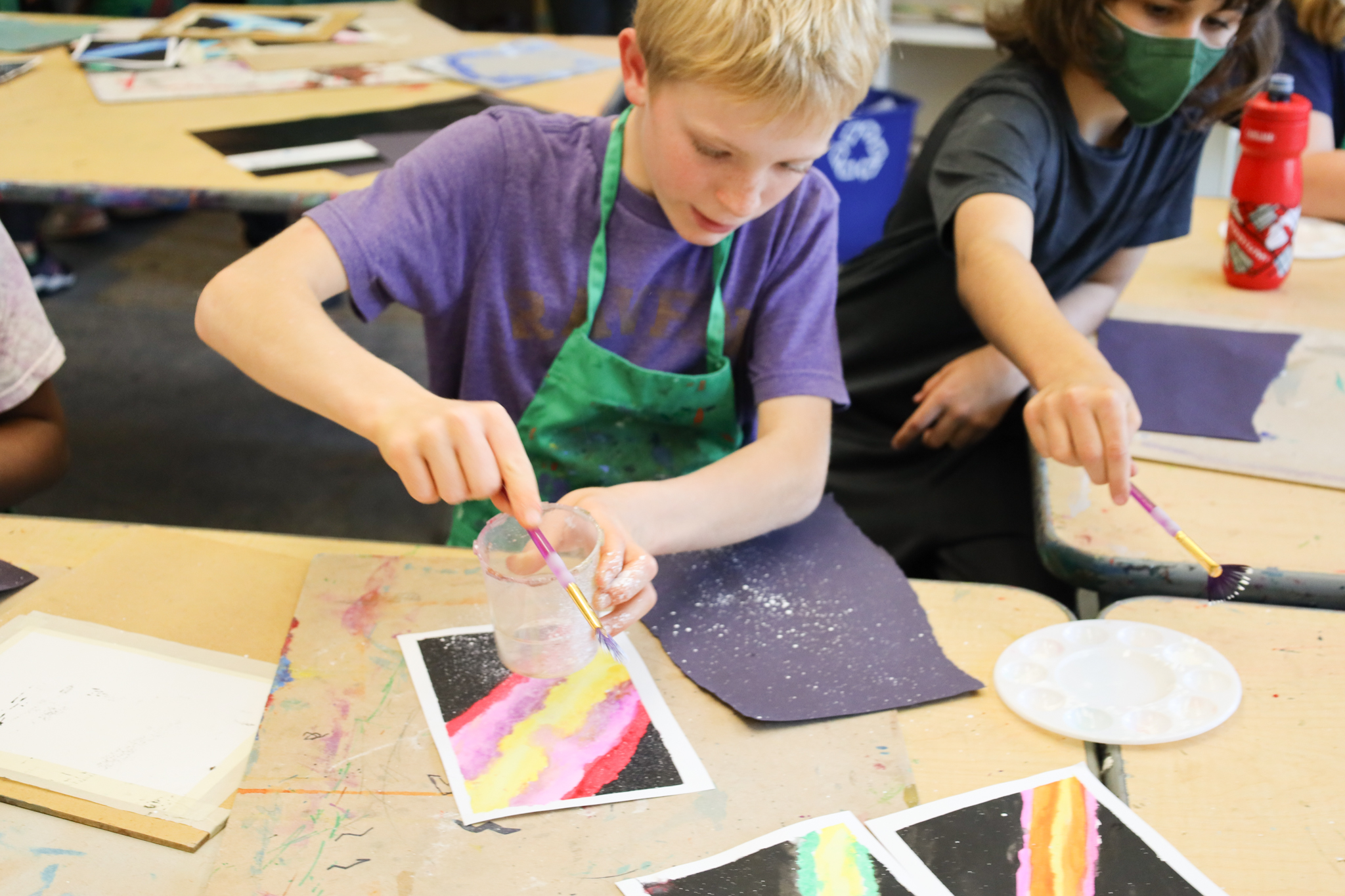
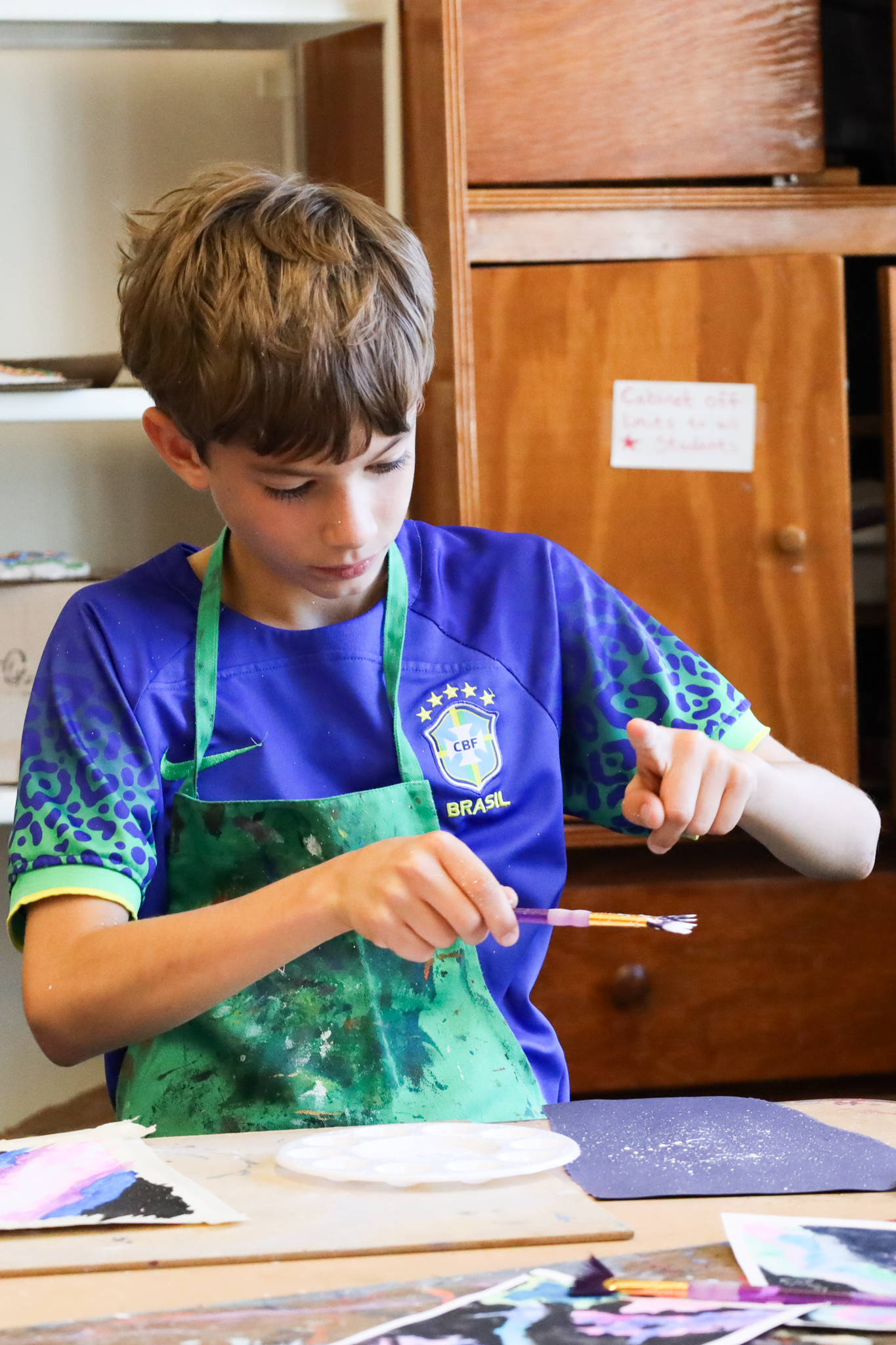
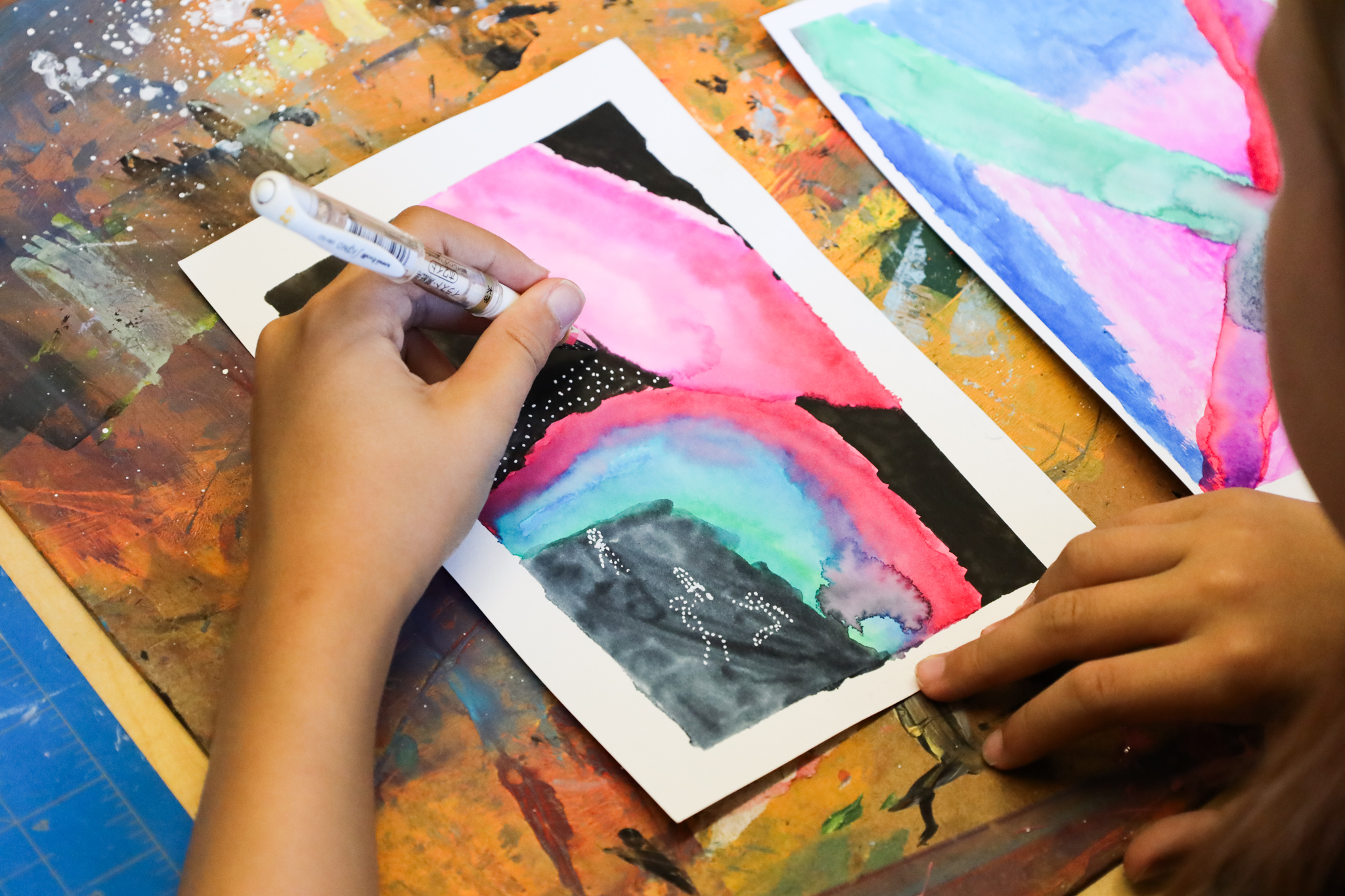
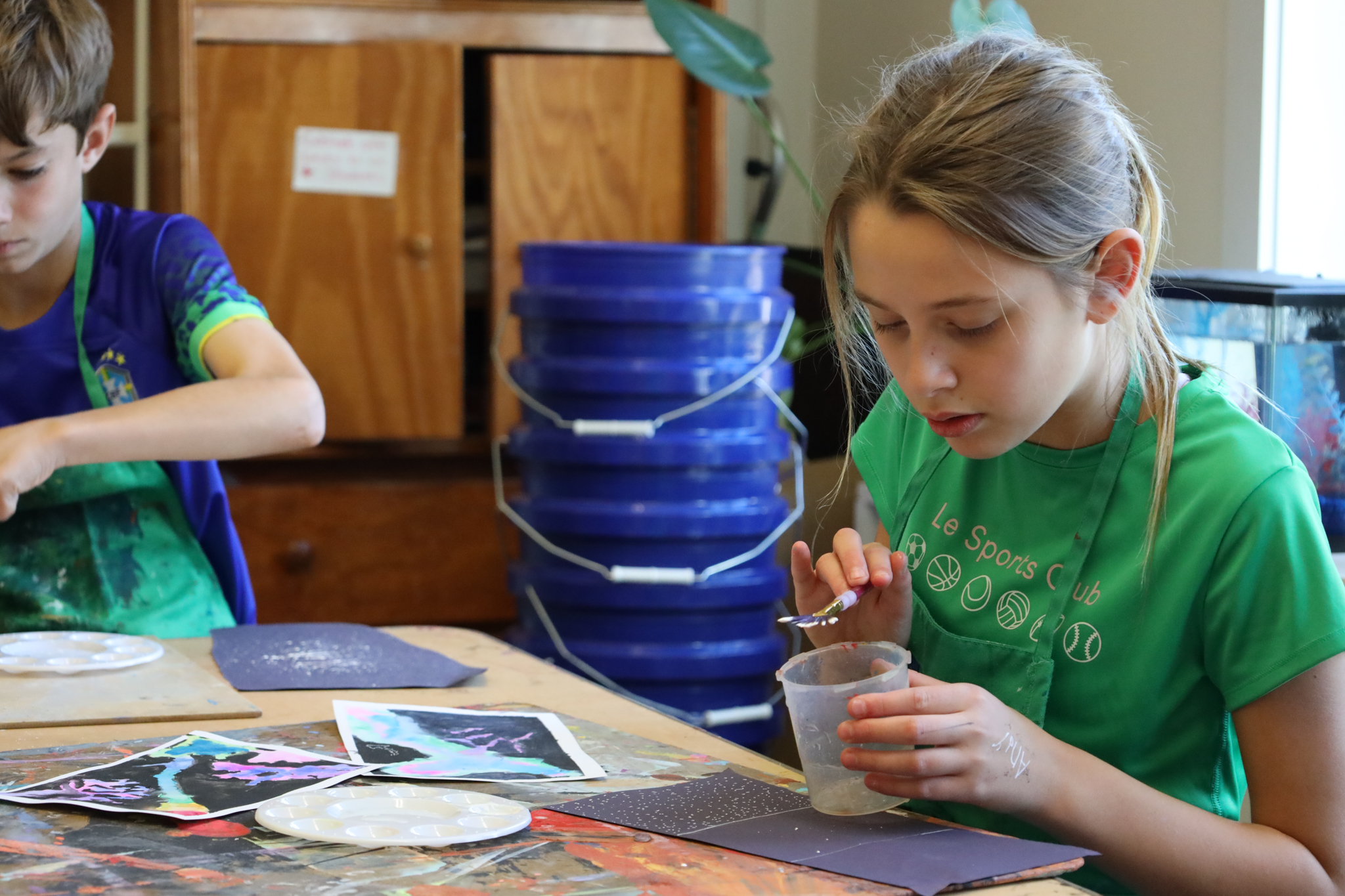
In Upper Elementary Art, we’ve been bringing a lot of nature into our work. Upper Elementary just finished painting watercolor galaxies where they learned very carefully how to blend colors together. Most recently, we have looked at the works of Andy Warhol, specifically his pop art. Inspired by Andy’s work, we’ve been exploring printmaking with sunflowers. In early November, we are going out into nature to collect items to use for our printmaking work. At this point, the students have experimented enough with printmaking to be familiar with it. They are encouraged to experiment, be creative, and really dive deeply into making their work their own.

Physical Education

Coach Bry Huston

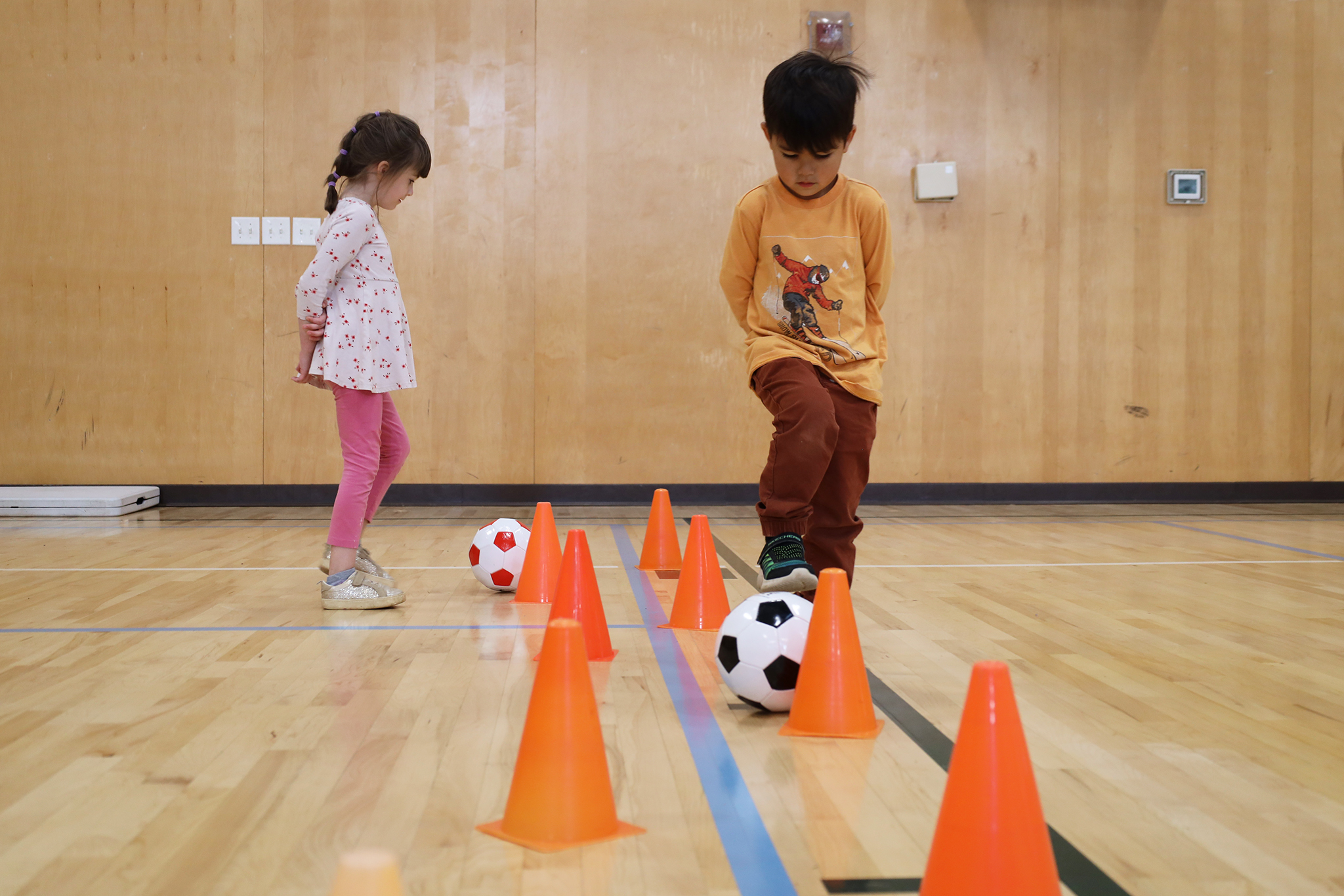
In Physical Education class, students at all levels focused on developing throwing skills. We engaged in activities that supported underhand and overhand throwing while still supporting body movements, body awareness, and body control. 

Music Enrichment

Jackie Dorr

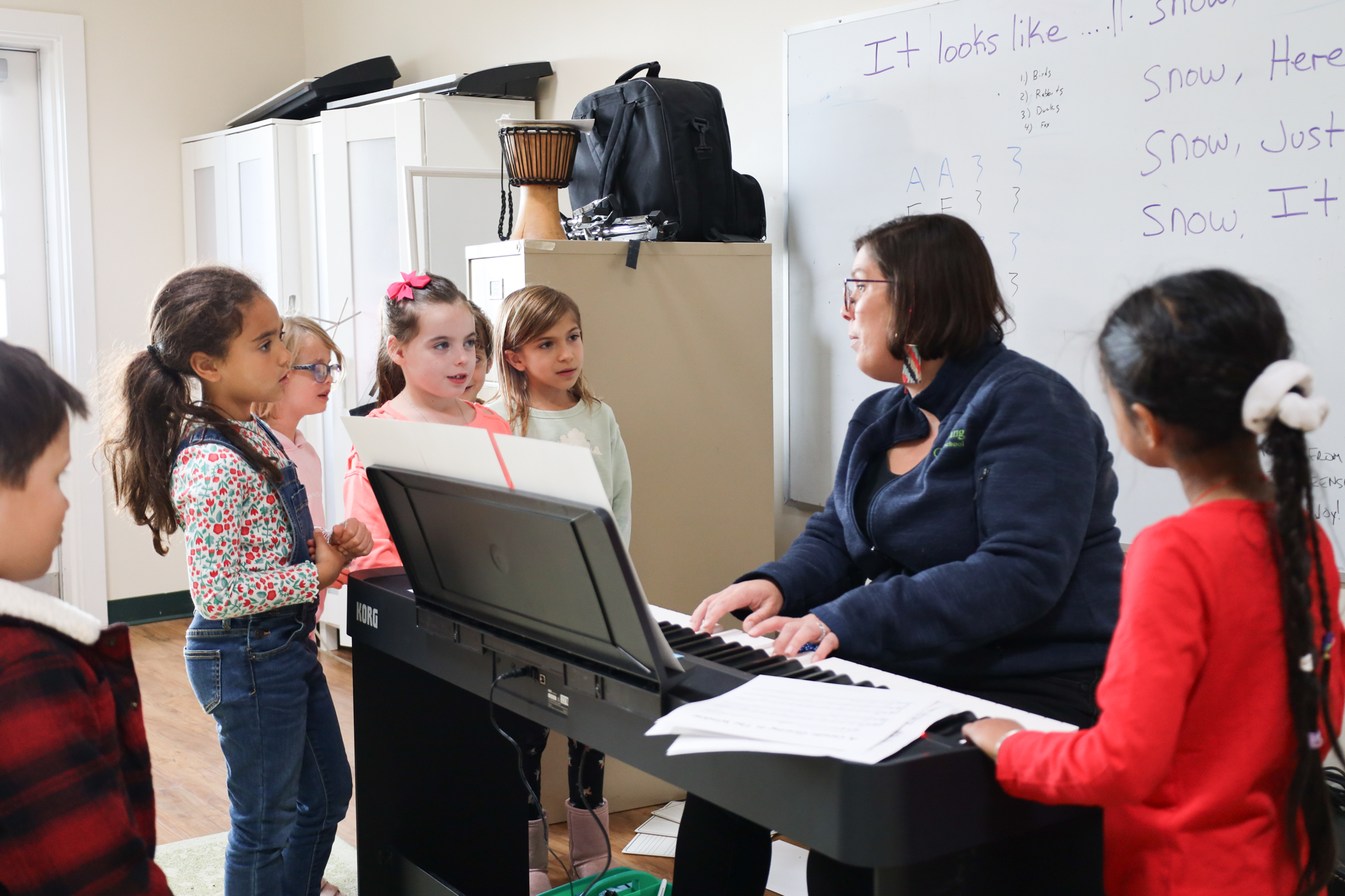
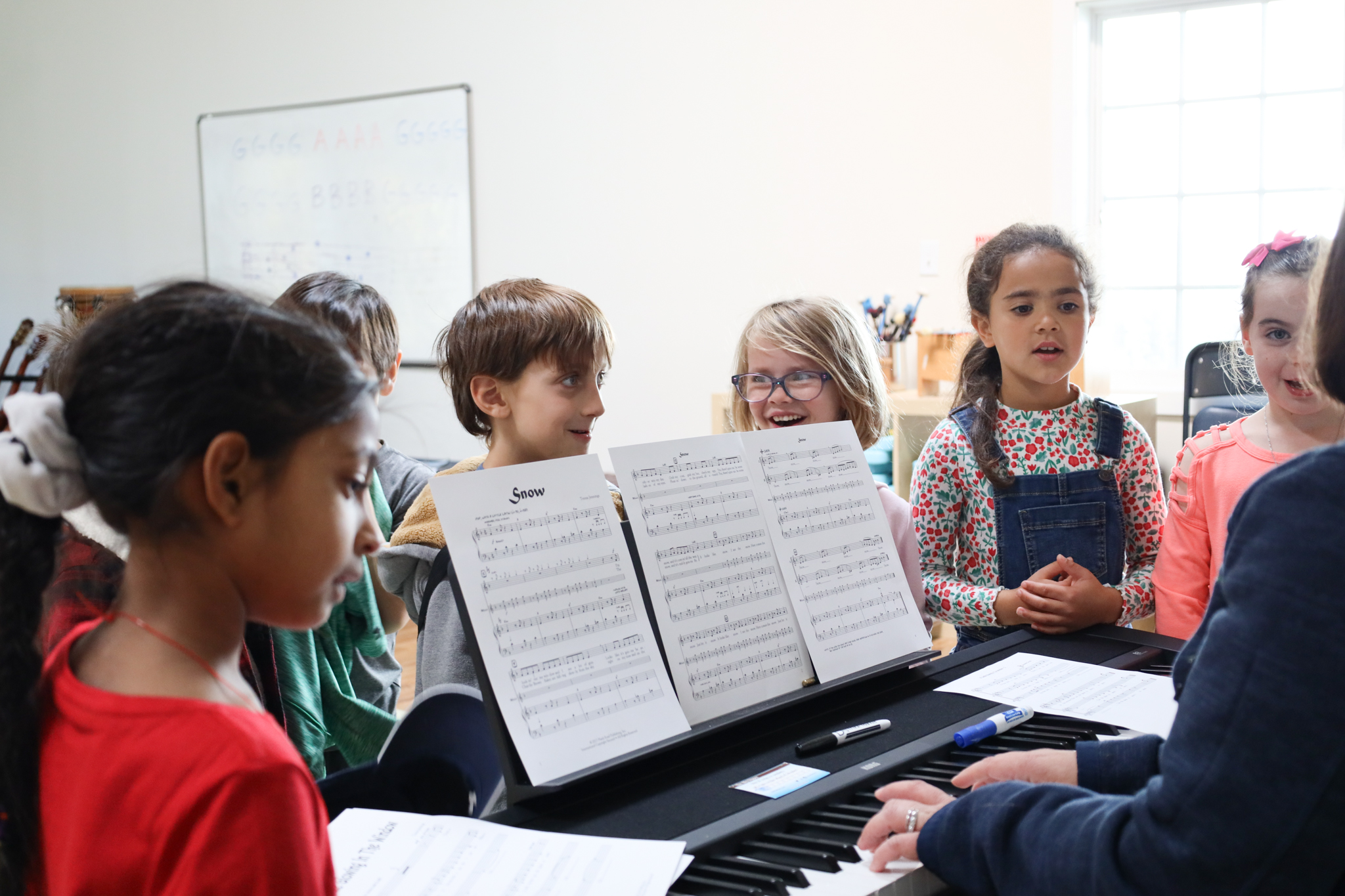
Children’s House students have been learning how to sing and play a c major scale on the bells. I can mix up the order of the bells and have the students put them back in the appropriate places to create a scale. We are also focused on developing their singing voices while incorporating songs about nature and Halloween. 

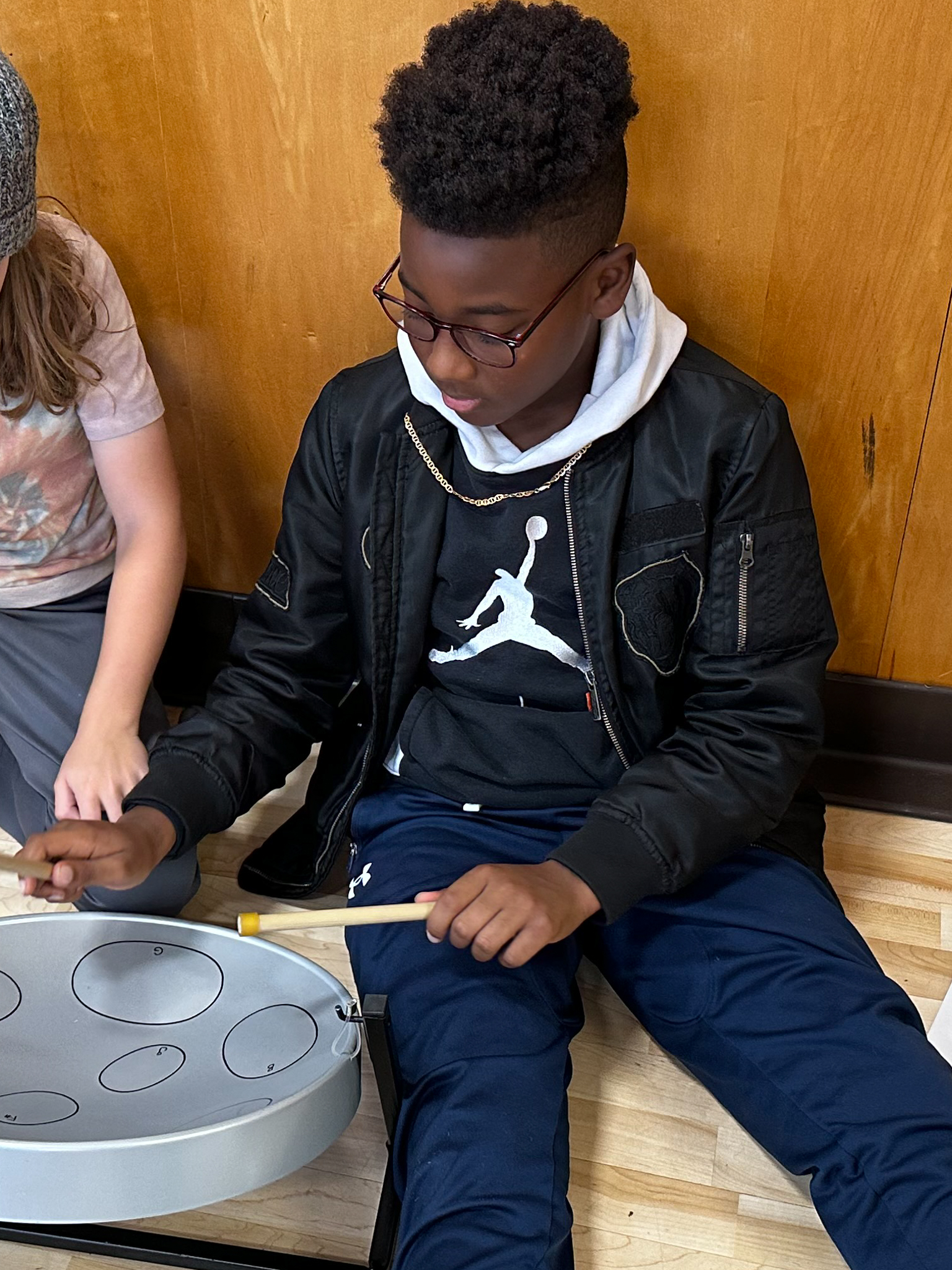
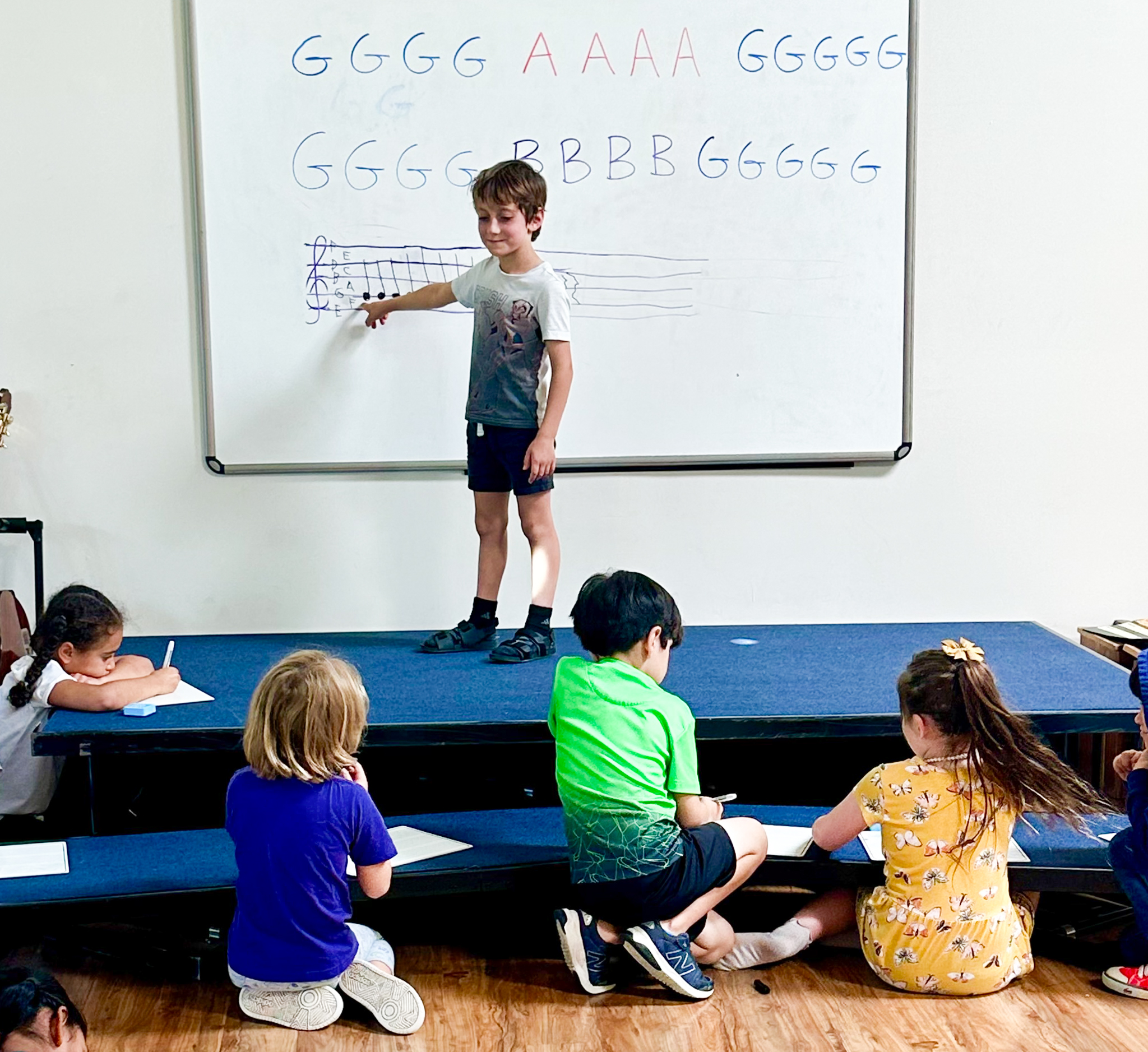
This semester in Lower Elementary music classes we’ve been focused on learning how to read music. The classes learned a song on the steel pans by ear, and then learned how to write out the song on a musical staff. (See attached video)

In Upper Elementary music, students have been analyzing the music for Sweet Child of Mine by Guns & Roses. After they analyzed the music, they were asked to go find an instrument they connected to so they could start learning the music they had just analyzed.

In addition, as we have begun preparing for the Winter Show, they have also analyzed some steelpan music and are currently working on how to perform the music they analyzed. There has been a huge focus on note reading as well as rhythmic development and putting pieces together as one big ensemble.

In Adolescent Creative Arts, the students have been working diligently writing their own piece of music together as a band.

Spanish Enrichment

Ale Equivel Castillo

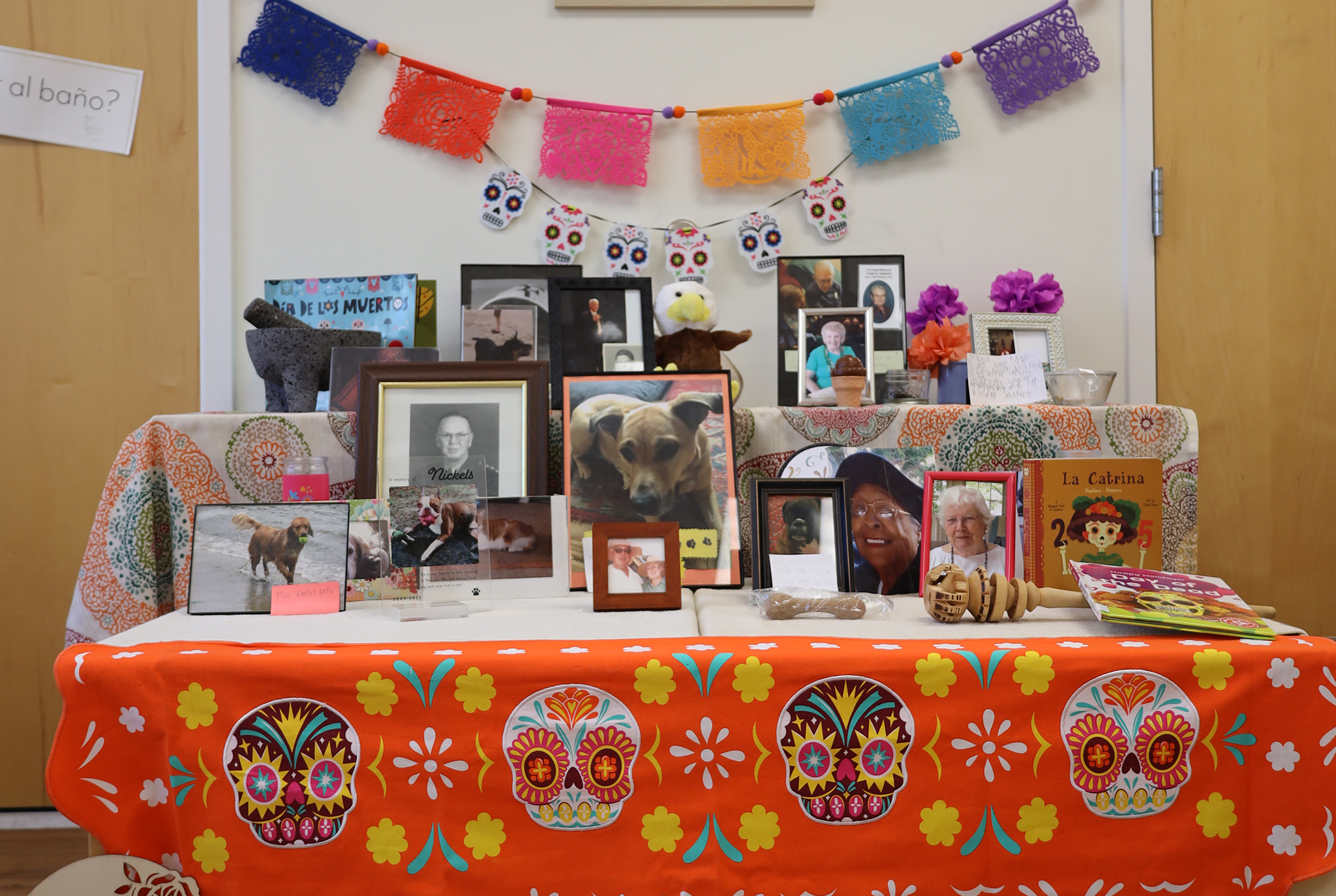
Children in our Spanish Dual Langauge Program have been learning about the Mayan celebration of Hanal Pixan, and the Mexican holiday of Dia de los Muertos! The children created decorations for their ofrenda. The Lower Elementary students are also making sugar skulls in honor of the holiday.

Children’s House students have been learning colors, family members, animals, numbers in Spanish. Children’s House elders (kindergarten year) create booklets to strengthen their Spanish reading and writing as well.

Library and Media Lab

Sherry White

Every Children’s House class has a weekly story time visit followed by a book checkout. Students are introduced to the skills and concepts needed to navigate the library, such as selecting a book, check-out procedures, book care, and the parts of the library. Library books are circulated for a period of one week. Each class has a scheduled library day and books need to be returned the following week in order to check-out additional books. Each library visit includes a purposeful read-aloud. Some of our stories this month have been My Autumn Book, How Many Seeds in a Pumpkin, The little Blue Cottage, and In the Middle of Fall.

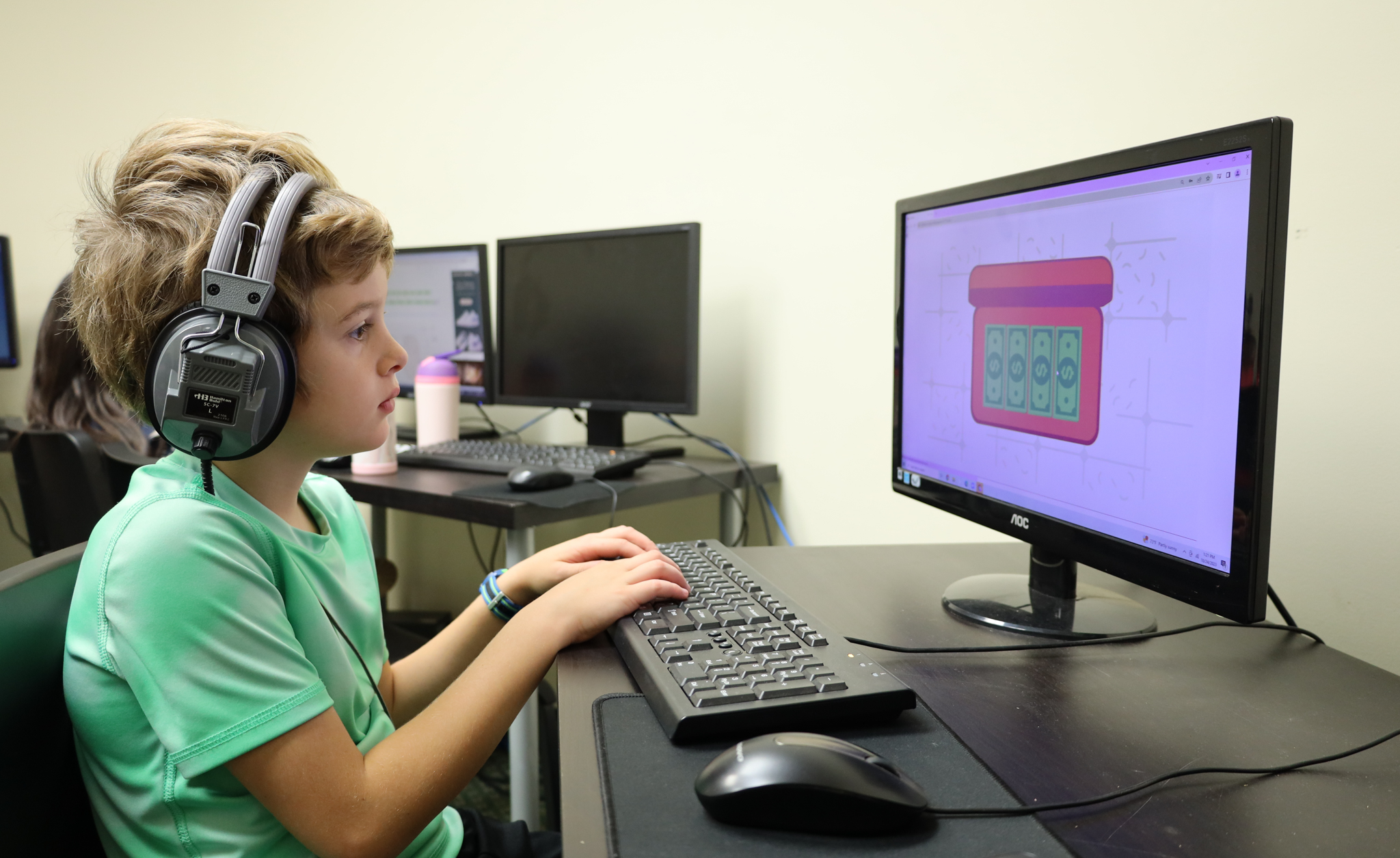
Lower Elementary students visit the Media Lab once a week to build their keyboarding skills using edclub.com. This online resource is used to teach correct finger-to-key movement across the entire keyboard. It is a highly effective tool that helps students at all skill levels improve their typing ability through guided lessons and engaging assessments. The student experience is designed to be clean, straightforward, engaging, and fun. It is a highly effective tool that helps students at all skill levels improve their typing ability through guided lessons and engaging assessments. Students are provided with continuous feedback on their progress every step of the way and are motivated to repeat each lesson to master each step prior to proceeding. Students are provided with an optional virtual keyboard and virtual hands on their typing interface to assist them when using the correct fingers when they are practicing each lesson. The carefully designed lessons include instructional videos, educational games, cross-curricular content, and other interactive experiences.

Developing Rich Language with our Toddlers

Developing Rich Language with our Toddlers

Developing Oral Language - Greenspring Montessori School

Rich oral language is a building block for strong literacy

Learning to be – this is every toddler’s goal. It is both simple and richly complex. Between the ages of 2 and 3, the child is newly aware of possessing their own identity separate from their family, and they are ready to truly be that person, with full independence.

A critical element of this self-realization is the ability to communicate. The toddler is beginning to understand conversational language and they are working to express their own thoughts, experiences, and feelings. They are yearning to label every object in their environment and know every detail of the work they find in the classroom. They are reaching for the words to seek help effectively in moments of struggle. In the Montessori method, we approach the toddler’s sensitive period for learning oral language strategically to help ignite their understanding of language and the world.


Developing Skills in the Toddler Classrooms:

  • Attention
  • Auditory memory
  • Indirect preparation for written language
  • Self-confidence with increased vocabulary
Developing Oral Language - Greenspring Montessori School

Early conversation is essential for child development

One of the most crucial elements of a toddler’s journey in language is conversation. In Montessori, we believe that the most powerful way to learn a skill is through practice, and conversations provide the ultimate “learning by doing” experience. The conversations that toddlers have with adults in the classroom provide them with richness – the knowledge that they are respected and seen, they feel valued for their opinions and feelings, and an opportunity to practice articulation with someone who can echo words back to them with exact pronunciation. These conversations provide them with a model of conversational etiquette and flow. It is through conversation that the young child learns the confidence to express their heart. Through this process, toddlers learn the functions of conversation—conflict resolution, self-expression, storytelling, clarification, and so on. In the Montessori classroom, we aim to converse with children throughout the morning—upon arrival, between a child’s tasks in the work cycle, and especially at the snack table. Any item in the room, event in our day, or thought from a child becomes a worthy and captivating topic.

Directive vs Expressive Language

Conversations between adults and children are spontaneous and natural in our Toddler classrooms, with the adults focusing on receptive and expressive language. Receptive language refers to what children can understand, such as following directions. Expressive language refers to what they can communicate with words and/or gestures. Adults minimize directive language (e.g., “Put your shoes here. Sit down. Wipe your nose.”) to provide space for meaningful, rich conversation.

Toddler Language Development - Greenspring Montessori School

The gift of music

We also use poems and songs to introduce new language to children. Rhythm and cadence can help children hear words more clearly. Poetry and music can also bring concepts to the child’s mind in a manner that connects them with his heart. We often give toddlers the option to sing or review poetry as a group, and these activities are available in the classroom for individual work or lessons.

With all these language tools in his belt, the toddler is ready to take on the world and build himself into the world citizen that he was meant to be. He will take with him all his accurate knowledge, confident self-expression, and the songs in his heart, and will approach the world with compassion and curiosity.

Developing Oral Language - Greenspring Montessori School

Speak clearly and truthfully to the child

Accurate language is another crucial tool for building a toddler into an effective communicator. Children create themselves from the tools they are given, so it is fundamentally important to communicate with children clearly and accurately. As we model speech, we enunciate as precisely as possible, and echo back correct pronunciation of the child’s mispronounced words in natural conversation. Beyond enunciation, we strive to give the child exact names for the elements of his environment and a detailed understanding of his world. In our Montessori environments, we provide children with exact names for every item in our environment, and for each of its parts. Baskets on the shelfs contain unique pictures and objects, exposing the children to new and interesting things.

Additionally, true stories give toddlers a unique learning opportunity. They provide details about the world the child would not otherwise have, as well as an understanding of the concepts of beginning, middle, and end. These stories help children understand how life happens in the real world – an understanding that they desperately crave. We also gift children with the opportunity to tell their own stories. Nothing is more beautiful than hearing the story about his baby sister that he is bouncing in to tell us. Storytelling is a daily part of our community life, and anything can serve as inspiration, from our family and friends to our breakfast.

Toddlers have a need to understand the world, and part of that is learning to differentiate between facts and opinions. In our classroom, we introduce both concepts on a daily basis. We let the child know that the details provided in lessons are facts, and ask them what they think of pictures in books. We help them understand the difference between those true details learned in lessons and the opinions that are expressed.

Developing Oral Language - Greenspring Montessori School

Learn more about our Toddler Program

Our Toddler Montessori Program serves children ages 18 months to 3 years at Greenspring Montessori School. Click here to learn more.

Why Cartoon-Character-Free?

Why Cartoon-Character-Free?

Children's House - Greenspring Montessori School
It is our policy that children and adolescents may not wear clothing or backpacks and lunchboxes that display large logos, brand-name, or images from for-profit entities such as commercial cartoon characters. Character and logo-free clothing help support our children’s concentration and focus.

Our goal is to create a non-commercialized environment for our children. We are fostering an environment where we minimize outside distractions and pull for their attention, allowing the child’s imagination and creativity to take root without having to compete with the powerful call of the modeling of these commercial images and stories.

Our commitment is to creating prepared environments for optimal learning, exploration, creativity, and discovery. A child’s concentration is initially fragile, needing care and protection to develop and strengthen. Concentration, when cultured and grown, is what allows the child to focus on big work, think through problems, find creative solutions, and build both knowledge and understanding.

We must remember that for some children, concentration and focus are a tiny little seed that is just starting to take root. Any distraction – any excuse to think of Pokemon, Frozen, SpongeBob or some other commercially created character – will pull them away from building the neurological connections they are forging each time they concentrate deeply. While the imaginative or creative play connected to such characters may seem like a positive, it is actually a significant interruption that can profoundly interfere with children’s focus and learning at school.

Parents, grandparents, and caregivers can help us build and preserve the children’s focus. Please send children to school with character-free clothing, shoes, backpacks, lunch boxes, thermoses, water bottles, bedding (for nappers), etc. We also ask that shoes not have lights on them, as these are very distracting: many of our students are working on the floor, so every time the light-up shoes walk by, their attention is pulled from their work.

Please help us cherish and nurture concentration to help it propagate and flourish!