What Makes Montessori Elementary Different?

What Makes Montessori Elementary Different?

There are many differences between Montessori and conventional education. While these differences span the age levels, the Elementary Montessori classroom is unique in additional ways. 

Prepared Environment

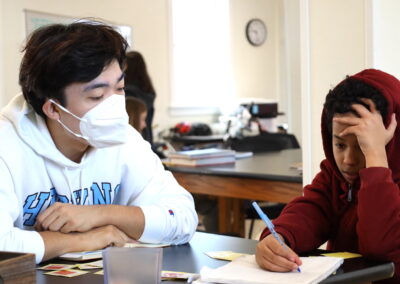
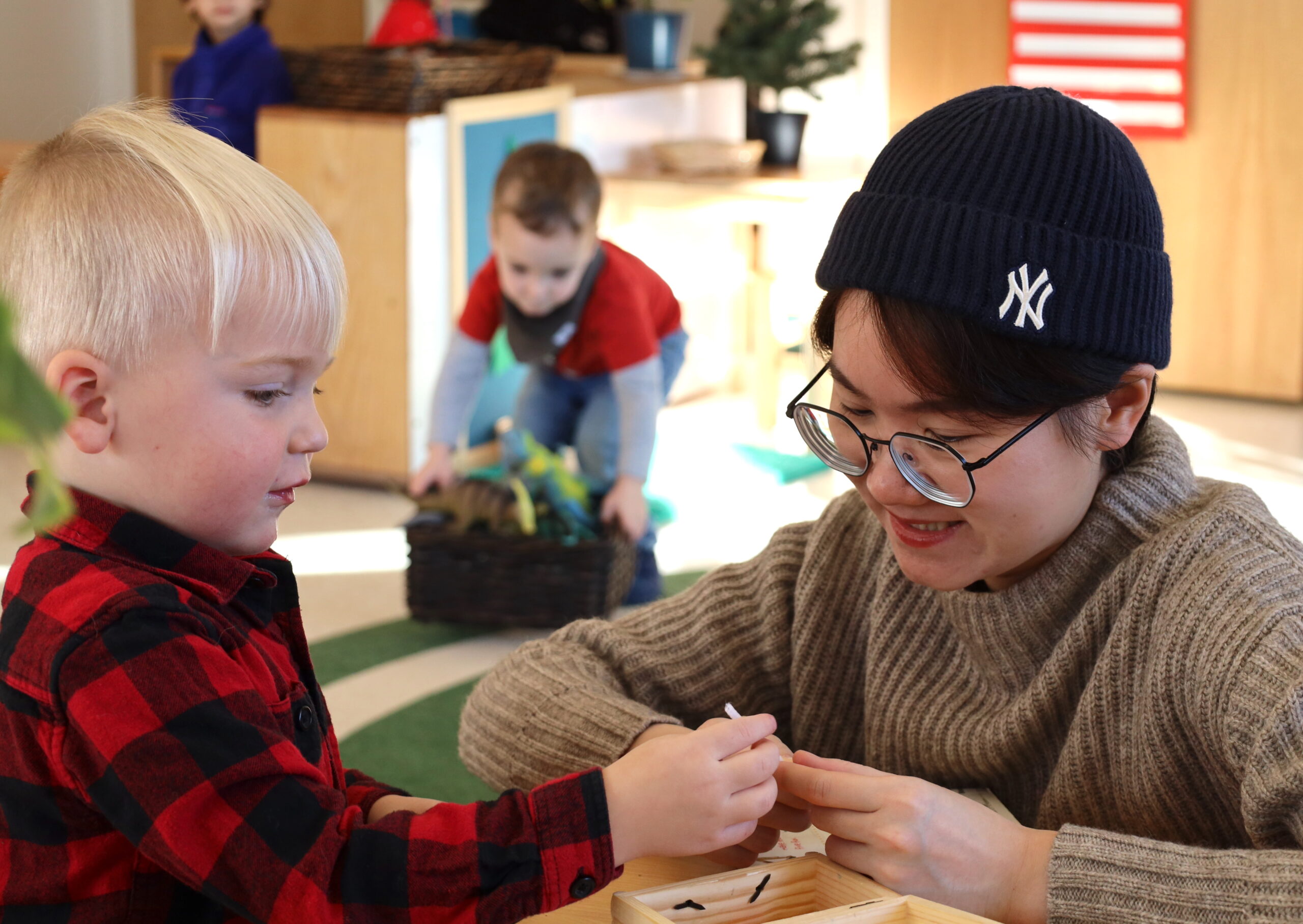
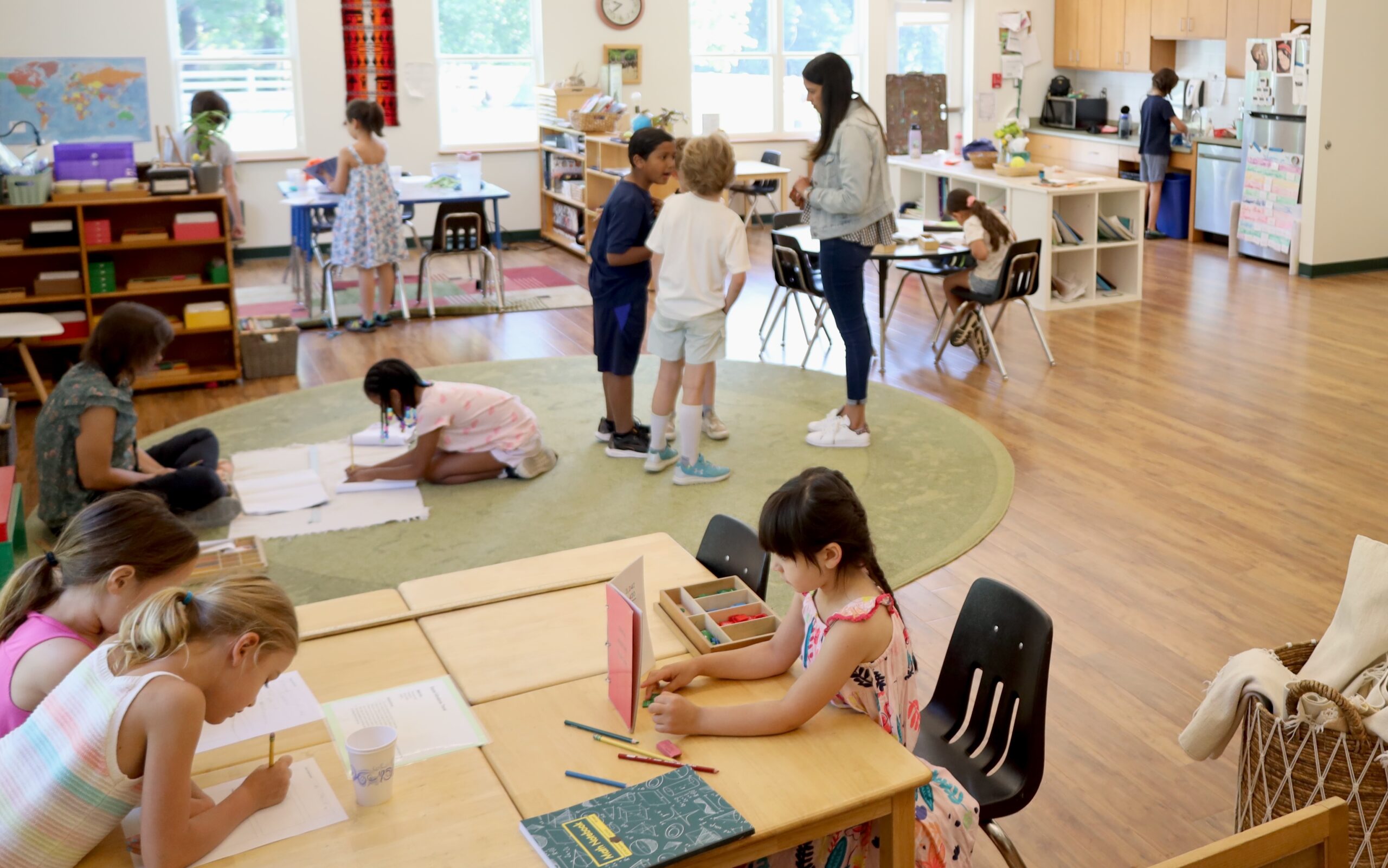
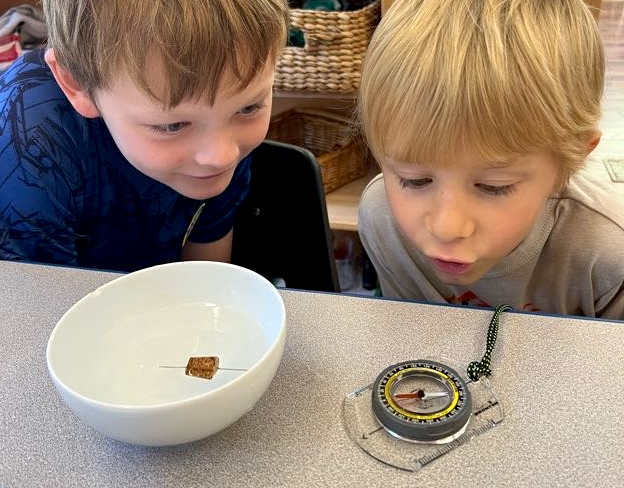
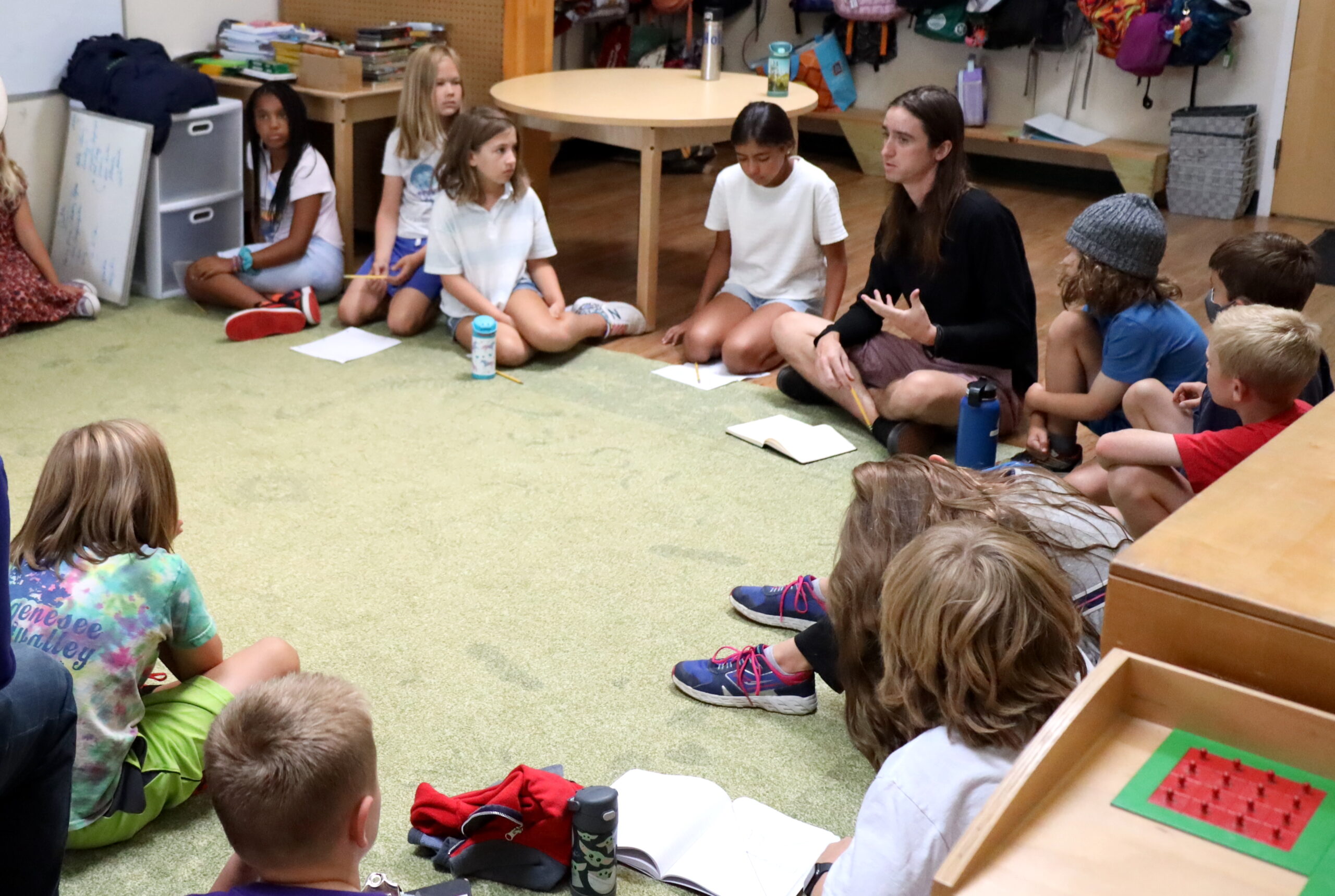
We refer to Montessori classroom spaces as prepared environments because they are carefully designed to maximize students’ independence, freedom of choice, and freedom of movement. Unlike traditional classrooms that often use bright colors, posters, and decorations to try and excite children, Montessori classrooms are organized and uncluttered, featuring simple décor such as plants and framed artwork. The environment is calming and draws attention to the beautiful hands-on materials, which are designed to entice the students to engage with them. Everything in the classroom is for the students’ use. You will not see a teacher’s desk or things mounted at adult eye level on the walls. Instead, the room features low, open shelving full of hands-on materials for students’ use. Because Elementary students are more social and often motivated by working with peers, open floor space and group tables support collaborative work.

Independence & Freedom

Throughout the day, students choose work that interests them, taking as much time as they need to complete it. Instead of being asked to sit at assigned desks or tables, students move freely about the classroom, choosing their work, as well as where and with whom they would like to work. Students are encouraged to use problem solving skills to work through challenges and rely on one another for support. Adults do not intervene or interrupt students unless their assistance is needed. Students are offered “freedom with responsibility,” which means they are afforded as much freedom as they can handle responsibly. Elementary students set goals with their Guide and are responsible for recording their work and monitoring their progress toward those goals.

Uninterrupted Work Cycles

In traditional classrooms, a block of time is allotted for each subject, and all students work on the same subject at the same time. In Montessori classrooms, students work during uninterrupted work cycles. During these three-hour blocks of time, students choose when and for how long to work on each activity, which ensures that they have the time to fully understand and complete their work without being interrupted. Many subjects are integrated, with new lessons being offered to students as they are ready for them. At the Elementary level, students have follow up assignments and long term projects, which gives them practice with planning, organizing, and budgeting their time. With support, they gain practice in building these executive functioning skills.

Mixed age groups

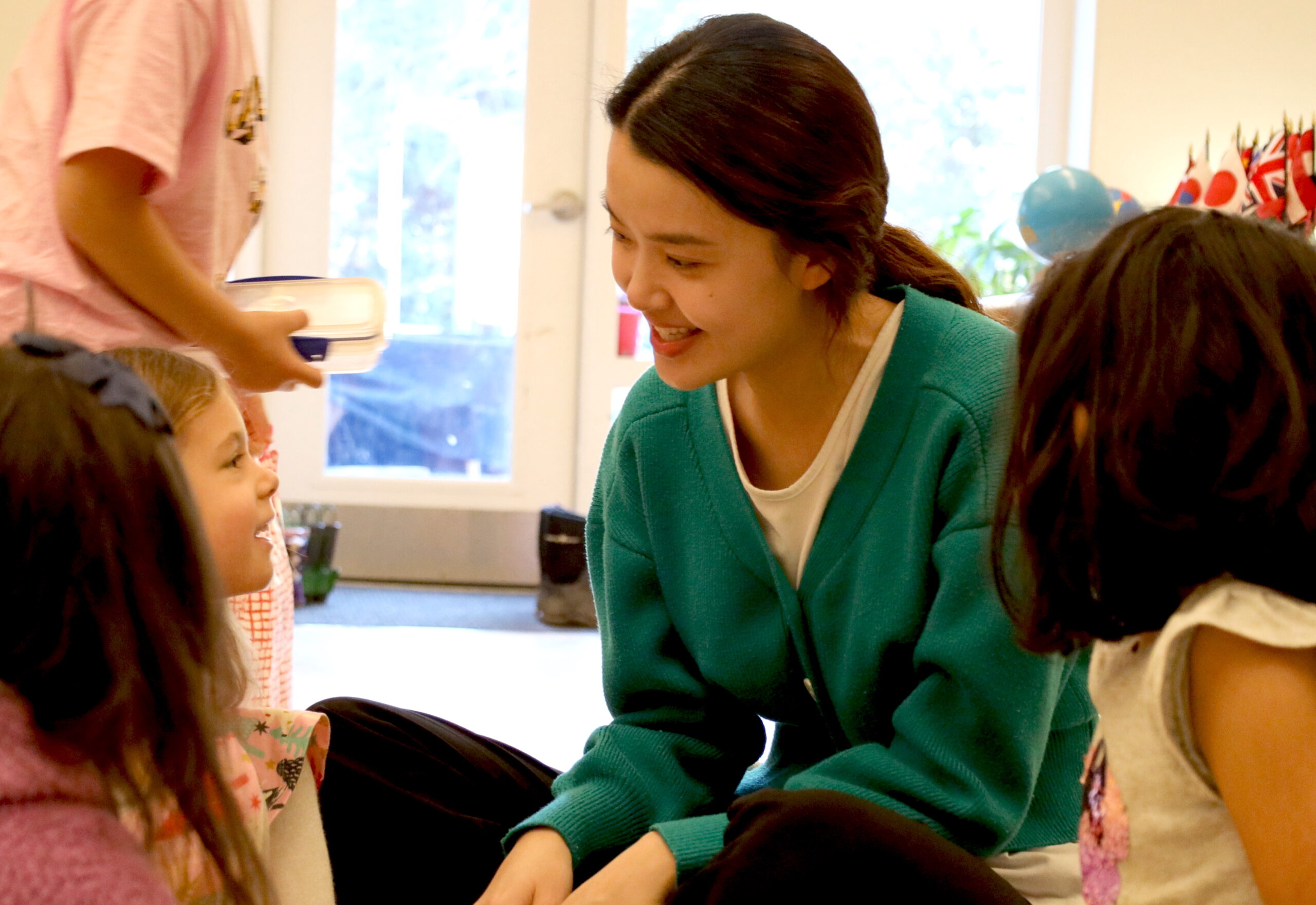
Montessori classrooms are unique because they include a three-year age range of students. This allows students and their families to build a close relationship with the same Guide over three years. It also means that the classroom enjoys consistency from year to year, with only a third of the group matriculating and a third of the group entering new each year. Older students often serve as role models for younger students, building their confidence and leadership skills. Lower Elementary classrooms are for 6-9 year olds (the equivalent of 1st, 2nd, and 3rd grade) and Upper Elementary classrooms are for 9-12 years olds (the equivalent of 4th, 5th, and 6th grade).

Individualized Instruction

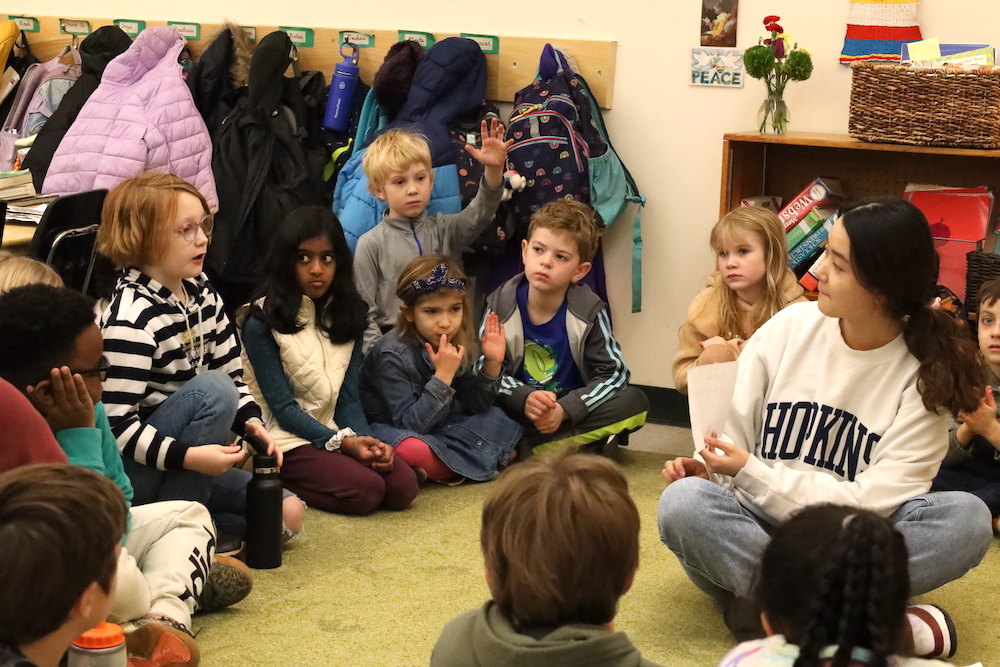
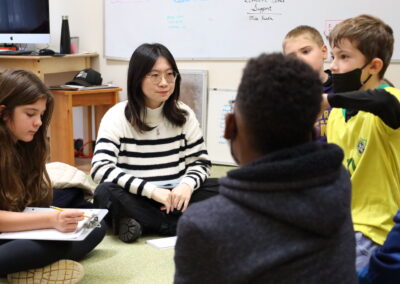
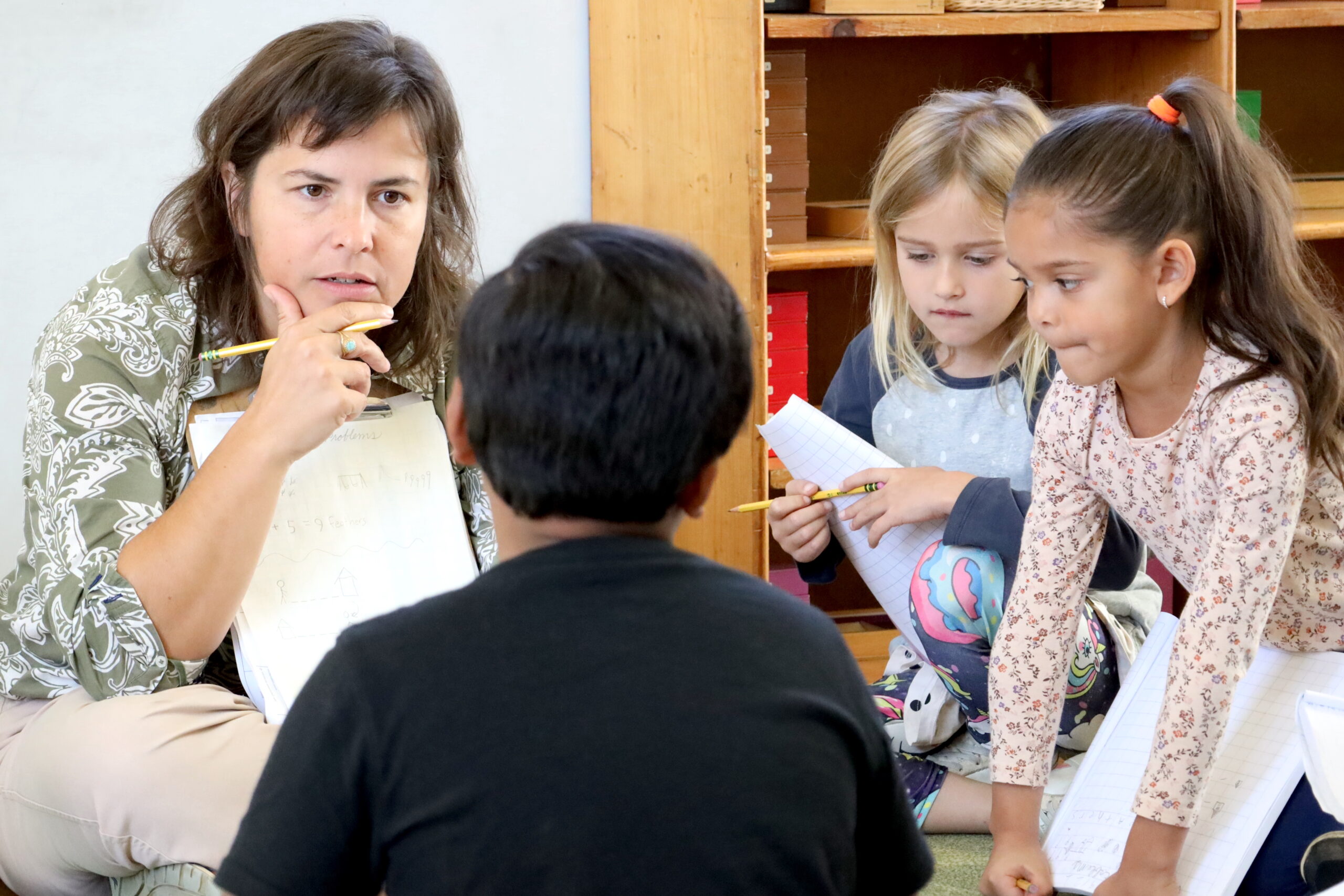
In most traditional schools, a teacher gives direct instruction to the whole class and to groups of students, based on a predetermined curriculum. Children are forced to move at the pace of the group, regardless of whether they already understand the material or need more time to fully absorb it. In Montessori classrooms, lessons are given to individuals and small groups as they are ready for them, regardless of age or grade. In addition, students independently use self-teaching materials and learn from each other. Because students work at their own pace in all different subjects, students are not set up to compete with one another. Instead, students support and collaborate with one another. At the Elementary level there is a great deal of collaborative work. Students learn to negotiate, plan, delegate, advocate, and problem solve through these projects.

Hands-on Learning

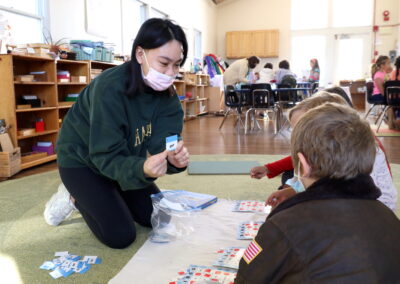
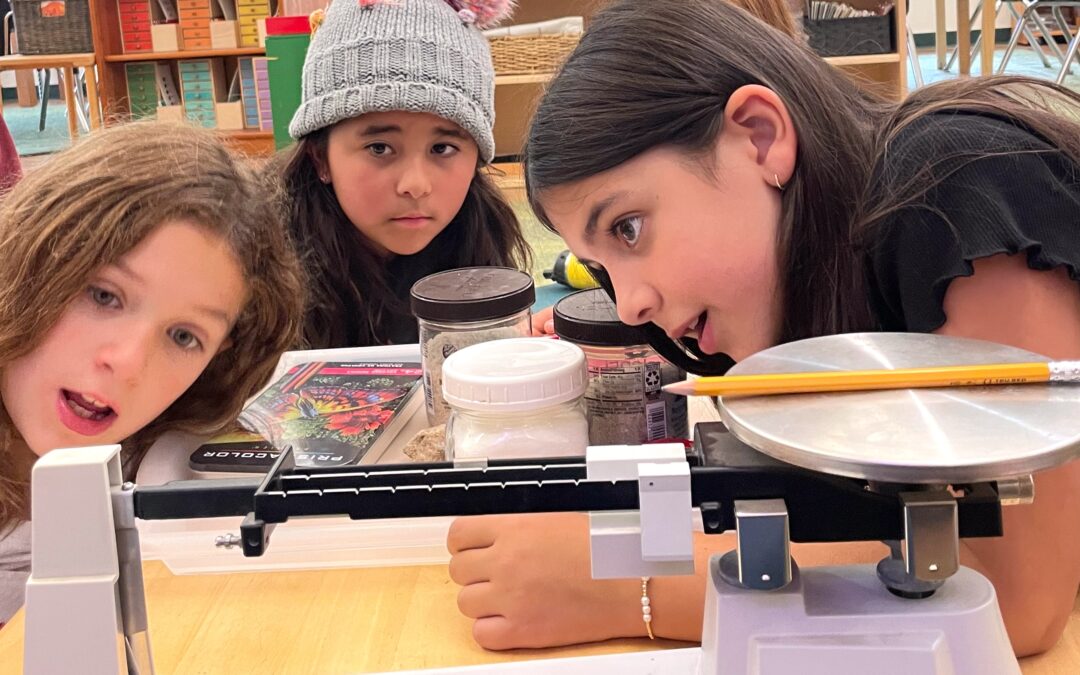
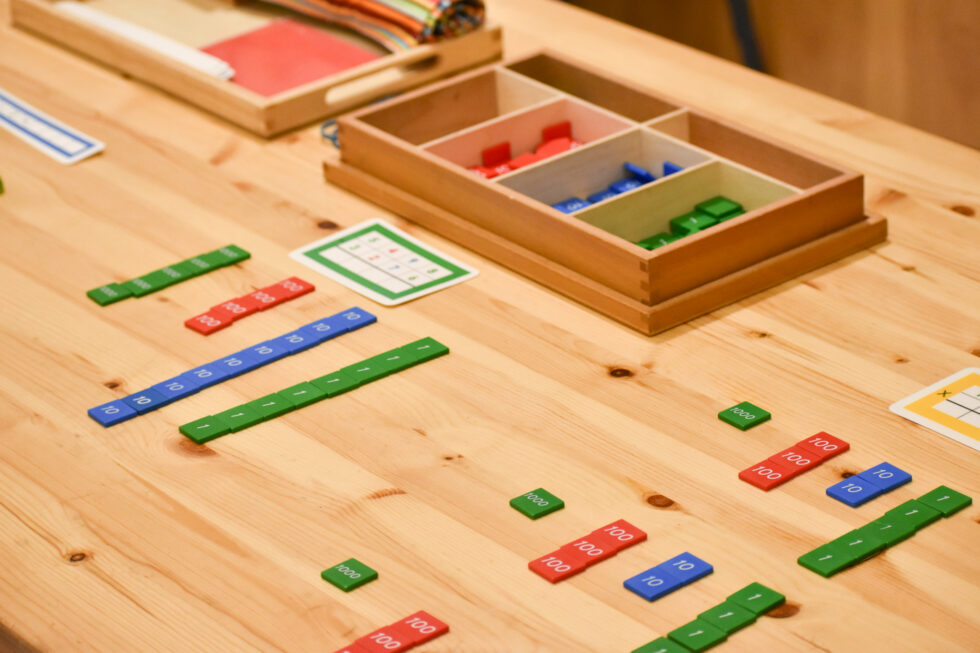
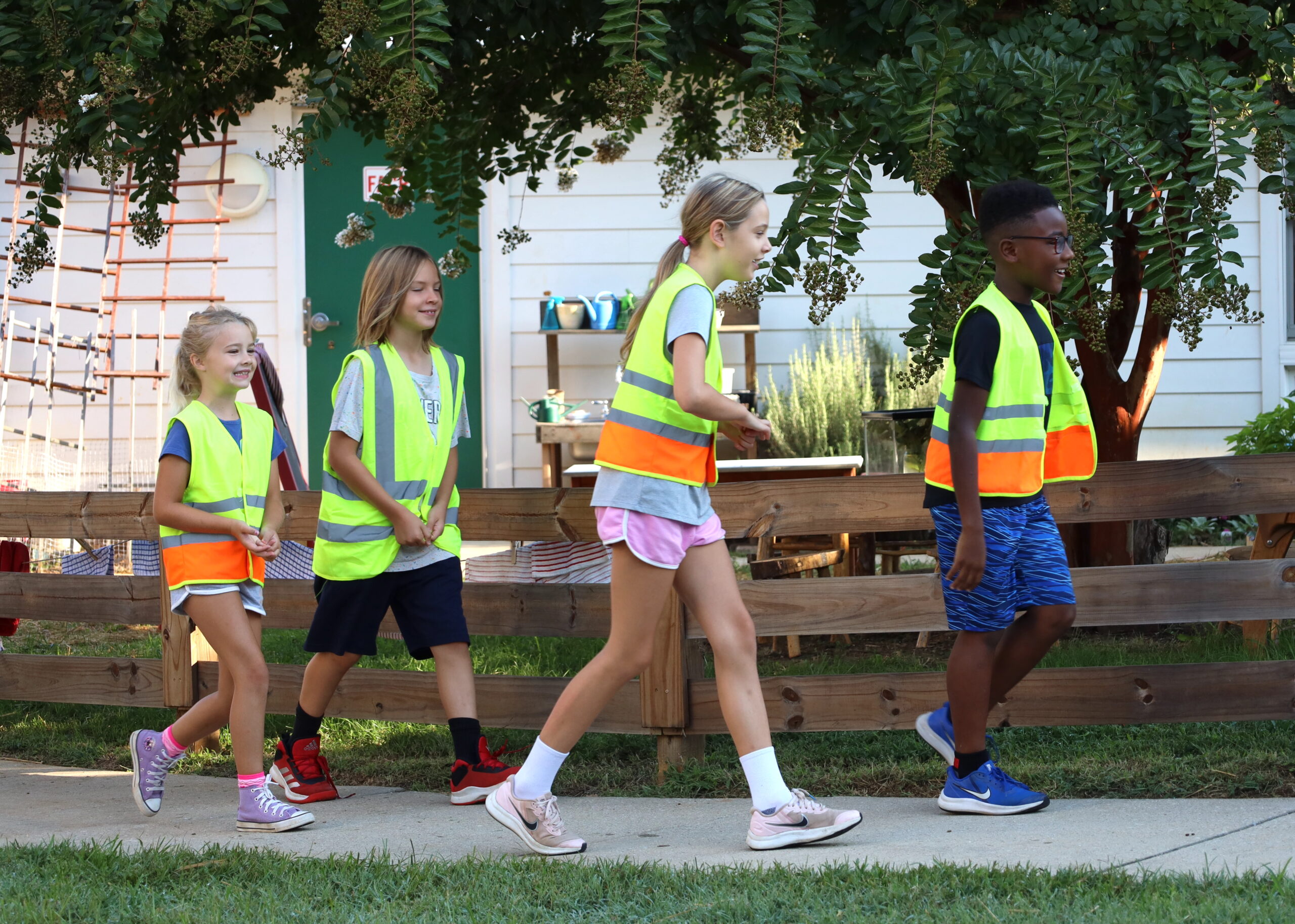
You will not see the use of worksheets, rote learning, and textbooks in Montessori classrooms. Instead, students use hands-on manipulatives that are concrete representations of concepts. These materials that appeal to the senses, and offer purposeful, real-life experiences. At the Elementary level, students begin the leap to abstract understanding with some concepts, as they are ready. Upper Elementary students especially are in transition, making the “leap to abstraction” in many areas. Elementary students also begin to learn outside the four walls of the classroom, making real world connections on expeditions called “Going Out.” 

Grace and Courtesy

Many traditional classrooms are adult-centered, with the teacher controlling the classroom and enforcing discipline with the use of rules, rewards and punishments. Montessori classrooms are child-centered. The students agree on a set of community values and all are responsible for upholding their shared agreements. Additional expectations for behavior are taught through Grace and Courtesy lessons. The focus is on the whole child, so lessons that support social and emotional development are considered as important as academic lessons. At the Elementary level, students take even more ownership of their community, using community meetings to communicate concerns and solve problems collaboratively.

Self-Construction

In traditional models of education, teaching is framed around the child’s perspective. (First we learn about our town, our state, our country…) In Montessori education, teaching is framed around a global perspective (the universe, the solar system, our planet, our continent…) At the Elementary level, this is taken even further with what is called the Cosmic Curriculum. Each year begins with the presentation of five Great Lessons which present the universe to the child, providing context for all subsequent lessons. With this broad perspective, students develop thinking of themselves as global citizens. Montessori students know that the ultimate goal of education is not to get good grades, be well behaved, or get into a good college. They grow up knowing a form of education that supports their self construction, which in turn, contributes to the betterment of society.

The child is capable of developing and giving us tangible proof of the possibility of a better humanity. He has shown us the true process of construction of the human being. The child is both a hope and a promise for mankind.

Dr. Maria Montessori

Preparing for Montessori Model United Nations

Preparing for Montessori Model United Nations

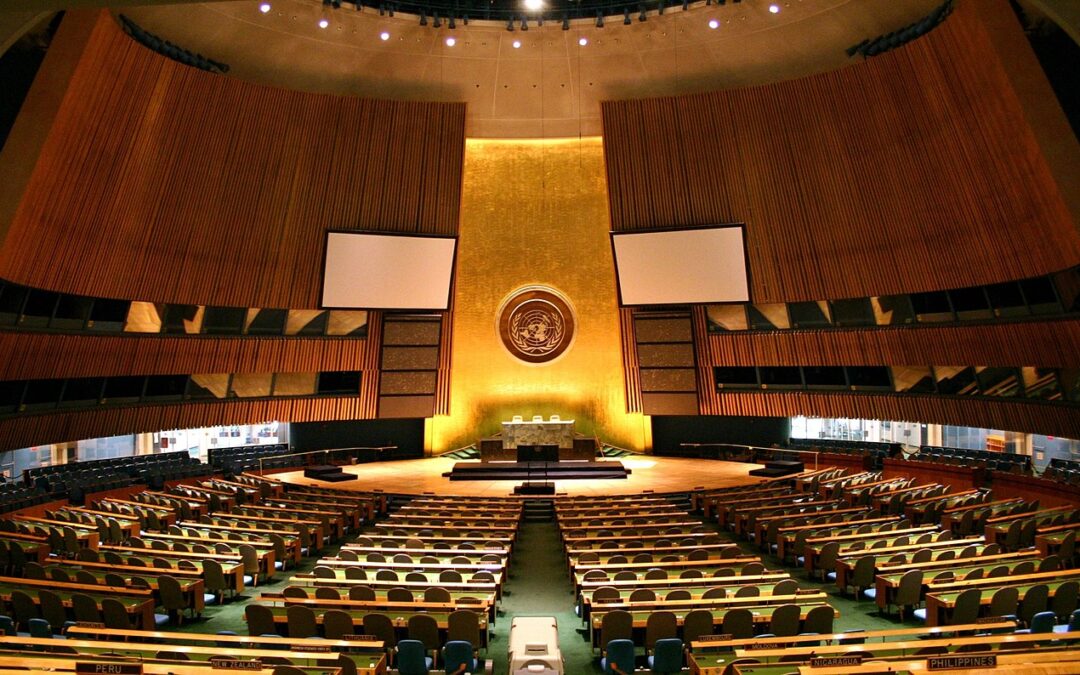
A group of Greenspring Montessori’s Upper Elementary students are excitedly preparing for the Montessori Model United Nations summit in February. It has been several years since we have been able to send a delegation, so we couldn’t be more excited to be planning to return to New York City in February to participate in this event with Montessori students from around the world. This year’s MMUN conference will take place February 15th though the 18th.

What is MMUN?

MMUN is a program designed to inspire global citizens of all ages. All of the programs focus on solution-building. At conferences, students discuss global crises and negotiate possible solutions with other students from around the world, gaining valuable insights into the intricacies of international collaboration.

How do students prepare for MMUN? 

First, a coordinator must be trained from every participating school. Mr. Mike attended his MMUN Certification Training in October and is taking the lead on preparing our students for the  conference in February.

First, students study the scope, mandates, and history of the UN, including what it can and cannot do. Next, students at each school are assigned a country to represent, based on the size of the group participating. This year, we have eight students participating and our group has been assigned Vatican City, the smallest country in the world! Students research their representative country and prepare country display materials to share during the conference.

Students are also assigned a committee, so they prepare by investigating the committee objectives and assigned topics, including past positions and proposed solutions, regional alliances, and more. They develop a profile of the country they will represent and identify their country’s perspective concerning its policies.

How are the committees and committee topics chosen?

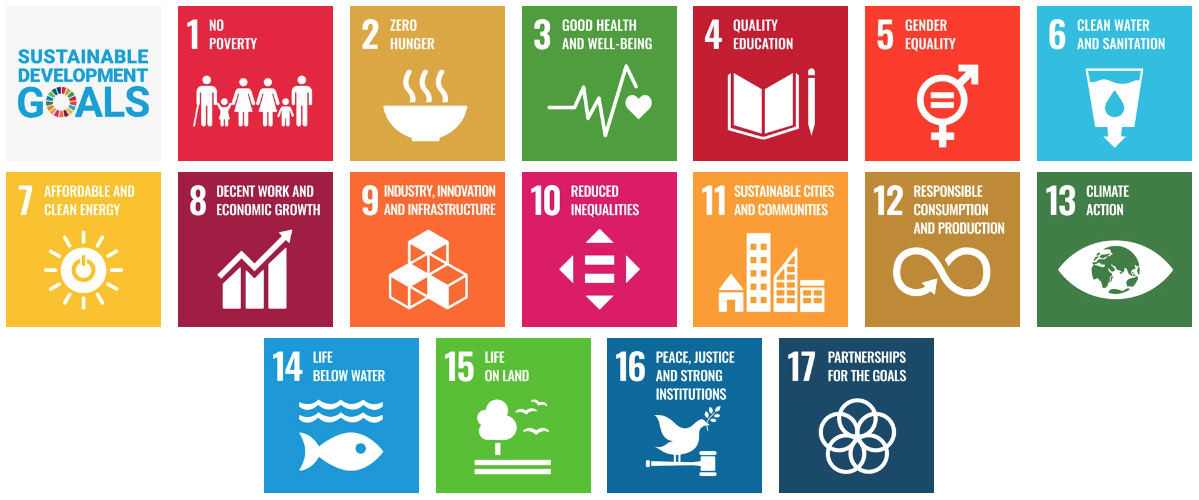
The topics for debate at each conference are aligned with the United Nations Agenda for the year. MMUN selects relevant topics for each committee. Topics are also associated with the 2030 Agenda for Sustainable Development, adopted by the United Nations Member States in 2015 with the 17 Sustainable Development Goals.

MMUN Committees:

DISEC – Disarmament & International Security
ECOFIN – Economic and Financial Affairs Council
HRC – Human Rights Council
SOCHUM – Social, Humanitarian and Cultural
UN WOMEN – UN Entity for Gender Equality and the Empowerment of Women

What actually happens during the conference?

At the MMUN conference in New York City, students from around the world participate in formal multi-day committee sessions as ambassadors of their countries where they work together to draft resolutions which will be shared with the Secretary-General of the UN.

Opening Ceremony

This formal ceremony opens the simulation where students publicly represent their country delegations. The Opening Ceremony begins with a Celebration of Nations, where each country delegation’s flag is represented. School groups also prepare Country Presentations so that all delegations can learn more about the other nations represented.

Committee Sessions

Students participate in a “working session” committee experience with other student ambassadors to learn and practice Rules of Procedure, improve their public speaking and negotiation skills, and make new friends. Taking on an ambassadorial role, students develop a position on each committee topic which will address their country’s needs, and then write position papers.

Social Events

Delegates share world cultures by performing musical numbers, sharing traditional recipes, providing a language demonstration related to either their home country or the country they are representing during the conference.

Closing & Celebration

At the end of the conference, elected Closing Bureaus from all committees present summaries of their work and hear from inspiring speakers. The conference closes with students celebrating together with good music and fun activities!

Stay Tuned!

We will post updates as our students continue their preparation. And of course, we will send photos and news from the conference itself in February!

Introducing the Greenspring Center for Lifelong Learning

Introducing the Greenspring Center for Lifelong Learning

We have exciting news to share! After years of dreaming, brainstorming, and planning, we are ready to announce the launch of our new venture, the Greenspring Center for Lifelong Learning!

Why this? Why now?

As Montessorians, we believe that children are the hope for humankind. We know that education is second only to homelife in children’s development as self-actualized human beings and global citizens. And of course, the secret to educational excellence is strong teachers.

Yet there are not enough educators and administrators to meet the growing needs of children and families. Some 300,000 teachers and other staff left the field between February 2020 and May 2022, a nearly 3% drop in that workforce, according to Bureau of Labor Statistics data.

teachers and staff left the field since the start of the pandemic

And while there are strong training centers out there preparing teachers to take their first steps into the world of education, once they are through training, support can be minimal and ineffective. Many new educators leave the profession before becoming seasoned professionals.

Data collected by Zippia indicates that 44% of all teachers quit in the first five years, many leaving the profession altogether. This figure is even higher for Montessori-trained teachers: a staggering 72% of Montessorians leave teaching in the first five years.

%

of Montessori educators quit in their first five years

This staffing crisis puts an incredible strain on those who are rising to the challenge and leaves our children without the support they need.

Our Mission

Every challenge, even one of this magnitude, can be overcome by sharing successful structures and strategies. We at Greenspring Montessori School feel it is a moral imperative to share the knowledge and strategies we have gained in more than 50 years of experience and from a rich network of leaders in the field. The Greenspring Center for Lifelong Learning’s mission is: 

Elevating and supporting the emerging generation of Montessori educators, leaders, and schools.

Our Resources

During the first phase of our launch, we are offering a toolbox of resources designed to serve our mission.

Voices in Montessori Podcast

Our podcast, Voices in Montessori, will share interviews with seasoned Montessori educators and leaders, as well as learning specialists, child psychologists, and other experts to inspire and support our growing community of adult learners. Our three themes are: Building Cultures of Belonging, Montessori for All Learners, and The Montessori Triad (The Prepared Environment, The Prepared Adult, and the Prepared Learner.) 

On-Demand Workshops

On-Demand Workshops 

Our library of on demand workshops will be tailored to leaders and educators at every level. We are creating learning modules to support onboarding new staff, provide ongoing education for school teams, and build the skills of individual classroom teachers.

Annual Conference

We are revitalizing the popular Baltimore Montessori Conference. Our new model –  Deepening our Practice – will provide full day workshops so that educators can dig deeply into important topics and leave with actionable ideas to implement in their classroom and school. The conference is scheduled for June 20-24, 2023.

Coaching Communities

When teachers are just starting out, they need ongoing, high-quality support. We will be facilitating year-long, virtual coaching communities for Children’s House and Elementary Guides in their first years of teaching and new school leaders that provide high-quality education and practical help in real-time.

And there is more to come! We hope you will join us in celebrating the launch of this exciting project. Please visit our landing page at greenspringcenter.org. The full site will launch on December 1st. 

How you can help!

In the meantime, please support us by joining us and sharing the news on social media!

Every School Year Begins with the Process of Normalization

Every School Year Begins with the Process of Normalization

Dr. Montessori coined the term “normalization” to describe children who are demonstrating independence, self-discipline, concentration, and joyful engagement. E. M. Standing, in his book Maria Montessori: Her Life and Work writes: “The crowning characteristic of a group of normalized children is joy. It pervades the little community like a perfume; and is as hard to describe as it is easy to perceive.”

At this time of the school year, students are working towards normalization. The multi-age classroom, the prepared environment, meaningful work, an uninterrupted work cycle, Grace and Courtesy activities, and adult observation all support the development of normalization in Montessori classrooms.

Montessori classrooms are multi-age, which means that in any given year, two thirds of the children are returning to the community. These “elders” in the community serve role models for their younger peers, easily folding them into the existing routines and culture of the classroom. Dr. Montessori, in The Absorbent Mind reminds us that children of varying ages work well together: “Our schools show that children of different ages help one another. The younger one sees what the older ones are doing and asks for explanations. There is a communication and harmony between the two that one seldom finds between the adult and the small child.”
The prepared environment is designed to call the children into work they find meaningful and engaging. The areas of the classroom are organized by subject area and hands-on manipulatives are arranged sequentially on the shelves. Offering many materials of interest at varying levels means that each student has work that calls to them. Guides invite children to lessons just as they are ready for them, ensuring that every child has work that is at a “just right” level of challenge. Practical Life activities in particular help the children build toward and prepare for work in other areas. These activities help children increase concentration, coordination, order, and independence, while also teaching care of self and care of the environment. A child carefully rolling a mat, carrying a tray, or scrubbing a table is building all of the skills needed for work in every other area of the curriculum.

A stretch of protected work time, called the uninterrupted work cycle, allows children to dive deeply into work that interests them. Dr. Montessori observed, “An interesting piece of work, freely chosen, which has the virtue of inducing concentration rather than fatigue, adds to the child’s energies and mental capacities, and leads him to self-mastery.” Dr. Montessori also observed that children work because they enjoy the experience, not the product. When a child finishes a painting, she may hang it on the drying rack and forget about it. After completing the Pink Tower, a child may choose to repeat the exercise many times, each time finding the work as thrilling as the time before. Children use these experiences to construct themselves. 

We also support the process of normalization through Grace and Courtesy lessons and activities. These activities can help the child become oriented to the prepared environment and serve as tools for functioning in the classroom, using the materials, and interacting with others. Some common Grace and Courtesy lessons at the beginning of the school year include greeting one another, rolling a rug, tucking in a chair, and asking to observe or participate. Grace and Courtesy activities are important for establishing respect for self and others, an important aspect of the path to normalization.
Guides use their observation skills to notice which materials the children are drawn to, what new lessons they are ready for, and what supports would help them to be more independent. Guides then make modifications to the environment and plan accordingly, so that each child is being met where they are.  

At this time of the school year students are working towards normalization. They are beginning to find focus and joyful work. For some children this occurs quickly, and for others it may take time to find their rhythm. The classroom itself also seeks normalization, not just individual children. Dr. Montessori wrote, “The greatest sign of success for a teacher… is to be able to say ‘The children are now working as if I did not exist.’” Students who work independently, are courteous towards each other, focus on their work, and enjoy the work they are doing are all signs of normalization. These characteristics that are developed in the early years don’t just benefit them in school, but for life!

The Importance of Classroom Agreements

The Importance of Classroom Agreements

Classroom Agreements for the Mulberry Lower Elementary class (ages 6-9).

Peace education is a major component of the Montessori classroom. In our article titled “Peace Education for All Ages,” we have discussed how mixed-age classrooms, the prepared environment, community meetings, and role-playing all support the development of conflict resolution skills.

Another tool that we use in Montessori classrooms starting in the Children’s House (ages 3-6) is the practice of creating Classroom Agreements. Rather than an adult presenting a list of rules and expectations, the children collaborate to create a set of guidelines for how they would like the classroom to operate and how they will treat one another. The Guide and Assistant ask the children to envision what they will need to contribute to create that environment. They provide coaching so the children phrase things positively (such as “We will…” rather than “Don’t…”). Typically we work on this during the first week of school each year, as this is a beautiful community building opportunity and sets the tone for the entire year.

Classroom Agreements for the Willow Children’s House class (ages 3-6).

The children sign the finished product and it is posted in the classroom. Students are invested in these commitments in a different way when they help to create them. I have observed a Children’s House student say to a classmate, “Remember, in our classroom we use kind words,” and point to the agreements posted on the wall. Just another example of the classroom belonging to the children. Dr. Maria Montessori coined the phrase Casa dei Bambini in Italian, which translates to ”the Children’s House”.

Our Upper Elementary students call their Classroom Agreements a “Classroom Constitution” in order to connect it to our nation’s constitution, which is an evolving document – revisited, studied and revised as needed. The Upper Elementary students revisit their Classroom Constitution at the beginning of every community meeting. During these meetings, they discuss challenges faced in the classroom or on the playground, brainstorm solutions, and find resolution as a group. When the group decides that a change or addition is necessary, they amend their Classroom Constitution. 

Classroom Agreements for the Ginkgo Upper Elementary class (ages 9-12).

Montessori students build upon these early experiences of responsibility and ownership to become leaders, problem solvers, and involved citizens.

Read more in our article titled “Peace Education for All Ages”.