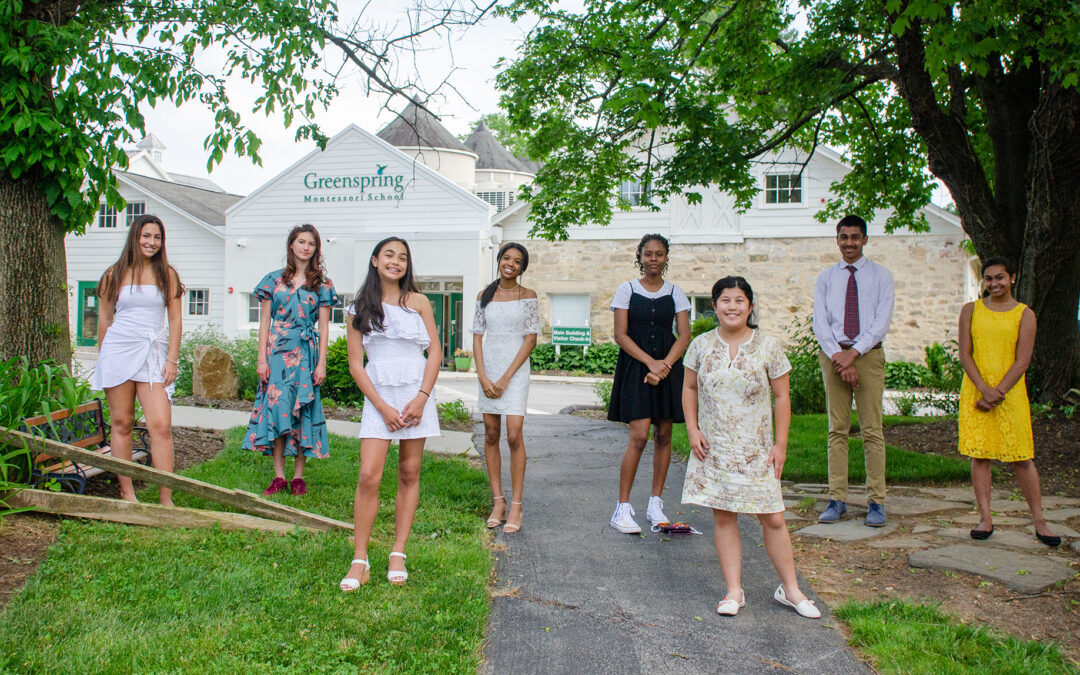
As the pandemic surges through the summer and into the fall, we are beginning to see the ways in which our world is reshaping. From working remotely and learning from home to businesses being transformed forever by the economic turn, we are just beginning to see that our lives will not return to normalcy. Children are entering into a world that will be vastly different from what we grew up with, and they need to be ready.
Montessori education was founded during another tumultuous time – the early 1900s in Europe. Through two world wars, a global pandemic, and a shattering economic crisis, Dr. Maria Montessori saw to it that her model equipped students with the tools to think critically, adapt, and persevere. Over 100 years later, her tenets are still followed today by a growing number of Montessori schools as well as parents adapting the Montessori method at home.
The truth is: the world needs what Montessori children can do.

Anne Frank in her Montessori classroom in 1936.
Montessori children think creatively and innovate
Unlike traditional learning in which the lesson and assessments are the heart of the school experience, exploration is emphasized in Montessori classrooms. Students are encouraged to follow their interests, decide how to demonstrate their learning, and share their discoveries with their peers. By learning at a young age to manage their time and think creatively, Montessori children are able to be thought leaders in the adult world, especially in science, engineering, technology, and mathematics. Montessori truly builds innovators.

Upper Elementary students dissect a cow brain as part of their chosen science work.
Montessori children develop strong leadership skills
Whether learning remotely or on campus, our Guides are dedicated to setting up an environment that allows the child to work at their own pace, encouraging them to ask questions and push themselves to learn more. This shift allows for students to take ownership of their own learning, having a sense of pride around education and discovery. Multi-age classrooms expand upon this, with our older children taking on the role of leaders in the classroom, teaching their peers as they themselves begin to master a subject. From the start of their Montessori education, our youngest children learn that they can do hard things, setting the stage for the work to come in the Elementary and Adolescent classrooms.

Upper Elementary students attending the Montessori Model United Nations Conference in New York to represent the country of Gayana.

A Greenspring student presents his biography research to parents and peers.
Montessori children engage in thoughtful dialogue about our past histories
Children are given the “big picture” – especially through the Cosmic Curriculum at the Elementary level. Academic subjects are not taught separately but woven together to show the interconnectedness of the disciplines. In our Elementary classrooms, children begin to wonder about how the world works, and we are consistently surprised and inspired by the ways in which these young people are ready to change the world for the better. In the Adolescent Community, students are eager to engage in respectful dialogue with their peers, discussing everything from moral philosophy to civil rights and beyond.

An Adolescent student reads a speech she wrote in support of Leia’s Law for gun control on the steps of the Baltimore County Courthouse.
Montessori children have an unwavering commitment to supporting those most vulnerable in our communities
In the Toddler and Children’s House classrooms, much of the child’s work involves the need and desire to serve the community in a way that challenges them. From serving tea and feeding classroom pets to organizing food and clothing drives and sharing art with people in a local retirement community, the children begin to generate their own service initiatives when they see there is a need in the world. Throughout their time at Greenspring, children and adolescents are taught that they have a voice and that they matter in the world. These early lessons help to define who they are and push them to continue making a difference, as we’ve seen with countless Greenspring alumni dedicated to service, the environment, and their communities.

Adolescents plant seedlings with Real Food Farm in Baltimore to support people with limited access to healthy food.
As we look toward the coming year and beyond, we are inspired to think about the direction our children will take us. This is truly a pivot point in history and we as Montessori educators are here to help shape that world with our students. We are not just looking for ways for our children to catch up on academics. We are looking ahead in order to understand what our children need in this new world.
To learn more about Montessori and learning options for your child, plan your visit today.


A Lower Elementary student writes about the research she is doing.
In the Montessori Children’s House program, students learn letter sounds before the letter names. For example, they learn that the sound of “d” is “duh,” not “dee” and the sound of “b” is “buh,” not “bee.” (See our blog post about Language in the Children’s House for more information.) Spelling is not the focus during the Children’s House years because the focus is on children hearing and learning the letter sounds rather than recognizing the letter names.

A Children’s House student uses the Moveable Alphabet to craft a message.
By using the Moveable Alphabet, children are able to put different letter sounds together to form a word (long before they have the hand strength necessary to hold a pencil). When a young child is asked to form the word “photo” with the Moveable Alphabet, she sounds out how she hears the word, letter by letter.
“Fuh”, “oh”, “tuh”, “oh”.
She would likely place out Moveable Alphabet letters like so:
f-o-t-o
While the word is spelled incorrectly, it is phonetically correct. This “spelling” is age-appropriate for a student in the Children’s House.
Later, once students have a firm grasp of letter sounds and have associated the letter names with these sounds, we work to introduce phonograms, which are when you put two sounds together to make a new sound (think, ee, ea, y, e-e all make the sound “ee”). With this work, which often begins during the Children’s House and continues into Lower Elementary, students become aware that there are options in spelling and become conscious of how to spell words when writing.


Once the child begins to internalize the phonograms, we can begin to explore the complexities of the English language. (Unlike Dr. Montessori’s native language of Italian, English is not a phonetic language; there are so many exceptions to every rule!) We practice reading “sight words” and finding “rule breakers.” This feeds the interest of the Lower Elementary student, who naturally begins to show an interest in how to correctly spell words.
Spelling is reinforced through extensive reading. The more a child reads, the more they will be exposed to spelling patterns. As a result, children are able to edit their work to identify words that don’t “look” right in context and begin to self-correct. In addition, children use a variety of strategies to determine the correct spelling of a work. Things like “have a go,” where the child will write a word that is misspelled, then write it again to see if it is correctly spelled, and if not try again until they get it right. Another strategy children may use to spell longer words is to “chunk” the word into single syllable pieces. As they move to Upper Elementary, children are exposed to Latin roots, which helps them understand the spellings of many English words.

Lower Elementary students write in English and Spanish to their pen pals at a Montessori school in Spain.
Keep in mind that even with more emphasis on spelling in Elementary, guides will not correct students’ spelling while writing rough drafts of reports or stories. We allow the children to focus on developing their skills of self-expression. The expression of the idea and the flow of creativity is more important than the limiting, halting prospect of getting every word right. Corrections are made during the editing stage of the writing process – whether individually, with a peer, or with the assistance of a guide. As children begin to create more polished work to share with others, such as the letters to pen pals shown above, they are more internally motivated to edit and correct their spelling.

A Lower Elementary student reads through his spelling dictionary.
Lower Elementary students keep their own personal spelling dictionaries, in which they can write words they want to remember how to spell. It allows the children to help themselves! It also teaches the very basic and beginning steps of learning how to use a dictionary. But most importantly, the words the student put into their personal dictionaries have meaning to them.
Just as with all other areas of the curriculum, the Montessori approach to spelling is rich, interdisciplinary, and meaningful.
For more on what you can do at home to support this work, take a look at this blog from How We Montessori.
To learn more about the Elementary Curriculum, please email us at learn@greenspringmontessori.org or visit the Elementary page of our website.
“Never help a child at a task which he feels can succeed.” -Dr. Maria Montessori
If you are lucky, your family members – especially those proud grandparents! – are excited and eager to learn more about your child’s Montessori journey. While we can’t expect our extended family to completely rearrange their homes or lifestyles, there are some simple ways that they can support your child in building independence.
Simple ways for family members to help your child’s growing independence
Allow the child to make decisions with limited choices
You can allow a child opportunities to make decisions without giving up all control. Consider offering two choices – both of which you are happy with. “Would you like a grilled cheese sandwich or chicken noodle soup for lunch?”
Allow the child to do things for herself
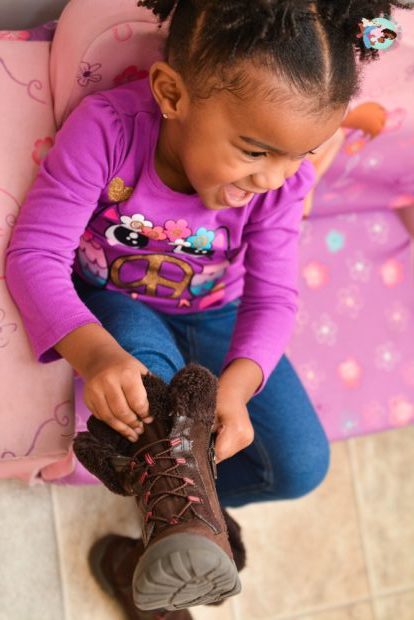
It is the natural instinct of a loving family member to make life “easier” for a child. But when we take away opportunities to overcome worthy challenges, we inhibit them from learning new skills and building self-esteem. For example, it may take much longer for a young child to zip up her own coat, but when time allows, give her the opportunity to try. If she begins to get frustrated, provide the minimal amount of help needed (such as holding the bottom of the coat to create tension, while the child pulls up the zipper).
Prepare the environment for independence
Allowing a child to do things for herself may require some support. Consider providing a stool at the bathroom sink so the child can reach the faucet to wash her hands. Consider putting out a small pitcher of water and a small glass so she can help herself when she is thirsty. If dishes, napkins, and silverware are placed in a lower cabinet, the child can help set the table for a meal.
Involve the child in activities of daily life
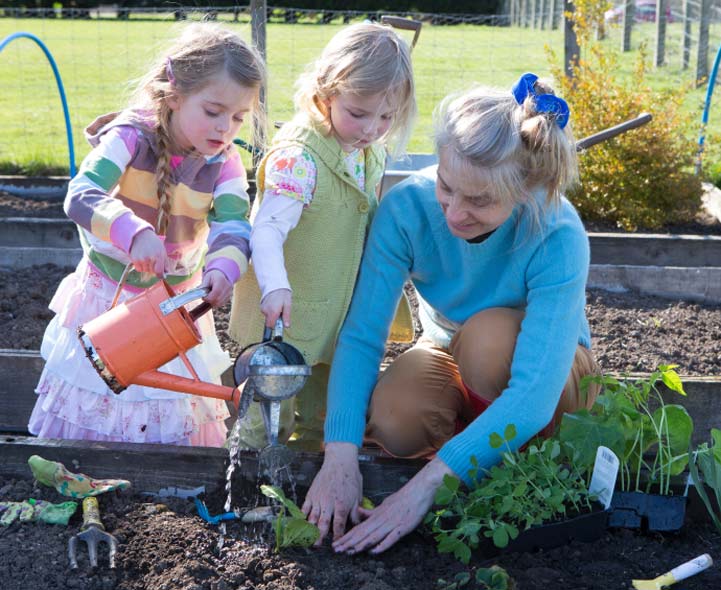
Not every visit with Grandma and Grandpa needs to involve a trip to the zoo. Children want to do what you do! Invite them to join you peeling vegetables, feeding pets, watering the flowers, etc. You may need to provide child-size tools for some of these activities, such as a small watering can or acrylic knife, so that your child can participate fully.
Create order in the environment
Instead of piling toys in a basket, consider setting up a small open bookshelf where only a few toys are accessible. This helps the child make independent choices and give more focused attention to the chosen activity. (Toys can be rotated in and out to keep the child’s interest.) A minimal, organized toy area will also help the child clean up independently because there is a clear place for everything.
Be careful of praise
Dr. Montessori found that praise can inhibit children from gaining independence because they begin to rely on the judgement of others. As an alternative, encouragement can be empowering. So instead of “Good job!” “Good girl,” or “You are so smart,” you can try, “You did it!” “Thank you for your help,” or “I can tell you worked really hard on this.”
How to help family members get on board
Model rather than preach!
Most family members won’t appreciate being given a list of rules about how to behave around your child. But you can provide a powerful example by modeling these approaches in front of your family.
Gentle reminders
Feel free to give family members gentle reminders, such as “Please don’t help him; he can do it himself” You can also make it clear what the child is capable of, such as “Lila likes to choose her own clothing. She can get dressed herself but she might need help if her arms get stuck. Please don’t worry if she puts things on the wrong way.”
Provide resources
If a family member seems receptive, you might share an article with a brief introduction to Montessori at Home, such as this one. For those who wish to know more, a nice introductory book is How to Raise an Amazing Kid the Montessori Way by Tim Seldin. Though not all of it will apply to extended family, it’s a quick read with lots of beautiful photos that provides a nice overview of Montessori for families. If you would like to help family members find child-size tools or suggest gifts that would be appreciated, you can give them a copy of the For Small Hands catalog or share a link to their website. You may also consider creating an Amazon wish list.
“The greatest gifts we can give our children are the roots of responsibility and the wings of independence.” -Dr. Maria Montessori
With a little help from family, we can create even more consistency between school and home and provide more opportunities for the child to build independence.

Every year, students at Greenspring Montessori School emphasize the importance of service and stewardship through community service projects. However, we approach service a little differently than other schools. Instead of requiring a set number of hours of service or having a top-down approach (such as a teacher or administrator planning a coat drive and then getting students to participate), our students actively organize their own service projects based on the needs they see in their community.
Just before the winter break, two of our Elementary students organized a holiday drive for Paul’s Place, a community center in Baltimore City. Our school community contributed an amazing total of 146 brand new gifts including toys, clothes, books, personal care, jewelry, and appliances. The staff at Paul’s Place was very moved and acknowledged our contribution in their morning meeting for staff and volunteers.
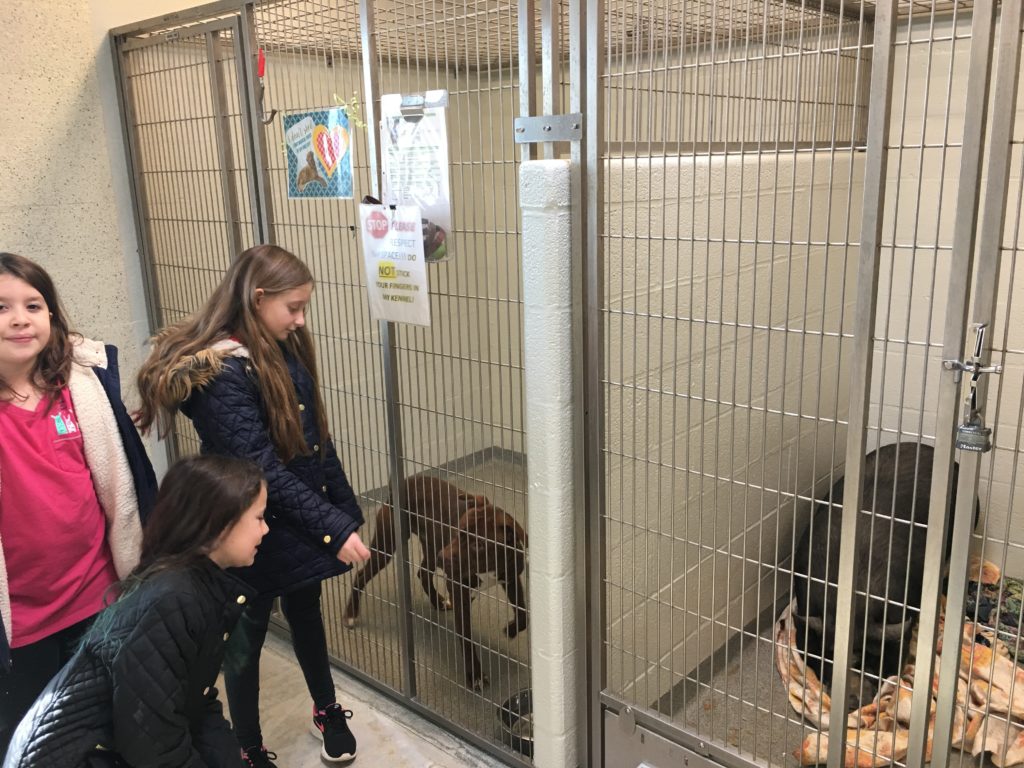
During the month of December, Upper Elementary students also collected donations for people facing homelessness and the Humane Society. Our students and families truly embraced Greenspring’s commitment to service during the holiday season!
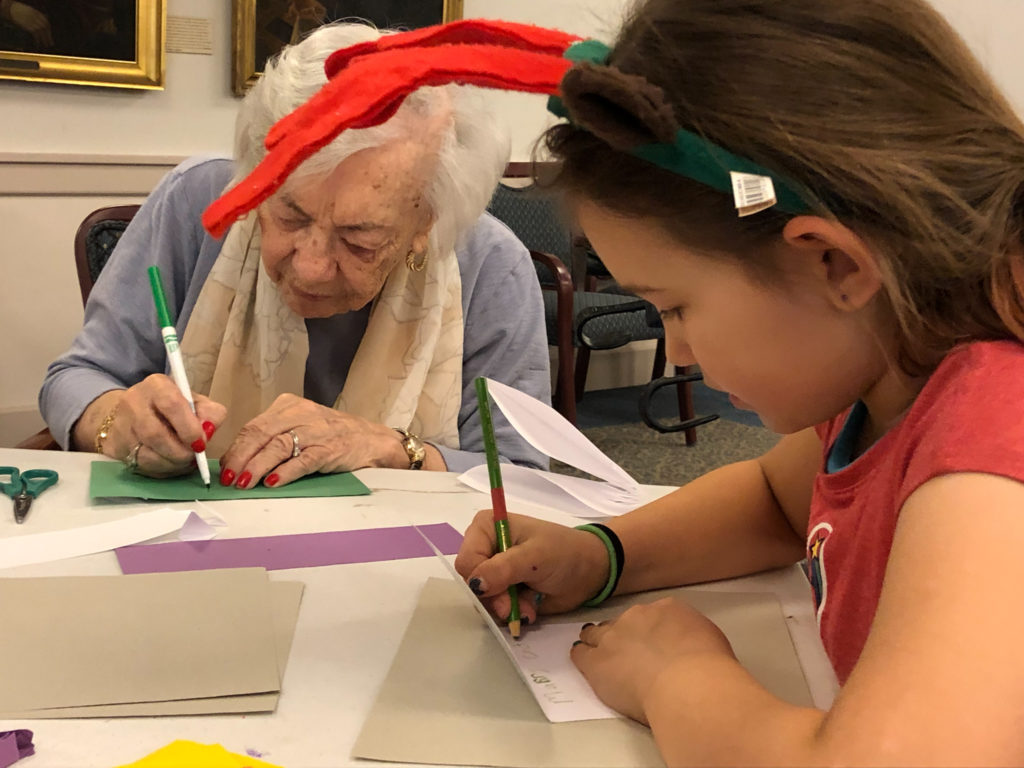
A group of third-year Lower Elementary students visited Pickersgill Retirement Community before the break as well. Students performed holiday songs and worked with residents on making holiday cards. It was a pleasant surprise when the residents chose to make cards for the students themselves! You can enjoy photos from their visit here. A group of students is already planning the next trip to sing additional songs and do more craft activities together.
At Greenspring Montessori School, when our students see a need, they respond with kindness, generosity, and thoughtfulness. It’s one of the things we love most about our community!

Reposted from NAMC Montessori Teacher Training Blog
 |
| Math and science work harmoniously in nature. |
Since the launch of Sputnik in 1957, the US has called for an increase in scientific and mathematical education. There is currently a movement underway to train and terrain 100,000 STEM (science, technology, engineering, and math) teachers. Across the country, there are new standards for STEM subjects, with educators being charged to be creative and engaging rather than just teaching from a textbook.
What does this mean for Montessorians?
STEM – Science, Technology, Engineering, and Math: Being Creative and Engaging in the Montessori Classroom
Montessori teachers have a jumpstart on their conventional counterparts. Since student engagement is at the forefront of the Montessori classroom, we are already actively engaging students in hands-on learning. Beginning in the Montessori preschool environment, students learn the fundamental rules of math and science through the discovery of natural laws through manipulation of didactic materials and problem-solving with peers. The work engages the senses and ensures the internalization of concepts, not just memorization of disjointed facts and figures. Through the Montessori concept of Cosmic Education, the curriculum reinforces that everything is interrelated; students see how math and science work harmoniously in nature, like in the Fibonacci sequence.
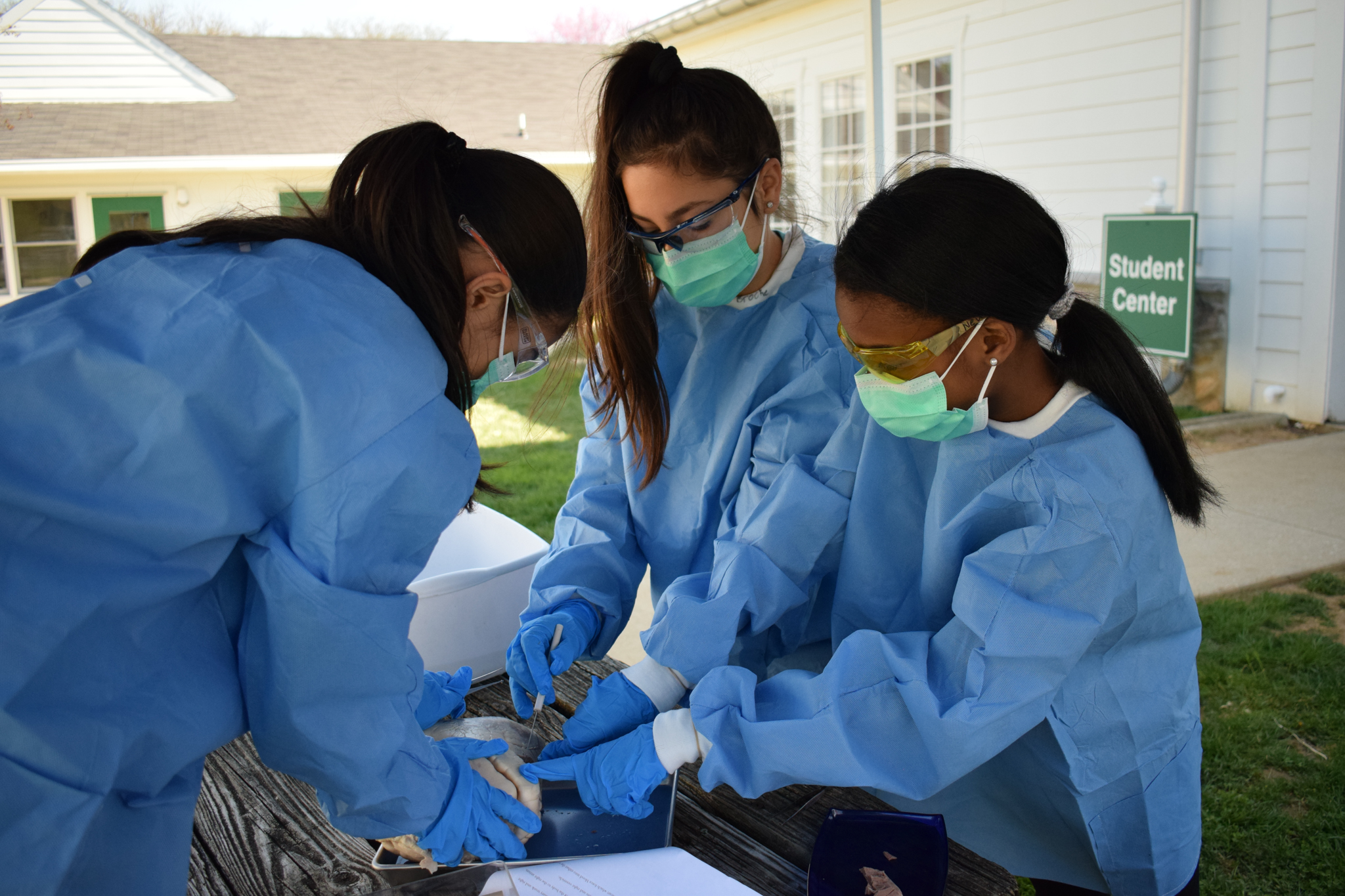
Upper Elementary students dissect a cow heart as part of their studies in anatomy.
On March 29, 2012, the National Governor’s Association issued a brief on “The Role of Informal Science in the State of Education Agenda”. It calls for an increase in hands-on discovery and practice of STEM concepts, something that is already happening across all levels in the Montessori community. It also calls for the use of outside resources such as museums, science centers, and other ‘real-life’ activities that engage and focus student’s attention in the areas of science, technology, engineering, and math. Again, Montessori teachers have been using “going-out” opportunities to pique student interest and foster real-life connections for over 100 years.

An Adolescent student shows one of their chicks to a Children’s House classroom, engaging in cross-level science work.
Larry Page and Sergey Brin, Co-founders of Google, have said that Montessori education allowed them to think for themselves. They credit Montessori with allowing them to question what was going on around them and to discover the answers for themselves. Former Montessori students, Jeff Bezos, founder of Amazon.com, and Will Wright, inventor of “The Sims” video game series, also credit Montessori for allowing them to ask questions, discover, and learn on their own terms.
The current STEM movement is calling for innovation, collaboration, and hands-on learning and problem-solving. To the Montessori community, this is nothing new. This is what we’ve been doing all along.

On any given day, you may smell an assortment of delicious aromas when you are walking the halls at Greenspring Montessori School. This is because students and faculty are often engaged in various cooking and baking activities as part of the Montessori curriculum. To support these efforts, we have a full kitchen in Emerson Village and we have kitchenettes complete with refrigerators, dishwashers, sinks, and prep space in each of the classrooms. Building practical life skills in areas of daily living is a cornerstone of the Montessori Method, and it is also proven to help students develop soft skills. These skills help children learn essential life tasks, such as working well with others, having empathy, and being trustworthy and respectful. To learn more about the importance of soft skills, please take a look at this new article.

Starting with our youngest students, guides and assistants work with toddlers to create snacks for their classroom. Whether they are carefully learning how to cut pieces of carrots using a crinkle cutter or making freshly squeezed orange juice, the children are actively involved in every step of the process. During the warmer months, many classrooms will also plant tomatoes, cucumbers, strawberries, and more in their outdoor environments, so they children will become familiar with where their food comes from.

At the Children’s House level, students will help to plan larger meals and snacks, and the guides introduce new flavors with the seasons. Instead of always baking comfort foods such as oatmeal cookies or muffins, our guides work to come up with recipes that include fresh and natural ingredients. During the fall, one of our Children’s House classrooms baked acorn squash. In addition to learning about how to use the oven with a classroom assistant, the children also talked about the color of the vegetable, the texture, and the new and interesting flavor!

Additionally, cooking is often a big part of Spanish language enrichment at all levels. Spanish Dual Language Children’s House students work with a parent volunteer each week to prepare mango salsa, pan de elote (a Mexican dish similar to cornbread pudding), and arroz rojo y friojoles de la olla (a Mexican style rice and beans). This is a great way to introduce new vocabulary and new tastes to our children while celebrating other cultures!

In Lower and Upper Elementary, students will often incorporate what they are learning in the classroom with a new recipe. Students in Ms. Sarah’s Spanish Dual Language classroom researched different cultures and shared meals with their entire classroom as part of their presentations. One group made yellow dal, a traditional Indian dish with lentils, while another group created Dulcis Coccora, an ancient Egyptian dessert (Cleopatra’s favorite!) made with honey.

At the Adolescent level, our students have come up with creative ways to grow their student-run business with their work in the kitchen! Several years ago, they started Pizza Fridays, selling pizza by the slice (along with hummus and veggies) every Friday to the students and the faculty. In addition to honing their cooking and prep skills, they also learn to work together, stay organized, and manage money. In addition, the students have built a chicken coop, compost bin, and they are starting a class garden. It is their hope to eventually sell eggs and vegetables to the school community, and even use some of these ingredients in their own cooking.
The joys of cooking with children can extend into your home too. Take a look at our blog on setting up your Montessori kitchen at home and consider trying some of the following this week:
- Take your child to the farmer’s market and pick out one new type of fruit or vegetable to try.
- Flip through a recipe book with your child and let them pick a meal for you to make together.
- Start giving your child a task during meal prep – this could be anything from rinsing the vegetables, to cutting, and eventually even cooking the ingredients.
- Give your child the opportunity to begin cooking, baking, or prepping one meal a day on their own (the younger ones may need some support) – this could be making scrambled eggs for breakfast, packing their own lunch, or preparing a snack when they get home from school.
- Make sure to include clean up in your routine together! – our children love setting the table with real plates and glassware, washing their dishes, and sweeping up crumbs
- Plant a garden – visit the store with your child and pick out seed packets or seedlings together! Children are more likely to try new things when they are involved in growing it themselves.