Science experiments are an integral part of Cosmic Education at the Elementary level, allowing the children to get “hands-on” with the scientific principles demonstrated in the Great Stories and Key Lessons.
Levels of Understanding
When they are first presented, the experiments provide a visual image for a story or lesson. Paper pieces sprinkled on water, for example, enable the students to imagine how the elements born during the birth of the universe cooled and coalesced, joining together to create the stars and planets.
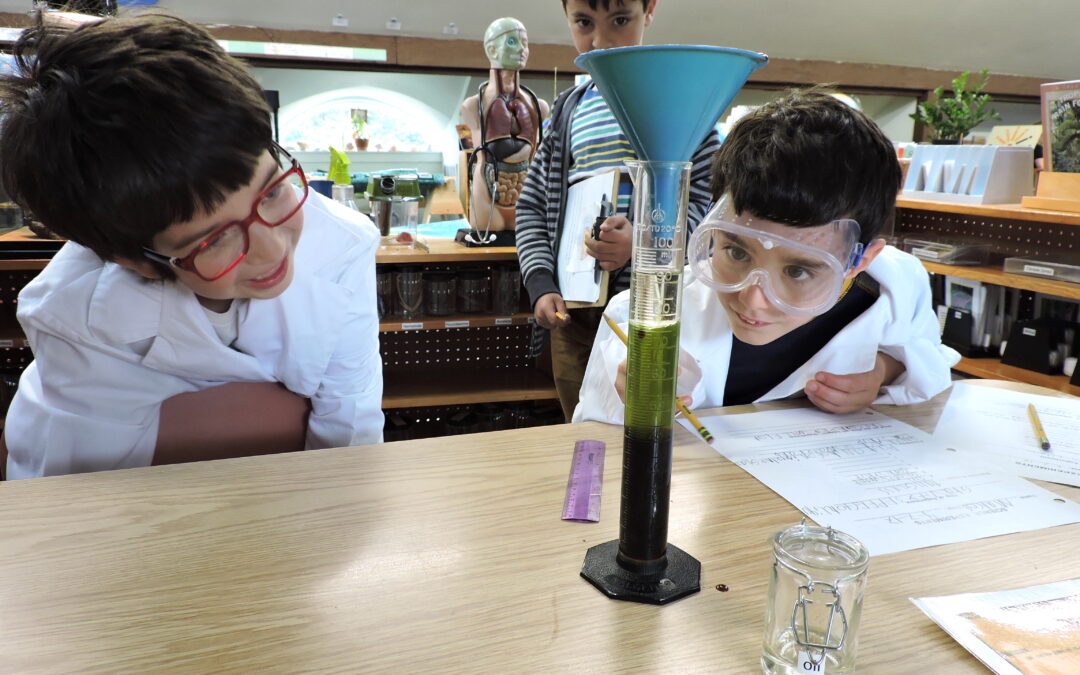
Above: Lower Elementary students demonstrate science experiments as part of the first Great Lesson, The Birth of the Universe.
From these explorations, the students can extend their studies further, engaging in deeper and more sophisticated studies of the fields of chemistry and physics. For example, the same experiment with the pieces of paper sprinkled on water may be repeated in order to study the surface tension of water. Later, students can return to this experiment to explore the mechanism of surface tension, leading to the idea of hydrogen bonding.
Above: Upper Elementary students practice building models of elements on the periodic table using the Bohr Board.
The Scientific Method
When they are first presented, the experiments provide a vehicle for introducing the scientific method, including identifying a research question, proposing a hypothesis, conducting an experiment to test the hypothesis, making observations, recording data, analyzing results, drawing conclusions, and presenting findings. Elementary students also explore the work of groundbreaking scientists across time periods and cultures, discovering along the way how many scientific discoveries came about from incorrect hypotheses, a wonderful opportunity to discuss “mistakes as teachers” and the importance of a growth mindset.
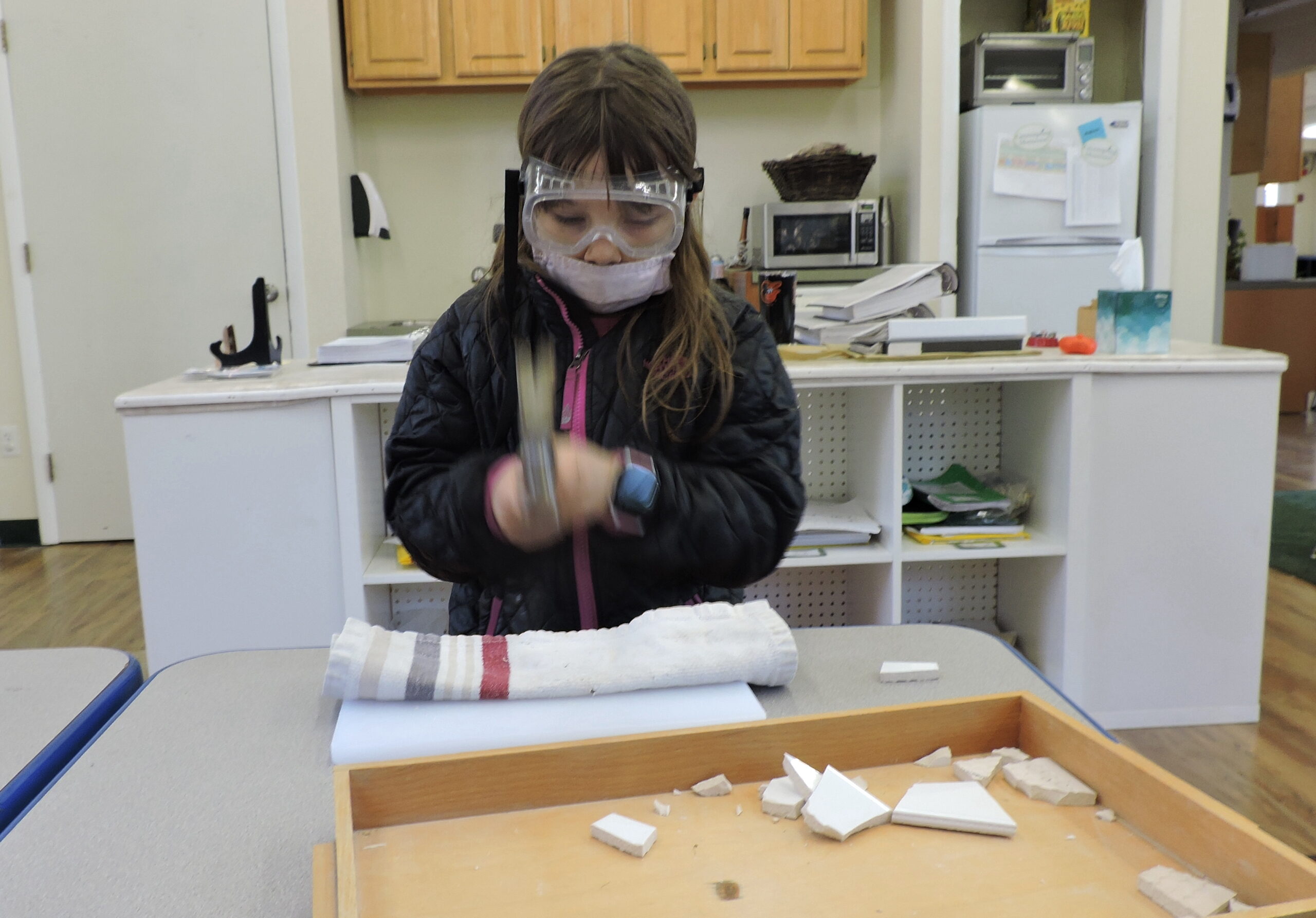
Above: A Lower Elementary student tests the properties of a solid.
The science experiments offered in the Montessori classroom bring Cosmic Education to life. They enable students to develop scientific skills and delve more deeply into scientific concepts. And most of all, they offer students opportunities to pursue their interests and develop concentration on the path towards their self-construction.
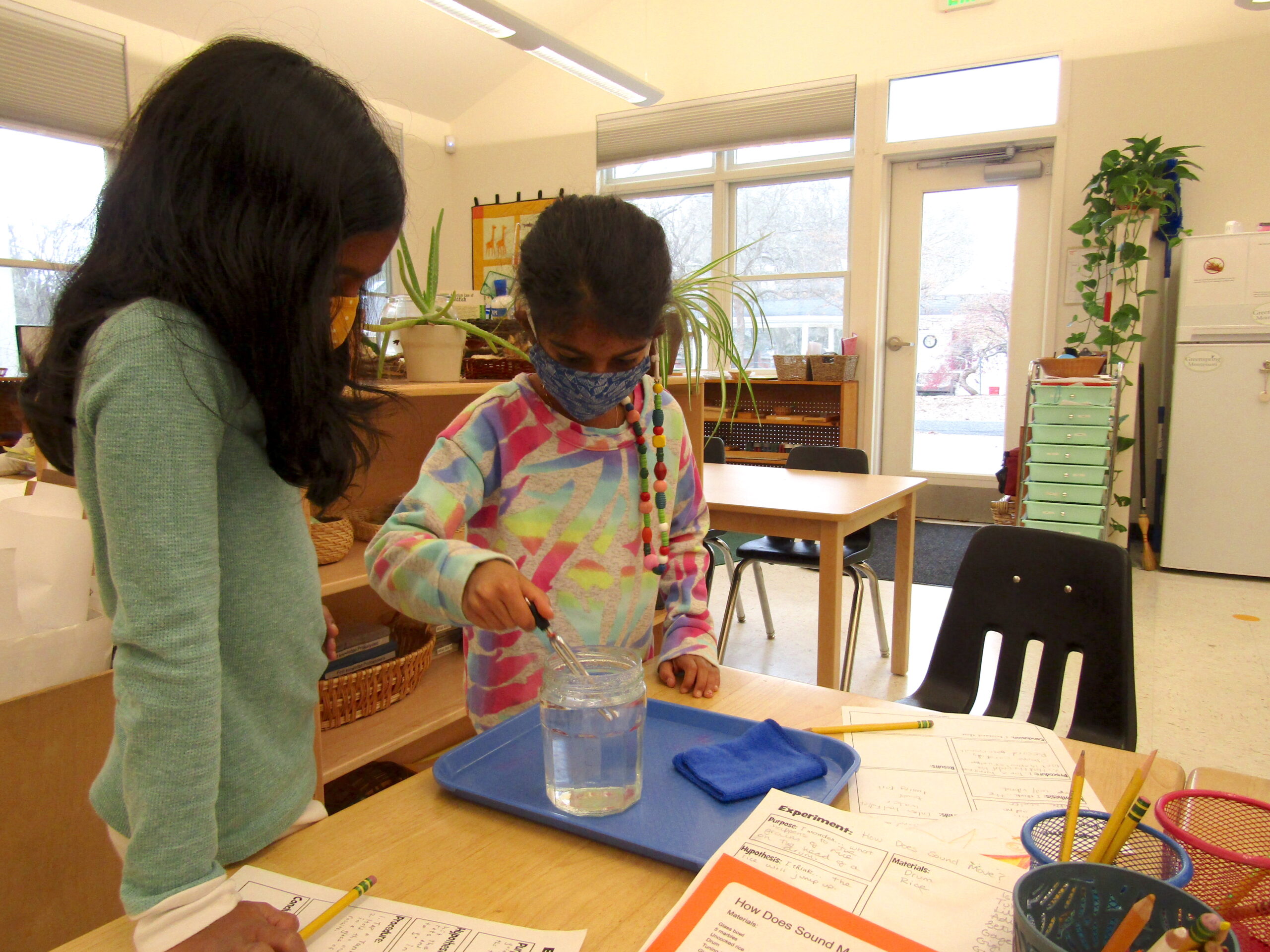
Above: Lower Elementary students explore the movement of sound waves through water.
Many of us do not have fond memories of our grammar studies. But Montessori grammar is different. Instead of being presented as a boring set of rules, Montessori students are first introduced to “The Story of Language,” which tells the story of the evolution of language from its earliest beginnings to modern day. And instead of waiting until middle school, grammar is introduced to children at the age when children are fascinated by words – between the ages of 5 and 7. Best of all, Montessori grammar is hands-on, colorful, and active!
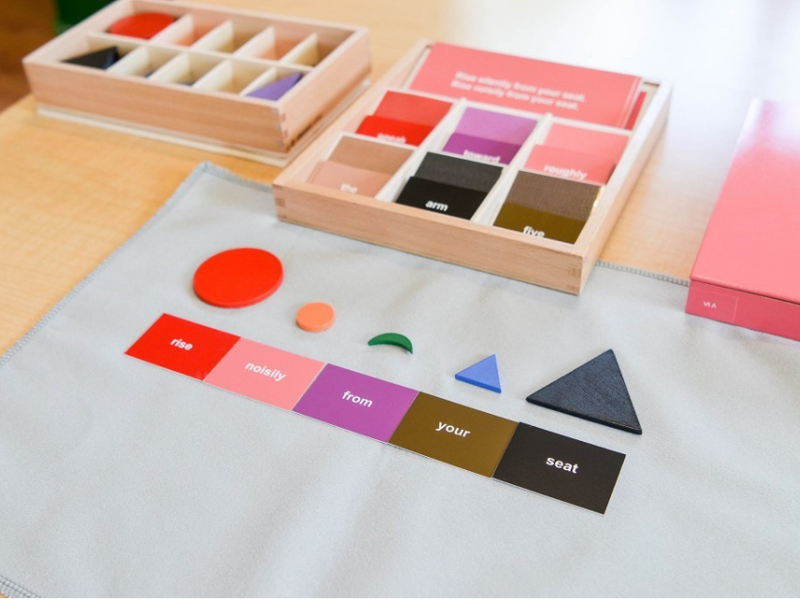
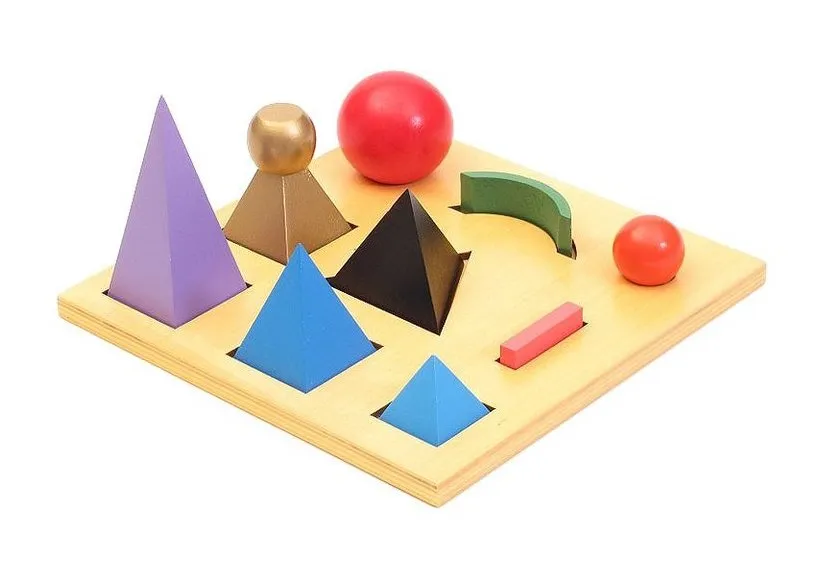
In Montessori grammar, each part of speech is represented by a shape and color with a special meaning. For example, the Noun is represented by a black pyramid. The pyramid, one of the first human structures, is solid and does not move. It is black to represent carbon, believed to be the first mineral discovered by humans. We can imagine nouns (naming words) being among the first words spoken by early humans. The Verb, on the other hand, is a red sphere, to represent the shape and energy of the sun which gives life. The verb gives life and movement to objects, just as the sun gives life to all living things.
Dr. Montessori designed a series of Grammar materials that bring this work to life.
“The study of grammar is to language what the study of anatomy is to science. By studying grammar, we become better writers and readers.”
– Lori Bourne, Montessori for Everyone
Key Experiences
Each part of speech is introduced in an interactive story or game that leaves a lasting impression. For example, when introducing the adjective, the guide will gather a group of children and ask the children to get something for her: a book. When the children return with various books, the guide responds, “No, not that one! Sorry, I was thinking of another.” The children continue fetching different books until they realize that they need more information. The guide then explains that when there are many of something, we must use more specific language. “I want the small book with the green spine.”
The Farm
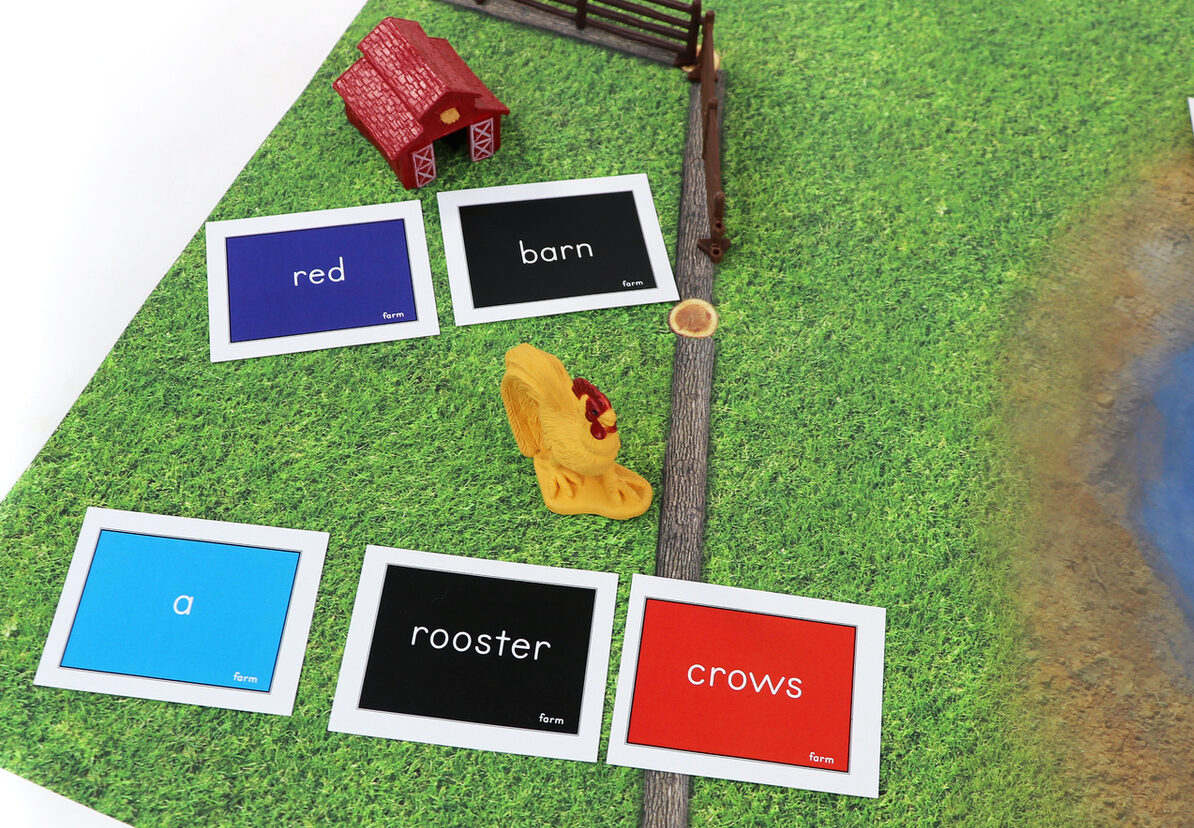
Early introductions to grammar can begin in the Children’s House classroom. One Children’s House material, called The Farm, usually consists of a wooden farm set, including a barn and miniature farm animals. It also comes with cards on which are written different nouns, verbs, adjectives, and other parts of speech.
A child who has been introduced to the function of the noun can practice this new skill by putting out labels naming the nouns they find on the farm, such as sheep, goat, farmer. A child who has had a lesson on the article and the adjective can practice differentiating between items or using more descriptive language, such as the brown cow vs. the black cowor a fluffy, white sheep. And a child who is working with the verb might add some action by placing out cards that say, The farmer plants tiny seeds.
This material allows the child to practice reading isolated words in context, to understand the function of words, and is preparation for reading and creative writing. After children have been introduced to grammar on a sensorial level, they are ready to understand it in a deeper way.
Grammar Commands & Grammar Boxes
In the Lower Elementary classroom, students begin working with the Grammar Boxes. There are eight grammar boxes, each isolating a new part of speech to be studied. After the key experience introducing a new part of speech, the children first work with the grammar commands. These involve student acting out the new part of speech. “Throw the eraser out the door” is a favorite!
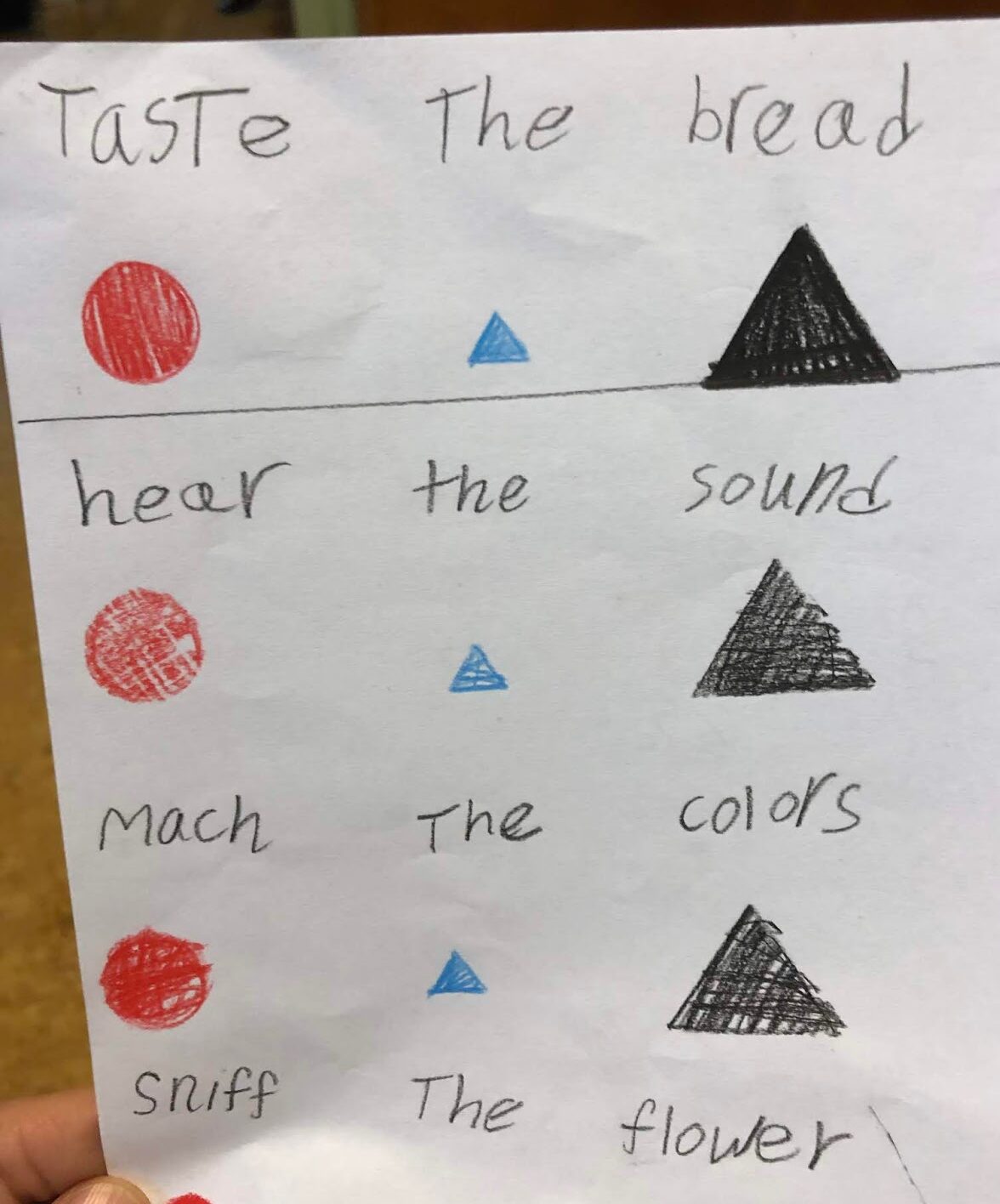
Then the child will work with the grammar box corresponding to the new part of speech. The child will select a sentence and then form this sentence by placing the word cards out in the correct order. They can experiment with syntax by exchanging the order of words in a phrase or sentence. Next the child will select the correct grammar symbols and place them above each word.
Extensions & Classification
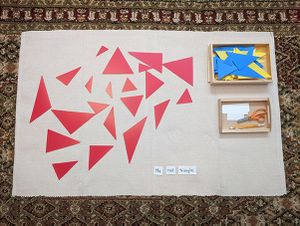
There are many grammar extension activities. One large, exciting one is the Detective Triangle Game. The child spreads out all the triangles on a rug or table. Then must sort them by type, matching the labels to each triangle – for example, “the small, red, isosceles, right triangle.” The child can clearly see how using adjectives gives us the information we need to distinguish one thing from another.
Students dive deeper into their grammar studies through classification. As they continue with the adjective, for example, children will have the experience of classifying the degree of adjectives, such as soft, softer, softest. Next, they will use the Classification Chart for Adjectives to practice identifying adjectives as either proper (e.g., Canadian), descriptive (e.g., rectangular), numerical (e.g., third), or pronominal (e.g., that), and make even finer distinctions within those categories.
Symbolizing
When students have worked through all the grammar boxes, they are ready to apply their knowledge to “real world” writing. Students can select a sentence from their own writing to symbolize or select a passage from a favorite piece of literature or poem. Students can also select a grammar pattern and create their own sentences that fit the pattern. These more abstract applications of grammar allow students to demonstrate a deep knowledge and understanding of the function of words.
In Montessori, grammar is tactile, active, and fun! It goes hand and hand with Montessori sentence analysis, which both provide a foundation for agile writers with a solid understanding of the function of words.
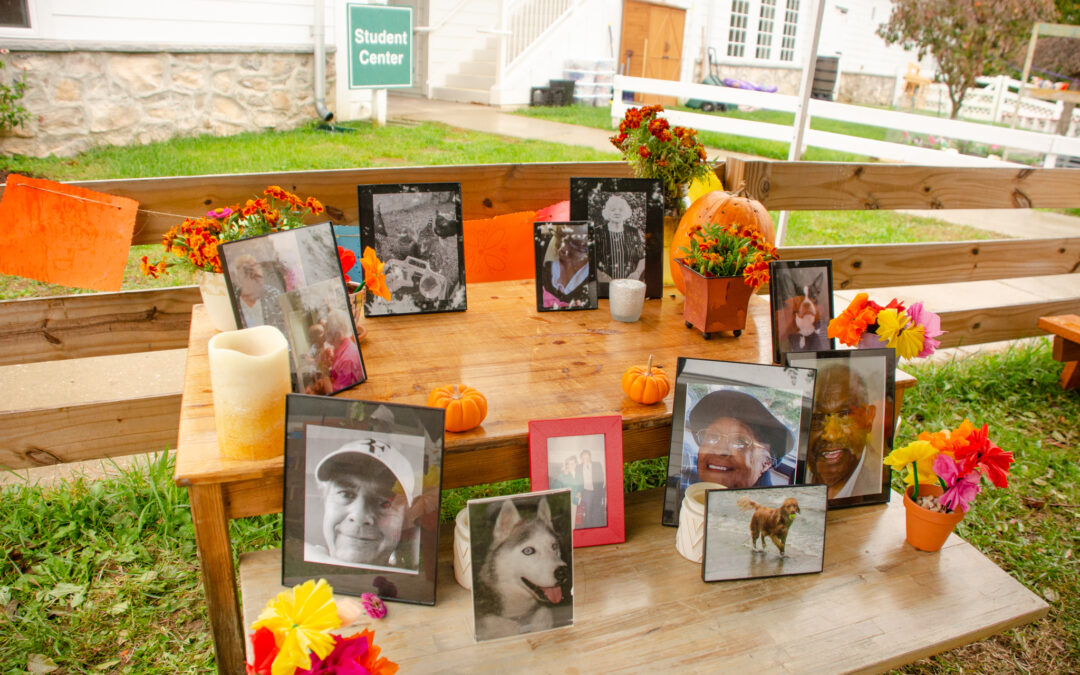
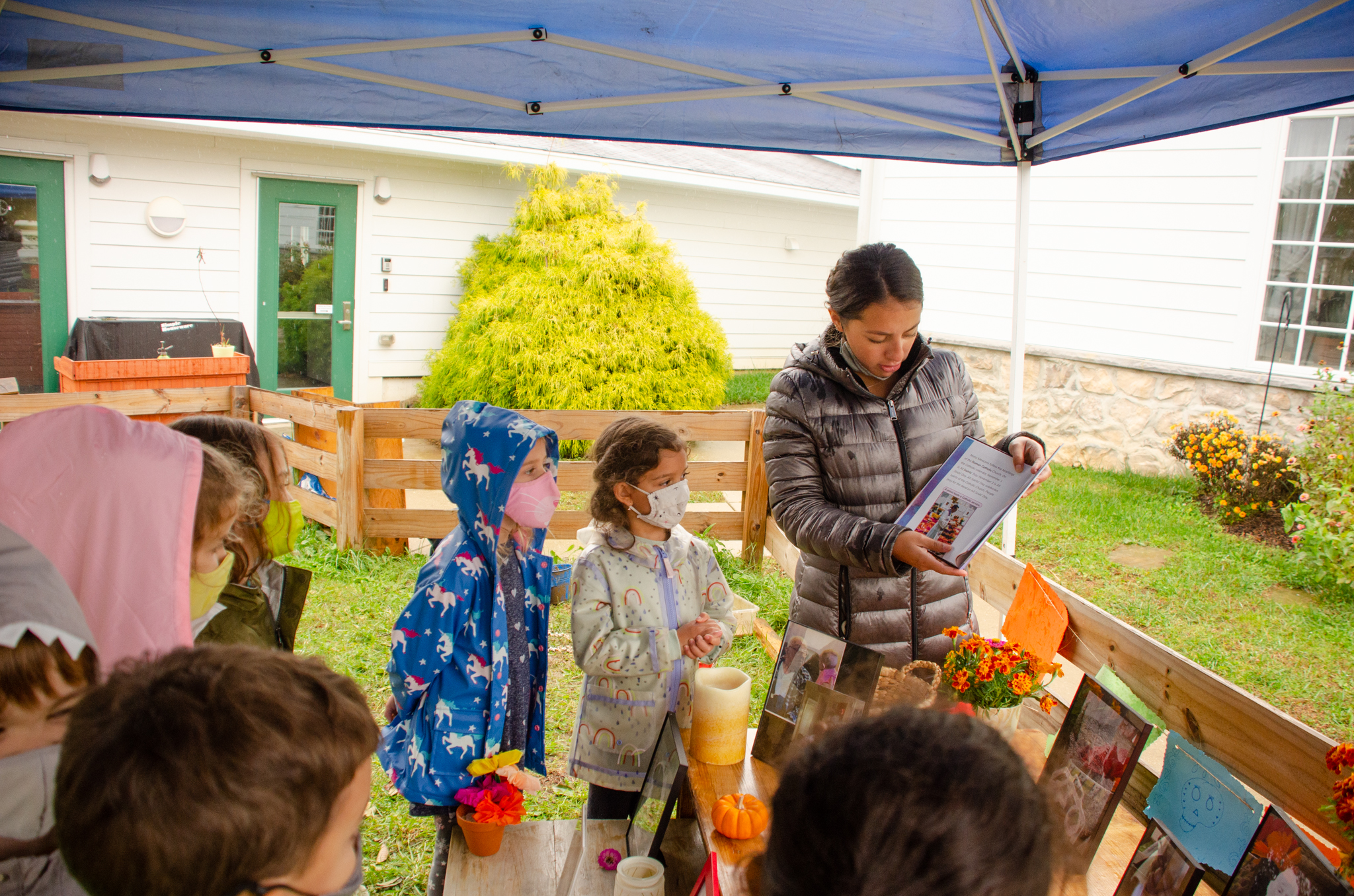
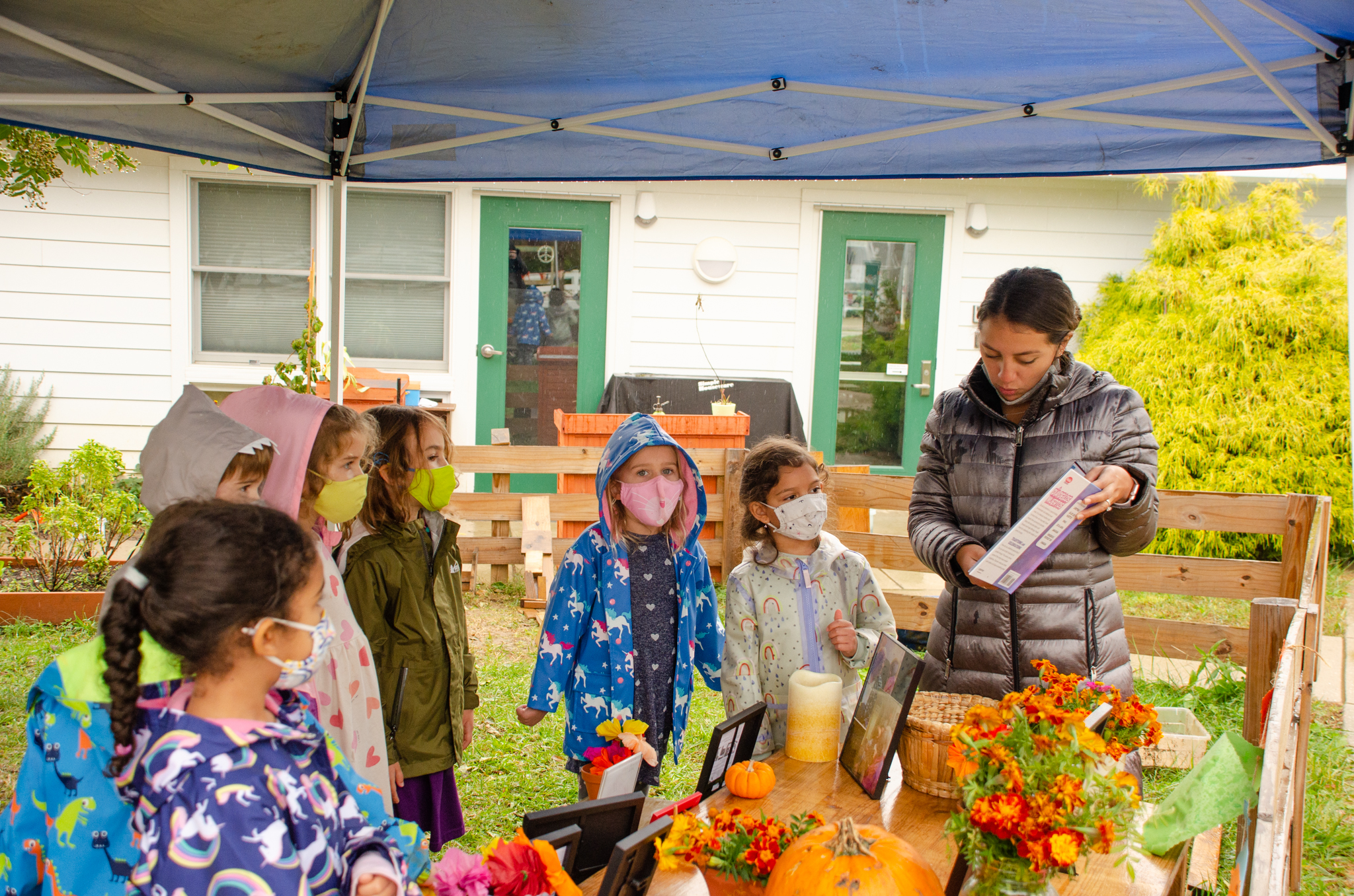
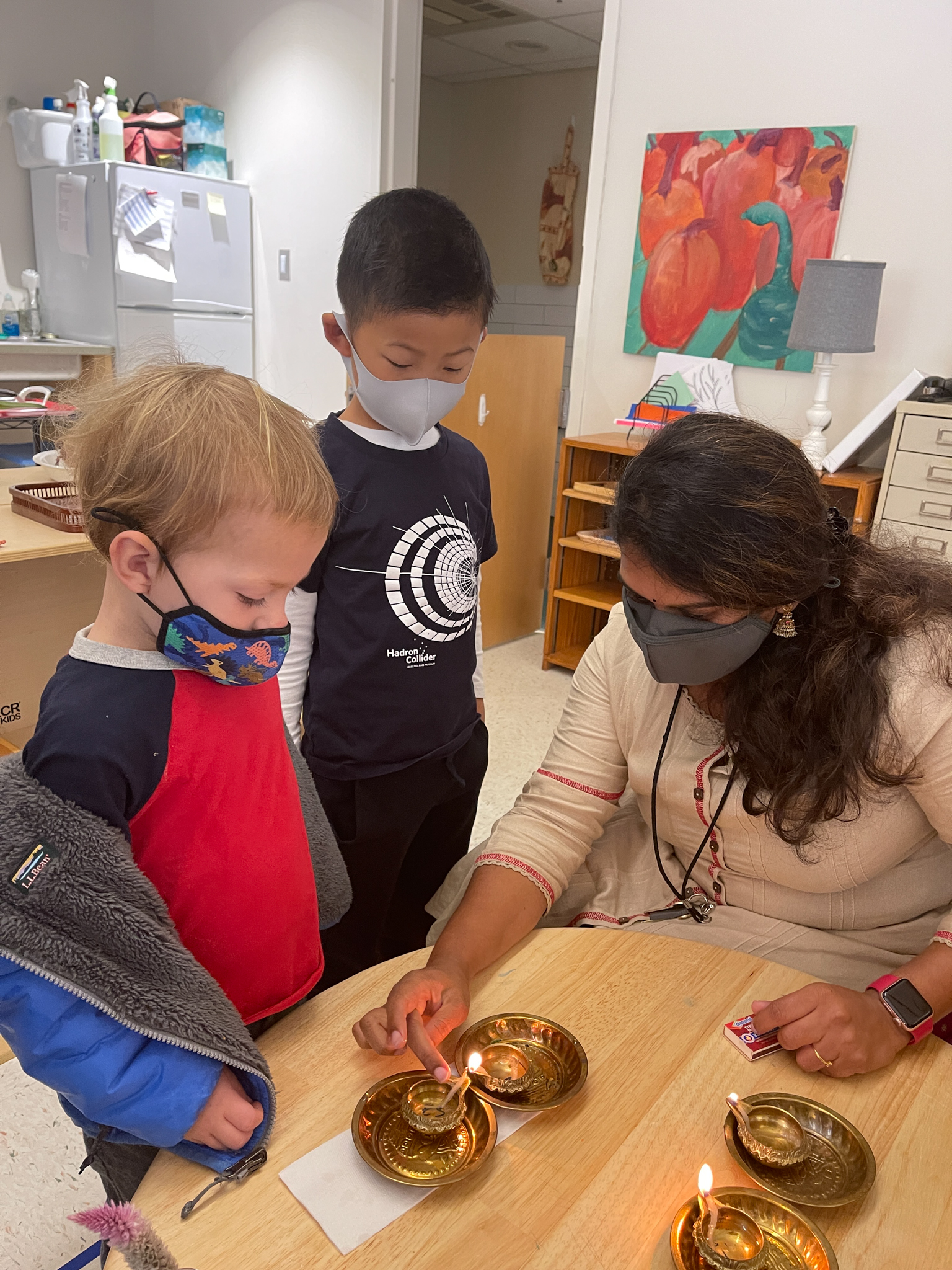
This year we as a School community are talking through ways to bring cultural celebrations and holidays into the classroom in an authentic and meaningful way. Celebrations and traditions are an important part of personal identity, and as a School, we find this to be a joyous way to learn about people in our community and around the world.
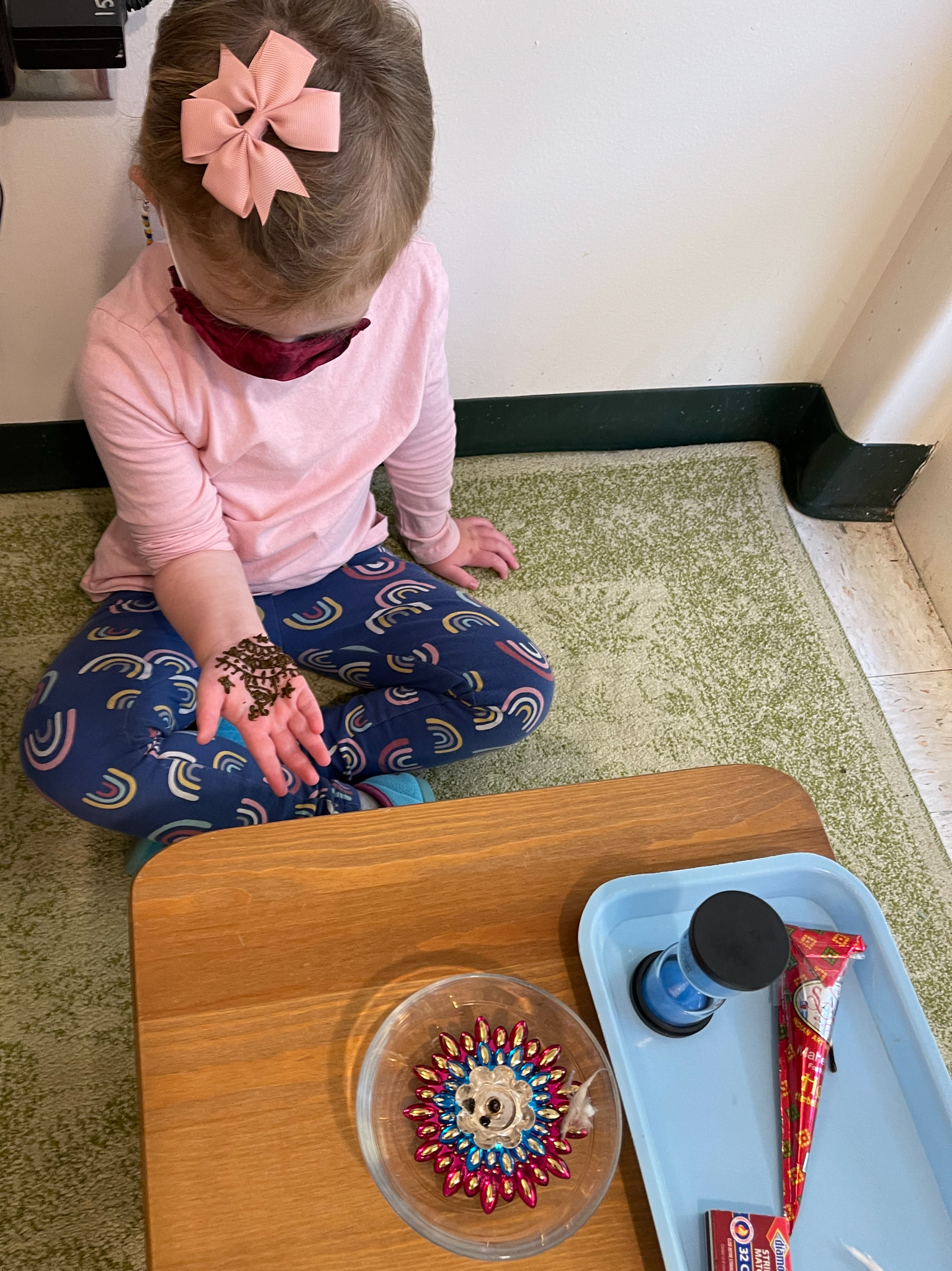
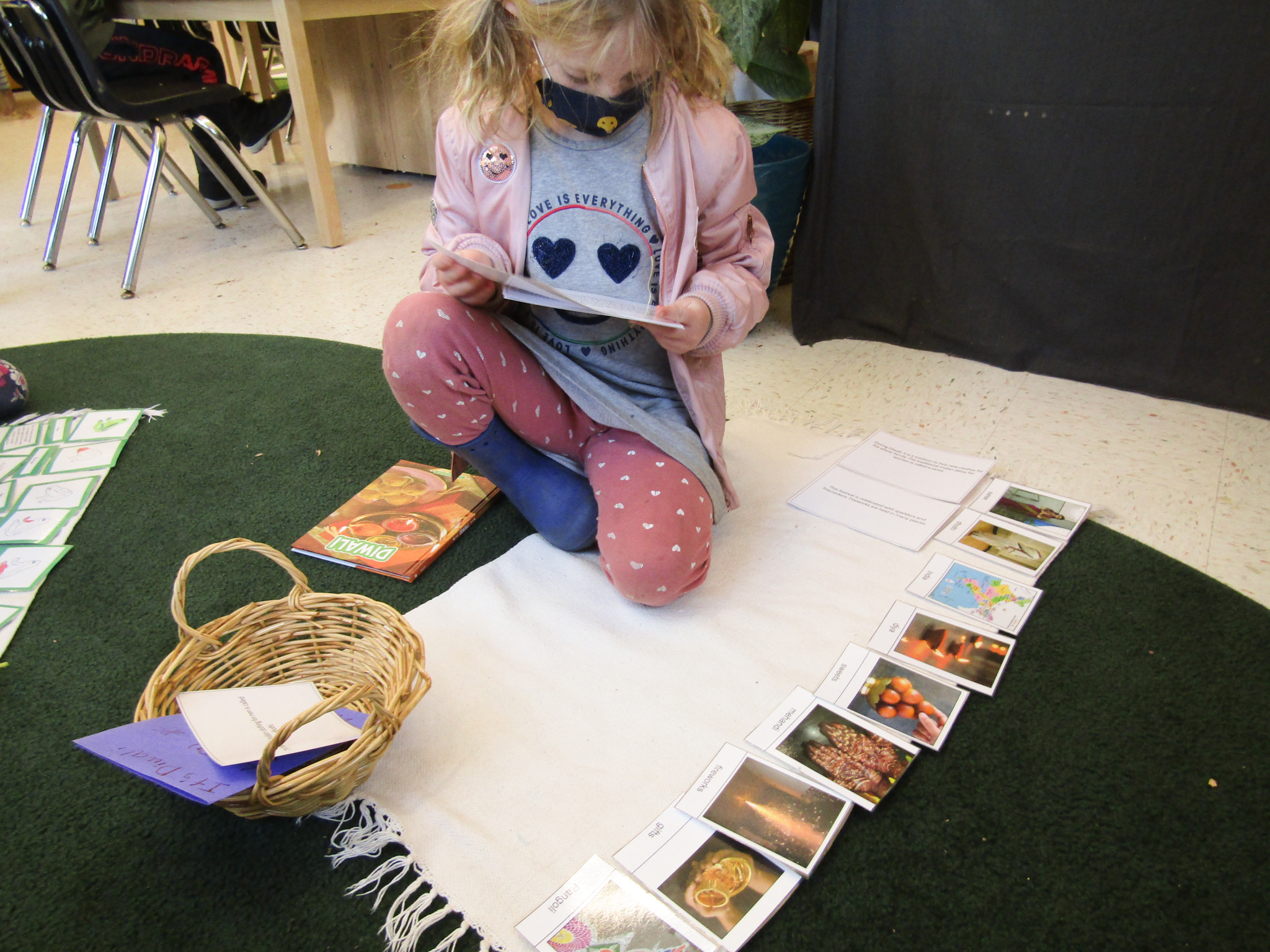
We began this work by asking our faculty and staff about the holidays they celebrate. Many were eager to share their traditions from all over the world. We’ve learned together about Navratri, Sukkot, Indigenous Peoples’ Day, Hanal Pixan and Dia de los Muertos, Diwali, and Hanukkah.
This work has also woven its way into our classrooms through true stories, cultural items and artifacts, nomenclature cards, children’s books, and more. It has been beautiful to see the ways our staff and children light up when they feel seen and acknowledged.
We will continue this work throughout the year with holidays including Kwanzaa, Dr. Martin Luther King, Jr. Day, Lunar New Year, Eid al-Fitr, Pride Month, and more. If you would like to share a celebration or tradition from your family with our classrooms, please reach out to us at community@greenspringmontessori.org.
Our DEIB work is guided by the four goals outlined in Anti-Bias Education:
Goal 1: Identity
Teachers will nurture each child’s construction of knowledgeable, confident, individual personal and social identities.
Children will demonstrate self-awareness, confidence, family pride, and positive social identities.
Goal 2: Diversity
Teachers will promote each child’s comfortable, empathetic interaction with people from diverse backgrounds.
Children will express comfort and joy with human diversity, use accurate language for human differences, and form deep, caring connections across all dimensions of human diversity.
Goal 3: Justice
Teachers will foster each child’s capacity to critically identify bias and will nurture each child’s empathy for the hurt bias causes.
Children will increasingly recognize unfairness (injustice), have language to describe unfairness, and understand that unfairness hurts.
Goal 4: Activism
Teachers will cultivate each child’s ability and confidence to stand up for oneself and for others in the face of bias.
Children will demonstrate a sense of empowerment and the skills to act, with others or alone, against prejudice and/or discriminatory actions.
“The child has a different relation to his environment from ours… the child absorbs it. The things he sees are not just remembered; they form part of his soul.” – Dr. Maria Montessori
Dr. Montessori saw the outdoor environment as a natural extension of the classroom. Working outside allows children to explore with all their senses, fosters scientific inquiry, and inspires creativity. Over the past several years, the Greenspring community has come together to create truly beautiful outdoor spaces on campus for this growth to take place. They have become a deeply beloved extension to the classroom. Now more than ever, these environments are an essential part of our Montessori approach to education. Below we have outlined what has been happening this year in our Outdoor Environments at each level.
Toddlers
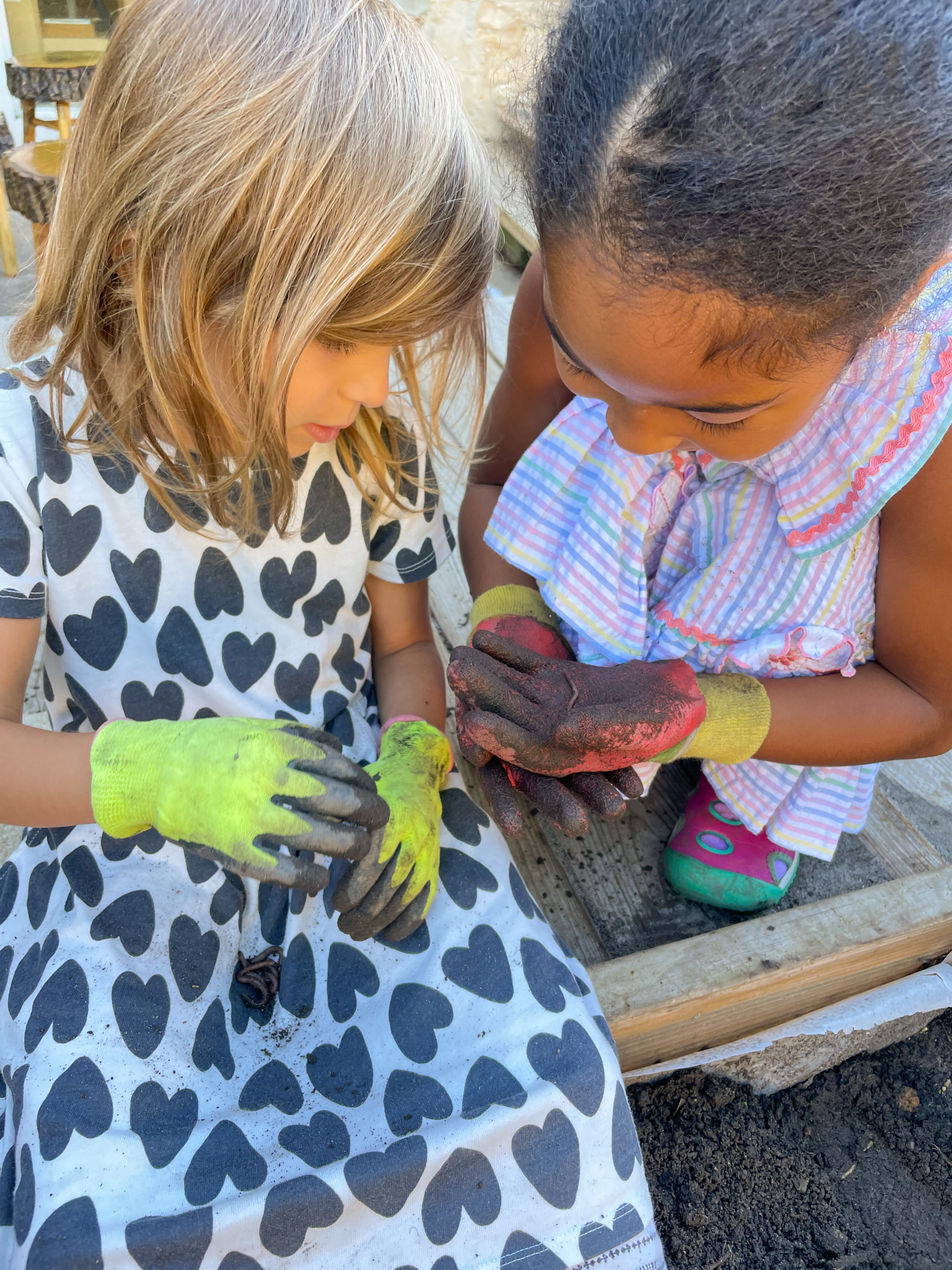
Toddlers are still in the developmental phase that Dr. Montessori said could be characterized by an “absorbent mind,” in which they soak up information through their senses. So we offer rich opportunities in the outdoor environment to see, touch, hear, smell, and taste. Depending on the day, you will see toddlers watering plants, sweeping the sidewalk, washing windows, filling the bird feeder, digging in sand, sorting pinecones and acorns, pouring water through funnels, and more. The toddlers enjoy tasting the herbs and vegetables that grow in their garden!
Children’s House
Students in our Children’s House classrooms also tend to the garden – planting, watering, weeding, and harvesting. Children also enjoy additional practical life, sensorial, art, and science activities, such as hammering nails into a tree stump, pumpkin scrubbing, creating geometric shapes from twigs, making collages from seeds, cutting zinnias for flower arranging, and experimenting with scientific concepts such as “sink and float.” On rainy days you might see students in the kitchen making apple sauce or baking pumpkin bread.
A Note on “Bad” Weather
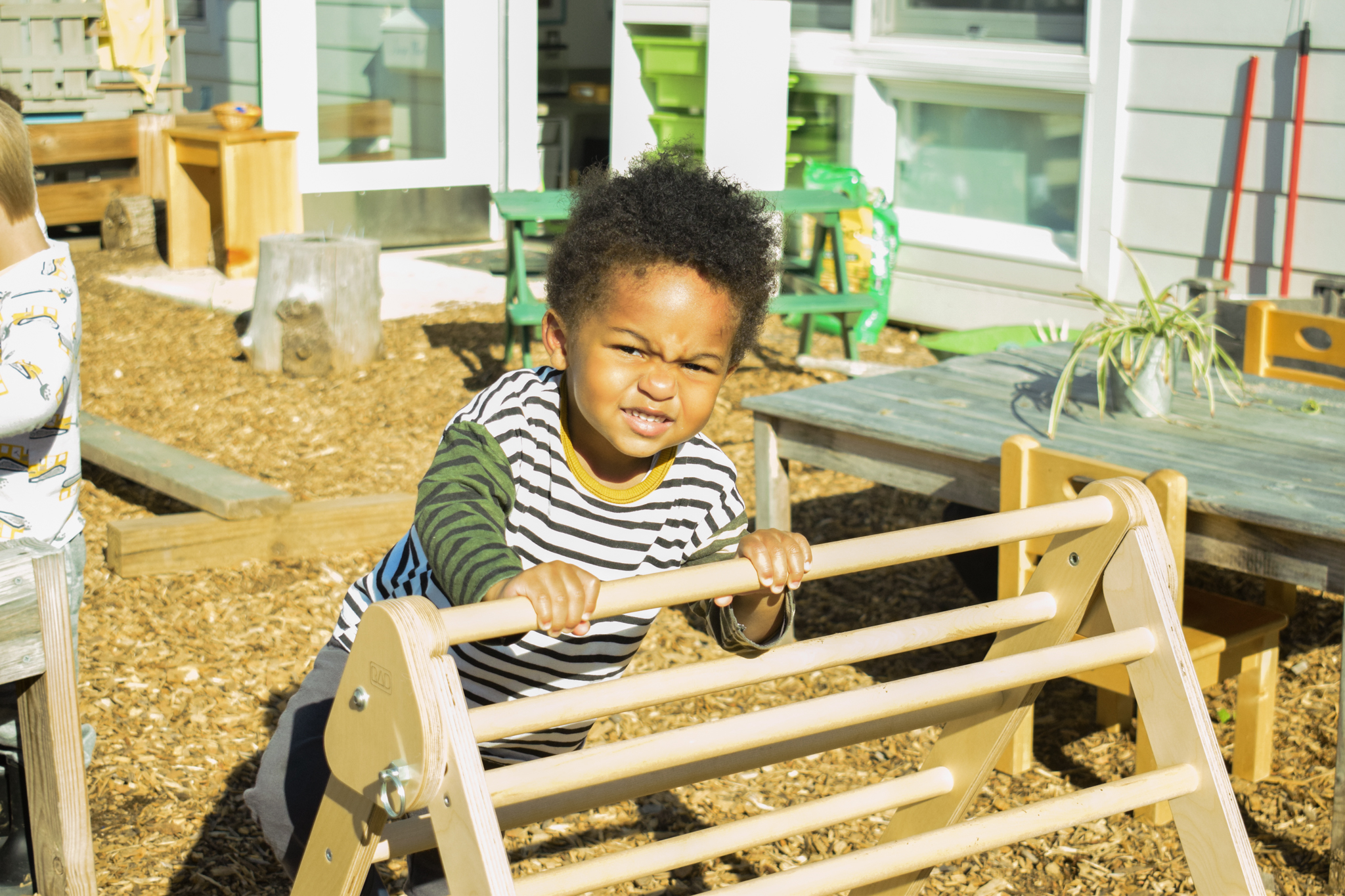
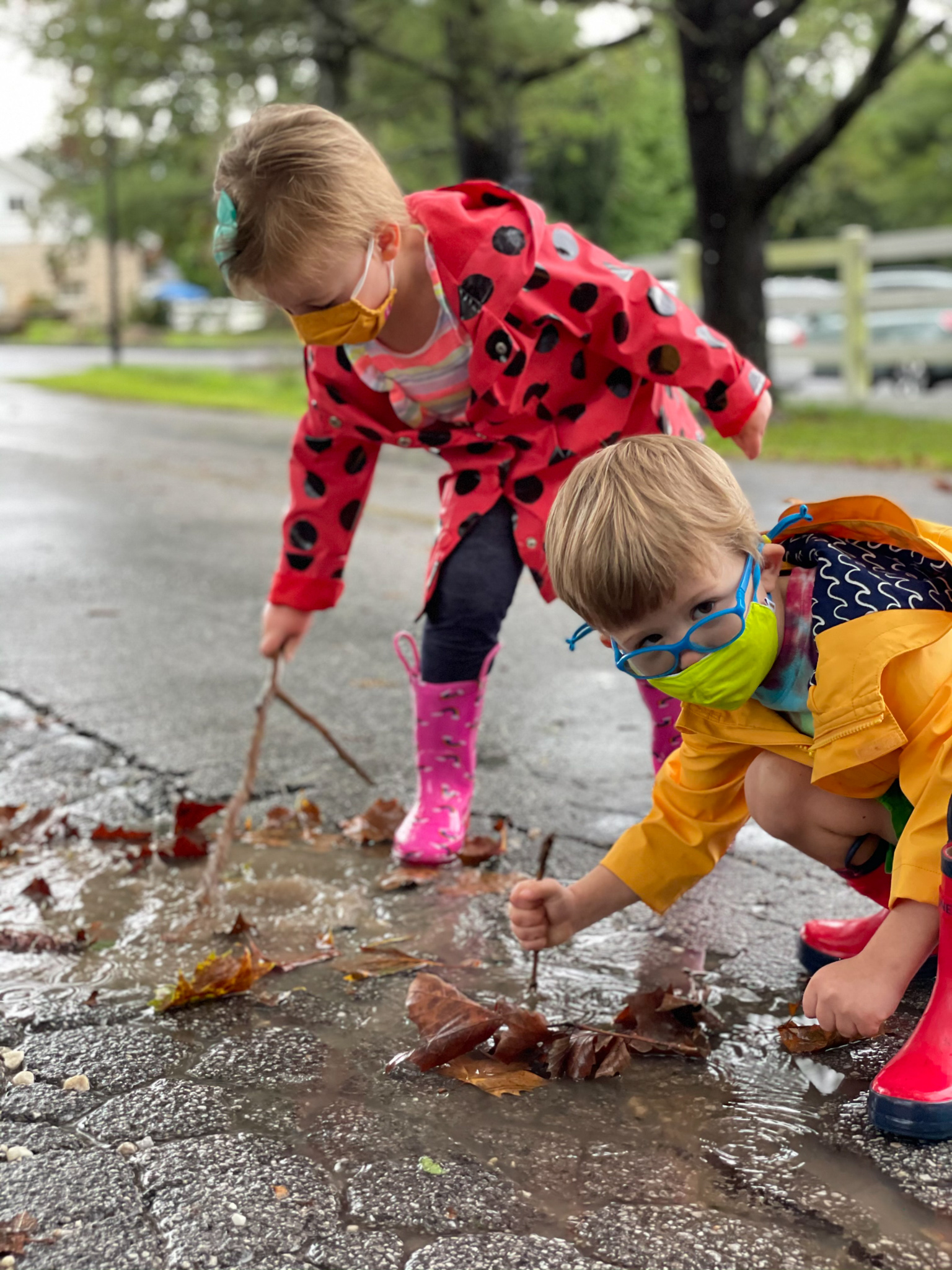
Our Outdoor Environments are open year-round, meaning that rain and snow simply become part of the prepared environment! Children have rain boots, rain jackets, and outdoor gear for all seasons so that the weather becomes another sensory experience. Guides and Assistants in Montessori classrooms are also particularly mindful not to instill learned feelings toward particular weather, keeping language neutral and descriptive.
Elementary
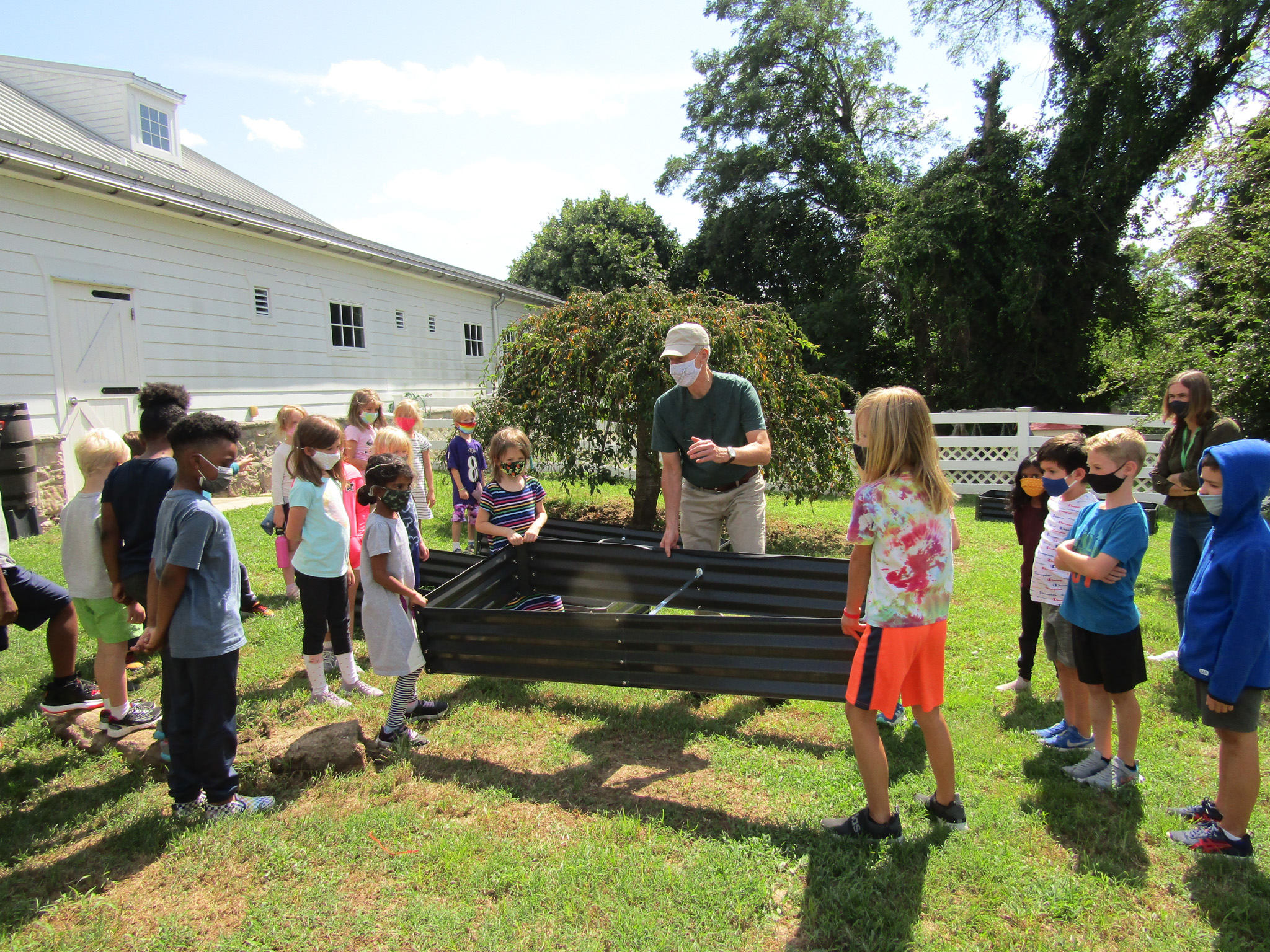
The Elementary outdoor environment includes all this and also complements the science lessons happening in the classroom. Students learn to identify the bird calls they hear in nature, identify different animal tracks, and identify the parts of a plant by dissecting a specimen from the garden. Students conduct science experiments in their garden to learn about plant respiration, soil composition, and photosynthesis. The values of environmentalism, service, and scientific exploration are nurtured through these experiences.
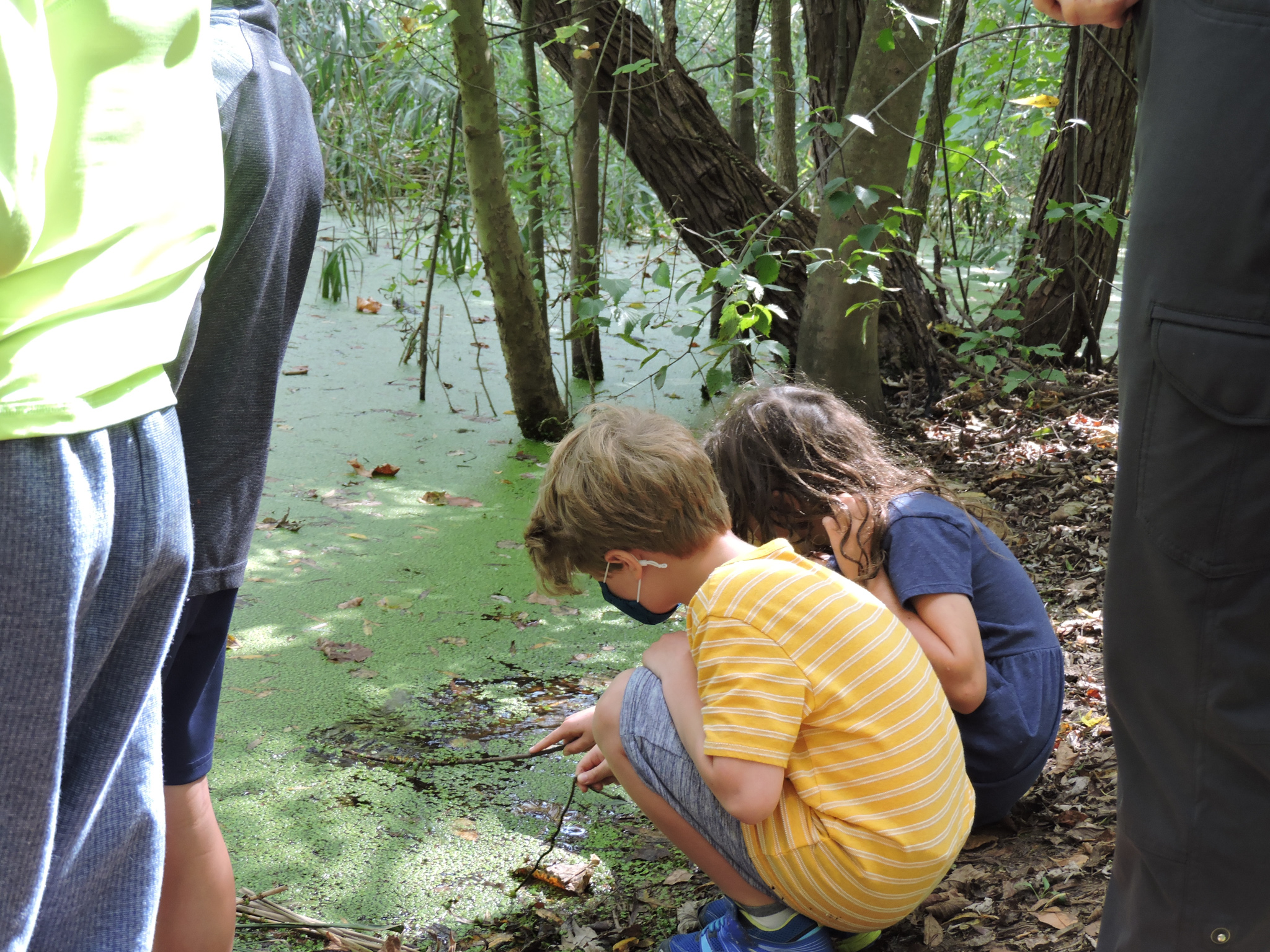
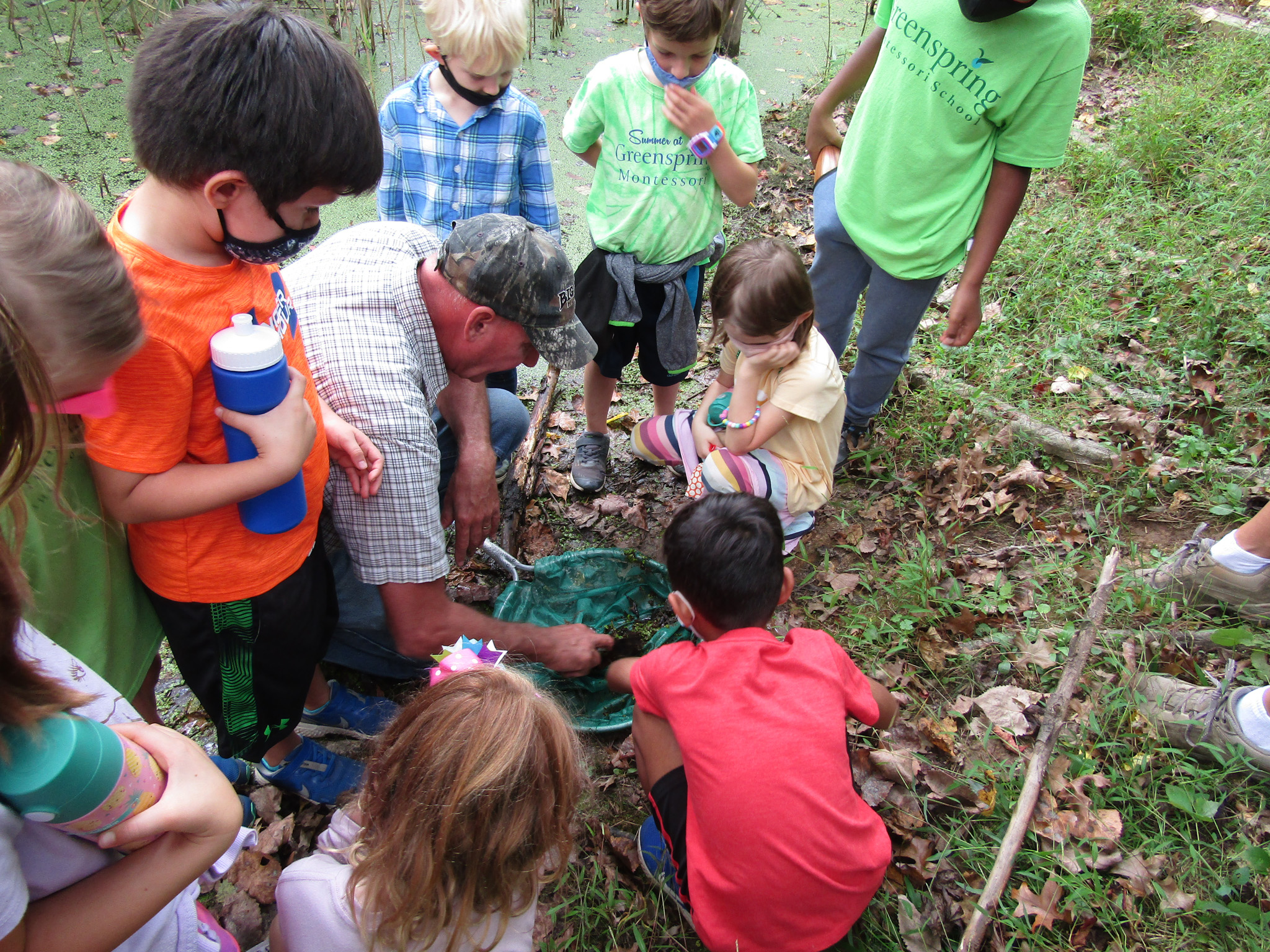
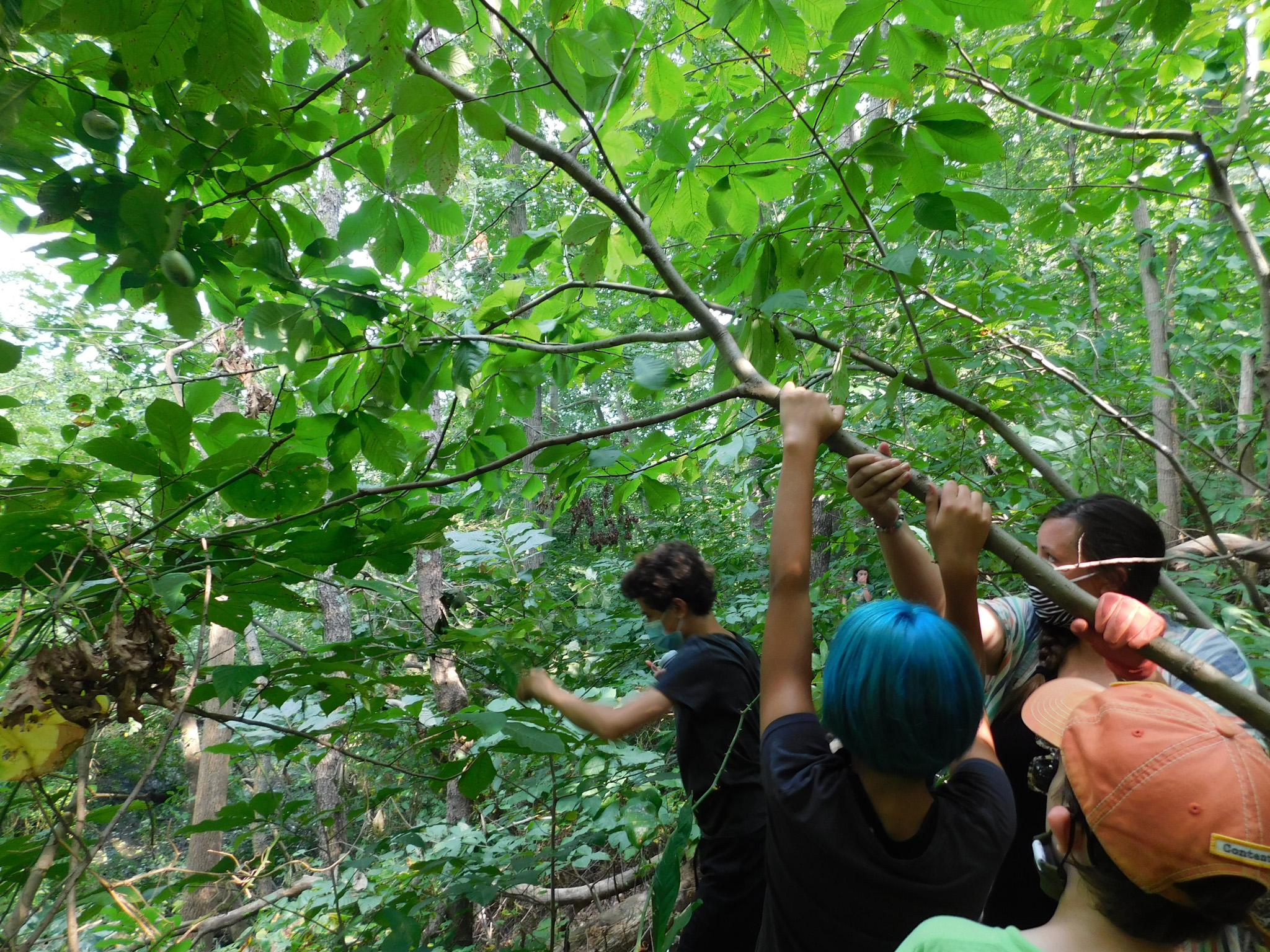
Children are also ready for more exploration into the greater community. Field trips and Going-Outs offer valuable opportunities for children to experience the natural world in a new way. Recently, Lower Elementary students went on a field trip to Oregon Ridge Nature Center, sparking new research of local wildlife.
Adolescents
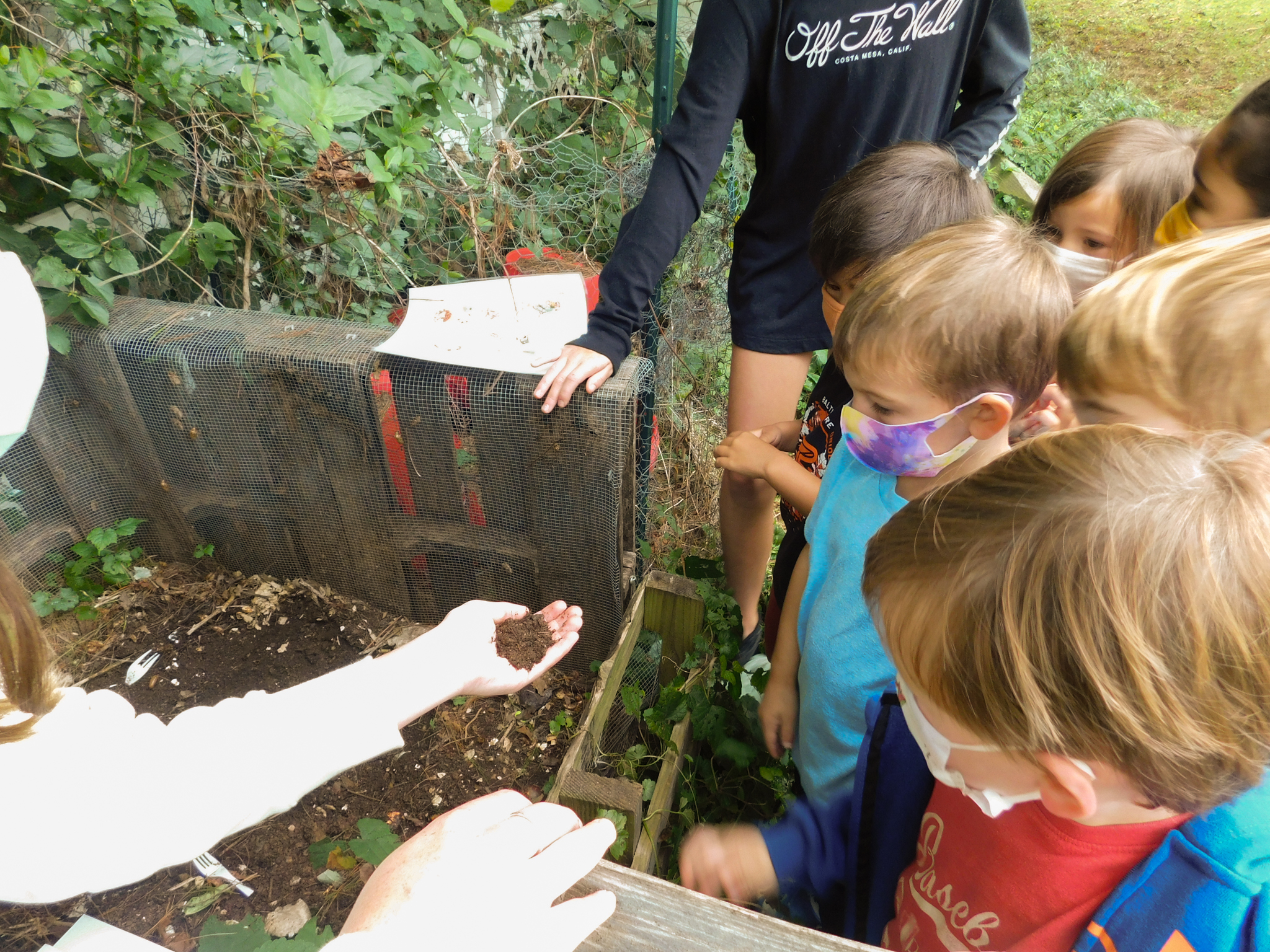
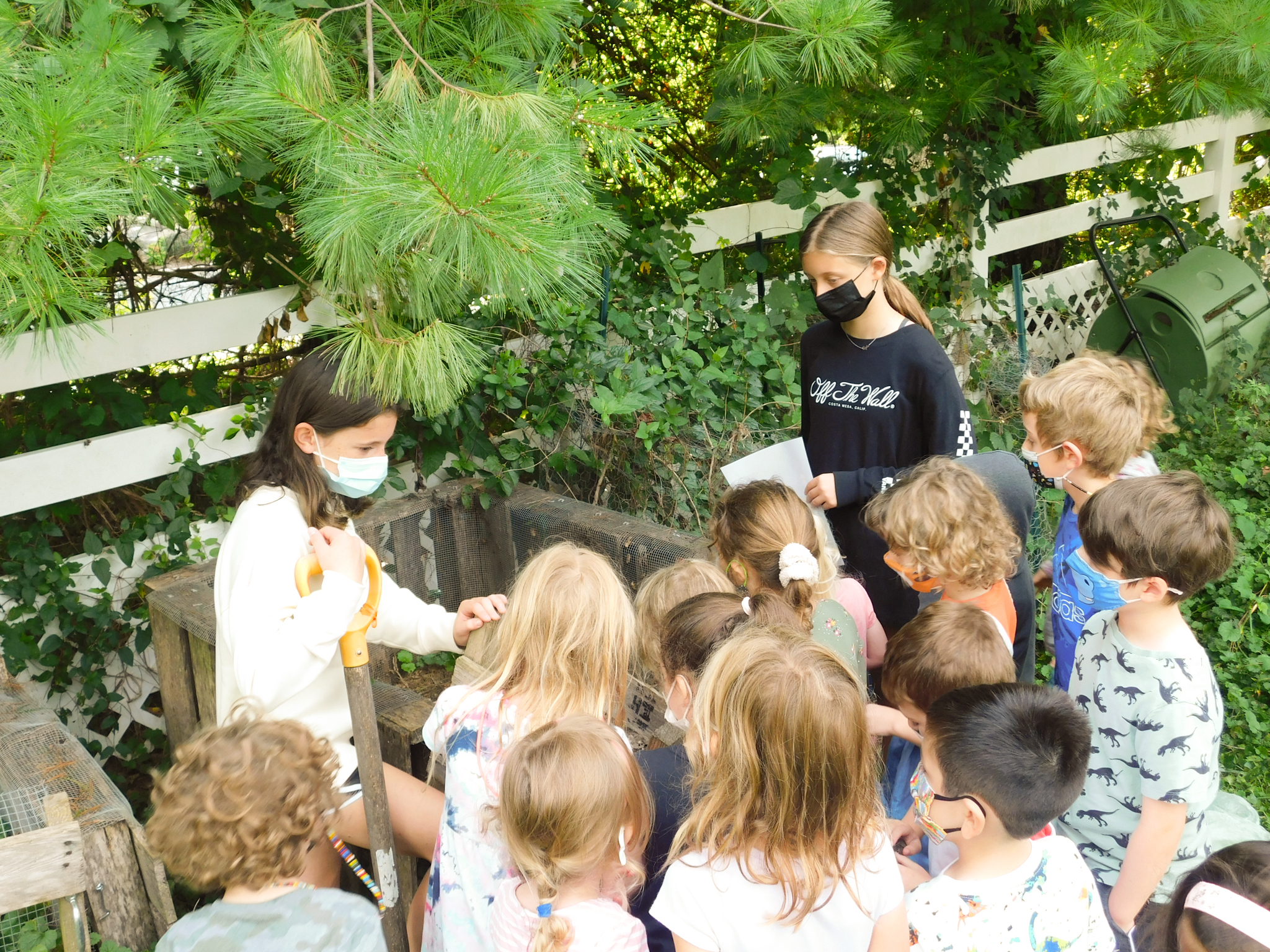
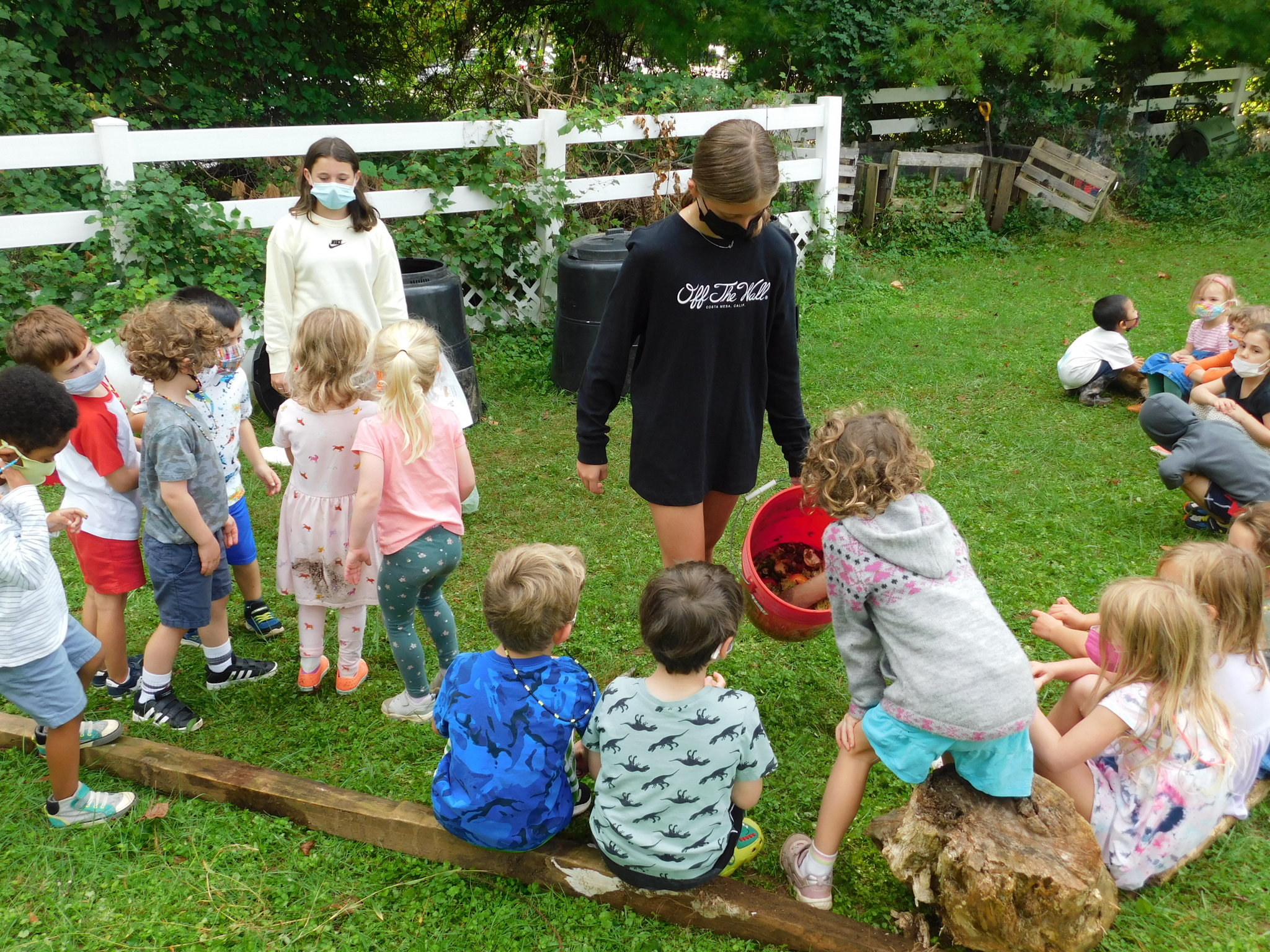
Dr. Montessori envisioned her Adolescent program as a working farm. So in addition to their classroom lessons and studies, our Adolescents honor Dr. Montessori’s vision by tending to a piece of our property called “The Land” – planting, tending to, and harvesting their gardens. The Adolescents also run a campus-wide composting program and give classes to younger students about how composting works and why it’s important. Over the years, we have seen our Adolescents caring for chickens, building a greenhouse, running a CSA, clearing invasive plants, and more. You can learn more about our Adolescents and their work on The Land here.
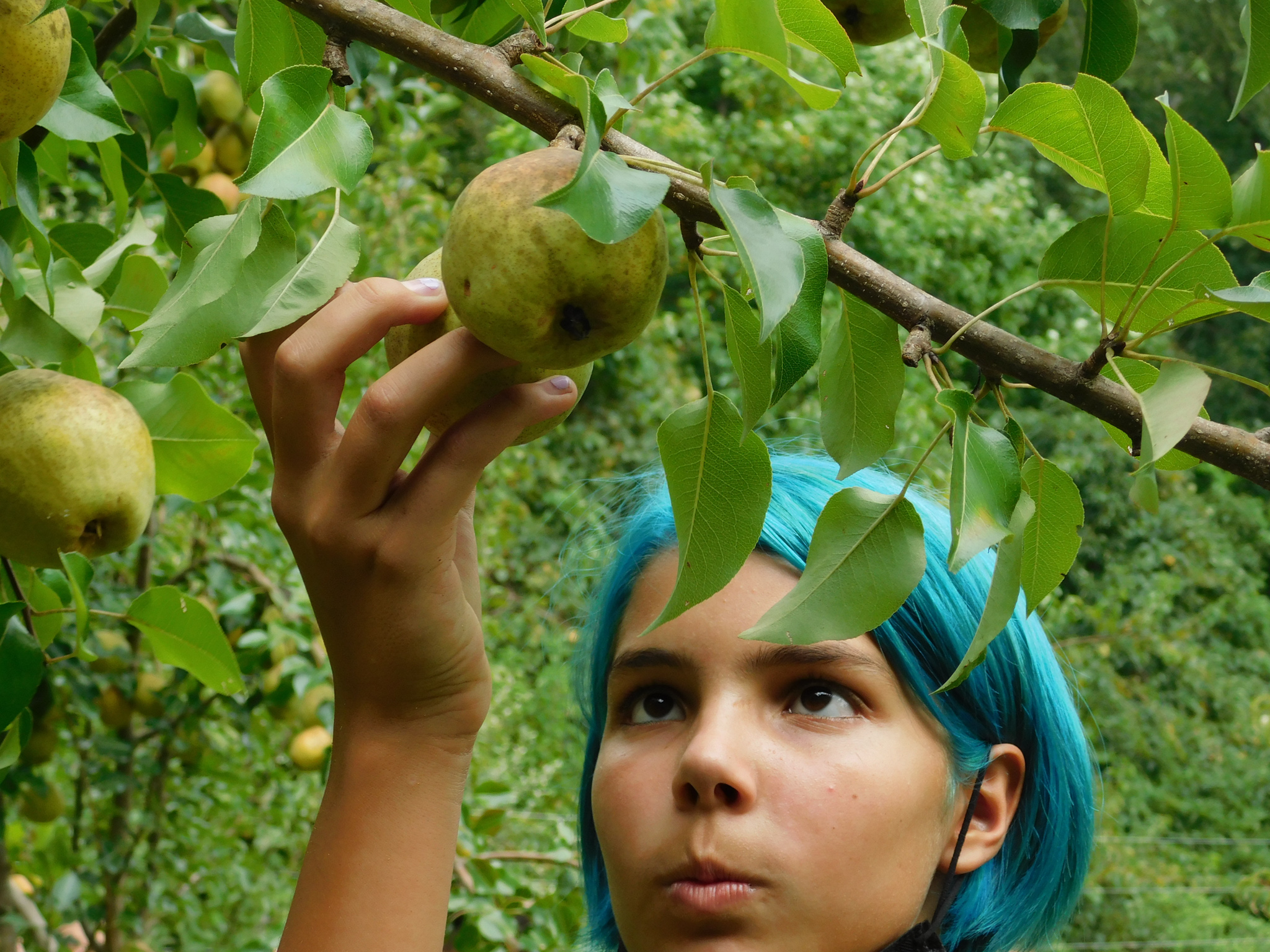
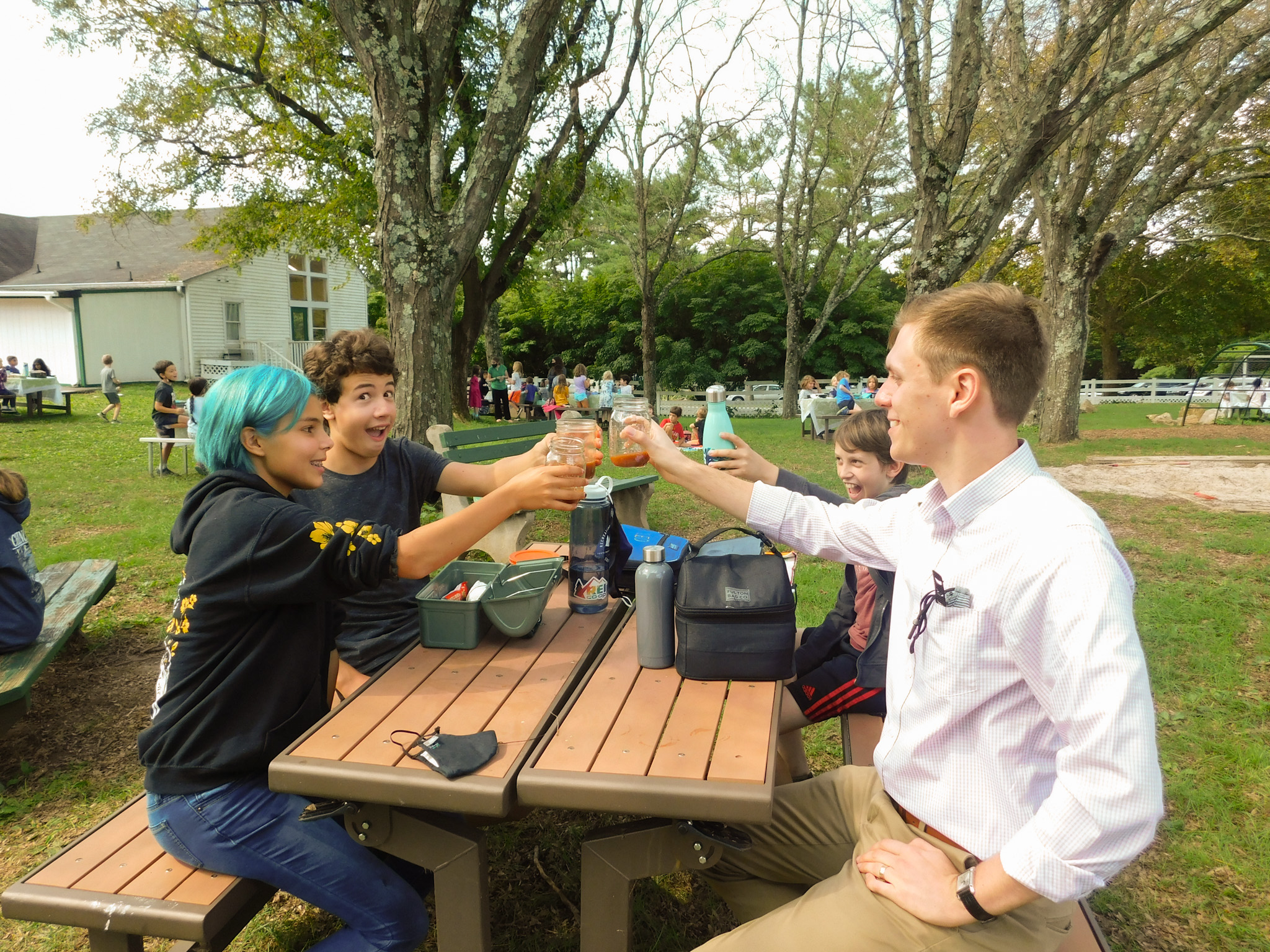
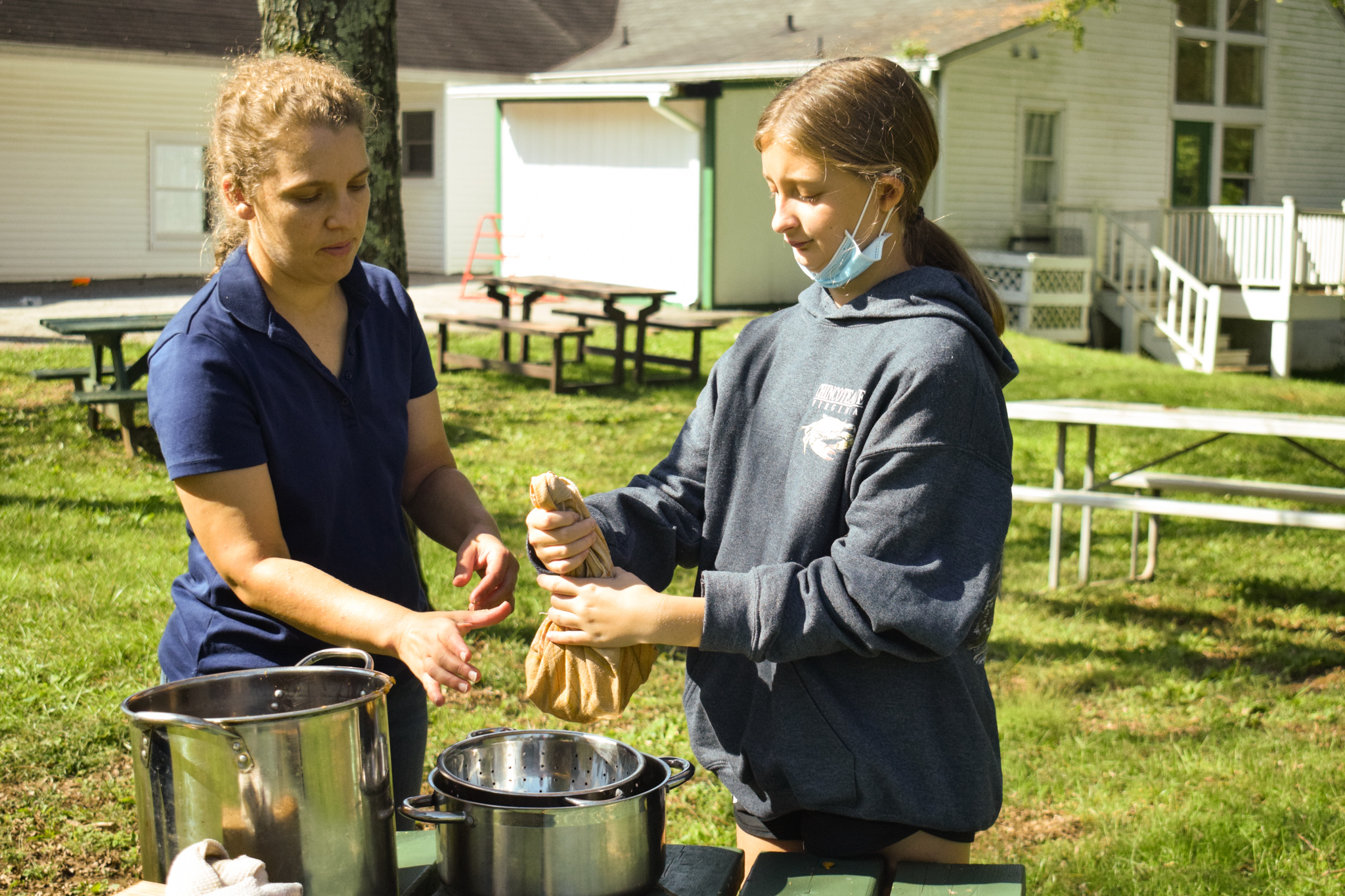
In September, Adolescents also went on a week-long Odyssey trip to Echo Hill Outdoor School on the eastern shore. This was an immersive community-building experience where the students looked closely at how our food is grown, a great introduction to their first science unit on the biochemistry of food. After returning to campus, students also created apple cider from local apples. They will be studying the process of fermentation and making vinegar.
The more children are outside, the stronger their connection with nature will become. As Dr. Montessori said, “When children come into contact with nature, they reveal their true strength.”
“The hand is the pathway to the brain.” – Dr. Maria Montessori
It may be hard for some parents to believe, but all children have the ability to really enjoy learning math. In Montessori classrooms, mathematics are introduced to children at 3 to 6 years old, enabling the child to form positive associations with numbers to be carried on throughout life. Scientific research supports that the key to developing this positive relationship early is to provide the child with hands-on experiences [source – https://www.hand2mind.com/resources/why-teach-math-with-manipulatives]. Dr. Maria Montessori demonstrated that if a child has access to concrete mathematical materials in their early years, they can come to their own understanding of the concept much faster than if introduced in an abstract form at a later age.
Think back to your own experience as a young student. Most of us learned math in school by memorizing the steps required to solve a problem. For example, when learning to “borrow” in subtraction, we learned to slash through one number and write another number above it, add a tiny number one in front of the number to its right, and then continue with the problem. Many of us learned how to do this without ever really understanding why we were doing it or what it meant. Yet for Montessori students, those mathematical symbols represent very concrete ideas that they have physically manipulated; they fully understand what they mean, how they work, and why.
At a certain point in development, usually around the age of 4, the child enters the sensitive period for numbers, and the child’s mathematical nature awakens. She graduates from purely sensory explorations to interest in specific measuring and counting. Once begun, the child progresses through the math materials sequentially. Montessori materials are scientifically designed to meet the child where they are, allowing for independent exploration. The materials are made to be self-correcting, allowing the child to learn as they go.
So, what are some of the essential Montessori materials for learning math? Here are a few of our favorites:
The Pink Tower
One of the first materials a child encounters in the Children’s House classroom at 3 years old is the Pink Tower. While this material may look like basic building blocks of conventional preschools, it is designed very specifically to introduce the child to the quantity of ten as well as basic experiences of order, sequence, coordination, and precision.
The smallest cube measures 1 centimeter cubed, and the largest is 10 centimeter cubed. In this way, the Pink Tower introduces the concept of base ten, which is also present in other sensorial materials such as the Brown Stair. When beginning the activity, the child carefully takes each cube, one by one, to their work mat. As the child builds the tower from biggest to smallest, they are able to work independently to determine the right order. If they place a cube out of order, they will quickly discover the tower doesn’t look quite right. This control of error is present in all Montessori materials and allows for the child’s self-discovery.
The Red Rods
The Red Rods are comprised of 10 wooden rods differing in length. The smallest rod is 10 centimeters long, and the largest rod is 100 centimeters, with each rod increasing by increments of 10 centimeters in length. The shape, weight, and color of this material is alluring to the child, drawing them in to learn more.
The Red Rods are introduced to children at around 3 years of age after they have become familiar with the initial sensorial materials in the classroom, including the Pink Tower, Brown Stairs, and Knobbed Cylinders.Moving the Red Rods allows the child to perceive the differences in length and weight. The child also expands upon their basic language of mathematics by discussing length, size, and order.
The Number Rods
Children are naturally drawn to the Number Rods after mastering the Red Rods. They are the same dimensions as the Red Rods, however, each 10 centimeters alternates between red and blue, showing the visual representation of each unit. The child is introduced to the number symbols and they learn to associate quantity and symbol.
With this work, the child is not simply memorizing 1-10 to recite back. They are learning that each quantity is a separate entity, known as one to one correspondence.
The Golden Beads
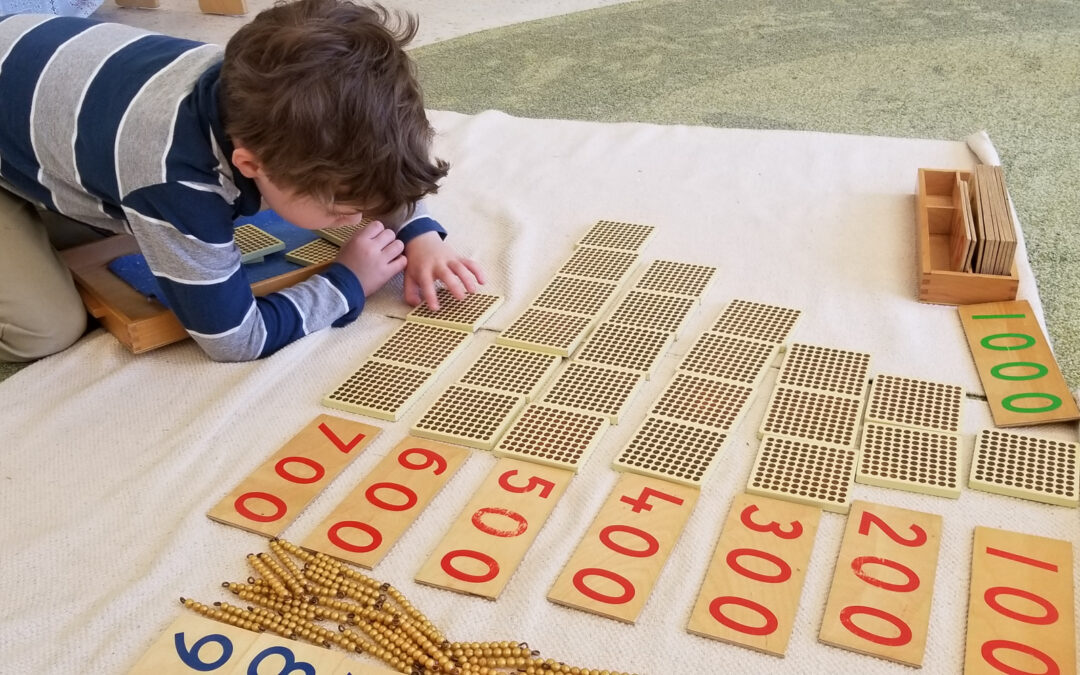
The presentation of The Golden Beads gives a visual and a very concrete experience of the decimal system and place value. With this material, the child learns the terminology of units, then tens, hundreds, and thousands. The child can literally feel the heft of the thousand square and see visually the relationship between the unit bead and the thousand cube.
The use of tangible materials allows the child to tap into mathematical concepts much earlier than in a conventional education setting. By physically exchanging (ie, carrying ten ten bars to the shelf and trading it for a hundred square), students as young as four quickly learn that ten tens are equal to one hundred. Montessori students discover that the “square” of a number (10 squared = 100) is literally the shape of a square and the “cube” of a number (10 cubed = 1,000) is literally a cube.
The Bank Game
Once a child is able to build a visual representation of a number, the Golden Beads are used to add, subtract, multiply, and divide numbers into the thousands. When students start using this material, one subtraction problem may take 20 minutes! But because it’s physical, social, and interactive, it doesn’t feel like work.
Children are given real-life examples of math problems, such as dividing a sum between their peers. This is a way to introduce them to solving increasingly complex problems while still maintaining a playful approach. A five year old may learn to divide 6,540 three ways to share with their peers.
The Stamp Game
When a student is ready to progress to a new challenge, either in Children’s House or during Lower Elementary, they are introduced to the Stamp Game. Instead of holding a large cube that actually shows the relative size of one thousand as they did with the Golden Beads, they use a representational material. These small square stamps are all the same size, but are differentiated only by their color and number label represent units, tens, hundreds, and thousands. Like the Golden Beads, the Stamp Game material is used to teach all four operations, with children adding, subtracting, multiplying, and dividing into the thousands. The Stamp Game is still hands-on, but slightly more abstract that the Golden Beads.
Since the elementary age child now craves variety more than repetition, other hands-on materials, such as the Bead Frame, Checkerboard, and Racks and Tubes are also introduced for computing all four operations.
The Trinomial Cube
The Binomial and Trinomial Cubes are three-dimensional puzzles that are introduced to children at age 3 or 4. The Trinomial Cube is made up of 27 color-coded blocks which fit together in a very specific way. Assembling the puzzle uses the child’s fine motor skills and requires the ability to observe the different characteristics of each block. Like other Montessori materials, the Cube is self-correcting. When it is assembled properly, it forms a cube that fits back into the wooden box. While the primary aim of the Trinomial Cube is to build a puzzle, children only later discover that it is a concrete representation of the algebraic formula, (a+b+c)³. You may recognize this formula from your own school days, but very few of us had the opportunity to interact with it in such a hands-on material. Through this process of discovery, children are able to grasp a deeper understanding of mathematical concepts.
Moving into Mathematical Abstraction
When the student is ready, they are shown how to record their work with the materials on paper. The paper is used to record the process completed with the concrete materials.
Having started with the Golden Beads, moved on to the Stamp Game, and then the Bead Frame, Checkerboard, and Racks and Tubes, at some point during this progression through the materials, the child experiences an “Aha!” moment and is able to “see” the answer without using the materials. The student understands the process so well, she can see the materials and can compute the answer in her mind. This moment is always thrilling to observe. The student feels pride and a sense of accomplishment that can not be matched by any lecture or quiz.
These are just a few of the many Montessori materials that are utilized daily in the classroom. By laying the foundation in the 3-6 year classrooms, Montessori students are able to understand mathematical concepts earlier and utilize problem-solving skills with more complicated math in high school and beyond.
To learn more about Mathematics materials in the Montessori classroom, take a look at this webinar from Greenspring Children’s House Guides, Lydia Farmer and Emily Shattuck – The Magic of Children’s House.
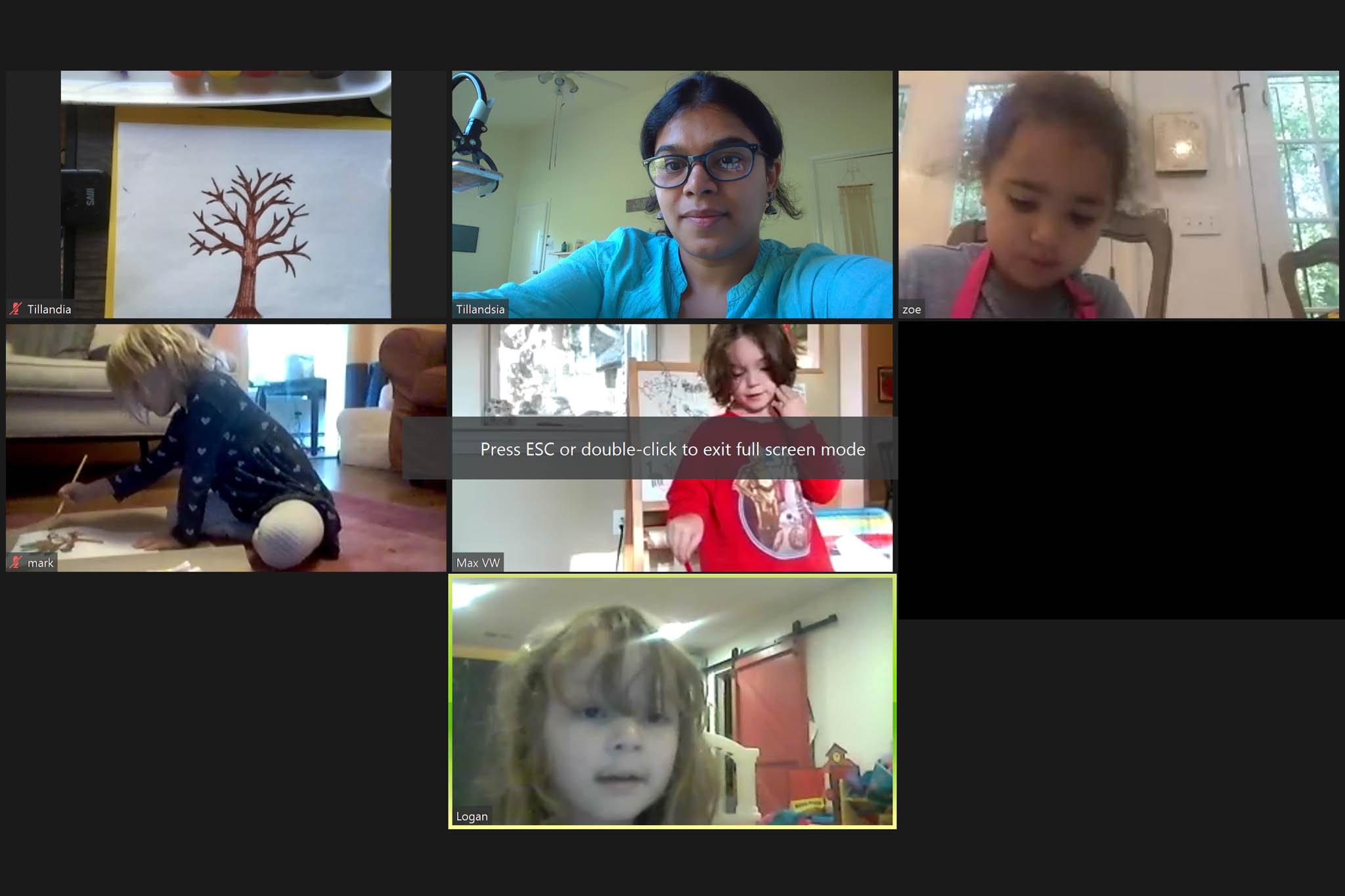
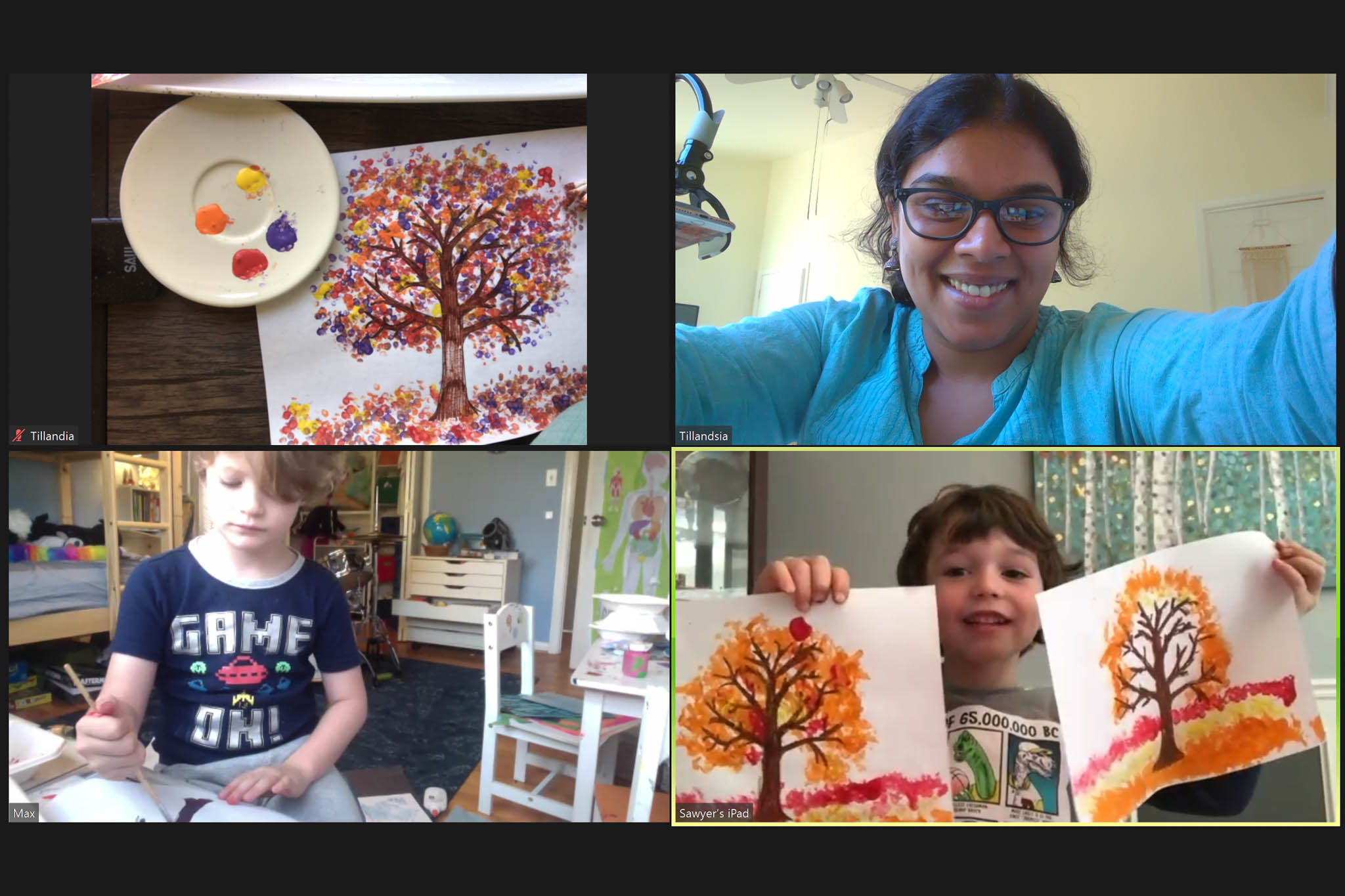
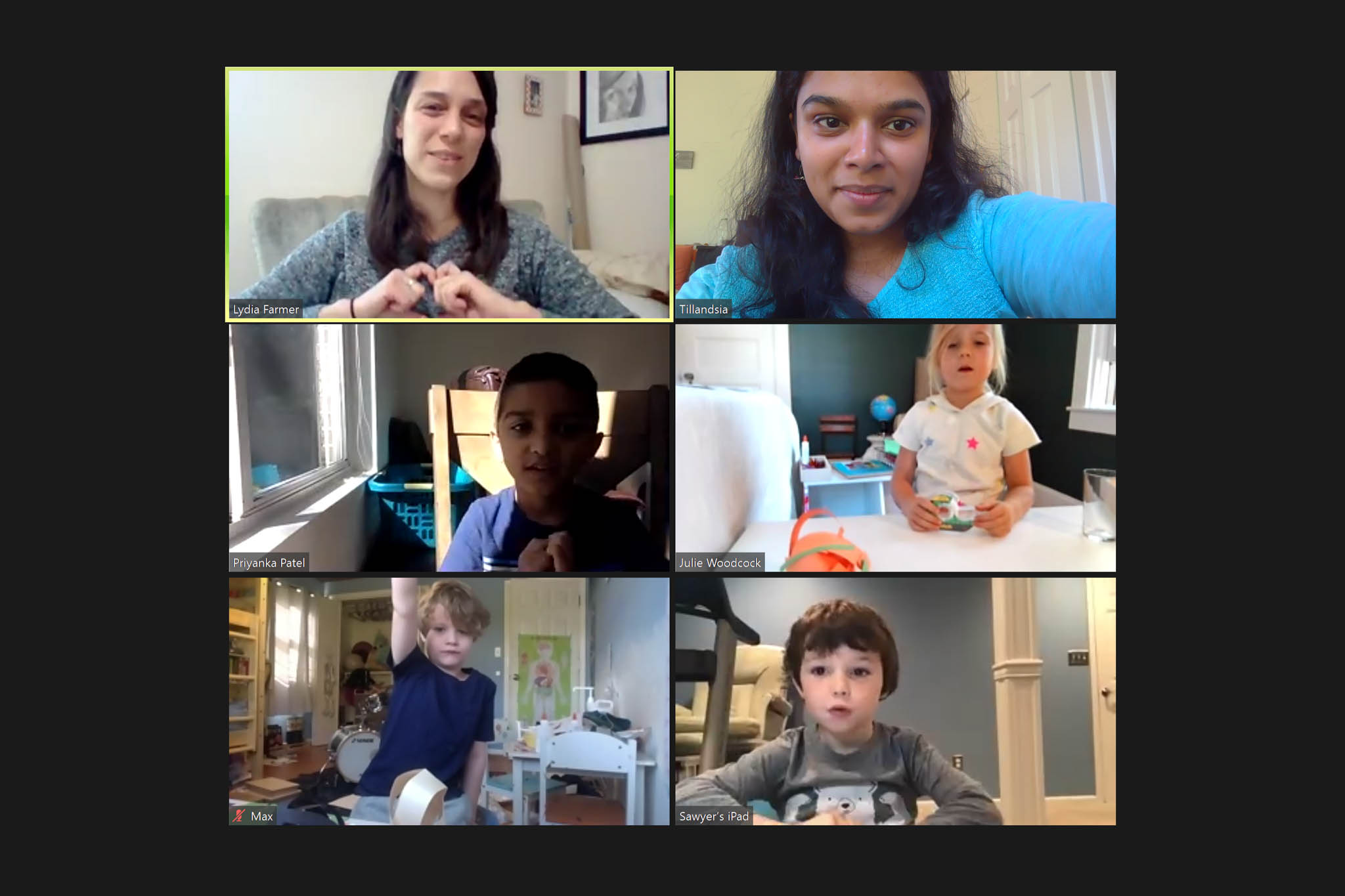
For our students Learning from Home, the connection to the natural world around them is still alive and well. An understanding of the natural world plays a major role in all Montessori classroom, and it has been our big work to bring this curriculum to our students in a digital classroom as well.
“There must be provision for the child to have contact with nature, to understand and appreciate the order, the harmony and the beauty in nature… so that the child may better understand and participate in the marvellous things which civilization creates.”
– Dr. Maria Montessori
Children’s House
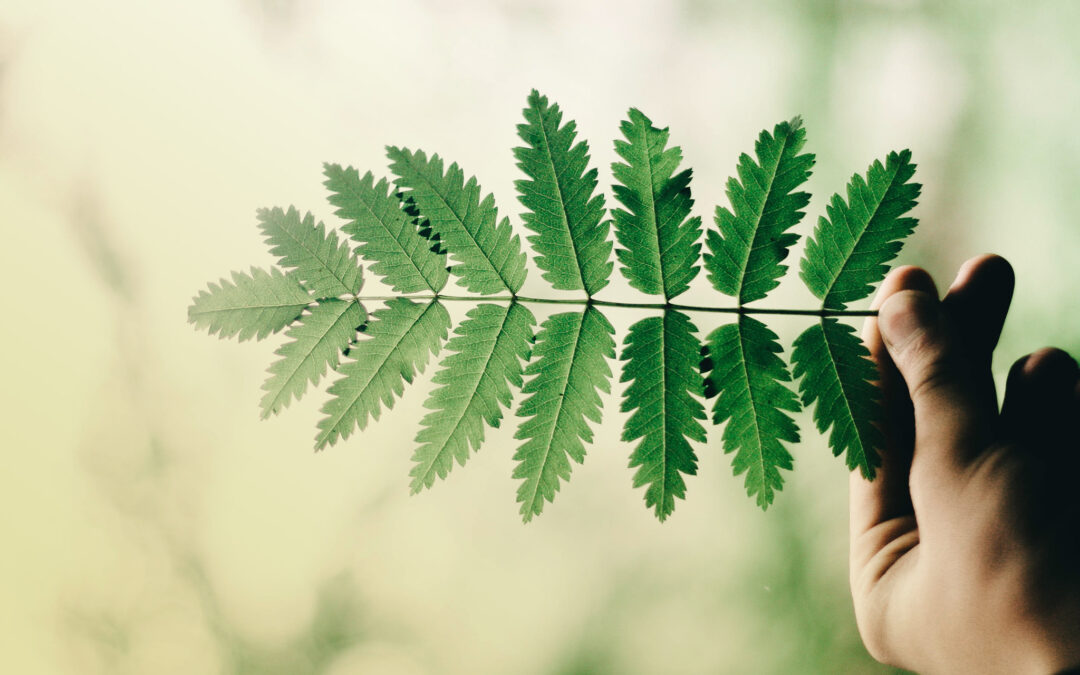
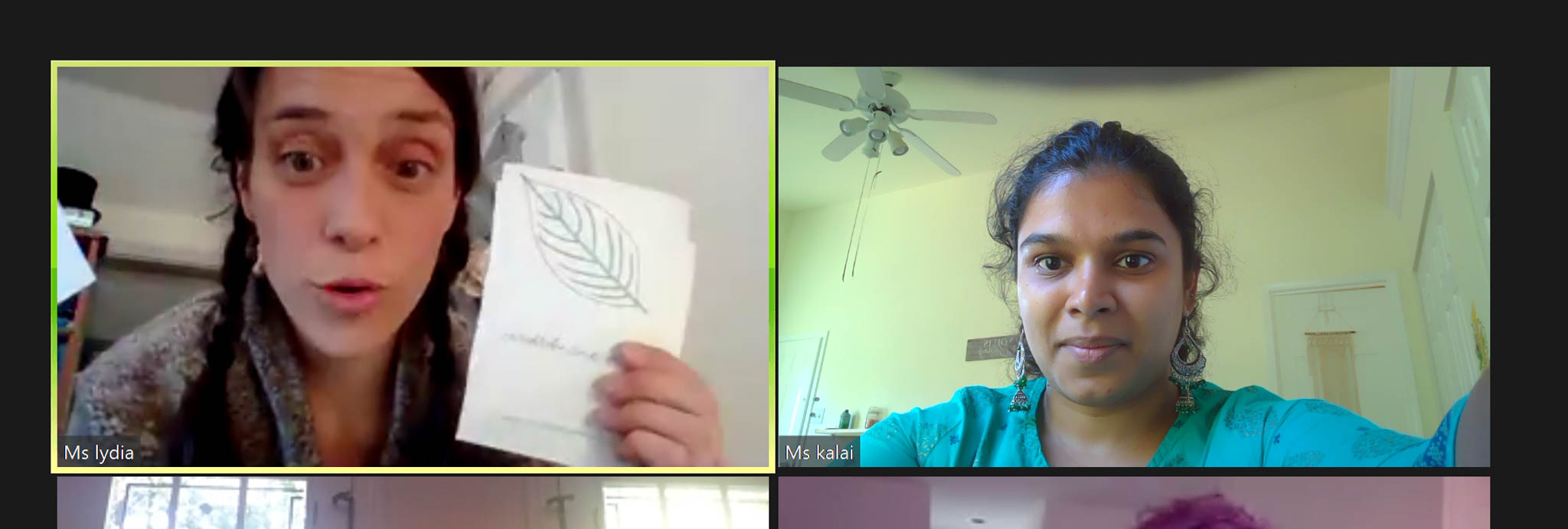
In our Tillandsia class, the children were introduced to the parts of a plant, which led to many questions about plants, botany, and our earth. As we learned about the parts of the leaf, we looked at some real plants to understand how the leaf is connected to the whole plant. Why do we care about the midrib and veins? Because they carry water up to the leaf all the way from the roots! Why do we care about the blade? Because its flat shape acts like a solar panel to absorb sunlight! Why do we care about the petiole? Because it can TWIST the blade to face the sun! Why do we care about the stipules? Because they STOP the flow of water through the plant when it starts getting cold outside. What would happen if a plant tried to drink up frozen water? Why is the leaf green? Why does it lose its green color? We have been exploring all these questions in our ongoing study of leaves.
The children have also been making so many globes and maps of the world. Some are creating these maps from memory, and some have chosen to label every country on our continent. We just started exploring the flags of North America, and learned about the United States flag first. Some children chose to create a flag to celebrate their favorite animal, their family, a group of friends they are missing, their neighborhood, or their bedroom! They chose what colors would represent what, and what shapes could be included. Some children added chopstick or popsicle stick flagpoles so they could wave their newly created masterpiece.
Lower Elementary
As always happens at the beginning of the year in the Elementary classrooms, we have begun telling many of our Great Stories. These are stories meant to capture the imagination of the children at the beginning of the year, in addition to opening their eyes to the different disciplines we offer in the Elementary classroom.
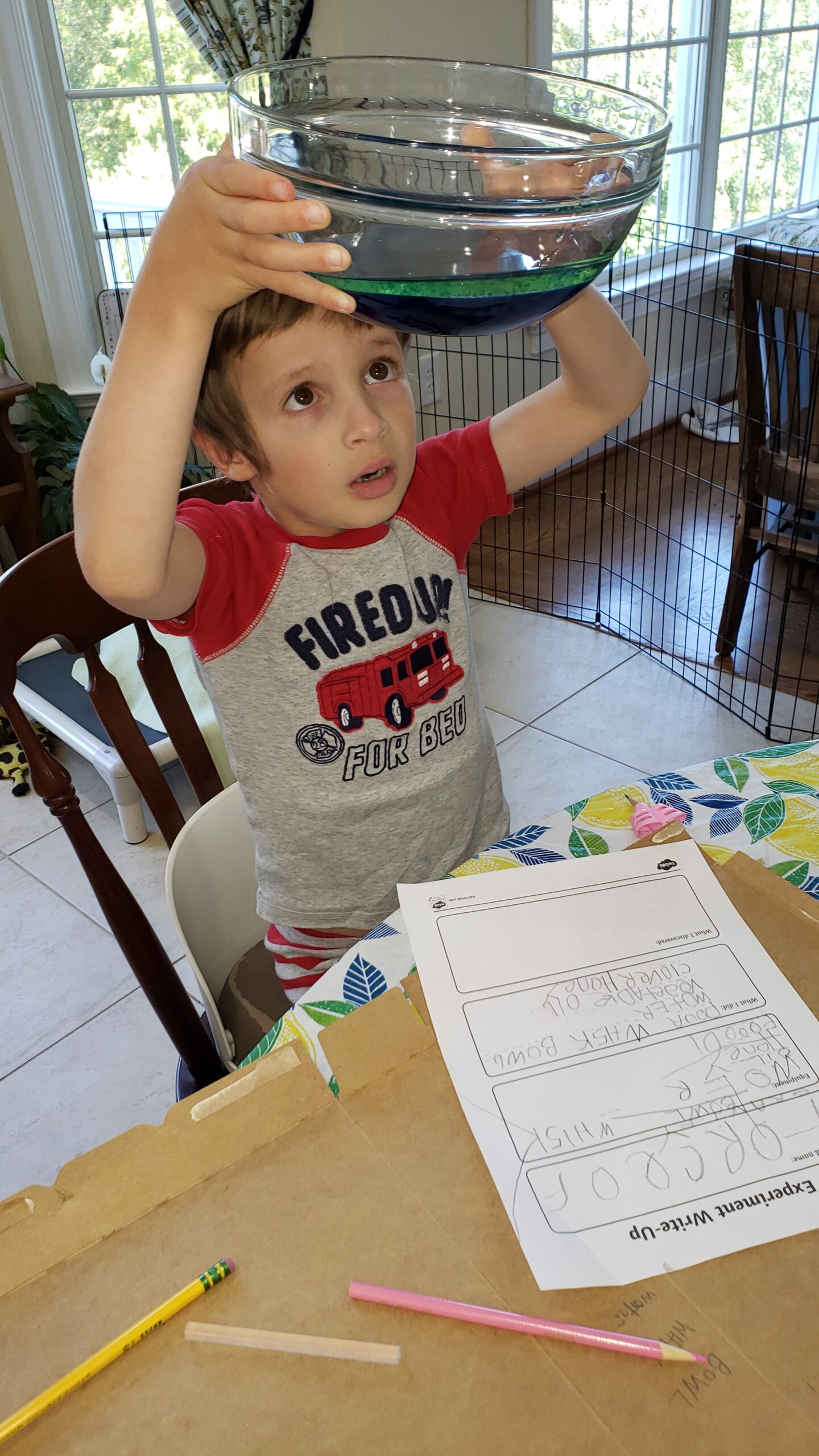
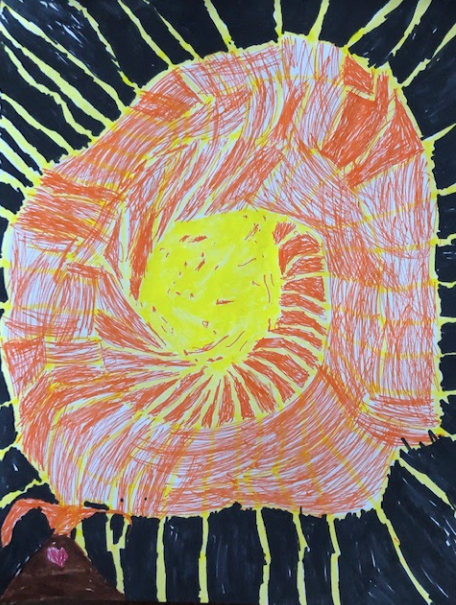
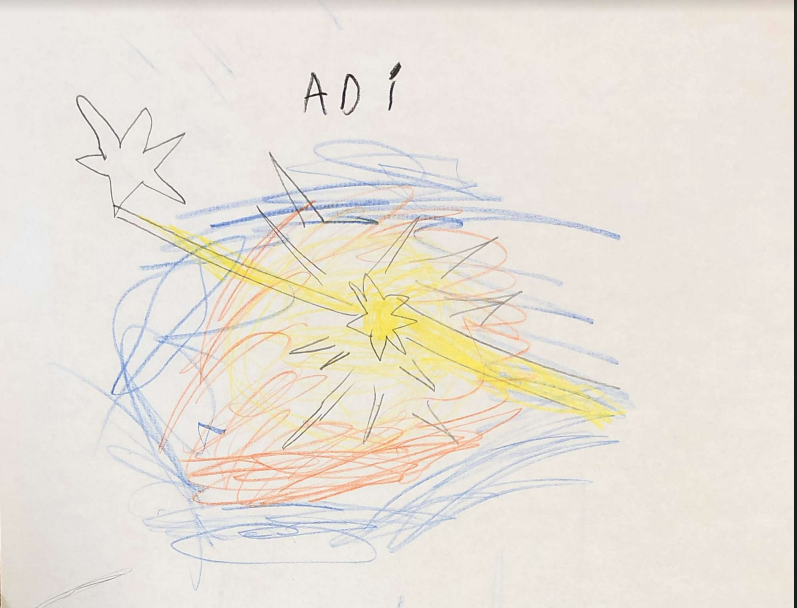
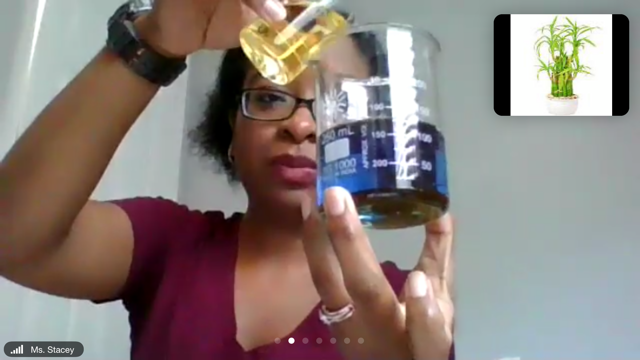
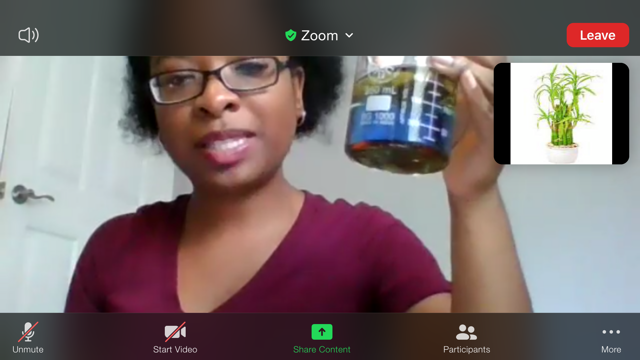
Recently, we told the story of The Coming of Life. We spoke about how all the elements in the universe were following their laws, including the elements on earth. The Sun, the Rocks, the Water, and the Wind play as characters in this story, and in order for these four characters to continue following their laws in harmony, life was created. We talk about the first life form probably looking like a microscopic jelly, through the evolution of life in water, to out of water, to dinosaurs, all the way to humans and life as we know it now. Stemming from these Great Lessons, there are many opportunities to learn about chemistry, physics, biology, history, and so much more. There was an interesting hands-on lesson for the children on density and particles that involved water, oil, and honey. These early lessons have sparked an interest among the students to study space and volcanos.
Upper Elementary Elementary
Our Upper Elementary students are in a hybrid class with some students Learning from Home and others on campus in the classroom. This group also began the year with our Great Stories. Each year, as the children get older, they discover new details in the Great Stories that spark their interests in a variety of fields. One of the lessons stemming from these Great Stories was the parts of a river. Outside on campus, Mr. Brad demonstrated to the students how water travels through a valley, carving a river.
Learn More About Our Programs!
If you are interested in learning more about the Montessori curriculum and whether Greenspring Montessori School is the right fit for your child, please schedule your virtual or in person visit.


















 One of the first materials a child encounters in the Children’s House classroom at 3 years old is the Pink Tower. While this material may look like basic building blocks of conventional preschools, it is designed very specifically to introduce the child to the quantity of ten as well as basic experiences of order, sequence, coordination, and precision.
  The Red Rods are comprised of 10 wooden rods differing in length. The smallest rod is 10 centimeters long, and the largest rod is 100 centimeters, with each rod increasing by increments of 10 centimeters in length. The shape, weight, and color of this material is alluring to the child, drawing them in to learn more.
  Children are naturally drawn to the Number Rods after mastering the Red Rods. They are the same dimensions as the Red Rods, however, each 10 centimeters alternates between red and blue, showing the visual representation of each unit. The child is introduced to the number symbols and they learn to associate quantity and symbol.
 The presentation of The Golden Beads gives a visual and a very concrete experience of the decimal system and place value. With this material, the child learns the terminology of units, then tens, hundreds, and thousands. The child can literally feel the heft of the thousand square and see visually the relationship between the unit bead and the thousand cube.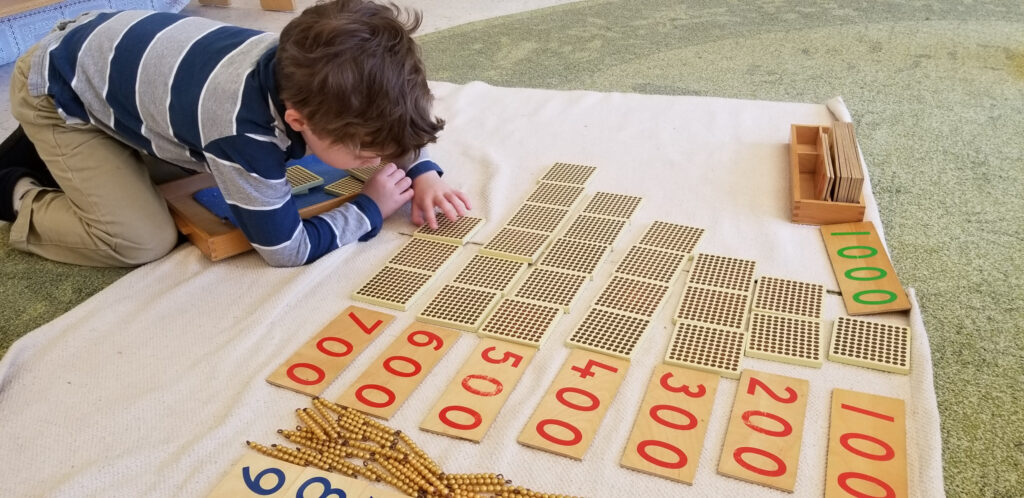
 Once a child is able to build a visual representation of a number, the Golden Beads are used to add, subtract, multiply, and divide numbers into the thousands. When students start using this material, one subtraction problem may take 20 minutes! But because it’s physical, social, and interactive, it doesn’t feel like work.