The Importance of Classroom Agreements

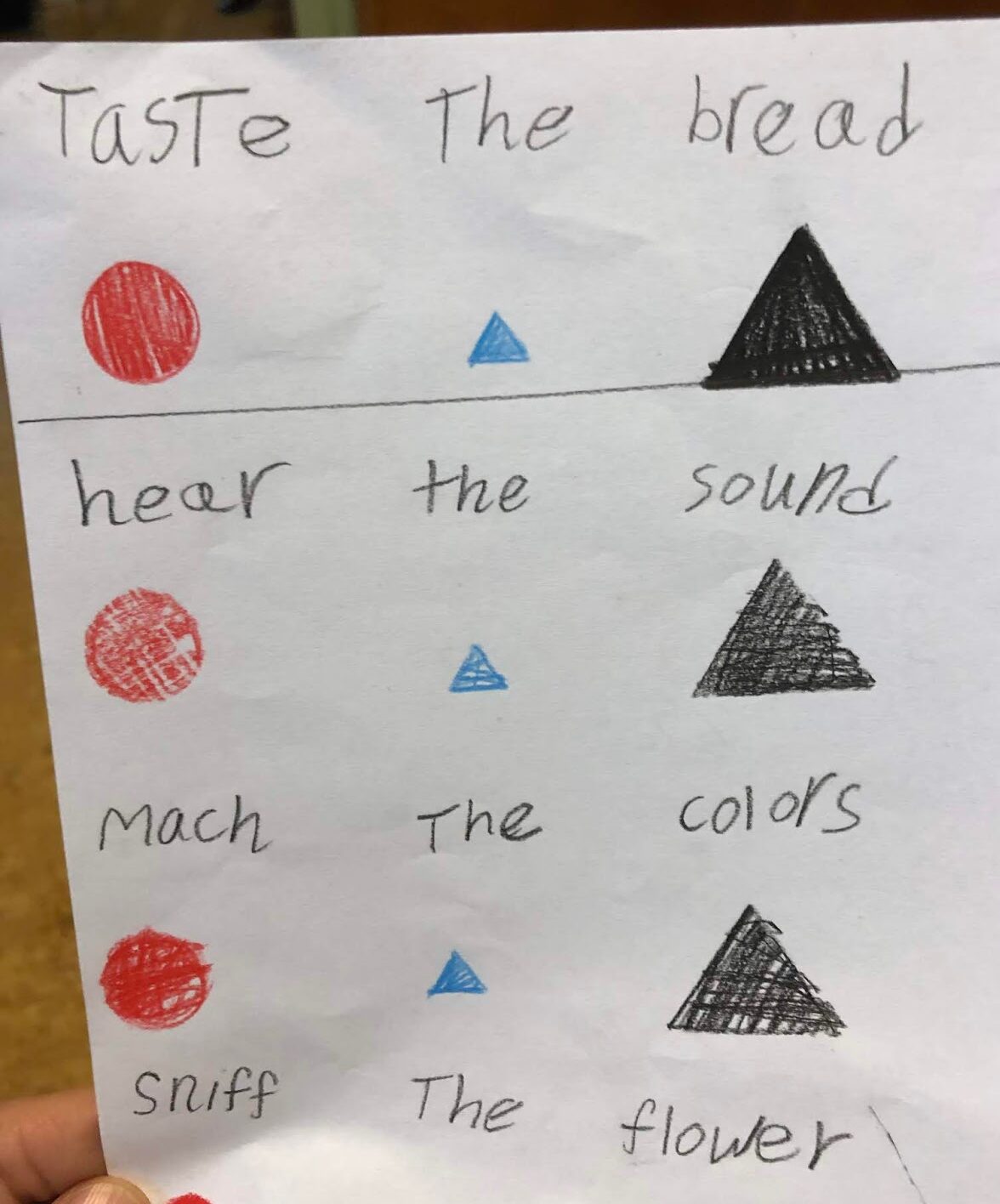
Classroom Agreements for the Mulberry Lower Elementary class (ages 6-9).
Peace education is a major component of the Montessori classroom. In our article titled “Peace Education for All Ages,” we have discussed how mixed-age classrooms, the prepared environment, community meetings, and role-playing all support the development of conflict resolution skills.
Another tool that we use in Montessori classrooms starting in the Children’s House (ages 3-6) is the practice of creating Classroom Agreements. Rather than an adult presenting a list of rules and expectations, the children collaborate to create a set of guidelines for how they would like the classroom to operate and how they will treat one another. The Guide and Assistant ask the children to envision what they will need to contribute to create that environment. They provide coaching so the children phrase things positively (such as “We will…” rather than “Don’t…”). Typically we work on this during the first week of school each year, as this is a beautiful community building opportunity and sets the tone for the entire year.

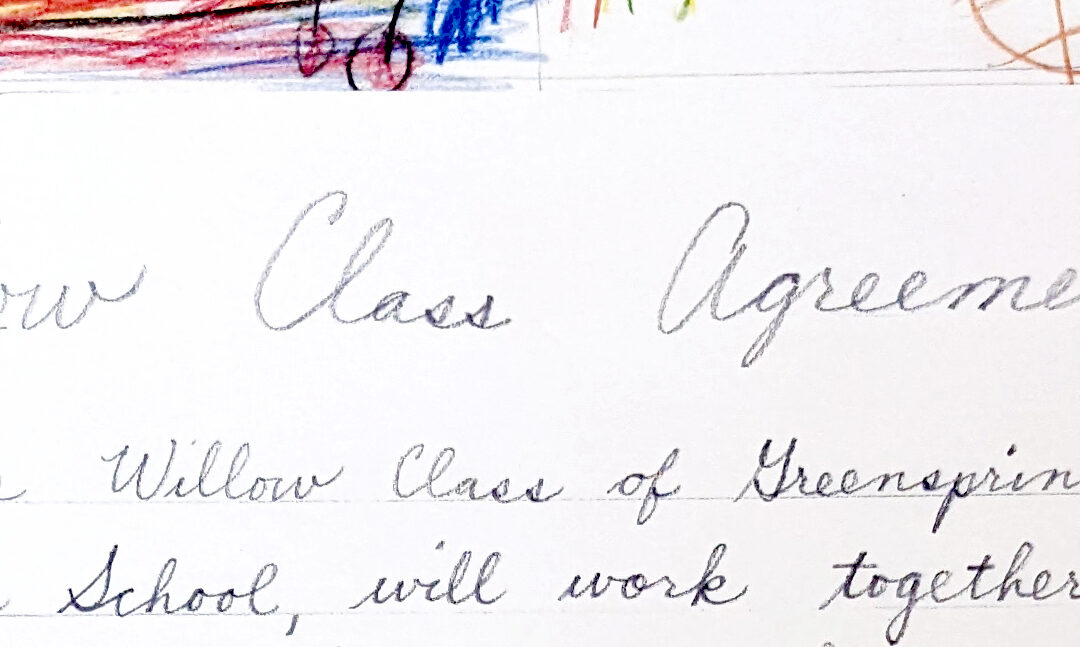
Classroom Agreements for the Willow Children’s House class (ages 3-6).
The children sign the finished product and it is posted in the classroom. Students are invested in these commitments in a different way when they help to create them. I have observed a Children’s House student say to a classmate, “Remember, in our classroom we use kind words,” and point to the agreements posted on the wall. Just another example of the classroom belonging to the children. Dr. Maria Montessori coined the phrase Casa dei Bambini in Italian, which translates to ”the Children’s House”.
Our Upper Elementary students call their Classroom Agreements a “Classroom Constitution” in order to connect it to our nation’s constitution, which is an evolving document – revisited, studied and revised as needed. The Upper Elementary students revisit their Classroom Constitution at the beginning of every community meeting. During these meetings, they discuss challenges faced in the classroom or on the playground, brainstorm solutions, and find resolution as a group. When the group decides that a change or addition is necessary, they amend their Classroom Constitution.


Classroom Agreements for the Ginkgo Upper Elementary class (ages 9-12).
Montessori students build upon these early experiences of responsibility and ownership to become leaders, problem solvers, and involved citizens.
Read more in our article titled “Peace Education for All Ages”.