Every year, students at Greenspring Montessori School emphasize the importance of service and stewardship through community service projects. However, we approach service a little differently than other schools. Instead of requiring a set number of hours of service or having a top-down approach (such as a teacher or administrator planning a coat drive and then getting students to participate), our students actively organize their own service projects based on the needs they see in their community.
Just before the winter break, two of our Elementary students organized a holiday drive for Paul’s Place, a community center in Baltimore City. Our school community contributed an amazing total of 146 brand new gifts including toys, clothes, books, personal care, jewelry, and appliances. The staff at Paul’s Place was very moved and acknowledged our contribution in their morning meeting for staff and volunteers.
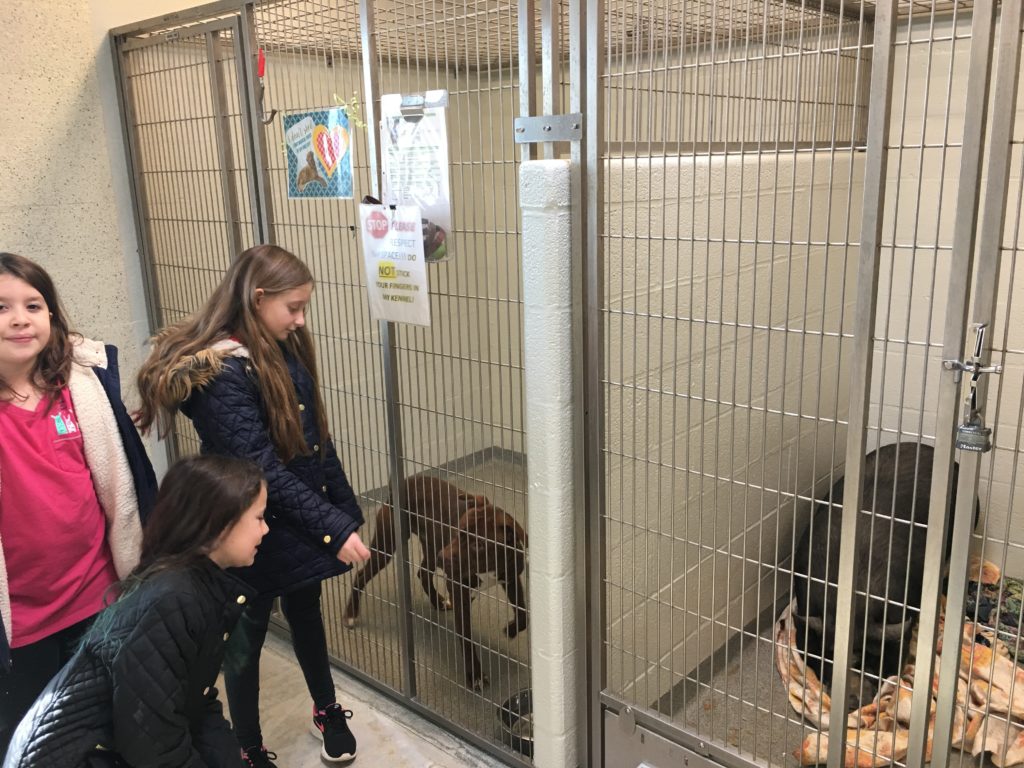
During the month of December, Upper Elementary students also collected donations for people facing homelessness and the Humane Society. Our students and families truly embraced Greenspring’s commitment to service during the holiday season!
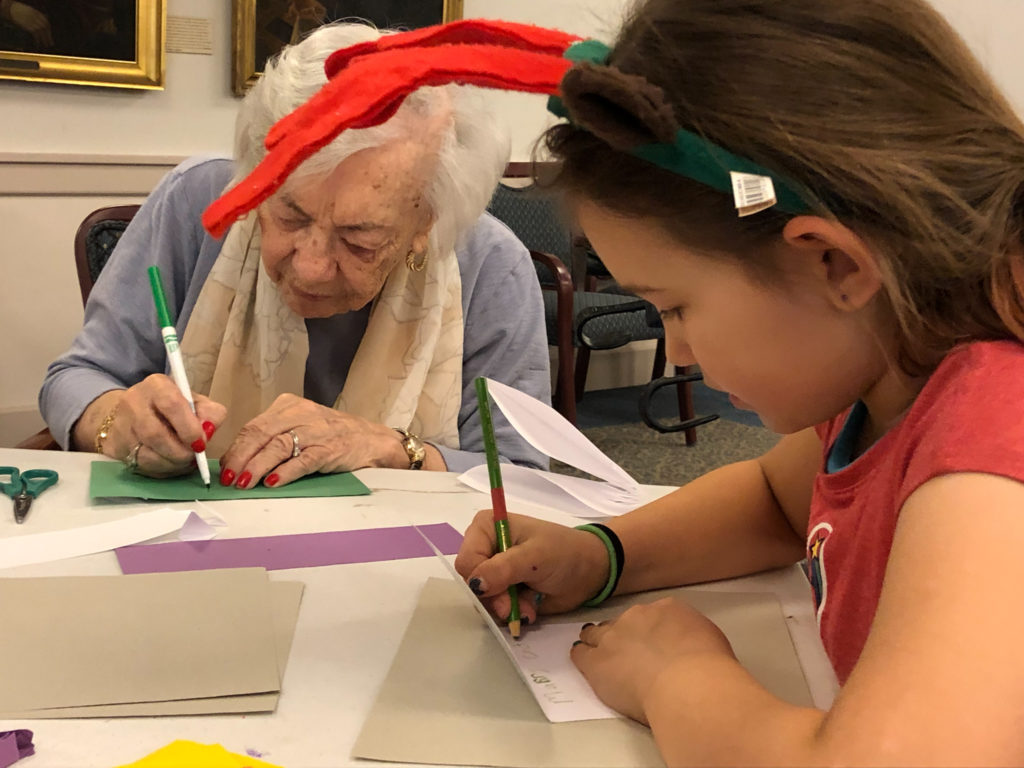
A group of third-year Lower Elementary students visited Pickersgill Retirement Community before the break as well. Students performed holiday songs and worked with residents on making holiday cards. It was a pleasant surprise when the residents chose to make cards for the students themselves! You can enjoy photos from their visit here. A group of students is already planning the next trip to sing additional songs and do more craft activities together.
At Greenspring Montessori School, when our students see a need, they respond with kindness, generosity, and thoughtfulness. It’s one of the things we love most about our community!

Reposted from NAMC Montessori Teacher Training Blog
 |
| Math and science work harmoniously in nature. |
Since the launch of Sputnik in 1957, the US has called for an increase in scientific and mathematical education. There is currently a movement underway to train and terrain 100,000 STEM (science, technology, engineering, and math) teachers. Across the country, there are new standards for STEM subjects, with educators being charged to be creative and engaging rather than just teaching from a textbook.
What does this mean for Montessorians?
STEM – Science, Technology, Engineering, and Math: Being Creative and Engaging in the Montessori Classroom
Montessori teachers have a jumpstart on their conventional counterparts. Since student engagement is at the forefront of the Montessori classroom, we are already actively engaging students in hands-on learning. Beginning in the Montessori preschool environment, students learn the fundamental rules of math and science through the discovery of natural laws through manipulation of didactic materials and problem-solving with peers. The work engages the senses and ensures the internalization of concepts, not just memorization of disjointed facts and figures. Through the Montessori concept of Cosmic Education, the curriculum reinforces that everything is interrelated; students see how math and science work harmoniously in nature, like in the Fibonacci sequence.
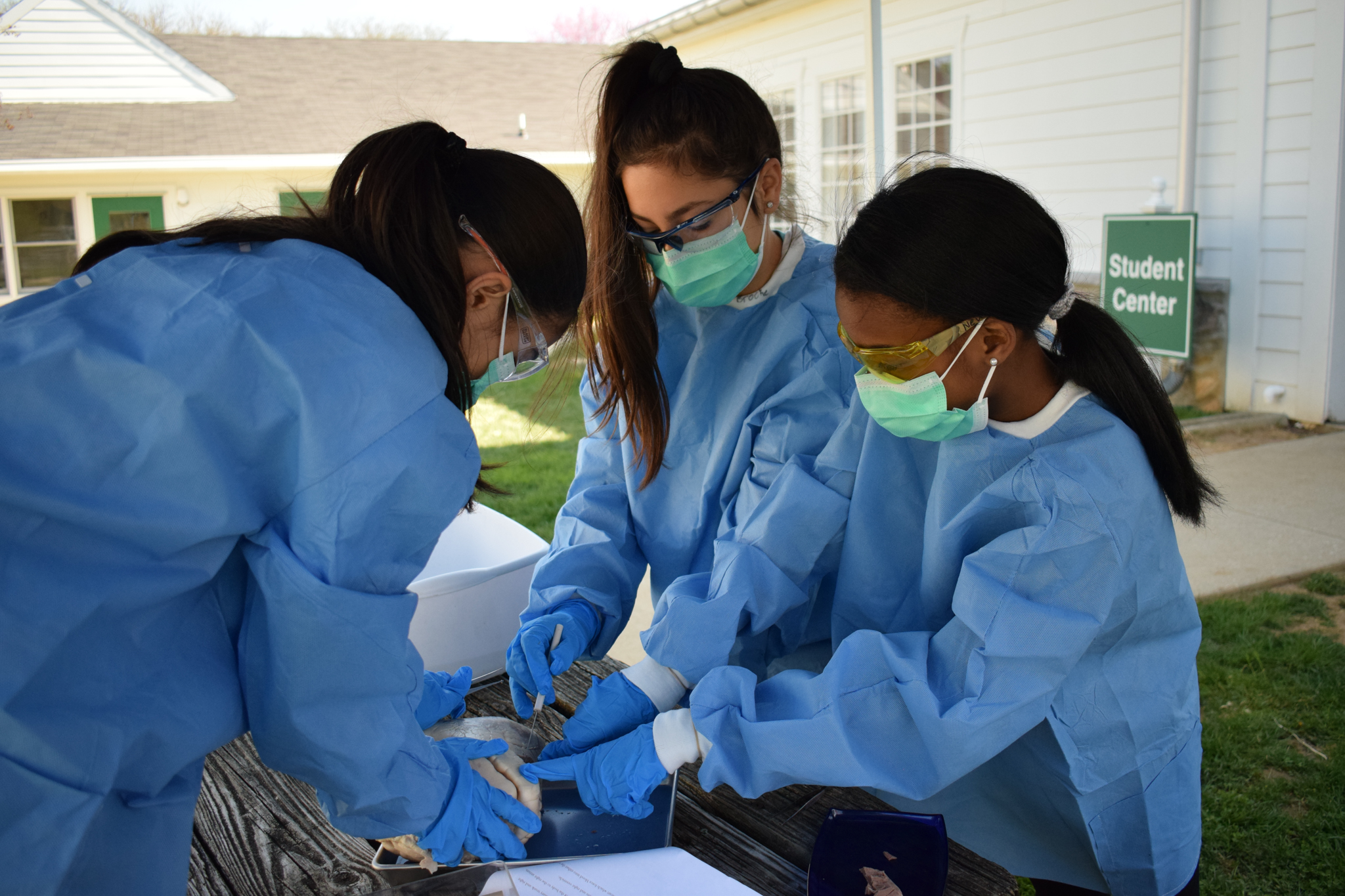
Upper Elementary students dissect a cow heart as part of their studies in anatomy.
On March 29, 2012, the National Governor’s Association issued a brief on “The Role of Informal Science in the State of Education Agenda”. It calls for an increase in hands-on discovery and practice of STEM concepts, something that is already happening across all levels in the Montessori community. It also calls for the use of outside resources such as museums, science centers, and other ‘real-life’ activities that engage and focus student’s attention in the areas of science, technology, engineering, and math. Again, Montessori teachers have been using “going-out” opportunities to pique student interest and foster real-life connections for over 100 years.

An Adolescent student shows one of their chicks to a Children’s House classroom, engaging in cross-level science work.
Larry Page and Sergey Brin, Co-founders of Google, have said that Montessori education allowed them to think for themselves. They credit Montessori with allowing them to question what was going on around them and to discover the answers for themselves. Former Montessori students, Jeff Bezos, founder of Amazon.com, and Will Wright, inventor of “The Sims” video game series, also credit Montessori for allowing them to ask questions, discover, and learn on their own terms.
The current STEM movement is calling for innovation, collaboration, and hands-on learning and problem-solving. To the Montessori community, this is nothing new. This is what we’ve been doing all along.

On any given day, you may smell an assortment of delicious aromas when you are walking the halls at Greenspring Montessori School. This is because students and faculty are often engaged in various cooking and baking activities as part of the Montessori curriculum. To support these efforts, we have a full kitchen in Emerson Village and we have kitchenettes complete with refrigerators, dishwashers, sinks, and prep space in each of the classrooms. Building practical life skills in areas of daily living is a cornerstone of the Montessori Method, and it is also proven to help students develop soft skills. These skills help children learn essential life tasks, such as working well with others, having empathy, and being trustworthy and respectful. To learn more about the importance of soft skills, please take a look at this new article.

Starting with our youngest students, guides and assistants work with toddlers to create snacks for their classroom. Whether they are carefully learning how to cut pieces of carrots using a crinkle cutter or making freshly squeezed orange juice, the children are actively involved in every step of the process. During the warmer months, many classrooms will also plant tomatoes, cucumbers, strawberries, and more in their outdoor environments, so they children will become familiar with where their food comes from.

At the Children’s House level, students will help to plan larger meals and snacks, and the guides introduce new flavors with the seasons. Instead of always baking comfort foods such as oatmeal cookies or muffins, our guides work to come up with recipes that include fresh and natural ingredients. During the fall, one of our Children’s House classrooms baked acorn squash. In addition to learning about how to use the oven with a classroom assistant, the children also talked about the color of the vegetable, the texture, and the new and interesting flavor!

Additionally, cooking is often a big part of Spanish language enrichment at all levels. Spanish Dual Language Children’s House students work with a parent volunteer each week to prepare mango salsa, pan de elote (a Mexican dish similar to cornbread pudding), and arroz rojo y friojoles de la olla (a Mexican style rice and beans). This is a great way to introduce new vocabulary and new tastes to our children while celebrating other cultures!

In Lower and Upper Elementary, students will often incorporate what they are learning in the classroom with a new recipe. Students in Ms. Sarah’s Spanish Dual Language classroom researched different cultures and shared meals with their entire classroom as part of their presentations. One group made yellow dal, a traditional Indian dish with lentils, while another group created Dulcis Coccora, an ancient Egyptian dessert (Cleopatra’s favorite!) made with honey.

At the Adolescent level, our students have come up with creative ways to grow their student-run business with their work in the kitchen! Several years ago, they started Pizza Fridays, selling pizza by the slice (along with hummus and veggies) every Friday to the students and the faculty. In addition to honing their cooking and prep skills, they also learn to work together, stay organized, and manage money. In addition, the students have built a chicken coop, compost bin, and they are starting a class garden. It is their hope to eventually sell eggs and vegetables to the school community, and even use some of these ingredients in their own cooking.
The joys of cooking with children can extend into your home too. Take a look at our blog on setting up your Montessori kitchen at home and consider trying some of the following this week:
- Take your child to the farmer’s market and pick out one new type of fruit or vegetable to try.
- Flip through a recipe book with your child and let them pick a meal for you to make together.
- Start giving your child a task during meal prep – this could be anything from rinsing the vegetables, to cutting, and eventually even cooking the ingredients.
- Give your child the opportunity to begin cooking, baking, or prepping one meal a day on their own (the younger ones may need some support) – this could be making scrambled eggs for breakfast, packing their own lunch, or preparing a snack when they get home from school.
- Make sure to include clean up in your routine together! – our children love setting the table with real plates and glassware, washing their dishes, and sweeping up crumbs
- Plant a garden – visit the store with your child and pick out seed packets or seedlings together! Children are more likely to try new things when they are involved in growing it themselves.
Does this sound familiar?
“How was your day?” … “Fine.”
“What did you do at school?” … “Nothing.”
It can be hard to get children to open up about what’s going on in their world, especially after a long day at school. Here are a few different communication strategies you can try. Find ones that work best for your family and then practice until they become part of your daily routine. This process takes time but can lead to more satisfying conversations in the long run.
Strategies to Try:
Wait at least a half an hour
After a long day at school wait at least 30 minutes to trying to engage in a conversation. Give your child a chance to take off the backpack, relax, and have a snack.
Ask open-ended questions
“Do you have homework?” or “Did you give your speech?” are questions that only invite a yes or no response. So try to pose open ended questions. Get creative! (There is a list of examples below.)
Be present
The moment your child starts to engage in conversation, stop what you are doing, and give your full attention. It can be hard to tear yourself away from what you’re doing to focus on a child’s question or comment, but your response can either encourage or shut down the conversation. Don’t forget to look interested!
Listen! And stretch the conversation…
Don’t talk, listen! Try comments like “Really?” “Uh-huh?” “I don’t believe it!” “Wow!” to stretch the conversation. They are non-threatening and invite the child to open up. You can also reflect back what the child is saying so they know you understand, and then be quiet so they can talk more. Child: “I played on the swing.” You: “You played on the swing.” The trick is to repeat the tidbit in a matter-of-fact but interested way to get your child to open up and add more.
Try to listen without judgement
Pushing, prodding, demanding, coaxing, lecturing, and threatening are sure ways to end conversations. Questions that begin with “Why” often make kids defensive. “Why did you wear that?” won’t work nearly as well as, “What do you think most of the kids will be wearing to the theater?”
Resist the urge to jump in with solutions and advice
Your child needs a chance to vent and can’t hear advice until she does. Then she needs a chance to figure out her own solutions, which is how she develops confidence and competence. When we can reflect feelings and then help children brainstorm solutions, kids find us more useful to talk to — and they’re more likely to seek us out when they have problems.
Take advantage of indirect communication
Kids often open more in the car, on a walk, or in the dark — all times when eye contact is limited. Remember that these are great times to get kids talking. Another opportunity for indirect communication is when their friends are over or in your car. Just keep quiet and listen. Your child knows you’re there, of course, but often is more willing to talk than if you were speaking directly.

Questions a child might answer at the end of a long school day:
What made you laugh today?
Did anything silly happen?
Did anyone do anything super nice for you?
What is the nicest thing you did for someone else?
Was there an example of unkindness? How did you respond?
What games did you play at recess?
Does everyone have a friend at recess?
Who did you sit with at lunch?
Who do you want to make friends with but haven’t yet? Why not?
Did you help anyone today?
Did you tell anyone “thank you?”
Who inspired you today?
What is something that surprised you?
What is something that challenged you?
What made you feel proud?
How were you brave today?
Will you teach me a song you learned at school?
What was your least favorite part of the day?
Tell me something good (or three!) that happened today.
What are you looking forward to tomorrow?
Do you have a teenager? Huffington Post has some great ideas about starting the conversation with your teenage children. Take a look here – https://www.huffingtonpost.com/liz-evans/28-ways-to-ask-your-teens-how-was-school-today-without-asking-them-how-was-school-today_b_5751546.html
If you are interested in learning more about Greenspring Montessori School, please click here to request more information.
Written by Margaret Jarrell, former Greenspring Elementary Guide
“The child is capable of developing and giving us tangible proof of the possibility of a better humanity. He has shown us the true process of construction of the human being. We have seen children totally change as they acquire a love for things and as their sense of order, discipline, and self-control develops within them…. The child is both a hope and a promise for mankind.” – Dr. Maria Montessori
Peace education is a major component of the Montessori classroom. Maria Montessori saw the education of young children as the human race’s opportunity to recreate itself in a way that would eliminate war. As with most things, Dr. Montessori did not think that meant children needed to be lectured on the subject, but rather that they needed to be given an opportunity to discover peace for themselves. Adults model peaceful and respectful behavior, and because Montessori classrooms are composed of mixed age groups, older students serve as role models for younger children.

We start building conflict resolution skills with our youngest students. Most classrooms have a peace corner or peace table, at which two students can go to resolve a conflict or a single child can go to calm down and feel peaceful. One strategy is the use of a peace rose. Children learn to take turns holding the peace rose while speaking about how they feel. They stay at the peace table until they have heard each other and resolved their conflict. With very young children, adults model and coach the children with words they can use. Older students can do this independently.
At the Elementary level, “community time” is set aside to help establish a sense of responsibility and place within the group. Students encourage and acknowledge one another. They also help establish rules of conduct for the classroom and the playground. These meetings are student-led and a forum in which conflicts are discussed, brainstormed, and resolved as a group. Role-playing and discussion can be helpful in finding ways to handle challenging situations.

Once students enter our Adolescent Community, they begin exploring questions like, “Are all humans created equal?” and “What brings humans together into groups?” These questions are taken very seriously and are never assumed to have simple answers. We help adolescents seek insight by looking at world history, at the differing cultures of the world’s people, and at the interactions between humanity and the environment. Perhaps most importantly, we think about how future history might be written in a way more in keeping with the harmony that seems possible between people and the world, or between one group of people and the next.
Peace is also, essentially, a habit that Montessori students learn. Lessons in Grace and Courtesy teach our students the habit of viewing and treating others with respect, and then to continue to try to forge understandings where they encounter conflict. Young students practice simple lessons such as how to greet others, say please and thank you, tuck in chairs. Elementary students may practice introducing themselves or the etiquette for making a telephone call. And Adolescents may send thank you letters to experts who have helped them along the way. These lessons are present in Montessori classrooms from such an early age that the habits they create become as natural to our students as using a spoon, or putting on shoes.
At the core of these lessons is respect for others, self, and the environment. Montessori students engage in community service at every level – within the classroom for youngest students and outside the classroom and the school for older students. We encourage our students to be involved by asking, “How can we help others?” This can begin with caring for the environment, such as weeding and sweeping public areas. It can also take the form of volunteering to help others in our school. For example, Lower Elementary students may participate in a campus-wide recycling project. Upper Elementary students may tend community gardens and Adolescents are serving others lunch as a part of the micro-economy. It also involves thinking about the needs of others. Our students often remind each other, “We must be quieter. The toddlers are sleeping next door!”

The benefits of peace education are not just altruistic, but eminently practical. Most adults who have navigated the many changes to the world (or even just the job market) in the last several years have had reason to think about how much more connected everything seems to be getting – countries thousands of miles away can be regular business partners in ways that they might not have a decade or two ago, and people are truly mobile on a global scale for the first time in our planet’s history. Prejudice in favor of one’s own tribe – whether that tribe is formed by religion or geography or your school’s alumni association – has become more and more counterproductive to operating in a world where diversity cannot be avoided and is to be celebrated.
Peace is an amazing concept, a useful tool, and, through Montessori education, an attainable goal. Children are born with innate instincts toward compassion and the practice of compassion becomes ingrained when cultivated over time. Montessori students develop into involved citizens!
“Within the child lies the fate of the future.” -Dr. Maria Montessori
Written by Margaret Jarrell, former Lower Elementary Guide
“The mind takes some time to develop interest, to be set in motion, to get warmed up into a subject, to attain a state of profitable work. If at this time there is interruption, not only is a period of profitable work lost, but the interruption, produces an unpleasant sensation which is identical to fatigue.” – Dr. Maria Montessori
In many traditional classrooms, students move through a series of subject periods, in which they must start and stop their work on a given subject according to a predetermined schedule. Can you imagine the frustration you would feel if fully immersed in a task, deep in concentration, and were suddenly jarred out of your thoughts by the ringing of a bell? You were just about to make a breakthrough? Too bad! It’s on to the next subject. This is not how the real world works and it is also not how children learn best.


So what is the alternative? Dr. Montessori discovered that children as young as three are able to choose productive and challenging work, focus on the task at hand, finish a cycle of work, rest without interrupting those who are working, and repeat this sequence. The three-hour, uninterrupted work cycle allows students to freely choose work and engage in work more thoroughly. Based on her experiences observing children during an uninterrupted work period, Dr. Montessori wrote: “Each time a polarization of attention took place, the child began to be completely transformed, to become calmer, more intelligent, and more expansive.” In other words, children are able to develop better concentration skills and focus through undisturbed work.
Some parents might worry: “Won’t my child get tired of working? Doesn’t he need a break every 45 minutes or so?” In fact, Montessori students do take breaks – they are free to get a drink of water or use the bathroom as the need arises. They may choose to have a snack, stand up and stretch, or observe another student’s lesson. But regarding external interruptions of work, Dr. Montessori wrote, “A great variety of interesting research has been made into the question of change of work with identical results – namely, that frequent change of work causes greater fatigue than continuous work of one kind, and that a sudden interruption is more fatiguing than persistence.” Once the child’s concentration is broken, it is very difficult to try to engage them to the environment once again. Angeline Stoll Lillard, author of Montessori: The Science Behind the Genius, writes, “If we choose when to take breaks, then breaks work for us, but if the timing is externally imposed, breaks can be disruptive to concentration.”


Interestingly, there is a natural ebb and flow to children’s concentration during a three-hour period. Research on children in Montessori classrooms shows that after about 1.5 hours, there is a tendency for students begin to lose focus. Montessori educators call this “false fatigue.” Montessori guides don’t panic and send the students outside to run a few laps. We find instead that after ten to fifteen minutes of aimlessness, a student will redirect herself to a new activity in which she will become engaged at a heightened level of concentration, sometimes for as long as an hour. The student’s most meaningful work often takes place in the second half of the work cycle.
Lillard points out that, “Montessori teachers who adhere to three-hour work periods without interruption claim one can see the difference in the quality of the children’s concentration on days when children know they will be leaving the classroom in an hour for a field trip or doctor’s appointment or special music class.” Children who know they will soon be interrupted choose unchallenging “busywork” at best, and at worst become distracting to their peers. When children who don’t know an interruption is coming, they choose demanding work, become engrossed, and are understandably upset when the disruption takes place.
We want to give our children the opportunity to learn at their own pace, allowing them to concentrate and focus on the task at hand in an uninterrupted, peaceful environment. As Montessori guides, we follow the child’s schedule, not ours. One of the best gifts we can give our children is the opportunity to fully develop their concentration and independence, free from unnecessary adult interruptions.
Parent Challenge: Do an experiment. The next time you see your child deeply engaged in an activity, make a concerted effort not to interrupt your child’s concentration. Make a note of how long she persists with one task. The results may surprise you!


Learn more about the Greenspring Montessori School Elementary Program.