Rich oral language is a building block for strong literacy
Learning to be – this is every toddler’s goal. It is both simple and richly complex. Between the ages of 2 and 3, the child is newly aware of possessing their own identity separate from their family, and they are ready to truly be that person, with full independence.
A critical element of this self-realization is the ability to communicate. The toddler is beginning to understand conversational language and they are working to express their own thoughts, experiences, and feelings. They are yearning to label every object in their environment and know every detail of the work they find in the classroom. They are reaching for the words to seek help effectively in moments of struggle. In the Montessori method, we approach the toddler’s sensitive period for learning oral language strategically to help ignite their understanding of language and the world.
Developing Skills in the Toddler Classrooms:
- Attention
- Auditory memory
- Indirect preparation for written language
- Self-confidence with increased vocabulary
Early conversation is essential for child development
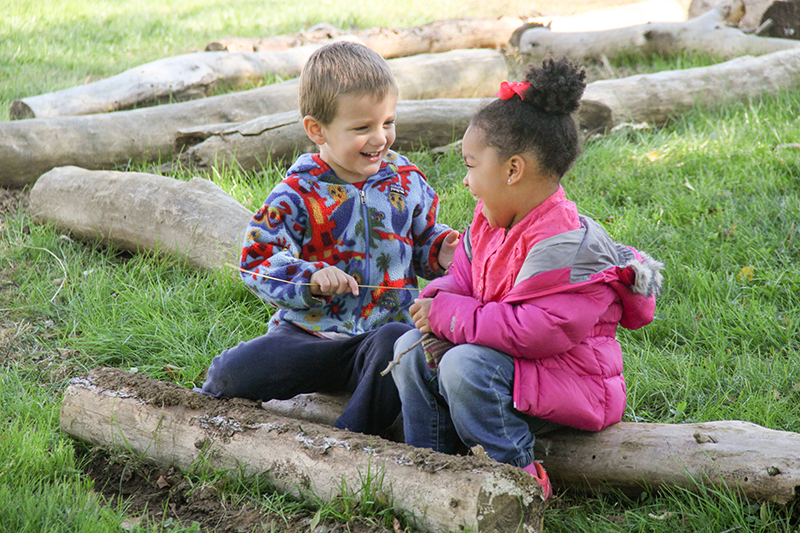
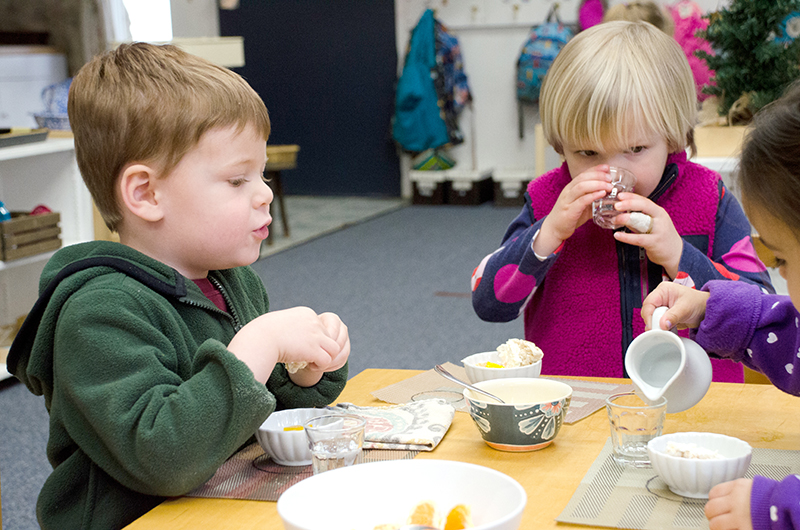
One of the most crucial elements of a toddler’s journey in language is conversation. In Montessori, we believe that the most powerful way to learn a skill is through practice, and conversations provide the ultimate “learning by doing” experience. The conversations that toddlers have with adults in the classroom provide them with richness – the knowledge that they are respected and seen, they feel valued for their opinions and feelings, and an opportunity to practice articulation with someone who can echo words back to them with exact pronunciation. These conversations provide them with a model of conversational etiquette and flow. It is through conversation that the young child learns the confidence to express their heart. Through this process, toddlers learn the functions of conversation—conflict resolution, self-expression, storytelling, clarification, and so on. In the Montessori classroom, we aim to converse with children throughout the morning—upon arrival, between a child’s tasks in the work cycle, and especially at the snack table. Any item in the room, event in our day, or thought from a child becomes a worthy and captivating topic.
Directive vs Expressive Language
Conversations between adults and children are spontaneous and natural in our Toddler classrooms, with the adults focusing on receptive and expressive language. Receptive language refers to what children can understand, such as following directions. Expressive language refers to what they can communicate with words and/or gestures. Adults minimize directive language (e.g., “Put your shoes here. Sit down. Wipe your nose.”) to provide space for meaningful, rich conversation.
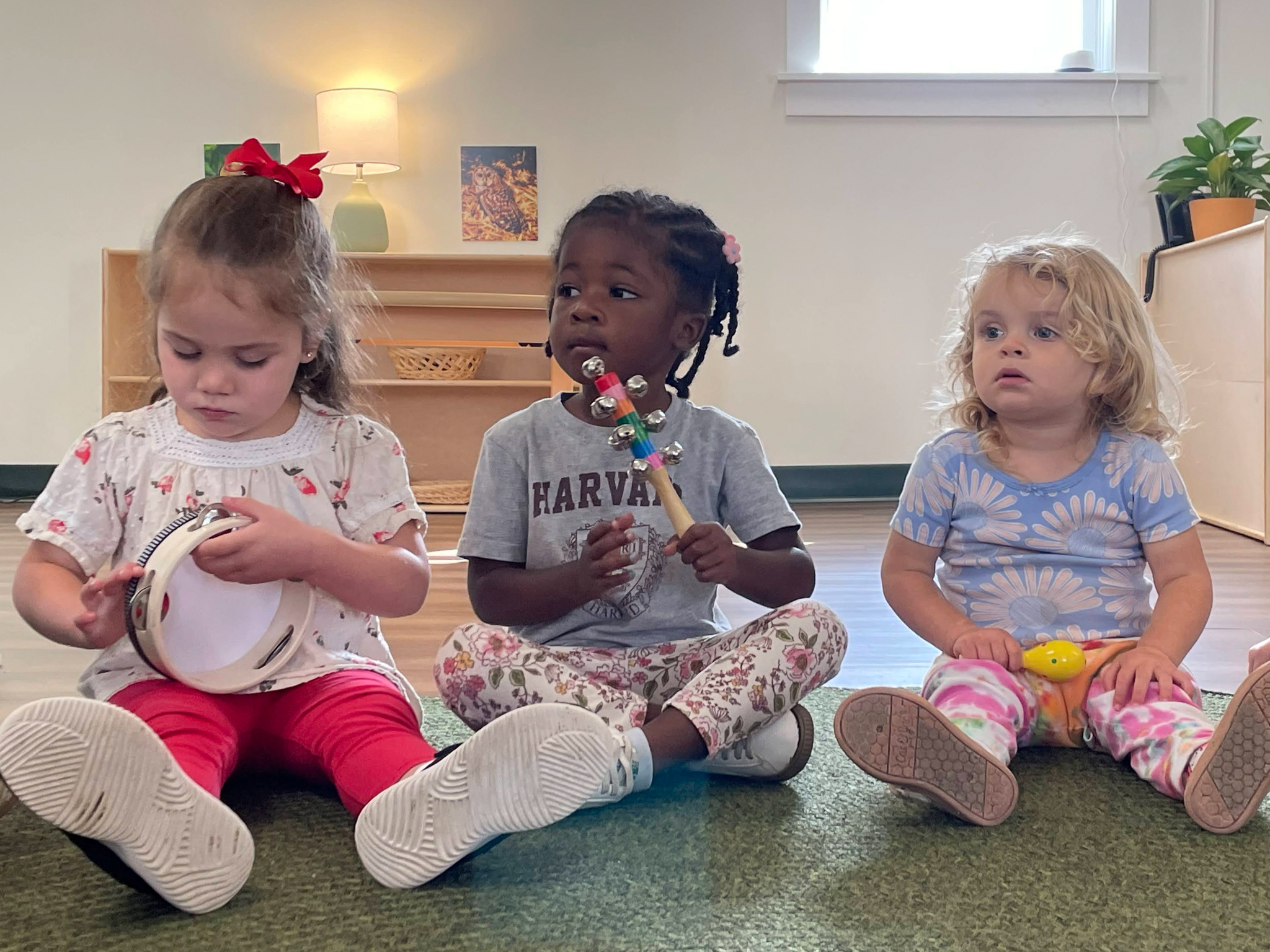
The gift of music
We also use poems and songs to introduce new language to children. Rhythm and cadence can help children hear words more clearly. Poetry and music can also bring concepts to the child’s mind in a manner that connects them with his heart. We often give toddlers the option to sing or review poetry as a group, and these activities are available in the classroom for individual work or lessons.
With all these language tools in his belt, the toddler is ready to take on the world and build himself into the world citizen that he was meant to be. He will take with him all his accurate knowledge, confident self-expression, and the songs in his heart, and will approach the world with compassion and curiosity.
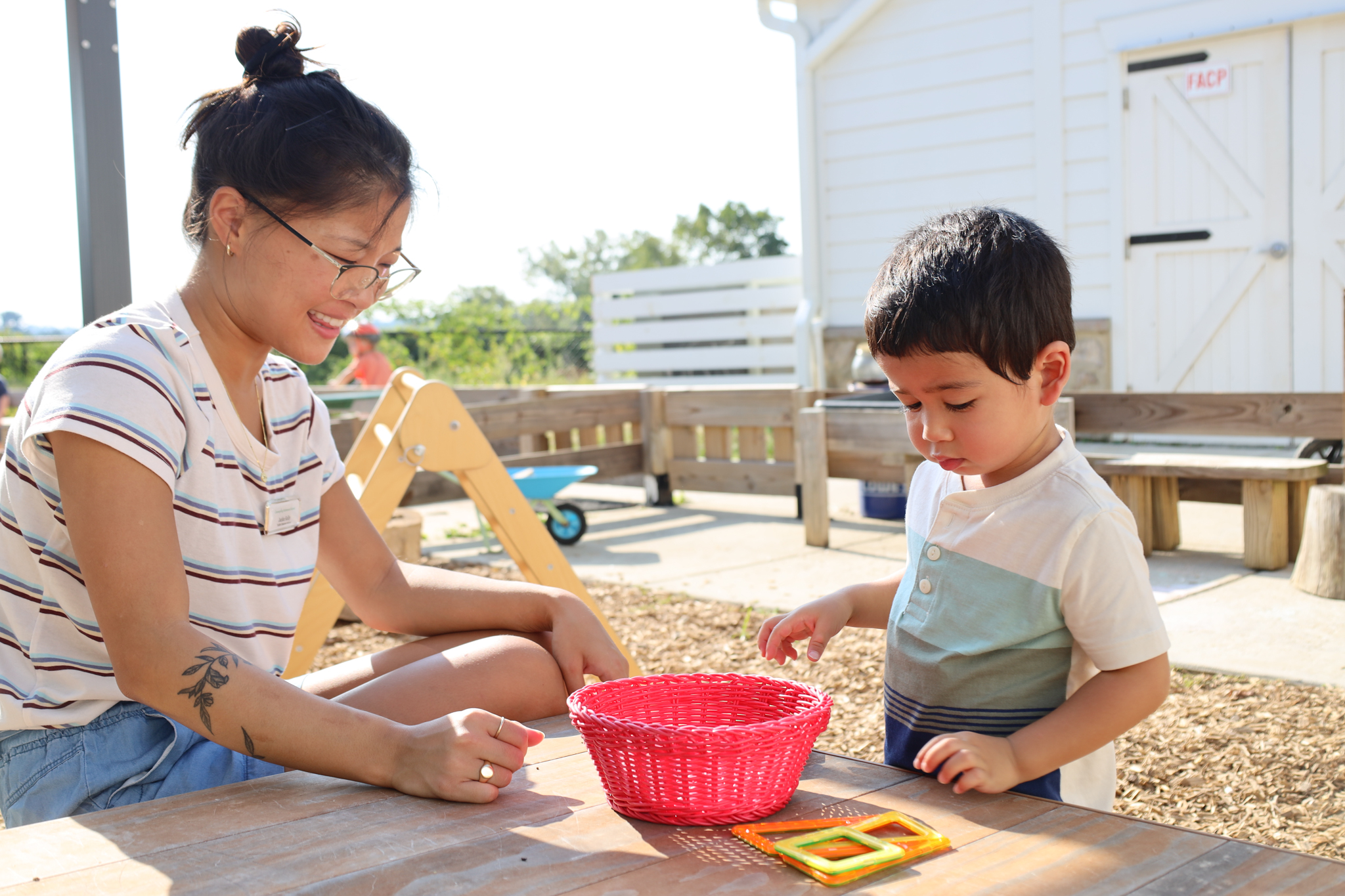
Speak clearly and truthfully to the child
Accurate language is another crucial tool for building a toddler into an effective communicator. Children create themselves from the tools they are given, so it is fundamentally important to communicate with children clearly and accurately. As we model speech, we enunciate as precisely as possible, and echo back correct pronunciation of the child’s mispronounced words in natural conversation. Beyond enunciation, we strive to give the child exact names for the elements of his environment and a detailed understanding of his world. In our Montessori environments, we provide children with exact names for every item in our environment, and for each of its parts. Baskets on the shelfs contain unique pictures and objects, exposing the children to new and interesting things.
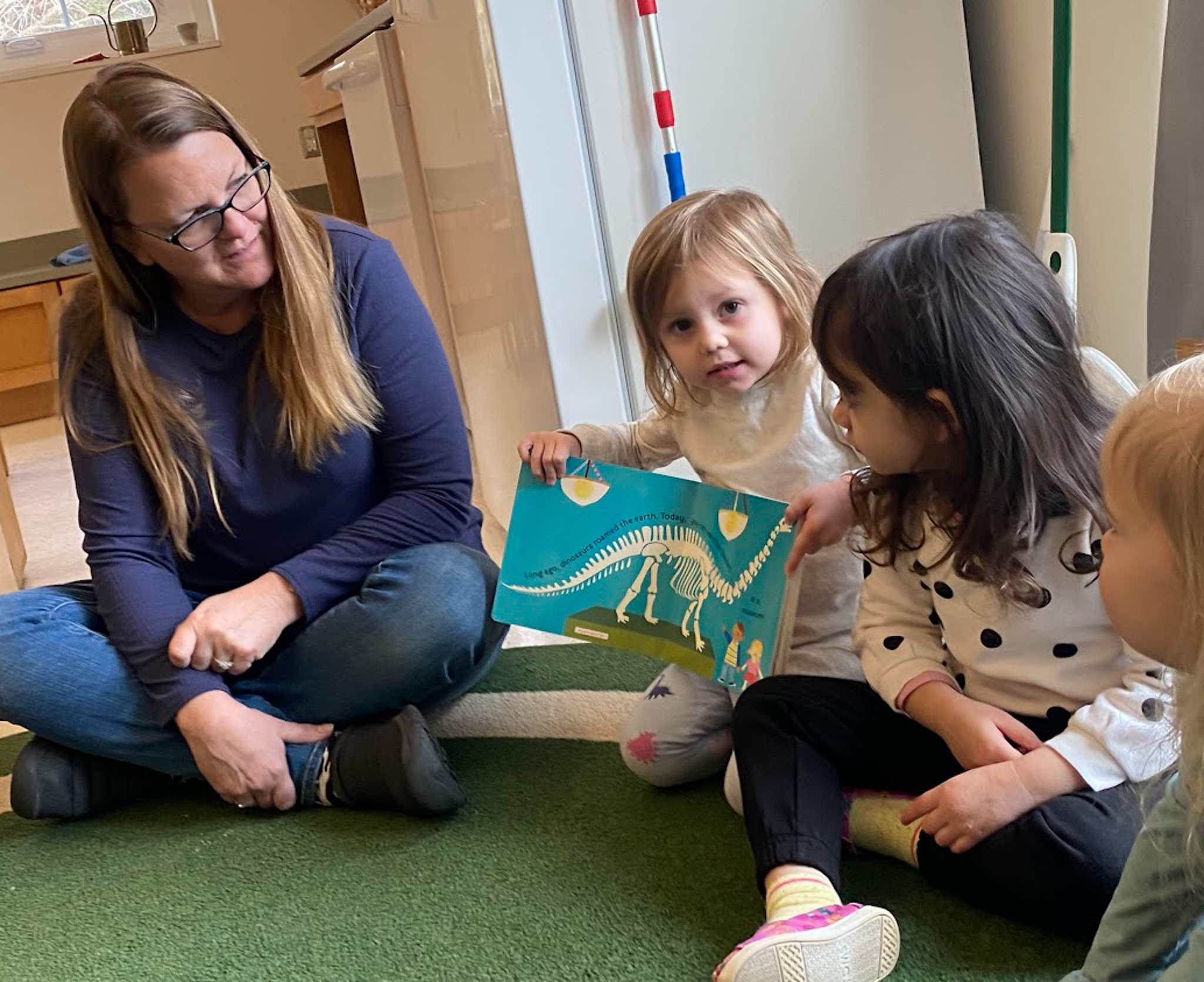
Additionally, true stories give toddlers a unique learning opportunity. They provide details about the world the child would not otherwise have, as well as an understanding of the concepts of beginning, middle, and end. These stories help children understand how life happens in the real world – an understanding that they desperately crave. We also gift children with the opportunity to tell their own stories. Nothing is more beautiful than hearing the story about his baby sister that he is bouncing in to tell us. Storytelling is a daily part of our community life, and anything can serve as inspiration, from our family and friends to our breakfast.
Toddlers have a need to understand the world, and part of that is learning to differentiate between facts and opinions. In our classroom, we introduce both concepts on a daily basis. We let the child know that the details provided in lessons are facts, and ask them what they think of pictures in books. We help them understand the difference between those true details learned in lessons and the opinions that are expressed.
Learn more about our Toddler Program
Our Toddler Montessori Program serves children ages 18 months to 3 years at Greenspring Montessori School. Click here to learn more.