“A child who becomes a master of his acts through repeated exercises [of grace and courtesy]…is a child filled with health and joy and remarkable for his calmness and discipline.” – Dr. Maria Montessori
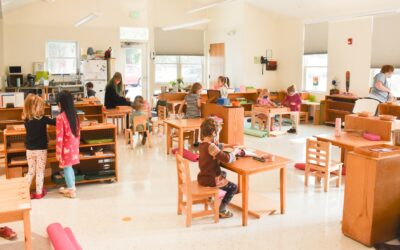
Have you ever entered a Montessori classroom and noticed that the children are naturally respectful of each other and often helpful? An older child may help a younger child zip his jacket zipper. A child might accidentally spill beans on the floor and two children stop what they are doing to help her clean up. Two students having a disagreement decide to go over to the peace table to work it out. These are manifestations of tGrace and Courtesy in the Montessori classroom, which is built upon 1) treating the child with respect, 2) teaching the child to respect herself, 3) teaching the child to treat others with respect, and 4) teaching the child to treat her environment with respect. Grace and Courtesy remains a focus at every level of Montessori education.

When we respect a young learner’s dignity by teaching the basic rules of etiquette, it fills a need in them. Dr. Montessori once taught a small group of children how to politely blow their noses; she explained every step in detail and showed them how to do it quietly and respectfully. After this presentation, the children erupted into spontaneous applause. They were delighted to know how to do something, that to adults would seem so basic. However, to these young learners, their teacher had shown them something they were longing to know how to do.
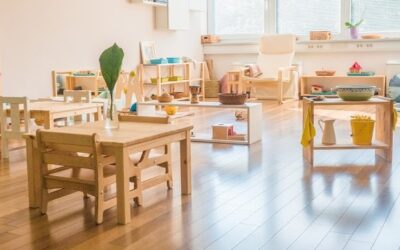
What does this look like in our classrooms? Treating the child with respect means that we speak to the children with soft voices and at eye level. We give the children freedom to choose their work and decide where they want to work. Yet the guidelines and limits of the environment are understood by all. For example, a lesson should be put back where it came from before moving on to something new. Children are free to choose their work, but are not free to disturb the work of others. We call this “freedom with responsibility.”


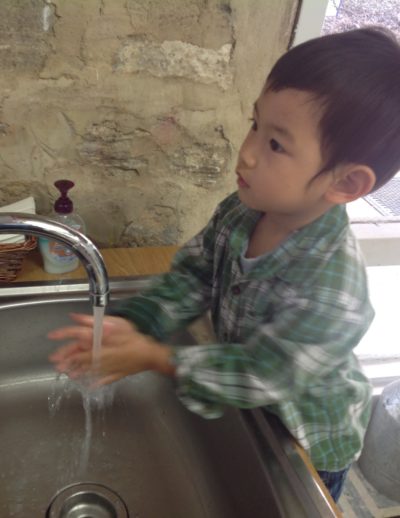
There are specific Grace and Courtesy lessons that demonstrate how to respect and care for oneself, such as blowing one’s nose, washing hands, getting in and out of a chair, putting on shoes, hanging up or putting on a jacket, etc.
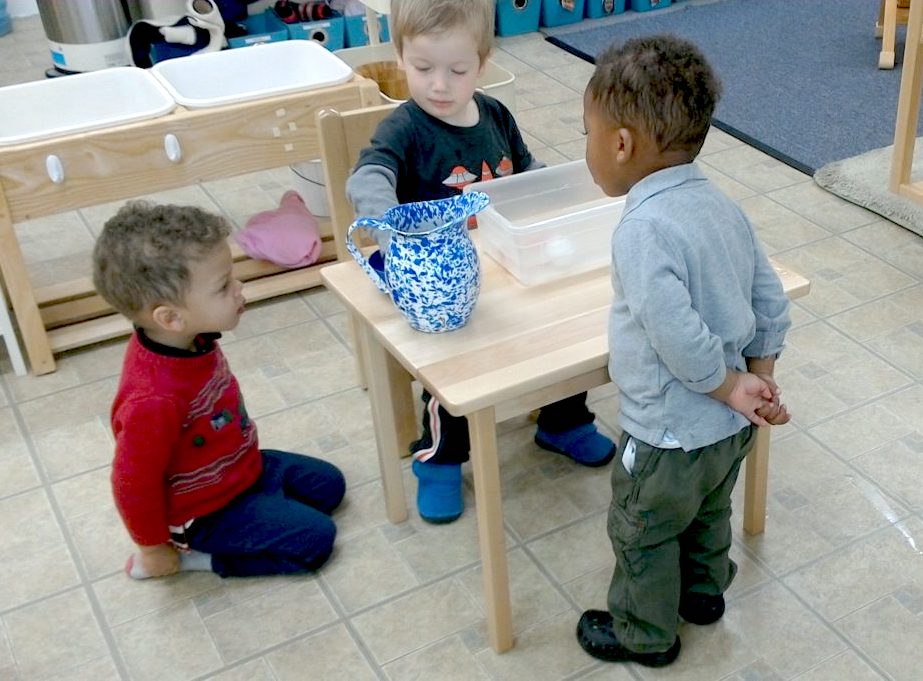

Lessons on respecting others include how to greet a visitor, walking around a rug, how to ask for help, using soft voices, inviting others to work, how to solve a conflict with a classmate, etc.


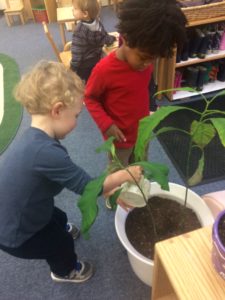
Lessons on respecting the environment include carrying and rolling up a rug, setting the table, how to take materials off of shelves, washing a plant, washing a table or mirror, etc. We are working daily on cultivating a sense of gratitude and nurturing wonder.
One of the main goals of a Montessori education is to prepare students to be contributing and valued members of society. This starts with lessons of Grace and Courtesy, which are key to modeling peace, learning how to act in social situations, showing respect for each other. These are tools our children will use their entire lives!