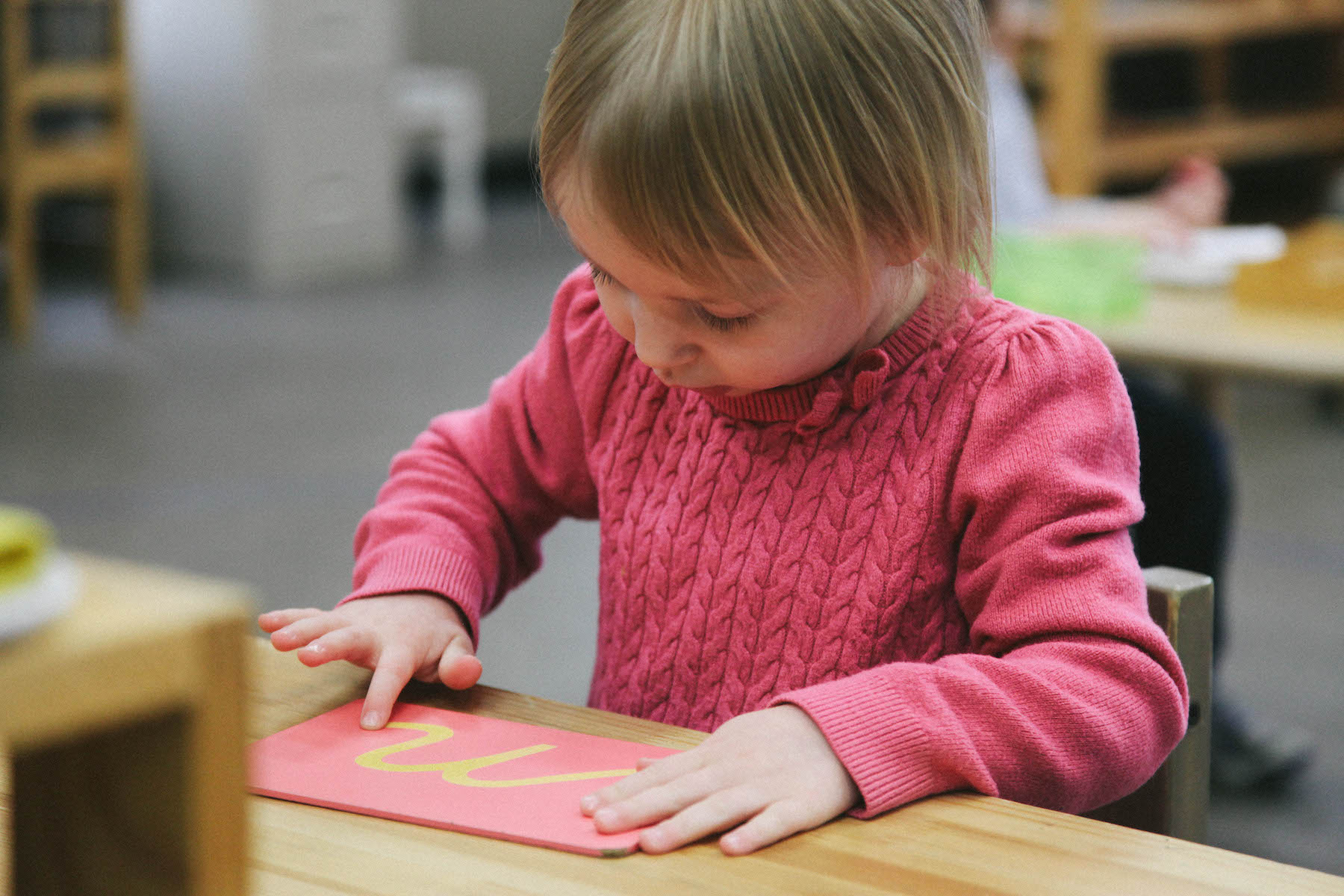
Children in Montessori classrooms learn to associate letter sounds with letter shapes using a material called the Sandpaper Letters. The shape of each letter is made with rough sandpaper, which incorporates the sense of touch to further reinforce learning. Children are encouraged to trace the symbol over and over again until the shape of the letter becomes a part of their muscle memory.
Similarly, children learn to associate numbers with their symbols using the Sandpaper Numbers. When each numeral is introduced, the Guide shows the child how the numeral is formed. Both the Sandpaper Letters and Sandpaper Numbers help prepare students for forming numbers and letters when writing with a pencil on paper.
Using the Sandpaper Letters and Sandpaper Numbers with the sand tray is another way to practice letter and number formation. For example, a child traces a sandpaper letter with their fingers and immediately writes that letter in the sand. Over time the child will associate the sound with the letter, and the proper formation of that letter becomes part of their muscle memory. The sand allows the child to write freely, without the pressure of holding a pencil. Mistakes are erased with a shake of the tray!

Tracing letters in sand

Tracing numbers in sand
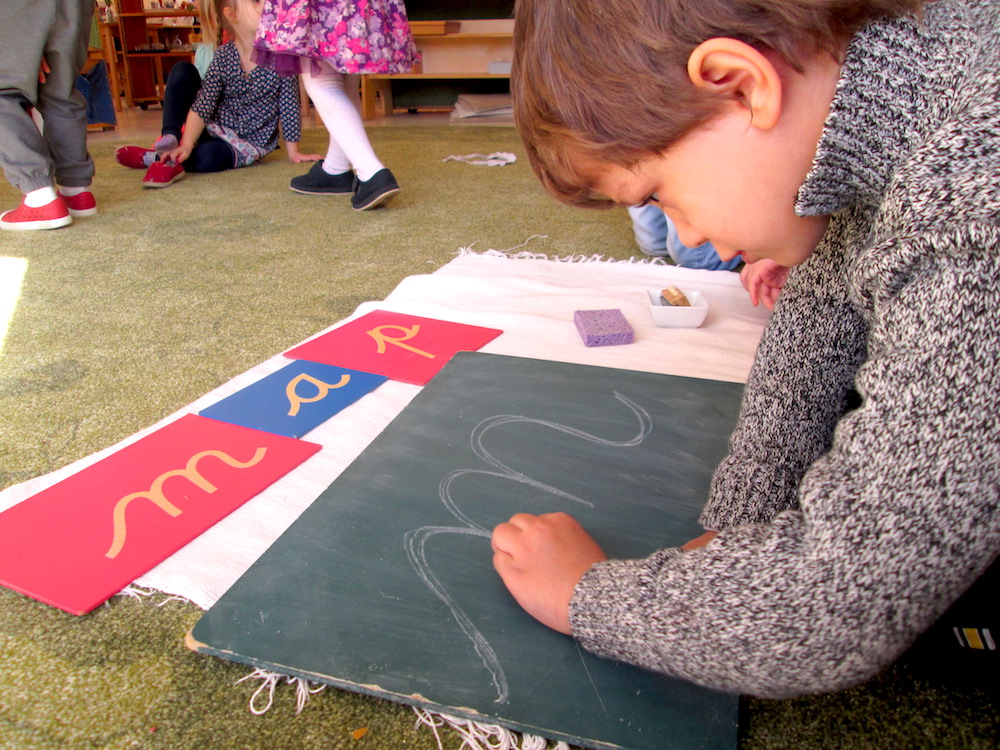
Using a chalkboard
When they are ready, children are ready to start forming letters and numbers on a chalkboard. Wall mounted chalkboards allow children to incorporate their gross motor skills, while smaller table-size chalkboards allow them to practice fine motor skills. When the time is right, children use the foundation they have built to make the exciting transition to pencil and paper!
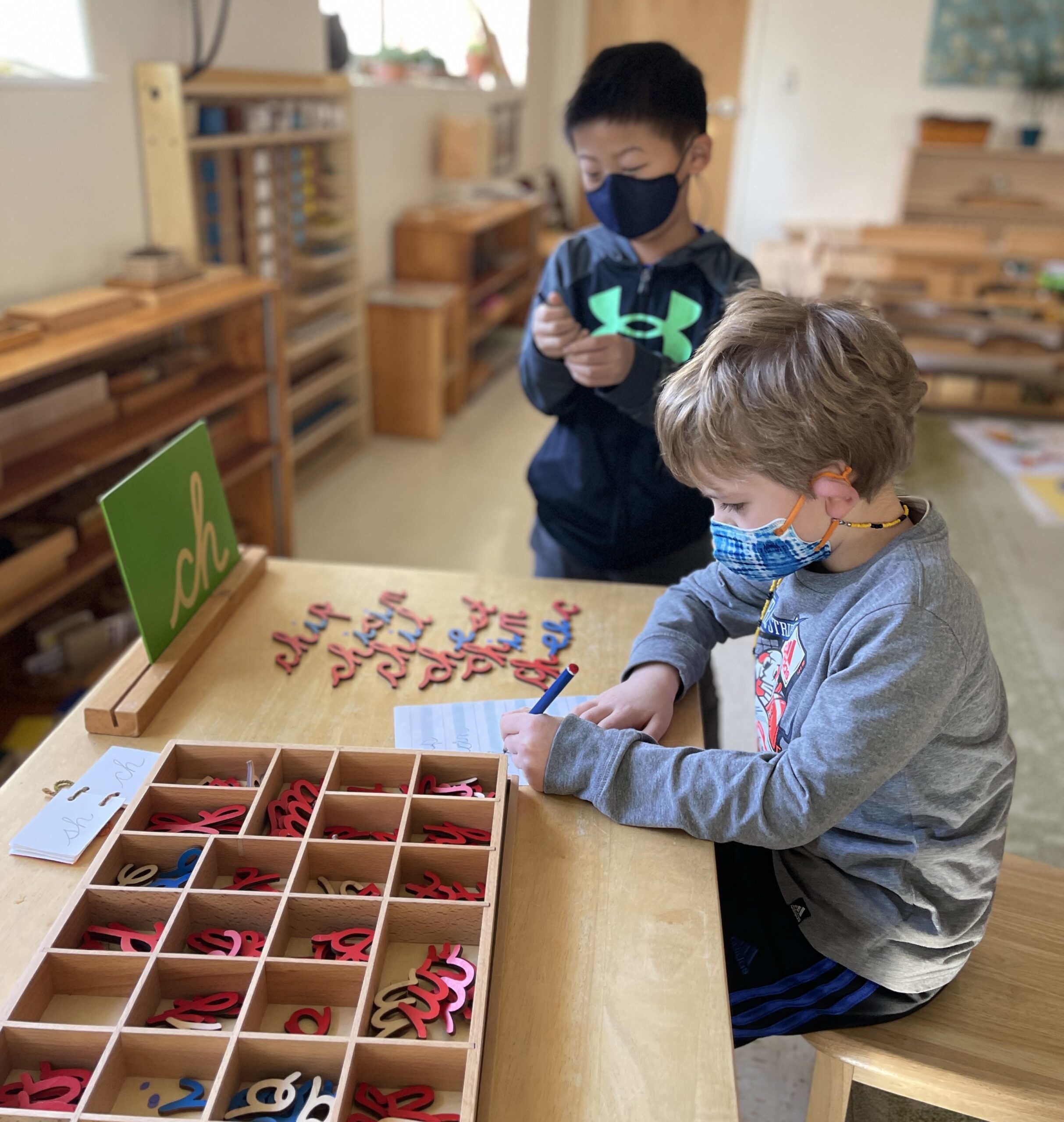
For answers to your other language-related questions, please check out our blog post titled, “Why do you teach letter sounds rather than letter names? (And other good questions about language acquisition…)”
You might also enjoy this post titled “The Benefits of Learning Cursive Writing.”