Science experiments are an integral part of Cosmic Education at the Elementary level, allowing the children to get “hands-on” with the scientific principles demonstrated in the Great Stories and Key Lessons.
Levels of Understanding
When they are first presented, the experiments provide a visual image for a story or lesson. Paper pieces sprinkled on water, for example, enable the students to imagine how the elements born during the birth of the universe cooled and coalesced, joining together to create the stars and planets.

Above: Lower Elementary students demonstrate science experiments as part of the first Great Lesson, The Birth of the Universe.
From these explorations, the students can extend their studies further, engaging in deeper and more sophisticated studies of the fields of chemistry and physics. For example, the same experiment with the pieces of paper sprinkled on water may be repeated in order to study the surface tension of water. Later, students can return to this experiment to explore the mechanism of surface tension, leading to the idea of hydrogen bonding.

Above: Upper Elementary students practice building models of elements on the periodic table using the Bohr Board.
The Scientific Method
When they are first presented, the experiments provide a vehicle for introducing the scientific method, including identifying a research question, proposing a hypothesis, conducting an experiment to test the hypothesis, making observations, recording data, analyzing results, drawing conclusions, and presenting findings. Elementary students also explore the work of groundbreaking scientists across time periods and cultures, discovering along the way how many scientific discoveries came about from incorrect hypotheses, a wonderful opportunity to discuss “mistakes as teachers” and the importance of a growth mindset.
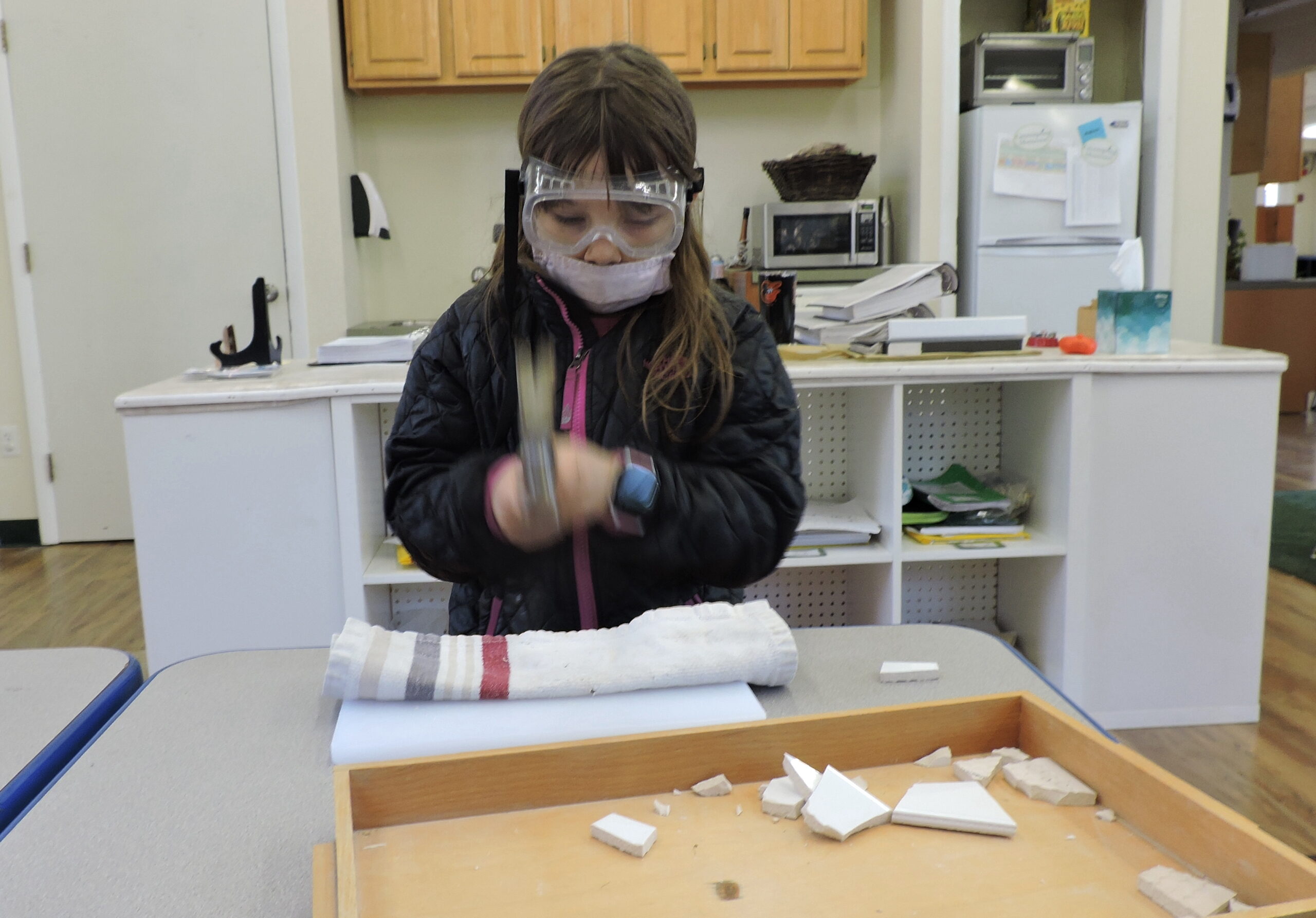
Above: A Lower Elementary student tests the properties of a solid.
The science experiments offered in the Montessori classroom bring Cosmic Education to life. They enable students to develop scientific skills and delve more deeply into scientific concepts. And most of all, they offer students opportunities to pursue their interests and develop concentration on the path towards their self-construction.
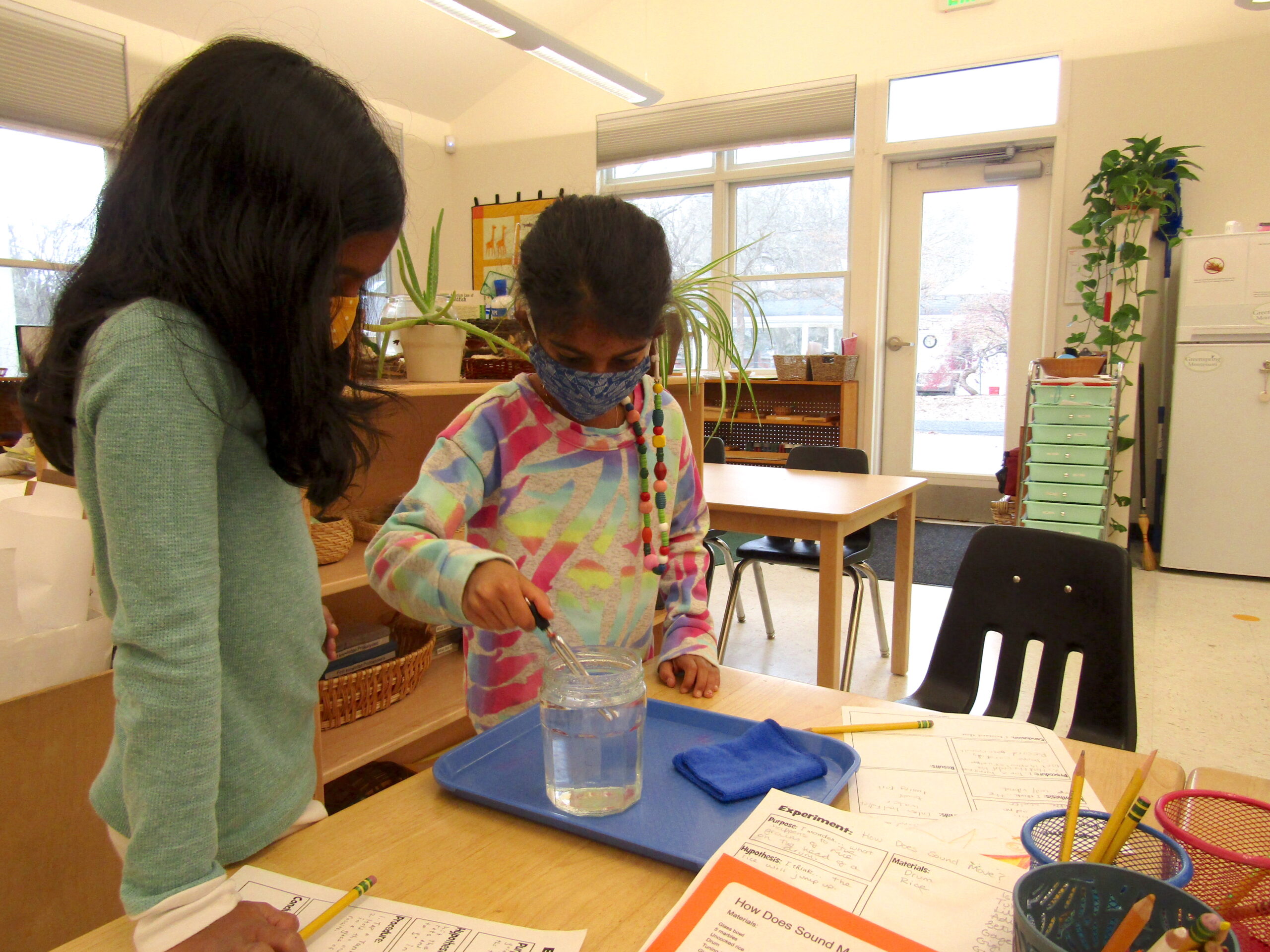
Above: Lower Elementary students explore the movement of sound waves through water.