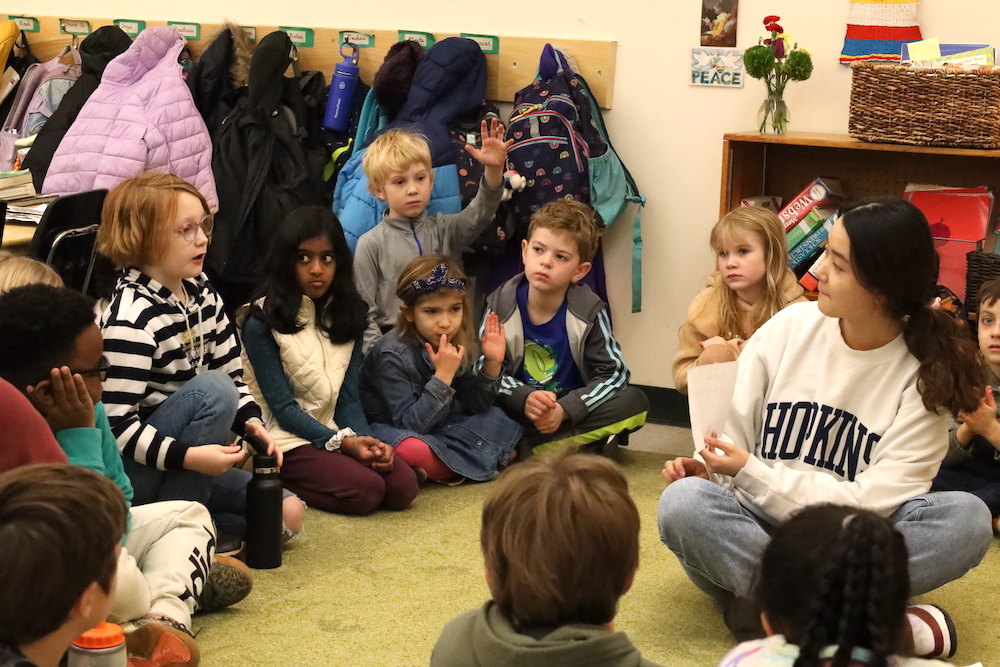
Several of our volunteers from the Johns Hopkins International Teaching and Global Leadership program presented their Lunar New Year traditions to our Children’s House and Elementary students.
Lunar New Year celebrates the first days of spring on the lunar calendar. Instead of tracking the Earth’s orbit around the sun, which is slightly over 365 days, the lunar calendar tracks the cycles of the moon. The holiday begins with the first new moon of the lunar calendar and ends on the first full moon of the lunar calendar, 15 days later.
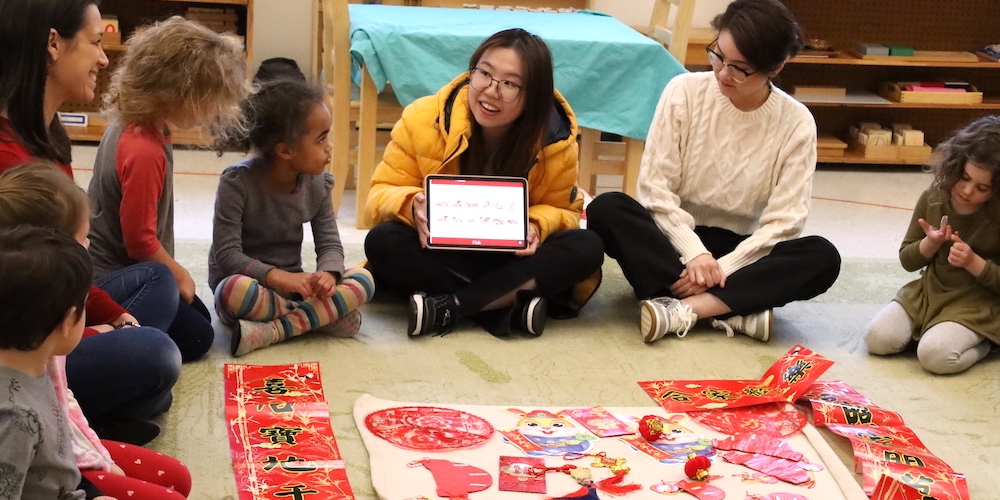
Lunar New Year is celebrated around the world, though it goes by different names. China’s Lunar New Year is known as the Spring Festival or Chūnjié in Mandarin, while Koreans call it Seollal, and the Vietnamese refer to it as Tết.
Each year in the Lunar calendar is represented by one of 12 zodiac animals included in the cycle of 12 stations or “signs” along the apparent path of the sun through the cosmos. 2023 is the year of the Rabbit!

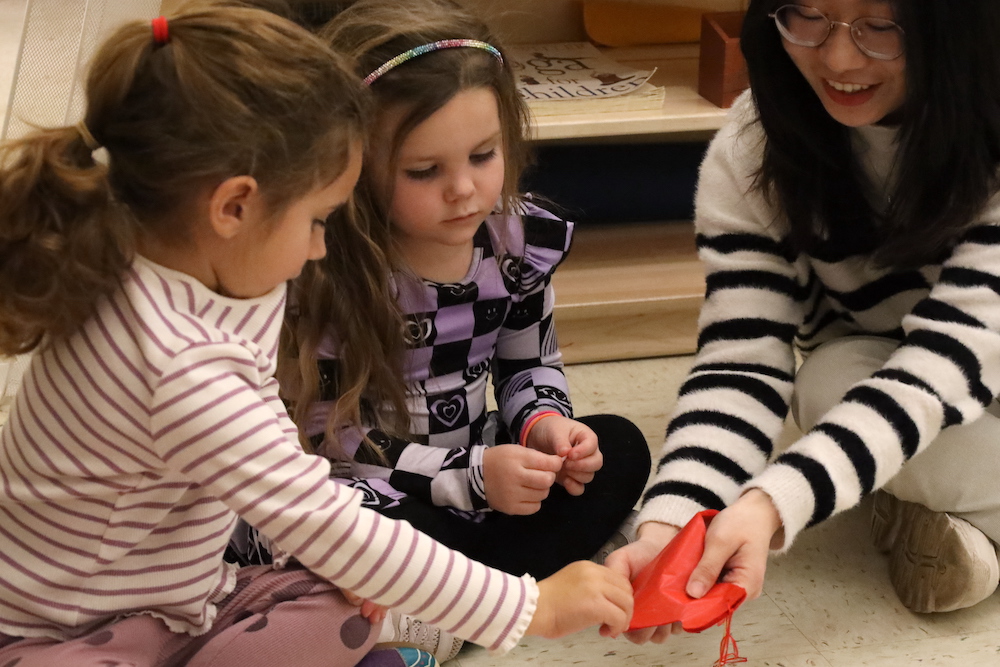


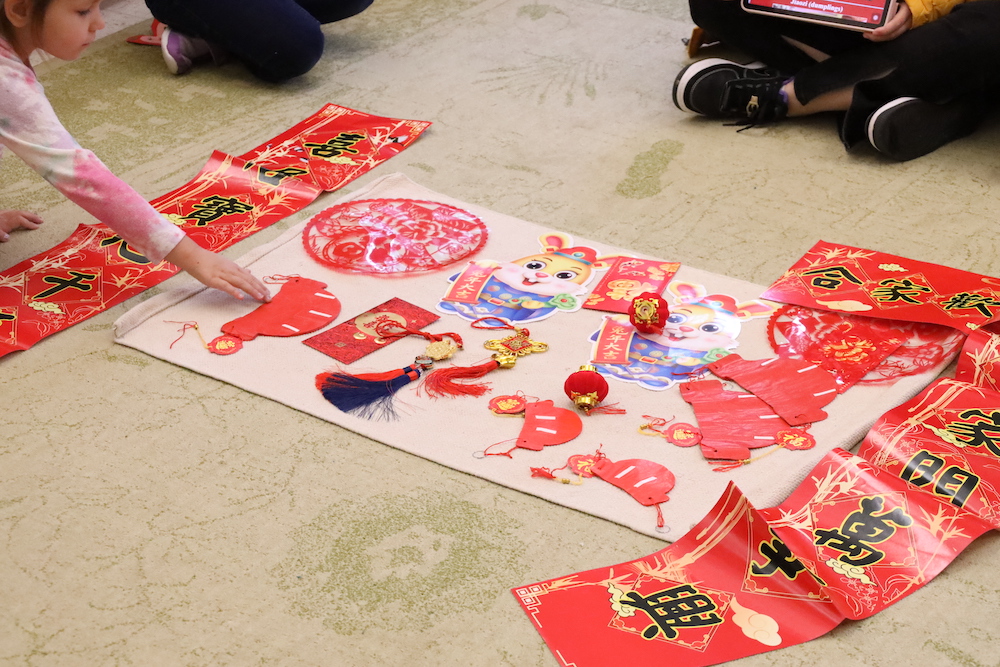

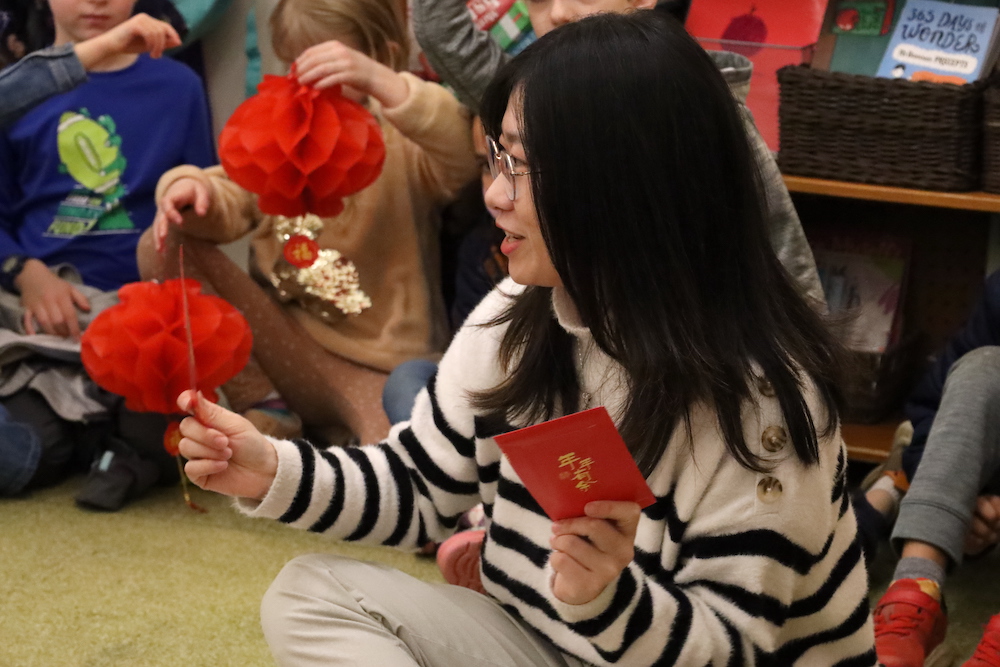
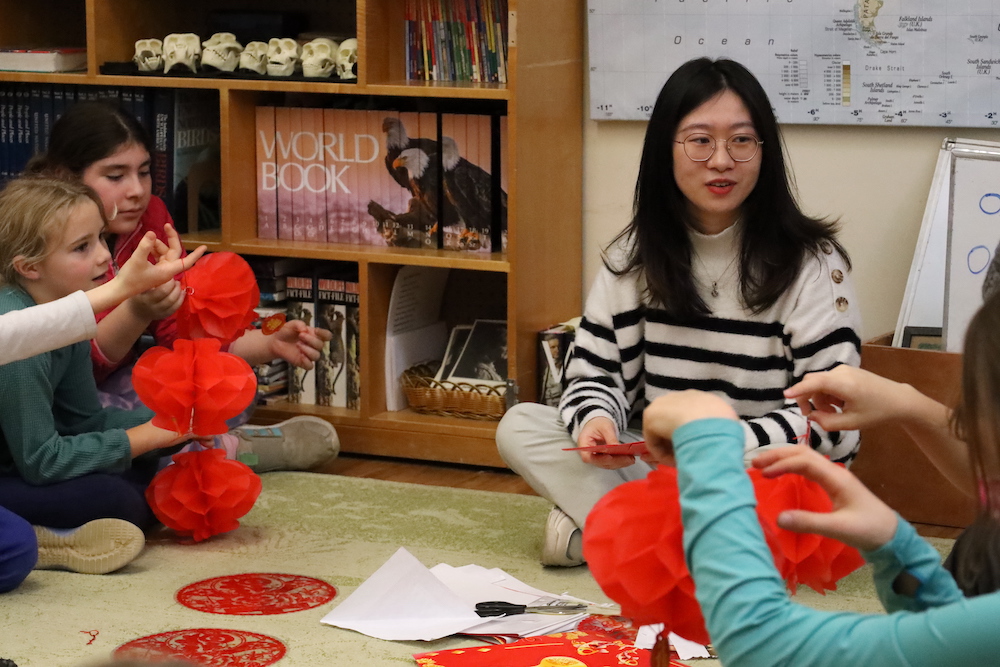
Regional customs and traditions vary widely but share the same theme: seeing out the old year and welcoming in the luck and prosperity of a new year. Some people give their houses a thorough cleaning before the spring festival, which symbolizes sweeping away the bad luck of the preceding year and making their homes ready to receive good luck. Red is the main color for the festival, symbolizing prosperity and energy, so many people put up red lanterns and other decorations. Another Lunar New Year tradition is giving red envelopes, which have money in them, to children and seniors. Those who receive a red envelope are wished another safe and peaceful year. The Lunar New Year is often celebrated with parades that include lion and dragon dances, firecrackers, and fireworks.
Thank you, Brittany, Coco, Sharon, and Chelsea for sharing your traditions with us! We are grateful to all of the families and staff members who have shared your cultural traditions with our children this year!