The toddler years (18 months to 3 years) are a time of rapid, foundational development. In a Montessori environment, this growth is supported by a carefully prepared space where learning happens through hands-on exploration, purposeful movement, and observation.
In this setting, the adult is not a lecturer, but a guide. Teaching happens through modeling, intentional materials, and the environment itself. Authentic Montessori materials are thoughtfully designed to isolate a single skill, include a built-in control of error, and—most importantly—foster independence.
What may look simple on the surface—pouring water, matching colors, carrying a chair—is actually deeply meaningful work that builds concentration, coordination, and confidence.
Below is a look at each area of the Montessori toddler classroom, highlighting a sample material or activity from each area of the curriculum.
Practical Life Area
Building independence through purposeful activity
Practical Life supports the child’s deep drive toward independence and belonging. Everything in this area is real, purposeful, and connected to everyday life.
Key Components:
- Care of Self: Putting on shoes, washing hands, using a tissue
- Care of the Environment: Wiping tables, sweeping small messes, watering plants
- Food Preparation & Service: Slicing soft foods, pouring water, setting a place for snack
- Control of Movement: Carrying trays, using tongs, transferring objects
- Grace & Courtesy: Simple greetings, waiting, observing others
Materials are simple, sequential, and scaled to the child’s size and ability.
Example Material: Clementine Peeling
 What it is: A small tray with a clementine, a small bowl for peels, and a plate. The child is shown how to hold the fruit, peel the skin using their fingers, separate the segments, and place the peels into the bowl before enjoying or serving the fruit.
What it builds: Fine motor strength, coordination, concentration, sequencing, and independence in food preparation.
The goal: To support the child in caring for themselves through meaningful, real-life activity, fostering independence, confidence, and a sense of competence in daily routines.
Sensorial Area
Refining the senses and organizing experience; building the foundation for mathematical thinking
Toddlers learn through their senses. The Sensorial area helps them classify and make meaning of what they experience.
Key Components:
- Visual Discrimination: Color, size, and shape
- Tactile Exploration: Texture and temperature
- Auditory Awareness: Differentiating sounds
- Olfactory & Gustatory: Smell and taste experiences
- Spatial Awareness: Nesting, stacking, and fitting objects
Materials isolate one quality at a time, making exploration clear and focused.
Example Material: Knobbed Cylinders (Half Block)
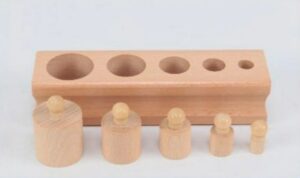 What it is: A wooden block containing a set of five cylinders with knobs, each varying systematicallyin one dimension (such as diameter or height). The child removes the cylinders and replaces them into their corresponding sockets, often working with one block at a time to isolate a single quality.
What it builds: Visual discrimination of size, fine motor control (pincer grasp), hand-eye coordination, concentration, and problem-solving.
The goal: To refine the child’s ability to perceive and differentiate gradations in dimension—such as thick/thin or tall/short—laying the foundation for later mathematical understanding and precise observation.
Language Area
Supporting the explosion of language
Toddlers are in a sensitive period for language, rapidly absorbing vocabulary and meaning from their environment.
Key Components:
- Vocabulary Objects & Baskets: Familiar items for naming
- Object-to-Picture Matching: Connecting real objects to images
- Books & Reading Corner: Realistic images and simple language
- Songs, Rhymes & Conversation: Building expressive and receptive language
- Early Sound Awareness: Listening games
The adult serves as a clear and intentional language model, naming objects and narrating actions throughout the day.
Example Material: Object-to-Picture Matching (Animals)
What it is: A set of realistic miniature animals paired with corresponding picture cards.
The child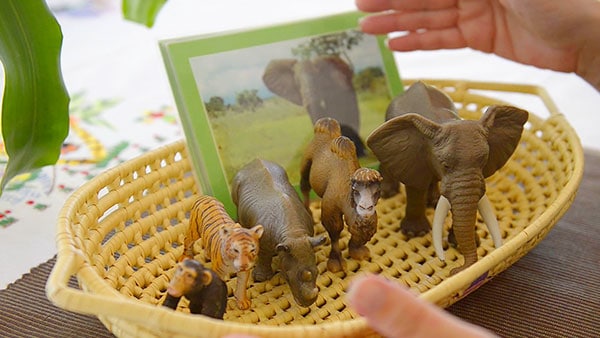 matches each object to its image, beginning with a small set and increasing as mastery develops.
What it builds: Vocabulary, visual discrimination, matching skills, and early classification.
The goal: To strengthen the connection between concrete objects and symbolic representation, expanding the child’s language and supporting their ability to identify, name, and describe the world.
Art & Creative Expression
Supporting creative expression through process
Creativity in Montessori emphasizes exploration and process over a defined end product.
Key Components:
- Drawing with colored pencils
- Simple painting experiences
- Play dough or clay modeling
- Basic gluing activities
- Opportunities for independent cleanup
Materials are limited, organized, and accessible to the child.
Example Material: Gluing Work
What it is: A small tray with pre-cut paper pieces or small items from nature, a small dish of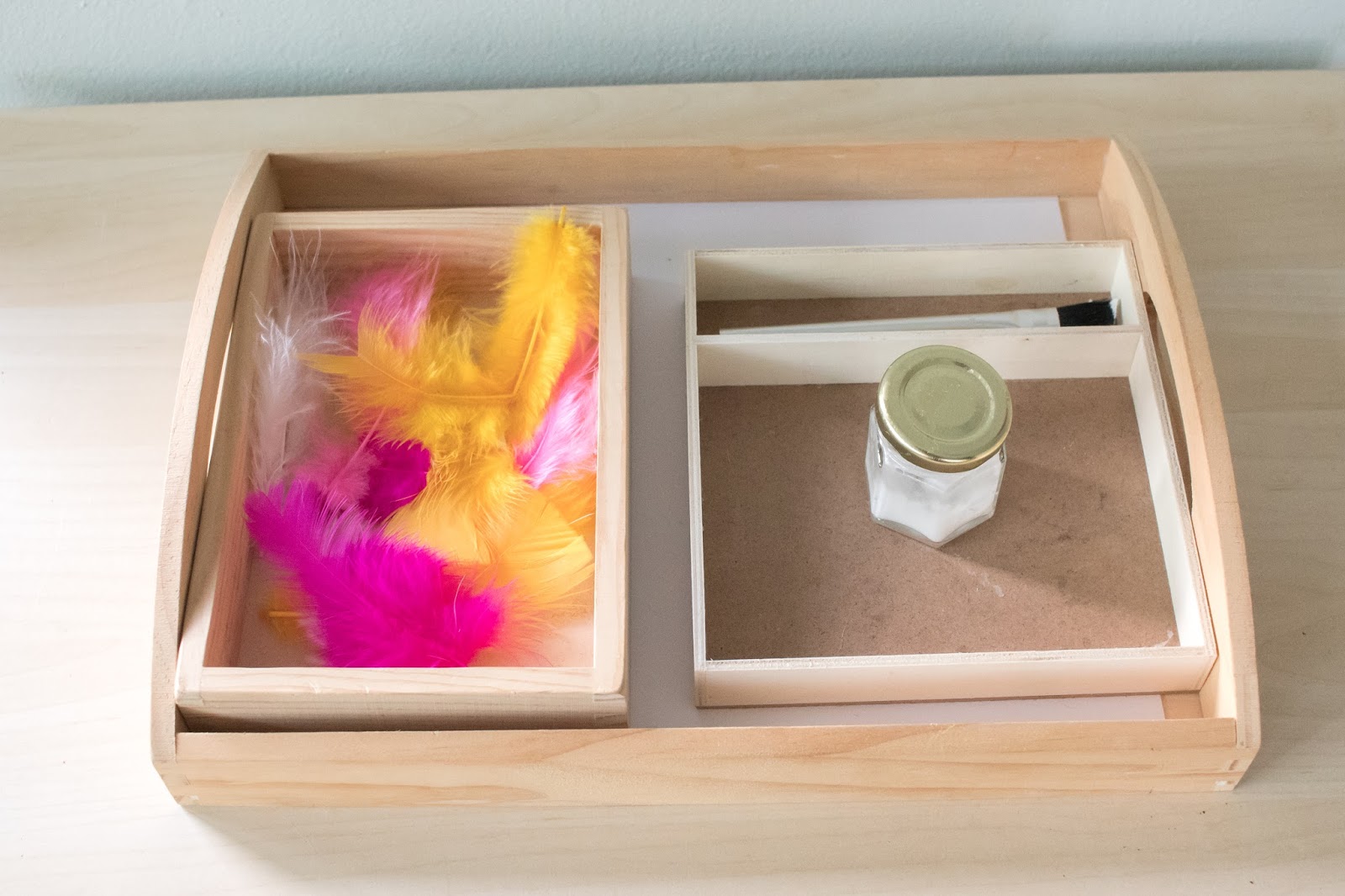 gluewith a brush, and a sheet of paper. The child applies glue and places the pieces onto the paper, creating their own arrangement.
What it builds: Fine motor control, hand-eye coordination, concentration, and creativity.
The goal: To support expressive exploration while refining precise hand movements needed for later writing and purposeful work.
Cultural & Science Area
Connecting the child to the wider world
This area introduces toddlers to nature and the world around them through real, sensory experiences.
Key Components:
- Nature exploration (leaves, shells, rocks)
- Plant care
- Simple animal classification
- Early geography concepts
- Observation-based science
Materials are concrete, real, and rooted in lived experience.
Example Material: Plant Care Work
What it is: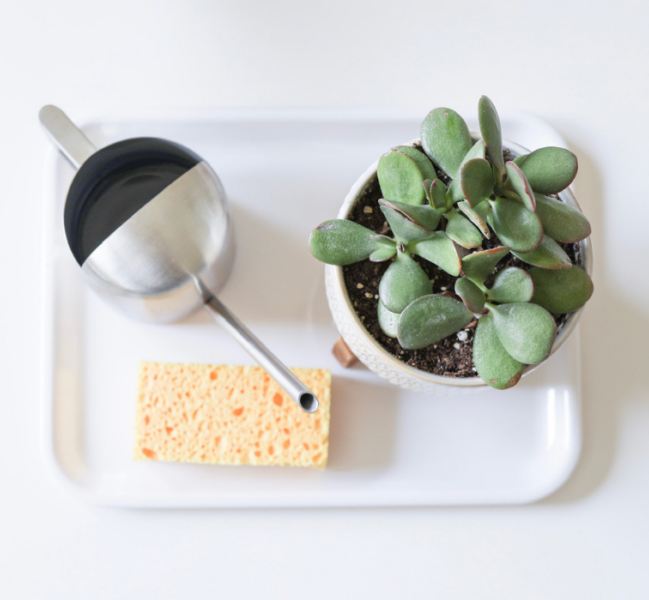
A small watering can, a live plant, and a designated space where the child can independently water and care for the plant. The setup may also include a cloth for wiping spills and a tray to define the work area.
What it builds:
Responsibility, concentration, coordination, and an early understanding of living things and their needs. It also fosters respect for the environment and a sense of connection to nature.
The goal:
To help the child develop a caring relationship with the natural world while building independence and awareness of how their actions impact living things.
Outdoor Environment
Supporting independence and a connection to nature through purposeful outdoor work
This area promotes autonomy, coordination, responsibility, and a connection to the natural world.
Key Components:
- Child-sized gardening tools (rakes, brooms, watering cans)
- Defined outdoor work spaces
- Access to natural materials (leaves, soil, plants)
- Opportunities for movement and real work
- Consistent routines for care of the environment
Example Material: Raking Leaves
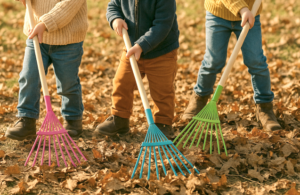 What it is: A child-sized rake and a designated outdoor area with leaves. The child is shown how togather leaves into a pile using controlled, purposeful movements, and may then transfer them to a wheelbarrow or compost area.
What it builds: Gross motor coordination, concentration, sequencing, responsibility, and a sense of contribution.
The goal: To support the child in caring for their environment through meaningful work, fostering independence, coordination, and a developing respect for nature.
Library / Cozy Corner
Creating space for quiet, language, and reflection
In a busy classroom, toddlers need a calm place to rest and engage quietly.
Key Components:
- Low shelves with forward-facing books
- Soft seating such as pillows or rugs
- Realistic, simple books
- A peaceful, low-stimulation environment
Example Material: Board Book Rotation Shelf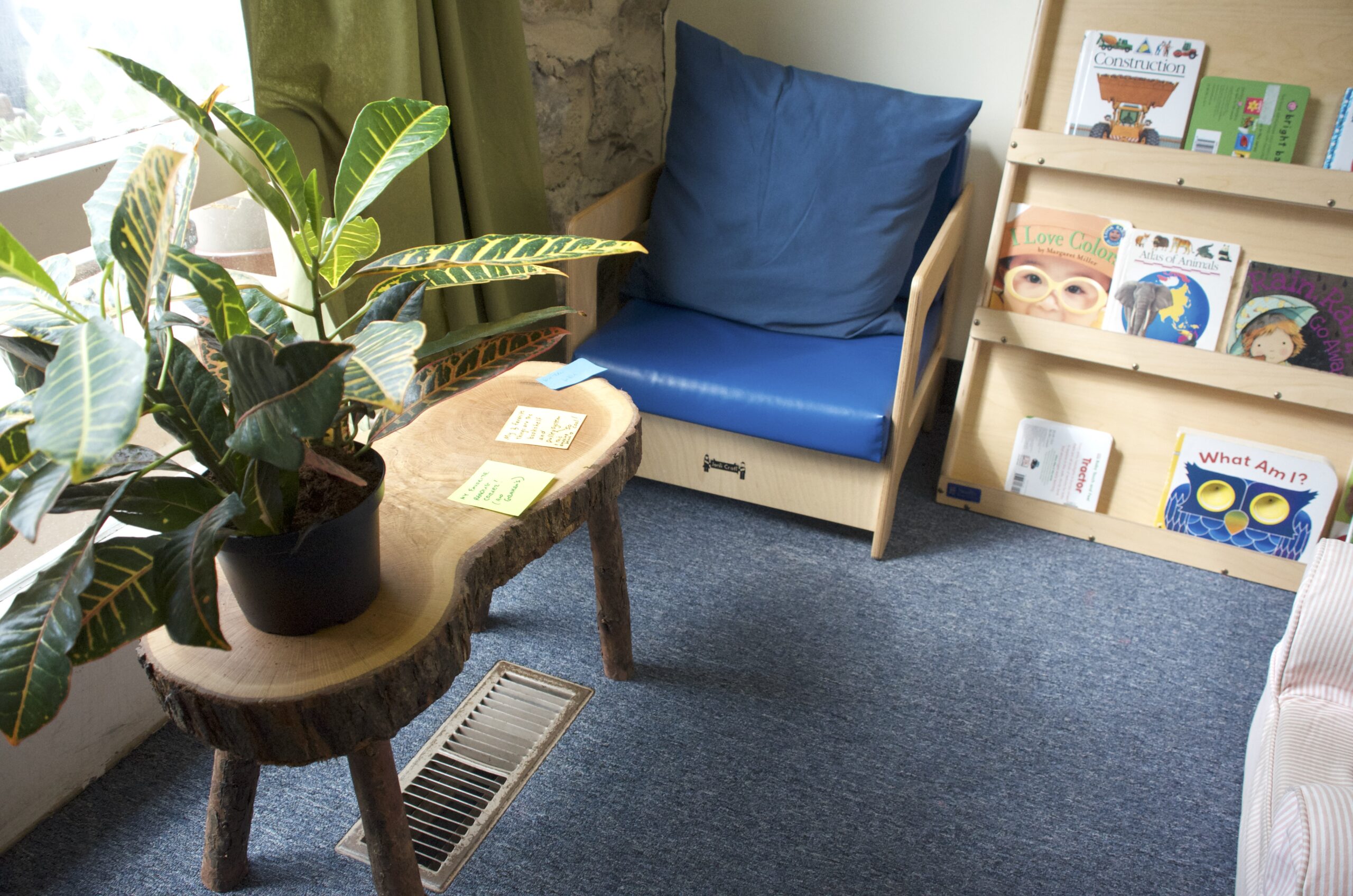
What it is: A small selection of sturdy, realistic board books displayed for easy access.
What it builds: Independence, attention span, and early literacy interest.
The goal: To foster a love of books and provide a space for quiet engagement.
Gross Motor Area
Supporting the child’s natural drive for movement
Toddlers are driven to move, and this area allows them to do so safely and purposefully.
Key Components:
- Climbing structures
- Balance activities
- Carrying and lifting
- Push and pull work
- Movement integrated throughout the classroom
Example Material: Pikler Triangle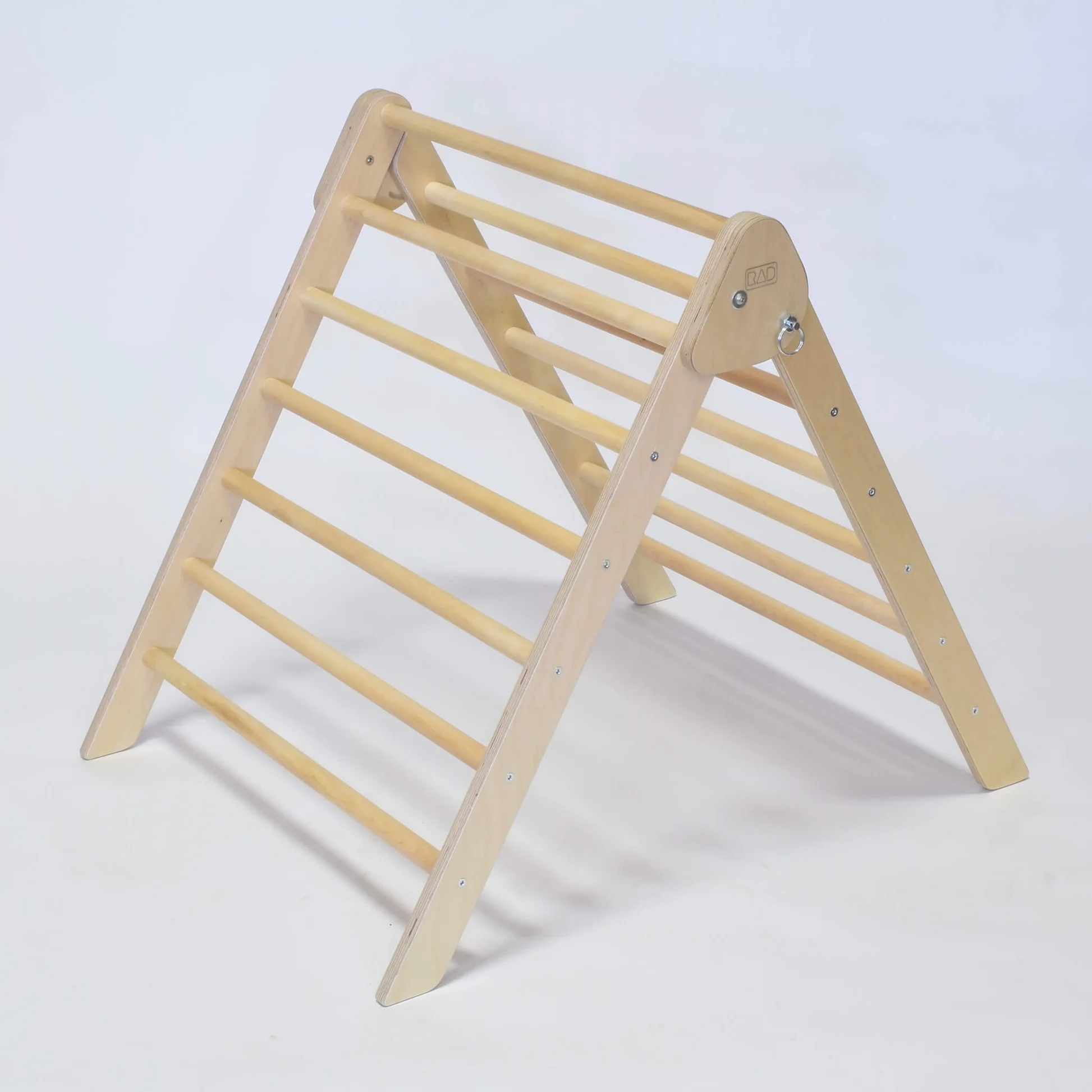
What it is: A small wooden climbing frame designed for safe, independent exploration.
What it builds: Strength, balance, coordination, and confidence.
The goal: To support the child’s physical development and mastery of movement.
Self-Care / Toileting Area
Supporting independence in daily routines
This area promotes autonomy, dignity, and awareness of the body.
Key Components:
- Child-sized toileting setup
- Handwashing materials
- Mirrors for self-awareness
- Accessible tissues and cleaning tools
- Consistent routines
Example Material: Nose Blowing
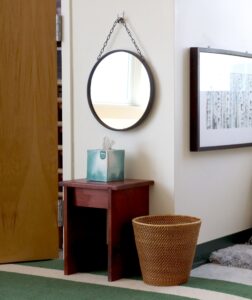 What it is: A small basket with tissues, a mirror, and a waste bin. The child is shown how to take a tissue, blow their nose, wipe, dispose of the tissue, and wash their hands.
What it builds: Independence, sequencing, body awareness, and hygiene habits.
The goal: To support the child in caring for their own body with confidence and dignity, fostering independence in everyday routines.
The Big Picture
A Montessori toddler classroom is a place where independence is nurtured, movement is purposeful, and learning is deeply rooted in real experience. Each material is intentional. Each activity isolates a skill. Each experience supports the development of the whole child.